REVIEW · AMSTERDAM
Amsterdam: 2.5-Hour Historic Private Walking Tour
Book on GetYourGuide →Operated by Jan's Fietstaxi · Bookable on GetYourGuide
Amsterdam reveals itself best on foot. This 2.5-hour private walking tour stays centered on Amsterdam’s historic core, with a guide who can pace things to your group and interests. I especially like the way it spotlights details most people speed past, like gable stones on older facades and the story behind lesser-known corners.
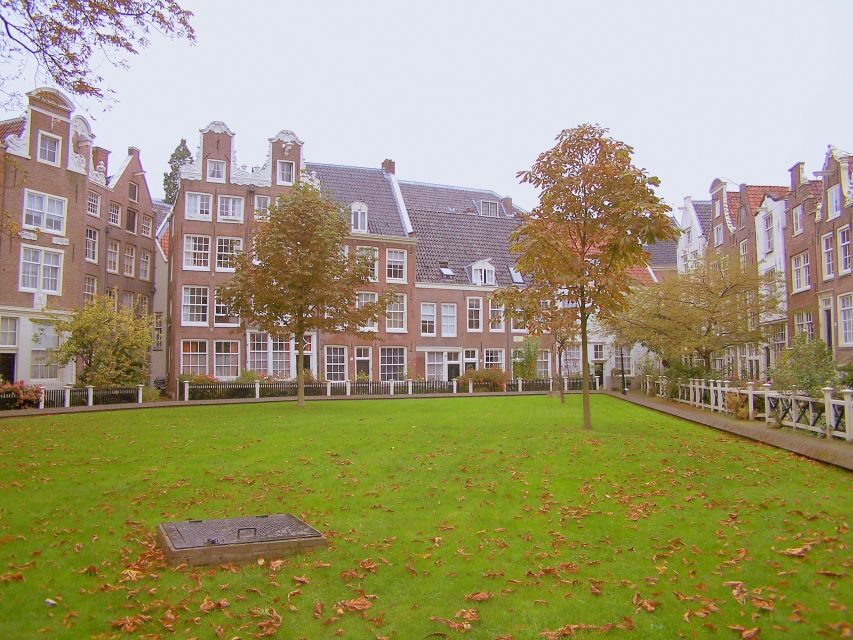
The tour’s second big win is the shift from street life to quieter, more reflective spaces: the Begijnhof courtyard and the nearby Civic Guards Gallery with original paintings. One thing to consider up front: you need to be able to walk at least 45 minutes without sitting, and it is not suitable for mobility impairments.
In This Review
- Key Highlights to Look for on This Private Walk
- Why This 2.5-Hour Private Walk Works So Well in Amsterdam
- From Victoria Hotel to Eastern-Center Landmarks
- Gable Stones, Riga House, Congac House, and the Hidden Church Story
- Nieuwmarktsquare, a Pass Through the Red Light District, and the Amstel Views
- Begijnhof Courtyard and Civic Guards Gallery Original Paintings
- Spui, Late-Century Ornaments, and Your Square Break at Rembrandtsquare or Amstelveld
- Guide Style: Jan’s Flexibility and How You Can Shape the Experience
- Price and Value: When $283 Per Group Makes Sense
- Who This Tour Suits (and Who Should Skip It)
- Should You Book This Amsterdam Historic Private Walking Tour?
- FAQ
- Where does the tour start?
- How long is the tour?
- What is included in the price?
- Is this a private tour, and how many people can go?
- What languages are offered?
- How much walking is required?
- What is the meeting or pickup option?
Key Highlights to Look for on This Private Walk
- A private guide who can tailor what you focus on, even if you already know Amsterdam
- Gable stones and historic facades on the eastern side of the center
- House of Riga, Congac House, and the former Hidden Church as key stops for architecture lovers
- Nieuwmarktsquare, including a look at the city’s former late-1400s gateway area
- Begijnhof + Civic Guards Gallery, where the courtyard and original paintings do the talking
- Amstel river intersections, Rembrandtsquare, and the Seven Bridges area for great urban-view moments
Why This 2.5-Hour Private Walk Works So Well in Amsterdam
Amsterdam can feel like an endless list of canals, churches, and bridges. This tour is a smart way to cut through that clutter. You get a focused loop through the historic center, with a private guide handling the flow so you’re not hunting for the next landmark.
The time window matters: 2.5 hours is long enough to learn the city’s visual language—facades, courtyards, and squares—but short enough that you’re not exhausted before you even reach the best bits. It also helps that the group is small and private, so questions don’t get lost and you’re less likely to get marched along with a crowd.
You’ll also start in a convenient place. The meeting point is at the Victoria Hotel opposite Central Station, which is easy to find if you’re arriving by train. From there, the guide leads you on foot through the neighborhoods that shape Amsterdam’s look and personality.
And because this is a walking tour, you really benefit from the “slow down” mindset. You’ll pass narrow lanes, back streets, and the kinds of street views you miss if you only hop between big attractions.
You can also read our reviews of more walking tours in Amsterdam



From Victoria Hotel to Eastern-Center Landmarks
The tour begins at the Victoria Hotel opposite Central station, then quickly shifts into older Amsterdam—especially the eastern side of the city’s center. This is where the architecture tells stories: you’ll notice how buildings face the street, how gables and stone details mark wealth and craftsmanship, and how street life folds into courtyards.
One of the tour’s strongest teaching moments is the way it helps you see “decorations” as history. Amsterdam’s older buildings often have carved stonework that looks decorative at first glance, but it also signals time periods, families, and city identity. The tour includes a large collection of what are often called gable stones, so you’re not just looking—you’re learning how to read what you’re seeing.
This part of the walk is also where you pick up a sense of direction. The streets can be confusing at first, even when you’re near major sights. Having a guide means you get the logic of the layout: which streets pull you toward the squares, which routes funnel you toward the river, and where the city opens up after tight lanes.
If you’re the kind of traveler who likes photos, this section is photo-friendly—but in a practical way. You’re guided to views that make sense in context, not just random snapshots.
Gable Stones, Riga House, Congac House, and the Hidden Church Story
Midway through the early stretch, the tour focuses hard on historic buildings that repay attention. You’ll see Riga House and Congac House, plus a stop connected to the former Hidden Church. Even if you’re not an architecture fanatic, these are the kinds of sites where one good explanation changes how you experience the street.
Gable stones deserve their own spotlight here. Amsterdam’s older homes often used the facade as a sort of public message—status, identity, and sometimes local history in stone. When you see a concentrated run of these details on one walk, it becomes clear that the city’s character isn’t only in canals and bridges. It’s also in the small, permanent markers on the buildings themselves.
The guide also helps make sense of the building types you’re seeing. You’ll hear about how old Amsterdam worked and why these structures were positioned the way they were. It’s not just names and dates—it’s the real-world reason these buildings exist where they do.
The former Hidden Church stop is especially interesting because it points to Amsterdam’s layered past and the way private life and public streets could overlap. You get to connect the idea of hidden religious spaces to the street you’re standing on, which is far more meaningful than hearing a vague historical tidbit.
This segment also serves another purpose: it prepares you for the shift later in the tour. By the time you head toward squares and the river, you’ll recognize patterns in style and layout, so the rest of the walk feels less like wandering and more like a guided map you can actually read.
Nieuwmarktsquare, a Pass Through the Red Light District, and the Amstel Views
Next, the tour moves into the area around Nieuwmarkt. You’ll pass by the Red Light District on narrow streets and then head toward Nieuwmarktsquare. This portion isn’t about sensationalism. It’s about location and urban geography—how Amsterdam’s streets connect historic markets, canalside life, and the neighborhoods that changed over time.
Nieuwmarktsquare is a key stop because it anchors you in the city’s older footprint. The square has history tied to a former gateway to the city dating back to the late 1400s. That detail helps you understand why this area matters beyond being a convenient square. You’re looking at the kind of spot that once functioned as a threshold, where people entered, met, and moved deeper into Amsterdam.
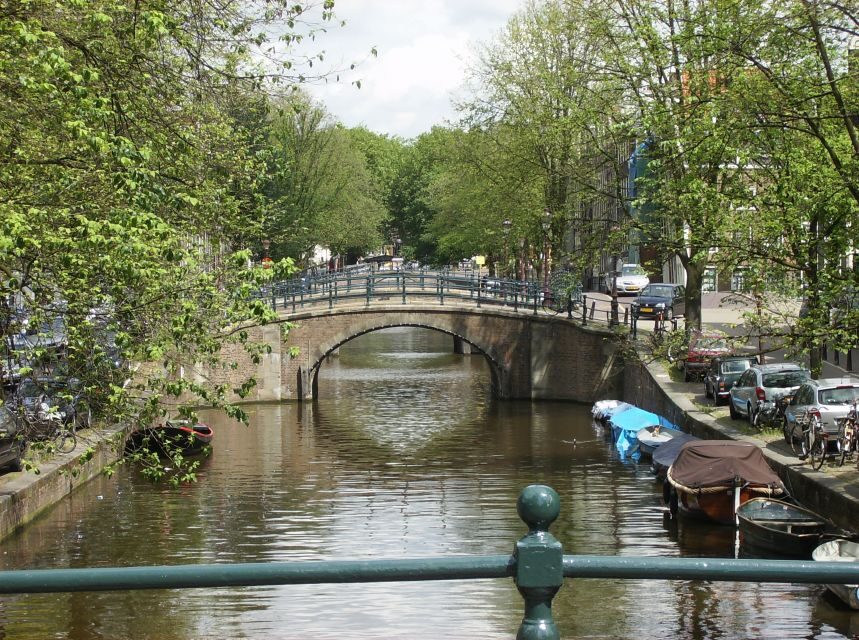
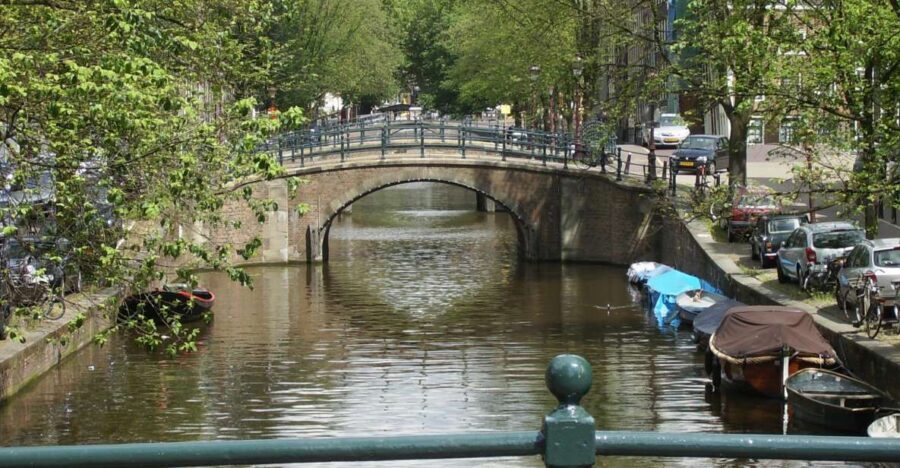
After the square, you’ll work your way toward the river corridor—passing Rembrandtsquare and continuing toward the Amstel river and the area around the Seven Bridges. This is where the walking route becomes visually rewarding. You get those classic Dutch city intersections where buildings, waterways, and bridges create a layered street scene.
Even if you think you know the Amsterdam postcard look, I like the way this walk frames it. The “Seven Bridges” area doesn’t just sit there as a photo goal. You walk into the perspective slowly, so you understand how the angles and crossings shape how the city feels.
There’s also a practical payoff: the guide chooses the flow so you’re not only seeing sights, you’re moving through the city in a way that naturally leads you from dense streets to open views and back again.
Begijnhof Courtyard and Civic Guards Gallery Original Paintings
One of the most rewarding moments on the tour is when it shifts from the busier streets to a calmer, more enclosed feel. You’ll reach the Begijnhof courtyard, a space that stands out precisely because it feels like an interruption in the city’s usual noise.
Begijnhof works well on a walking tour because you don’t just learn about it in theory. You experience the contrast in space. The courtyard gives you a pocket of quiet where the architecture and layout matter more than traffic or crowds. It’s a good place to reset your eyes and take in how a historical community was organized in everyday city life.
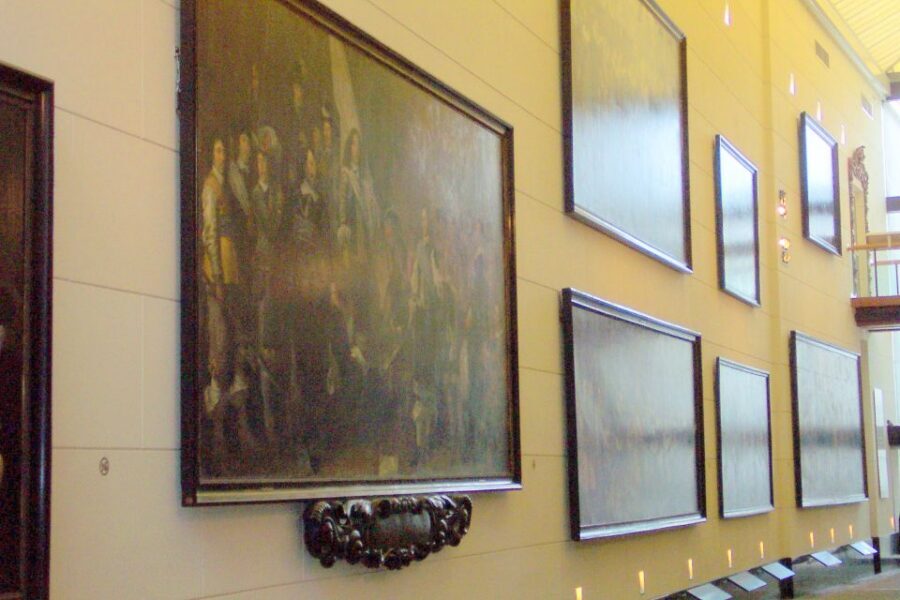
Nearby is the Civic Guards Gallery, which includes original paintings. This is where the tour earns points for variety. You’re not only seeing buildings; you’re seeing the visual culture connected to the civic identity of the city. The originals matter because they change the quality of the stop. A gallery visit can feel like a quick glance, but original works make you slow down and pay attention.
This section also helps you balance the earlier parts of the tour. You’ve spent time on facades and street-level details. Here, you shift to art and the way historical Amsterdam expressed itself inside institutions and community spaces.
If you like places that feel different from the main tourist circuit, this is one of the best reasons to choose a private guide. You’ll feel the transition, not just receive a list of stops.
You can also read our reviews of more private tours in Amsterdam






Spui, Late-Century Ornaments, and Your Square Break at Rembrandtsquare or Amstelveld
After Begijnhof and the Civic Guards Gallery, the walk continues toward Spui. Along the way, you’ll pass mansions with large late century ornaments. This matters because it adds a different architectural chapter. Amsterdam isn’t only medieval streets and gabled stone facades. You also get later periods of style, where decoration and street presence show up in a new way.
Spui itself is a useful stop because it connects you back to the city’s everyday rhythms—without turning the tour into a shopping detour. You get context for how Amsterdam’s historic center functions as both a heritage zone and a living city.
Timing is also smart here. During the tour, you’ll have a break at either Rembrandtsquare or Amstelveld. That’s important because it acknowledges the one practical limitation of walking tours: your legs need a pause. Just remember, the requirement is that you can walk for at least 45 minutes without sitting, and the break comes during the tour, not immediately at the start.
I like that this break is placed at impressive squares. It’s not a token coffee stop. You rest while still seeing something that feels “Amsterdam”—open space, historic surroundings, and a better chance to orient yourself for the next stretch.
If your group includes people who love taking photos, squares are where you can do it without sprinting. If your group includes people who just want good stories, squares are also where the guide can land explanations in a way that makes sense.
Guide Style: Jan’s Flexibility and How You Can Shape the Experience
The biggest reason people seem to rate this tour highly is the guide’s approach. A guide named Jan shows up in multiple accounts as friendly, quick to adapt, and focused on helping you notice what you’d otherwise miss.
The tour format supports that flexibility. Because it’s private, you’re not locked into a one-size route. If you’ve been to Amsterdam before, you can ask for emphasis on small alleys, hidden churches, behind-the-scenes courtyards, and less obvious viewpoints.
One of the clever advantages of a private route is that it can help you slip away from pure crowd flow. Even within central Amsterdam, small changes in walking order can mean you experience streets with more breathing room.
Here’s how you can get the most out of it: bring a couple of priorities. For example, if you care more about architecture, ask to spend extra time on the gable stones and facade details. If you prefer softer scenes, ask the guide to focus on the Begijnhof contrast and the art at the Civic Guards Gallery.
Also, don’t be shy about practical questions. The best walking guides explain why buildings face the way they do, how squares used to function, and why certain neighborhoods feel the way they do today. That’s the kind of context that turns a good walk into a memorable one.
Price and Value: When $283 Per Group Makes Sense
The price is $283 per group for up to 4 people, and that’s where the math gets interesting. At first glance, it sounds like a lot for a 2.5-hour activity. But private guides cost real money, and you’re paying for more than walking time. You’re paying for pickup in central Amsterdam, a dedicated guide for your exact group, and a route that packs major historic stops into a short window.
This is best value if you have a small group of friends or a family unit. If you’re two people, you’re still likely getting value from personalization and the ability to keep the pace comfortable. If you’re solo, the price per person is higher, so it’s more of a choice for travelers who really want a guided interpretation instead of self-guided wandering.
Another value point: the tour includes guided tour time and pickup at agreed central locations (hotel, railway station, or another arranged meeting spot). That can remove friction on travel day. You spend less time figuring out logistics and more time learning the city.
Notably, food and drinks are not included. That’s normal for a walking tour, but it means you should plan to eat before or after. If you know you’ll get hungry, keep a small snack plan so the break doesn’t feel rushed.
Who This Tour Suits (and Who Should Skip It)
This is ideal for you if you want a structured walk through Amsterdam’s center that’s heavy on historic buildings, squares, and architecture details. You’ll likely enjoy it if you like learning to see: gables, facades, courtyards, and how the city layout connects everything from the market area to the river.
It’s also a good fit for repeat visitors. The private nature lets you request emphasis on the less obvious parts, like behind-the-street spaces and hidden-feeling churches and courtyards.
You should skip it—or pick a different style of tour—if mobility is a concern. The tour requires that you can walk at least 45 minutes without sitting down, and it is not suitable for people with mobility impairments. If you’re unsure, be honest with yourself about stamina on cobblestones and uneven historic streets.
Should You Book This Amsterdam Historic Private Walking Tour?
Book this tour if you want a guided, interpretive look at Amsterdam’s center in a tight timeframe, and you’ll use the guide’s expertise to understand the architecture rather than just collecting photos. The combination of gable stone details, Nieuwmarktsquare history, the Begijnhof courtyard, and the Civic Guards Gallery original paintings makes it more than a standard highlights stroll.
Don’t book it if walking for 45 minutes without sitting will be tough, or if you prefer a fully self-paced visit where you can stop and start on your own schedule.
If you’re traveling as a group of up to four, this price can feel fair because you’re buying a private route, pickup convenience, and a guide who can tailor the experience. I’d call it a smart choice when you want Amsterdam’s historic feel with fewer wasted steps and better context.
FAQ
Where does the tour start?
The tour starts at the Victoria Hotel opposite Central station in central Amsterdam.
How long is the tour?
The tour lasts 2.5 hours.
What is included in the price?
The price includes a guided tour. Food and drinks are not included.
Is this a private tour, and how many people can go?
It’s a private group tour, with pricing set for a group up to 4 people.
What languages are offered?
The live tour guide is available in Dutch and English.
How much walking is required?
You need to be able to walk for at least 45 minutes without sitting down. It’s also not suitable for people with mobility impairments.
What is the meeting or pickup option?
Pickup is included at any hotel, railway station, or another agreed-upon location in central Amsterdam.