REVIEW · AMSTERDAM
5 hrs Golden Age Amsterdam Private Walking Tour With Local Guide
Book on Viator →Bookable on Viator
Five hours. A lot of Amsterdam.
This private walking tour is built for your first trip, when you want fast orientation and a real sense of how the city grew. You’ll move from grand civic buildings to canal-era oddities, then into quieter inner courtyards like the Begijnhof. I especially liked how the guide turns landmarks into stories you can remember, and how you get a personal group setup (max 4) that makes it easy to ask questions. One thing to consider: several major stops have tickets that are not included, so you’ll want a plan before you go—especially if you want the Anne Frank House.
In practice, the route mixes famous sights with smaller, “wait, what is that?” moments. You also get a careful, matter-of-fact approach to heavier topics in De Wallen, plus context for why places like Dam Square and Royal Palace matter. If you’re the type who likes history with concrete details (think wooden poles and canal purpose), you’ll be in your happy zone.
In This Review
- Key things that make this tour worth your time
- Starting at Amsterdam Centraal: why this is the right “first hour”
- Centraal Station to the Weeping Tower: medieval walls, churches, and canal-sized surprises
- The Waag and Chinatown’s Fo Guang Shan: trade power meets immigrant layers
- De Wallen to Dam Square: context first, photos second
- Begijnhof courtyards, secret churches, and the Anne Frank timing reality
- Price and value: what $540.69 buys (and what it doesn’t)
- Guide Aleks and the small-group difference you can feel fast
- Should you book this 5-hour Golden Age private walk?
- FAQ
- How long is the tour?
- What’s the group size limit?
- Where does the tour start?
- Do they offer pickup?
- Are entrance fees included?
- Which major attraction needs tickets booked far in advance?
- What places are listed with separate entrance tickets?
- What’s the scheduled day/time shown?
- Can I cancel for a full refund?
Key things that make this tour worth your time
- A true orientation loop across Amsterdam’s most important areas in about 5 hours
- Local-guide storytelling that explains what you’re seeing, not just where it is
- Canal-era details like how cities were built on wooden poles and what grachten are for
- A smart mix of free and ticketed stops so you can budget as you go
- Small group pacing (up to 4) with time for photos and questions
- Clear guidance in De Wallen so you know what’s normal, what’s sensitive, and what to avoid
Starting at Amsterdam Centraal: why this is the right “first hour”
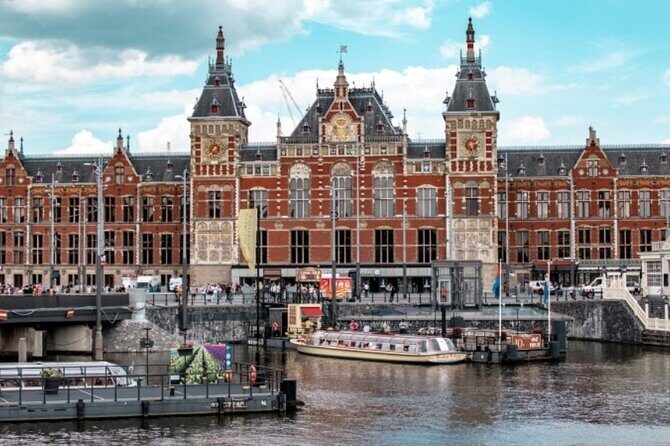
Amsterdam can feel like one big puzzle at first. This tour starts at Amsterdam Centraal, the city’s main station, and uses that as the jump-off point for everything else. You begin with the station building itself and the construction details that explain Amsterdam’s survival strategy: the big structures stand on 6,059 wooden poles, sunk to make a stable foundation in a watery landscape.
That early tech-and-architecture context matters. After a short look at Centraal, you’ll start noticing the city’s pattern everywhere—brick facades, canal edges, and the way older Amsterdam squeezed power and trade into tight spaces.
This tour also works because the group stays small. With only up to 4 people, you don’t get shoved along like part of a crowd wave. In the real world, that means you can ask practical questions—How did this city manage water? Why is this building here?—and actually get an answer.
Pickup is offered, which can be a nice help if you’re arriving by train or trying to reduce walking before the tour even starts. If you’re meeting at the station, plan on being there a few minutes early so you don’t have to rush into the first segment.
You can also read our reviews of more walking tours in Amsterdam



Centraal Station to the Weeping Tower: medieval walls, churches, and canal-sized surprises
After the station, the route shifts into major landmarks that show Amsterdam’s layers.
St. Nicholas Basilica is next, and it’s not just a pretty stop. You’ll look at the scale and the time period—the biggest Catholic temple in the Netherlands, dating from the second half of the 19th century. Even if you’re not a church person, it’s useful because it shows Amsterdam’s religious presence wasn’t static. It evolved with time and politics.
Then you get the Weeping Tower. This is one of those spots where a quick explanation can completely change how you see the place. The tower once belonged to the medieval wall system around Amsterdam, from the 15th century. It’s also tied to a bigger story: it’s the location from which Henry Hudson set sail on his journey to Northern America. You’ll stand in a spot that sounds small, but points to a whole chapter of European exploration.
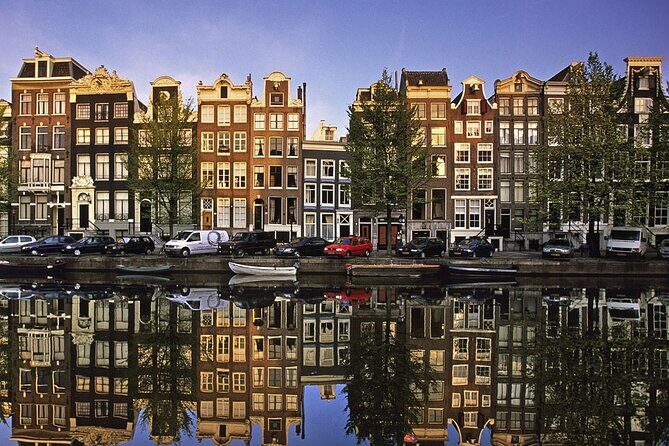
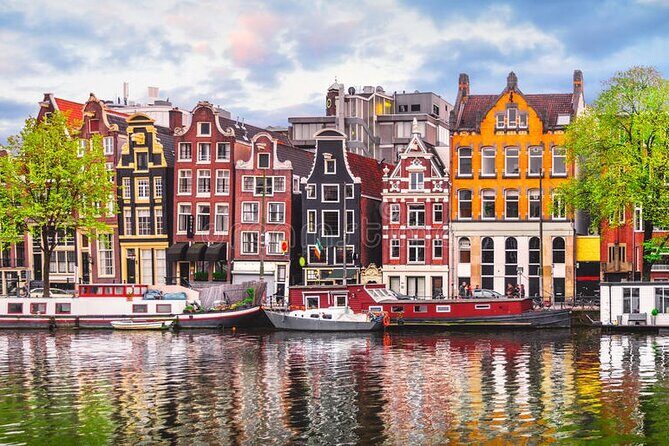
From there, the tour zooms in—literally—at Het Kleinste Huis van Amsterdam, the smallest house in Amsterdam on the Singel canal. This stop is where the guide’s storytelling really pays off. You’ll hear about what the word grachnen refers to—the canals of Amsterdam—and how canals shaped daily life: purpose, history, and ongoing maintenance. You’ll also get trivia that makes you look differently at bridges and at those narrow, tall, slightly leaning houses that line so many canals.
If you’re someone who likes details you can reference later in the week, this is a strong set of stops. They’re not just photo ops; they teach you how Amsterdam functions.
Possible drawback to expect here: you’ll do several short segments with stops that are brief by design. If you want long sits in every place, you may wish you had more time in only a couple of locations. The tour’s goal is breadth plus context in limited time.
The Waag and Chinatown’s Fo Guang Shan: trade power meets immigrant layers
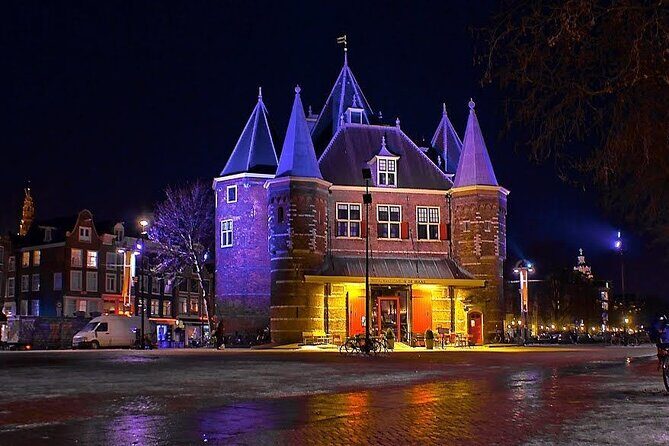
Next, you hit De Waag, the old Weigh Building, also known historically as a Customs House area and guild headquarters. The date range matters: it dates to the beginning of the 15th century and connects to the idea that gate and trade spaces formed the “engine room” of Amsterdam.
Here’s the value: you get the sense of how a merchant city regulated commerce and organized expertise through guilds. You’re not just seeing a building—you’re learning why these places existed.
Then the tour shifts toward a different cultural lens with Fo Guang Shan, a Buddhist (Chinese) traditional temple in the heart of Amsterdam’s Chinatown. It’s described as the second biggest temple of its kind in Europe, so it’s not a tiny side street detour. This stop helps balance the Golden Age focus with a modern Amsterdam reality: the city’s identity is layered, and communities are still shaping what you see.
One of the smartest parts of this tour is that it doesn’t treat Amsterdam as only one era. You’ll look at medieval fortification remnants, then a major 19th-century basilica, then a historic trade building, then a major temple in Chinatown. That mix gives you a more accurate mental map.
De Wallen to Dam Square: context first, photos second
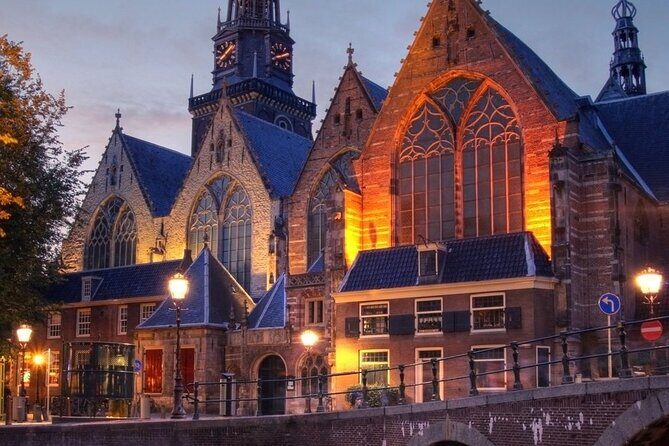
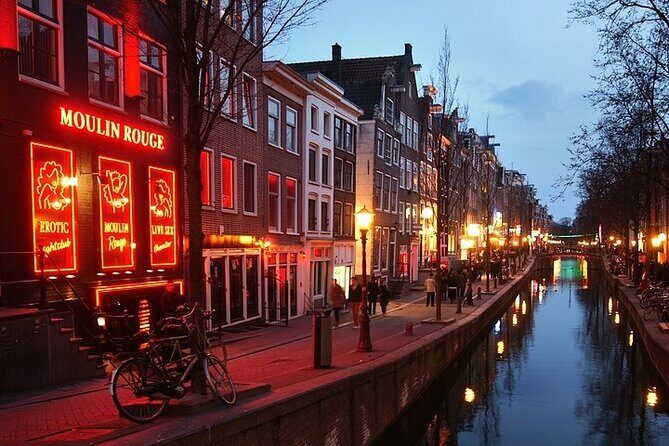
This is where the tour handles something you might feel uncertain about: De Wallen (Red Light District). Instead of treating it like a thrill ride, the guide sets a practical tone. You’ll get a short break, with around 30 minutes devoted to moderation and context—stories about the history of prostitution and the Netherlands approach to drug policy, plus what’s okay and what isn’t.
You’ll also get guidance on how to enjoy the area while staying within the law. That’s useful because Amsterdam can feel permissive in the abstract, but it’s still governed by local rules and social limits. When you have a guide there, you don’t have to guess.
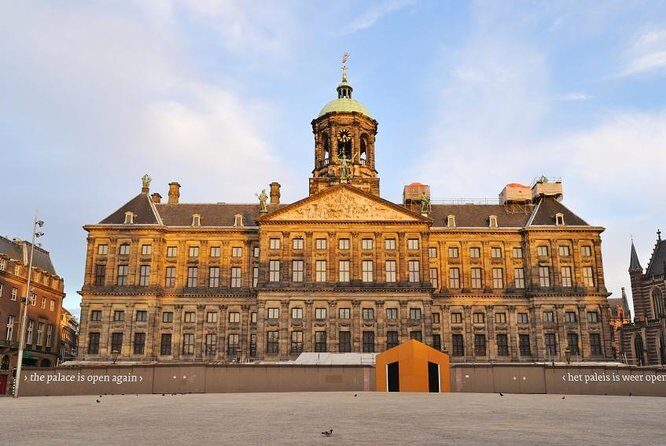
After the Red Light District, you shift to Dam Square, Amsterdam’s oldest central square and a kind of city “stage” surrounded by major buildings: the Royal Palace, New Church, the National Monument, and even modern landmarks like Madame Tussauds, Magna Plaza, and Hotel Krasnopolski mentioned as part of the surrounding area.
This stop helps you understand why Dam Square keeps pulling power to itself. It’s old, central, and full of story.
Then you walk by or around Royal Palace Amsterdam (a former city hall building from the mid-17th century). The guide connects it to the same foundation logic you heard at the station: it was built on 13,659 wooden poles. You’ll also see the building as one of the official residences of the Dutch Royal Family. Note: the Royal Palace has a separate ticket.
You’ll also take in the National Monument, a WWII remembrance stand about 22 meters (75 feet) high from 1956. That’s a good moment to pause and switch gears. After all the canal-era city framing, the monument brings the story into modern memory.
Next comes Nieuwe Kerk—the building originally erected in the 15th century and still used for royal wedding and crowning ceremonies. The point isn’t only the architecture. It’s how the Dutch Reformed Church tradition and royal pageantry share space in real life. This is another stop with a separate ticket.
If you want a smooth visit, plan mentally for the pacing: some stops are just exterior/time at the spot, while others (like Anne Frank House later on) require more planning and ticketing.
Begijnhof courtyards, secret churches, and the Anne Frank timing reality
If you’ve ever wanted one of Amsterdam’s “shut the door behind you” spaces, you’ll get it here.
The tour includes Begijnhof, a hidden courtyard and memorial area for the Beguines—semi-closed sisters’ order similar to nuns. You’ll hear about another secret Catholic church, the oldest wooden house in Amsterdam, and the English Church. You’ll also get legends tied to specific figures (including Sister Cornelia Arens) and a story described as the Miracle of Amsterdam from 1345.
This stop is valuable for two reasons. First, it shows Amsterdam’s religious complexity wasn’t only public and monumental. Second, it gives you a mental reset after busier central streets. The Begijnhof feels built for reflection, even if you only spend a short time there.
Then you continue along with stops that widen the story again.
Munt Tower (Munttoren) connects to city gates and money. It was erected at the meeting point of the river Amstel and the Singel canal area, and it served as a main gate into the medieval city. The guide also points out that coins were minted there during the 17th century.
Rembrandt Monument follows, honoring Rembrandt van Rijn, including a 3D exposure of The Night Watch and trivia about the masterpiece and the painter’s private life. If art history is your thing, this is where a short time can still feel worthwhile, because you’ll walk away with a sharper understanding of what you’re looking at elsewhere in Amsterdam.
You’ll also pass through the flower and garden accessories market area, described as the biggest and most famous in the city. Even if you don’t buy tulip bulbs, this stop is a mood switch. Amsterdam becomes sensory: color, smells, and the practical side of seasonal planting.
Next is Sint Luciënsteeg, where you’ll see the City Orphanage (Burgerweeshuis) from 1580 and the surrounding street features like stone gables and stone tablets referencing house identities through medieval ages. It’s a reminder that Amsterdam wasn’t only wealth and art—it managed people, education, and welfare in physical spaces.
Then comes the heavyweight: Anne Frank House. This stop needs advance planning. Tickets are described as only bookable online and at least 6 weeks in advance. The tour includes time here, but the key point for you is the logistics reality: if you don’t book early enough, you might not be able to go when you’re in Amsterdam.
Close by, you also have Westerkerk, described as the third oldest church from 1631 (after the South and North churches), with a leaning tower. It was intentionally built for Protestant believers, and it’s mentioned as the wedding place of former Dutch queen Beatrix. The guide also shares a note that Rembrandt van Rijn’s burial place is never precisely proven, though it’s said to be near here. This stop has a separate ticket.
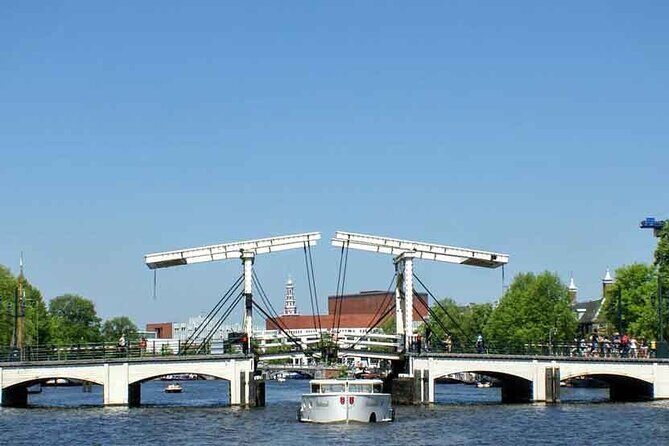
Finally in this big stretch, you get the Amstel viewpoint and its famous bridges, including the Blue Bridge and Skinny Bridge. These bridges help you see how the city’s waterways turn into everyday public space.
You then end up in Jodenbuurt (also called Plantage), the Jewish Quarter where many Jews lived from the end of the 16th century until World War II. You’ll pass along important buildings tied to the Jewish community and also Holocaust memorials. This is a respectful, heavier area—worth treating as such.
This section is where the tour feels most “Amsterdam across time.” It goes from medieval foundations and canals to royal civic power, then to faith and hidden courtyards, and finally to modern remembrance. That’s why the route stays interesting even when it gets serious.
You can also read our reviews of more guided tours in Amsterdam




Price and value: what $540.69 buys (and what it doesn’t)
Let’s talk money in a way that helps you decide.
The price listed is $540.69 per group, for up to 4 people, for an approx. 5-hour private walking tour. That’s not a bargain-basement price, but it’s also not inflated for what you’re getting: a private guide for a full morning window, with pickup offered, plus a route that covers a lot of the city’s core “story places.”
What you’re really paying for is time and interpretation. Many visitors do Amsterdam with a guidebook and a map. You still see the spots. You just don’t get the way they connect—wooden poles, guild power, canal maintenance, why religious sites sit where they do, and what De Wallen’s history looks like when explained with care.
Now, here’s the consideration: entrance fees are not included for several major stops. From the separate-ticket list, you should budget for places like:
- Royal Palace Amsterdam (listed €10.00 per person)
- Westerkerk (€7.00 per person)
- Old Center (€13.50 per person)
- Anne Frank House (€16.00 per person)
- Nieuwe Kerk (€10.00 per person)
- Ons’ Lieve Heer op Solder (€16.50 per person)
Also, Ons’ Lieve Heer op Solder is described as the famous secret church museum. It’s only 5 minutes on the route, but it has its own ticket. That likely means you’ll want to decide ahead of time if you want it as a quick visit or whether you’d rather prioritize other ticket stops.
So the smart value question for you is: are you the type who will pay for the big sites anyway? If yes—especially Anne Frank House and the places with separate admissions—then the private guide cost starts to look more reasonable because you’re compacting planning stress and maximizing context.
If you plan to skip most paid attractions and only do free exteriors, the guide fee can feel heavier. That doesn’t make it “bad.” It just means the tour is best when you treat it as a full experience, not a “mostly free” stroll.
Guide Aleks and the small-group difference you can feel fast
The reviews highlight a clear pattern: the guide’s style is the reason people remember the tour. One name that comes up is Aleks, praised for being friendly, flexible, and fast with history and culture explanations. People also call out that he adjusts his approach for different ages and energy levels, including when families are in the group.
That matters to you because a private tour lives or dies on pacing. You don’t want someone who only recites facts. You want someone who can answer your specific question and also keep the walk moving.
In practical terms, small groups make it easier to:
- ask follow-ups without feeling rushed
- request a specific focus, like trying to see a church in the attic museum context
- adjust timing when someone needs an extra photo moment
If you care about getting your bearings and leaving with a mental map, this kind of guiding style tends to deliver.
Should you book this 5-hour Golden Age private walk?
Book it if you want a first-trip structure and you like history explained in plain terms while you’re walking. This tour is especially good if you want both the big names (Dam Square, Royal Palace area, Anne Frank House zone) and the small, detailed meaning moments (wooden poles, canal purpose, the smallest house, Begijnhof courtyards).
Skip—or at least rethink—if you already have a tight schedule and only want free sights. With several separate-ticket stops, you’ll need to budget and plan. Also, if you’re not interested in topics like De Wallen’s context or Holocaust remembrance in Jodenbuurt, you might prefer a more narrow theme tour.
My take: for a group of up to four, this is one of the better ways to get Amsterdam’s story without feeling lost. The route covers a lot of ground, but it’s not random. It’s meant to connect places into a usable understanding.
FAQ
How long is the tour?
It runs for about 5 hours.
What’s the group size limit?
The group maximum is 4 people.
Where does the tour start?
It starts at Amsterdam Centraal railway station, Stationsplein, 1012 AB Amsterdam.
Do they offer pickup?
Yes, pickup is offered.
Are entrance fees included?
Tour guide services are included, but entrance fees are not included for several stops listed with separate prices.
Which major attraction needs tickets booked far in advance?
Anne Frank House tickets must be booked online and at least 6 weeks in advance.
What places are listed with separate entrance tickets?
Royal Palace Amsterdam, Westerkerk, Old Center, Anne Frank House, Nieuwe Kerk, and Ons’ Lieve Heer op Solder all have separate listed entrance fees.
What’s the scheduled day/time shown?
The opening hours shown are Monday from 11:00 AM to 5:00 PM.
Can I cancel for a full refund?
Yes. You can cancel up to 24 hours in advance for a full refund. If you cancel less than 24 hours before, the amount paid is not refunded.