REVIEW · AMSTERDAM
Private Workshop for Wooden Shoe Making in Simonehoeve
Book on Viator →Operated by Simonehoeve Cheesefarm and Woodenshoes factory · Bookable on Viator
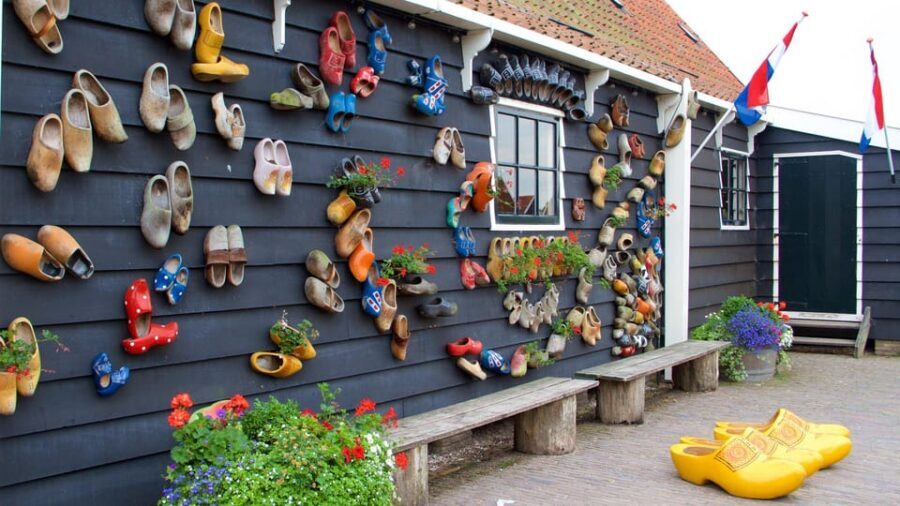
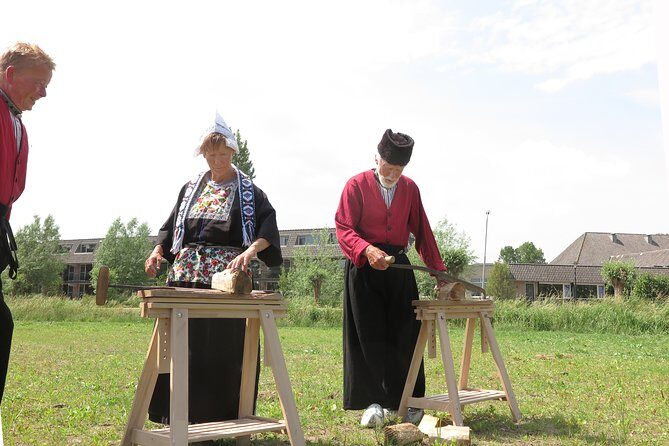
Wooden shoe making feels oddly satisfying. At Simonehoeve, you get a private clog workshop tied to a working cheese and wooden-shoe facility in Katwoude, near Amsterdam. You’ll watch how clogs are shaped both by hand and with machines, then get your own block of wood to work on.
Two things I really like: the hands-on time with real tools (not just watching), and the fact that the workshop is paired with an actual cheese farm tour and tastings. You’re basically buying into two Dutch traditions at once, in just about 2 hours.
One consideration: this is physical and time is tight. Even with the included semi-finished shoe parts and the option to paint a beer opener, plan for the possibility that you won’t finish a fully polished clog to your exact standards.
In This Review
- Key things to know before you go
- Entering Simonehoeve: a working farm, not a showroom
- How the 90 minutes of clog making actually works
- Traditional tools, plus a realistic pace
- Engraving time and the beer opener lifesaver
- Cheese-farm tour with tastings: where the value gets “real”
- Price and what you’re really paying for ($84.58 per person)
- Timing, start times, and how to plan your Amsterdam day
- Who this workshop suits (and who might not love it)
- Should you book Simonehoeve’s wooden shoe workshop?
- FAQ
- How long is the private wooden shoe workshop and cheese farm tour?
- Is this a private tour?
- What’s the meeting point for Simonehoeve?
- What’s included in the price?
- Do I need to arrange transport to the farm?
- Is there an age limit?
Key things to know before you go
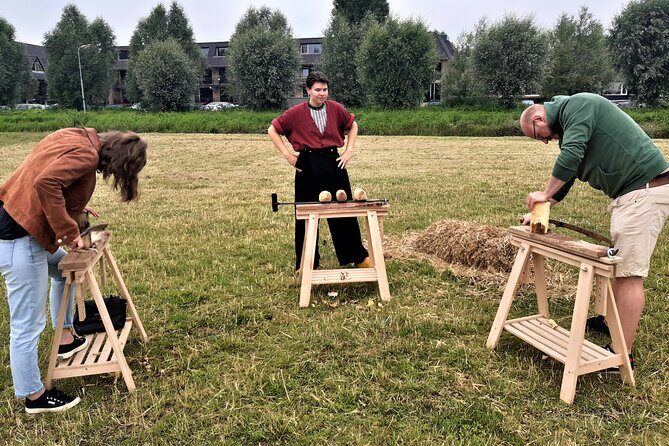
- Private instruction in a small workshop setting means you get more attention than a big group class.
- Hand + machine demonstrations help you understand how clogs go from block to wearable shape.
- One block of wood per person (from 4 people) keeps everyone actively working.
- Beer opener painting is built in to manage the physically demanding parts of clog making.
- Cheese farm tastings extend the value with cheese, Dutch biscuits, and fruit wine.
- 2-hour total time is great if you’re short on time, but it can limit how far your clog project goes.
Entering Simonehoeve: a working farm, not a showroom
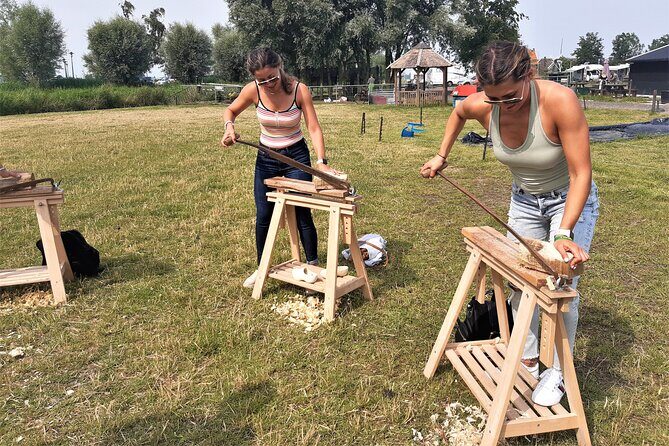
Simonehoeve isn’t set up like a museum. You’re stepping into a working cheese-farm and wooden-shoe factory environment, where the clog-making is tied to everyday production. The result is that the whole experience feels more practical than performative.
The meeting point is Simonehoeve, Wagenweg 2, 1145 PW Katwoude, Netherlands, and the tour ends back there. It’s also close to public transportation, so you don’t have to build your whole day around a car. If you’re planning your Amsterdam day, keep in mind that this spot is slightly outside the city, so you’ll want to start your schedule with travel time in mind.
What I appreciate most is that the workshop and farm tour are clearly connected. You’re not just learning the craft in isolation—you’re seeing how it fits into a wider local industry that includes cheese making.
You can also read our reviews of more private tours in Amsterdam

How the 90 minutes of clog making actually works
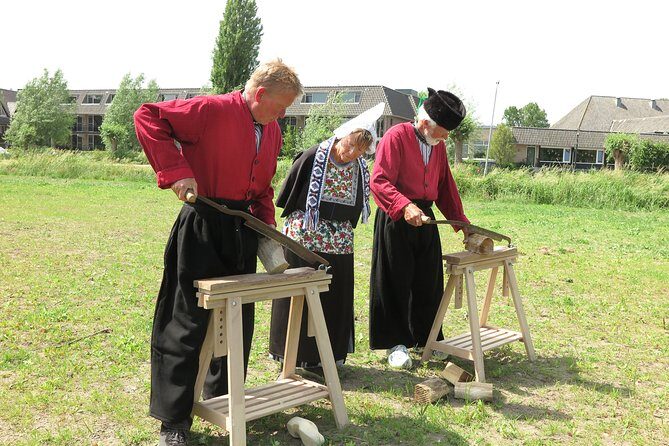
The total experience runs about 2 hours, with around 1.5 hours focused on making and engraving clogs. Expect a joint explanation and demonstration first: you’ll see how clogs are made both manually and with the help of equipment.
Then comes the part you’ll care about most: you’ll get the opportunity to make a wooden shoe from a block of wood, and the workshop is set up for small groups (from 4 people). This matters because it keeps the pace realistic. You’re not waiting around for long stretches while someone else gets their turn.
Here’s the rhythm you should expect:
- The instructor shows key steps and shares techniques you’ll later use on your own piece.
- You start shaping the wood toward a clog form.
- You also get to engrave as part of the process, so your clog doesn’t just look handmade—it also carries personal detail.
There’s also the included semi-finished handmade wooden shoe element. Translation: you’re not starting from zero. This helps you get a souvenir you’ll be happy to take home, instead of spending the entire session only carving rough shapes.
Traditional tools, plus a realistic pace
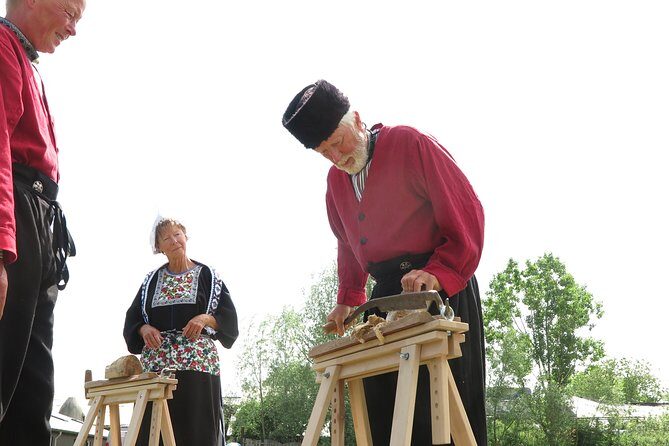
Clog making uses sharp tools and real muscle. Even if you’ve never held a chisel before, you’ll likely feel the difference quickly. The workshop is listed as physically demanding, with a moderate physical fitness level recommended. There’s also a minimum age of 16, because you’ll be handling sharp equipment.
So while this is hands-on, it’s also guided hands-on. The instructor is there to show you what matters and help you avoid common mistakes—like rushing the shaping steps and ending up with a clog that’s off balance.
One more practical point: this workshop includes both manual and machine processes in the explanation. That’s useful because you can understand what parts are easiest by hand and what parts are faster (or more consistent) using equipment. It’s a good way to learn the craft mindset, not just copy a single step.
Engraving time and the beer opener lifesaver
There’s a built-in twist that I think is smarter than it sounds. Because clog making is physically demanding, the workshop includes painting a blank wooden beer opener. You can certainly choose to keep working and finish your own wooden shoe too.
In other words, the beer opener isn’t just a throwaway craft. It’s your backup plan for taking something home even if your clog project runs behind schedule.
A real example of how this plays out: one participant found the clog-making portion interesting but too long to fully finish within the allotted time. They ended up switching halfway to painting the clog-shaped bottle opener, so at least they left with a finished souvenir even though the clog itself wasn’t done to their satisfaction.
If you care about maximizing what you take home, use that logic: start strong on the clog, but don’t be stubborn if you feel you’re falling behind. Painting the beer opener is part of the program for a reason.
Cheese-farm tour with tastings: where the value gets “real”
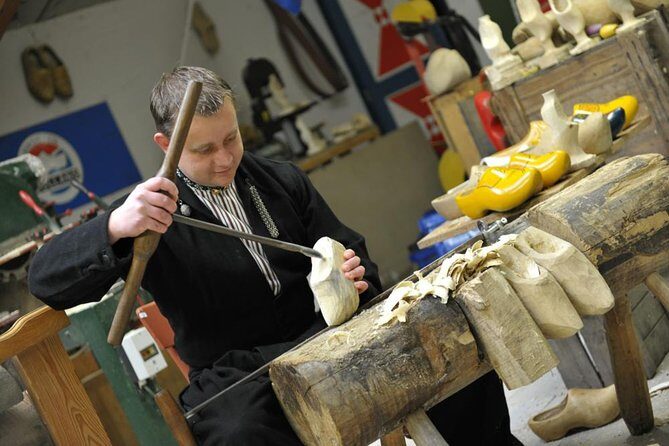
After the workshop, you’ll tour the cheese farm as part of the same experience. This is where the time feels like it’s paying off—because you’re not just leaving with an object. You’re leaving with flavors and context.
The tasting includes:
- tastings of all types of cheese
- Dutch biscuits
- fruit wine
That combination is a classic Dutch tasting setup: salty and creamy cheeses, crunchy biscuits to keep your palate clear, and a fruit wine to round things out. It also helps you slow down after the physical work. Your body gets a break, and your brain gets to enjoy the cultural side of the farm.
If you want more to eat or drink, you can purchase food and drinks in the restaurant on site. That’s handy if your workshop schedule is early or if you know you’ll want a second snack after your tasting flight.
You can also read our reviews of more tours and experiences in Amsterdam



Price and what you’re really paying for ($84.58 per person)
At $84.58 per person, this isn’t a cheap activity. But for the amount of instruction and the “two-for-one” structure, it can be good value—especially if you’re the type who learns best by doing.
Here’s what that price covers:
- Use of equipment
- Tour through the cheese and clog farm
- a semi-finished handmade wooden shoe
- a blank wooden beer opener you can paint
And that’s before you consider the time and effort involved. You’re paying for a guided workshop with hands-on work, plus the farm tour and tasting lineup. Transport is not included, so that’s the main “extra” cost to factor in, depending on how you’re getting there from Amsterdam.
Also, since this is private and small-group oriented, it’s more than a standard entry ticket. The listing notes that the average booking happens about 22 days in advance, which hints this is popular—especially for people combining Amsterdam with day trips to nearby countryside.
My practical advice: if you’re deciding between a longer workshop elsewhere and this short format, choose this one if you want something intense but time-friendly. Pick a longer class only if finishing a clog to the last detail is your top priority.
Timing, start times, and how to plan your Amsterdam day
The session runs about 2 hours total, and you can choose from multiple start times. That flexibility is useful when Amsterdam has a “must-do” morning, a museum plan, or a boat ride you don’t want to miss.
Because the workshop includes sharp tools and engraving, you’ll do best if you show up with clear energy. Don’t schedule this right after a late night. You’ll want time to stretch afterward, and the cheese tour is more enjoyable when you’re not rushing.
Here’s how I’d build your day:
- Arrive a bit early so you’re settled before tools come out.
- Treat the clog-making as the main event; everything else should be lighter afterward.
- Keep a low-key dinner or snack option after the farm tastings, even if you plan to buy food on site.
Who this workshop suits (and who might not love it)
This is a strong match if you want:
- a hands-on souvenir with a clear link to Dutch craft
- a short activity you can fit into a day trip schedule
- a mix of craft + food (cheese, biscuits, and fruit wine)
It’s also well suited for couples or small groups, because it’s listed as private, meaning only your group participates. That tends to make the whole experience feel less rushed and more personal.
You might think twice if:
- you expect to fully finish and refine a clog like it’s a multi-day project
- you’re sensitive to physically demanding activities or working around sharp tools
- you’re hoping for a purely relaxing, low-effort souvenir
For anyone who’s worried about finishing a clog, the included beer opener painting is your safety net.
Should you book Simonehoeve’s wooden shoe workshop?
Book it if you want a genuinely practical Dutch experience with real tools, quick progress, and a satisfying payoff. The strongest reason to go is the combination: clog-making instruction plus a cheese farm tour and tastings in one tight schedule.
Skip it—or choose a different format—if your top goal is to take home a clog you personally finished end-to-end with zero compromise. The time is short, and the workshop is physically demanding. In that case, the beer opener option becomes especially important, and you may want to be mentally prepared that your clog may be “finished enough” rather than museum-perfect.
FAQ
How long is the private wooden shoe workshop and cheese farm tour?
The experience lasts about 2 hours total. About 1.5 hours is spent making and engraving clogs, followed by the cheese farm tour and tastings.
Is this a private tour?
Yes. It’s listed as private, so only your group participates.
What’s the meeting point for Simonehoeve?
You meet at Simonehoeve, Wagenweg 2, 1145 PW Katwoude, Netherlands, and the tour ends back at the same meeting point.
What’s included in the price?
The price includes use of equipment, a tour through the cheese and clog farm, a semi-finished handmade wooden shoe, and a blank wooden beer opener that you can paint.
Do I need to arrange transport to the farm?
Transport is not included. You’ll need to get yourself to Simonehoeve at the meeting point.
Is there an age limit?
Yes. The minimum age is 16 due to handling sharp equipment.