REVIEW · THE HAGUE
The Hague Walking Tour
Book on GetYourGuide →Operated by HTG Services · Bookable on GetYourGuide
The Hague’s big moments fit on foot. This private walking tour strings together the city’s key sights through a local, expert perspective, from the Dutch government district to the royal offices and the Peace Palace. I like how the route stays relaxed and readable, with enough time to connect stories to the buildings you’re actually seeing.
I especially like two things: the chance to understand how places like the parliament area and the royal palace sit inside The Hague’s older past, and the Peace Palace stop, where you get an audio guide focused on international justice and Carnegie’s role. One drawback to think about is that, depending on pacing, you may spend less time with the guide than you expected by the time you reach the visitor center, since the Peace Palace portion includes an audio experience.
In This Review
- Key highlights to expect
- The Hague in one walk: where government, royalty, and modern design meet
- Getting started: hotel pickup versus Den Haag Centraal meeting point
- Parliament buildings and the Counts of Holland hunting story
- Royal offices and a chance to see the King and Queen at work
- Shopping streets plus modern architecture: tram tunnel and City Hall
- Peace Palace visitor center: Carnegie and international justice by audio
- How much walking you’re really doing (and what to wear)
- Private guide value: why $164 can make sense
- Who should book this tour (and who might want a different plan)
- Should you book The Hague Walking Tour?
- FAQ
- How long is the The Hague Walking Tour?
- Where does the tour start?
- How much walking is involved?
- Is the Peace Palace visitor experience included?
- Is this tour private?
- What languages are available?
- What’s included in the price, and what is not?
Key highlights to expect
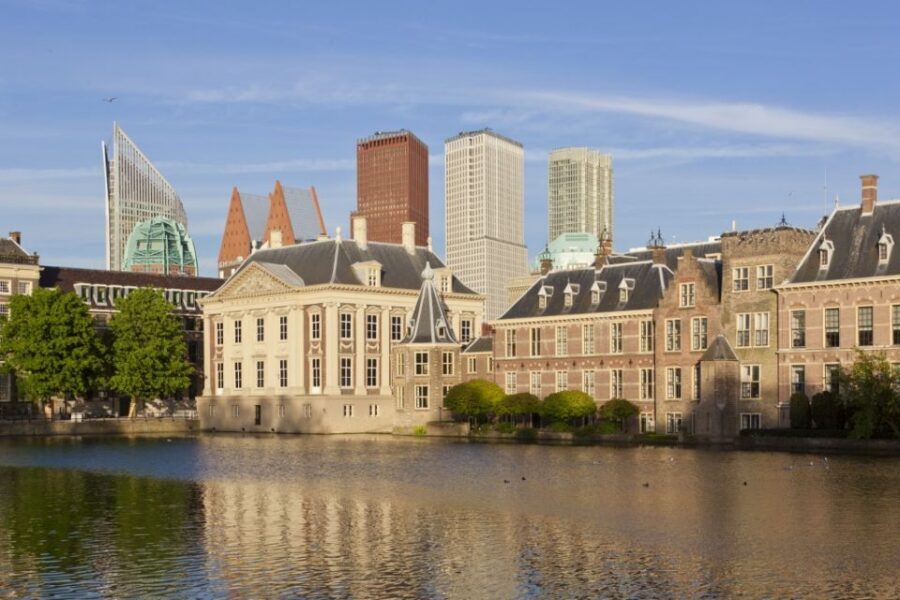
- Parliament buildings on an old hunting ground site tied to the Counts of Holland
- Royal-area street level views with a chance to glimpse the King and Queen at work
- Modern contrasts like the underground tramway tunnel and City Hall
- Small-area walking that makes the highlights feel connected, not scattered
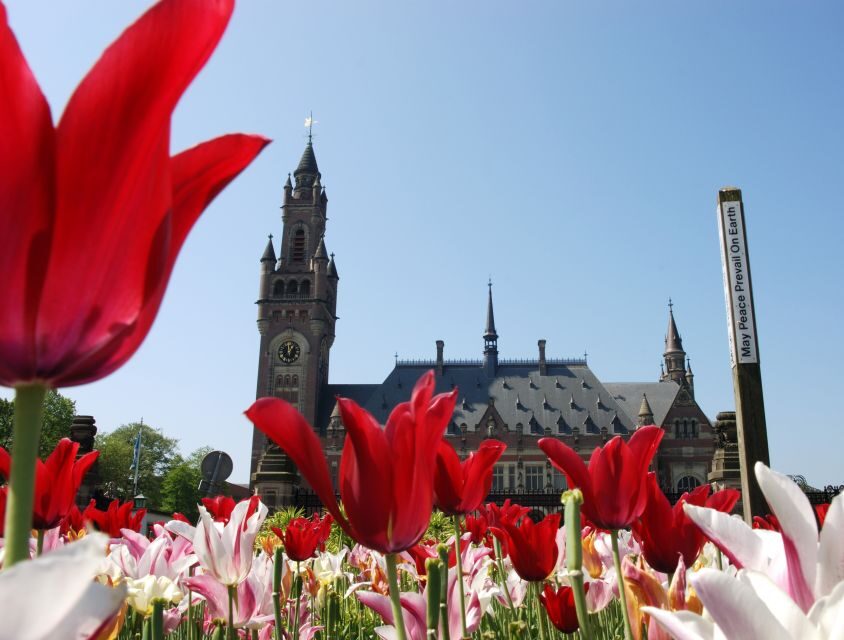
- Peace Palace visitor experience with an audio guide on international justice and Carnegie
The Hague in one walk: where government, royalty, and modern design meet
The Hague can feel like a travel trick question. People often assume it’s the capital because it hosts the Dutch parliament, the International Court of Justice, and plenty of embassies. Then you step outside and realize it’s more interesting than that label. The city mixes the formal and the everyday: stately buildings, official-looking streets, and shopping streets close together.
What makes this walking tour work is that it treats those contrasts as the point. You’re not just checking boxes. You’re moving through the city at a pace that helps you notice layers—older ground rules, royal presence, and newer, daring design.
You’ll also appreciate the private format. A local guide can answer your questions in real time, and you can steer what you pay attention to—history details, architecture, or how the city functions day to day.
You can also read our reviews of more walking tours in The Hague

Getting started: hotel pickup versus Den Haag Centraal meeting point
You start either from your hotel in downtown The Hague or at the train station if you’re arriving from elsewhere. If you’re meeting the guide at the station, it’s by the Cloud Lamp at Den Haag Centraal, with the guide holding a sign with your name.
This matters more than it sounds. If you’re new to town, meeting at the central station keeps you from wasting time figuring out transit or street orientation. If you’re staying downtown, hotel pickup reduces friction and helps you start the walk in a calm, settled way.
The tour is about 3 hours, so you’ll want to arrive with comfortable shoes already on. The start time can vary based on availability, but the overall experience stays the same: a focused loop through The Hague’s most recognizable highlights.
Parliament buildings and the Counts of Holland hunting story
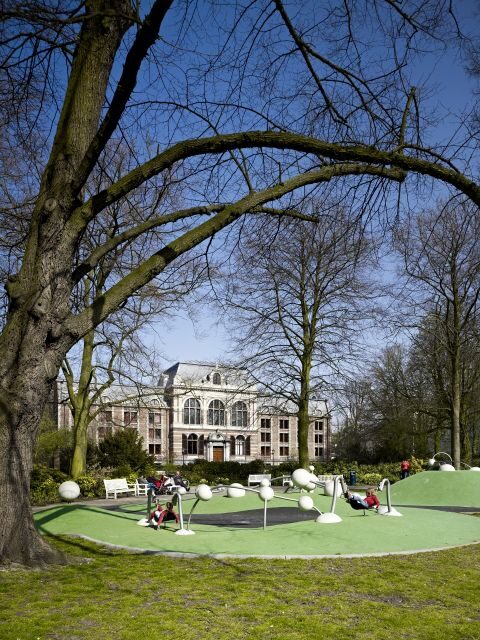
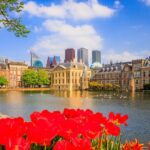
One of the first places you’ll visit is the parliament area. The buildings are constructed on land that used to be the hunting area for the Counts of Holland. That single detail helps you read the modern scene differently.
Instead of seeing a government district as just a set of official-looking facades, you get a sense of continuity. The ground has a story, even if the architecture changes over time. That’s the kind of context a good local guide brings—small facts that make you look twice at what you’re already seeing.
A practical note: in this part of The Hague, you’re in the thick of civic architecture and official surroundings. You’ll likely want to keep your pace steady and your questions ready, because this is where the guide’s explanations connect closest to the visible design choices.
Royal offices and a chance to see the King and Queen at work
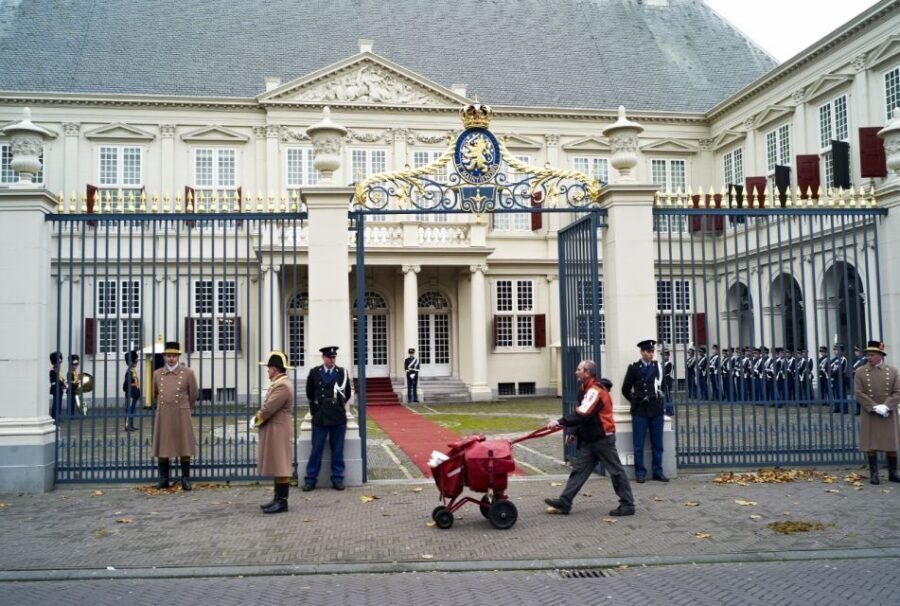
The old town area in The Hague is where the royal presence shows up. The tour includes stops around the King’s Palace, and there’s a chance you may catch a glimpse of the Dutch King and Queen at work.
Let’s keep expectations realistic: a glimpse is never guaranteed. But having it framed as a possibility changes how you observe. You’ll likely notice official entrances, the way the area feels structured, and how The Hague balances everyday street life with government and royalty.
I like this kind of stop because it’s not just about monuments. It’s about atmosphere—how power and ceremony show up in ordinary street views. If you enjoy meeting architecture on its own terms, this portion is a strong reason to pick a guided walk rather than wandering solo.
Shopping streets plus modern architecture: tram tunnel and City Hall
After the heavier, official sites, the tour keeps moving through busy shopping streets. That change of scenery is useful. You get a break from the formality and you see how the city actually breathes—pedestrians, storefront rhythm, and the everyday side of The Hague.
Then comes the modern contrast. You’ll pass by standout, more daring architecture highlights, including the underground tramway tunnel and City Hall. This is where you feel the city’s identity as more than just governance and history.
Here’s what I think makes these modern stops valuable: they stop you from treating The Hague like a museum. The underground tramway tunnel is a reminder that public life and infrastructure sit right alongside prestigious buildings. And City Hall reinforces that civic design can be both functional and visually bold.
If your travel style is architecture-forward, this segment is one of the best uses of a walking format. You can’t appreciate transitions from street to tunnel to public building as well from a bus window.





Peace Palace visitor center: Carnegie and international justice by audio
The tour finishes at the Peace Palace, at the visitor center. You’ll get an audio guide to help you understand what you’re seeing—especially the laws of international justice and the role Carnegie played in developing this building.
This ending is smart for two reasons. First, the subject matter—international justice—doesn’t always click through photos. Second, the audio guide format gives you control. You can slow down when something feels important, and you can move on when you’re ready.
The Peace Palace area is also a natural “wrap-up moment.” After walking through Dutch civic and royal life, you end in a place that focuses on how nations handle justice. It creates a theme arc without needing long speeches.
One consideration: if you were expecting the guide to remain with you for every minute at the visitor center, plan for the fact that the Peace Palace portion uses an audio format. That worked well for many people, but one reviewer felt they didn’t get enough guided time before the audio handoff. If this matters to you, it’s worth asking the guide early in the walk how the Peace Palace timing will work so you can judge whether the guided portion meets your expectations.
How much walking you’re really doing (and what to wear)
You’re looking at about 5 kilometers (around 3 miles) total walking. That’s not extreme, but it’s also not “casual stroll” distance if you’re visiting on a busy day or carrying heavy bags.
The tour advice is straightforward: wear comfortable shoes and avoid bringing anything heavy. I agree with that. The Hague’s sidewalks are mostly manageable, but the charm of walking tours is also their demand—your feet do the work and your eyes catch the details.
If you have mobility limits, you’ll want to consider whether 3 miles of walking is comfortable for you, because the stops are close enough for walking but still enough ground to matter.
Private guide value: why $164 can make sense
At $164 per person for a private tour lasting about 3 hours, you’re paying for three big things: local guiding, private group time, and the Peace Palace visitor center component.
The value improves when you care about context. A guided walk can turn a city’s highlights into a story you understand, not just pictures you collect. And private format matters because it gives you flexibility. If you want to ask individual questions, slow down at a detail, or focus on the kind of architecture you enjoy, you’re not competing with a larger group’s pace.
The tour also works well if you’ll benefit from multilingual support. The guide is available in English, German, Dutch, French, and Spanish, so you’re less likely to lose nuance if your language comfort matters.
One more value factor: hotel pickup from downtown The Hague helps you avoid the “where do we meet” stress that often drains time from short tours. You’re starting the experience faster, which is part of what makes a 3-hour tour feel worth it.
Who should book this tour (and who might want a different plan)
This tour is a great match if you:
- Want a guided city narrative instead of a random sightseeing route
- Like architecture and city planning, especially when older and modern designs are shown side by side
- Prefer asking questions and getting answers tailored to your interests (this format tends to reward that)
- Want a structured way to see the key civic and royal highlights without rushing
It may be less ideal if you:
- Expect the guide to stay with you for the full visitor center experience at Peace Palace (audio guidance is part of the plan)
- Need very long seated time during the tour, since it’s fundamentally a walking route
One practical tip from the guide style this tour seems to favor: come with at least a couple of interests. Some people want more history. Others care about specific kinds of buildings. When a guide can follow your questions, the walk feels personal instead of generic.
Should you book The Hague Walking Tour?
I’d book it if you want The Hague’s highlights in a manageable, connected route, with explanations that turn monuments into meaning. The combination of civic sites, royal-area atmosphere, modern architecture, and a Peace Palace finish with audio makes it an efficient, high-return use of a half-day.
I’d think twice if you’re the type who needs lots of guided time inside museums or visitor centers. Since the Peace Palace portion includes an audio guide, you’ll get context that way, but you may not get the same level of live narration minute by minute.
If your goal is to get your bearings fast and still come away with real stories, this private walk is a strong choice.
FAQ
How long is the The Hague Walking Tour?
The tour lasts about 3 hours.
Where does the tour start?
If you’re not using hotel pickup, you meet by the Cloud Lamp at Den Haag Centraal. The guide holds a sign with your name.
How much walking is involved?
Expect about 5 kilometers, or roughly 3 miles.
Is the Peace Palace visitor experience included?
Yes. The Visitor Center Peace Hall is included, and you’ll have an audio guide there.
Is this tour private?
Yes, it’s a private group tour.
What languages are available?
English, German, Dutch, French, and Spanish.
What’s included in the price, and what is not?
Included: hotel pickup from downtown The Hague, a private tour in your chosen language, and the Visitor Center Peace Hall. Not included: food and drinks, and gratuity.