REVIEW · AMSTERDAM
Small-Group Women’s History Tour in Amsterdam
Book on Viator →Operated by Badass Tours · Bookable on Viator
Women’s history hits different in Amsterdam.
This 2-hour walk turns the city into a storybook, focused on the women who shaped Amsterdam in many ways, not just the usual repeat themes. You’ll hear how women changed culture, influenced society at high levels, and pushed back against earthly and spiritual power. The guide is a trained storyteller, and the whole thing feels like you’re being handed a different map of the same streets.
I like two things right away: the small group size (up to 12) keeps the pace human, and the storytelling approach makes the past feel close instead of academic. I also love that the tour isn’t only about Dutch feminists or work life. It zooms out and shows a wider range of women’s roles over time.
One thing to consider is that this is a good-weather walking tour. If the weather’s lousy, you’ll want a Plan B mindset.
In This Review
- Key highlights before you go
- A 2-hour women’s-history story-walk that starts with Centraal Station
- Beurs van Berlage: finance meets female power
- Dam Square: hustle, cameras, and a tasteful scandal
- Beurspoortje: motorcycles, early gay nightlife, and resisting fear
- Nes: the theater district and a headline-grabbing money story
- The equestrian statue of Queen Wilhelmina: authority you can see
- Rokin: Amsterdam’s main waterway and the Women’s Riot
- Begijnhof finale: a quiet women’s enclave if the doors are open
- Price and value: what $47.47 buys you
- Who this tour suits best
- Should you book it?
- FAQ
- How long is the Small-Group Women’s History Tour in Amsterdam?
- How much does the tour cost?
- What’s included in the tour?
- How many people are in the group?
- Where do I meet the tour, and where does it end?
- Do I need a printed ticket?
- Is confirmation immediate after booking?
- What happens if the weather is bad?
- Can I get a refund if I change my plans?
- Is the tour near public transportation, and are service animals allowed?
Key highlights before you go
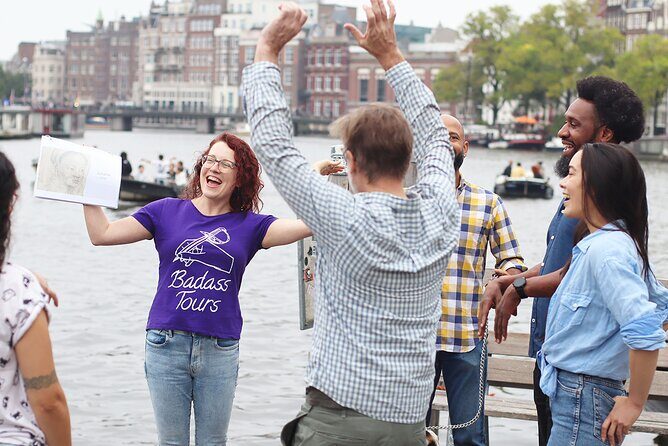
- Up to 12 people means you can actually hear the stories without fighting for space.
- Mobile ticket keeps things simple on the day.
- A story-first route across Amsterdam’s historic center, with stops that match the theme.
- Bold, sometimes spicy (but tasteful) anecdotes that make you remember what you hear.
- Women at the power points, from finance-related settings to royal symbolism.
- A finale at Begijnhof that can feel like you stepped into a quieter world.
A 2-hour women’s-history story-walk that starts with Centraal Station

You’ll begin near Prins Hendrikkade 48, close to where you can get your bearings fast. The tour kicks off across the old harbor from Amsterdam Centraal Station, and that first stretch matters. Starting here frames Amsterdam as a trading city and a city of movement—then the stories shift from big geography to big human choices.
This is a smart way to start if it’s your first day in town. You get orientation while the guide sets expectations: this isn’t a generic history tour that makes women look like side characters. The point is variety—women who challenged systems, shaped culture, and lived out their goals despite resistance.
Even at this early stage, it helps that the tour is led by someone who’s both an Amsterdam-history fan and a trained storyteller. You’re not just collecting dates; you’re collecting context.
You can also read our reviews of more historical tours in Amsterdam



Beurs van Berlage: finance meets female power
Next you’ll stop at Beurs van Berlage, a place tied to the city’s stock exchange world—past and present. Here, the tour introduces two female fighters whose stories respond to the stock exchanges, the old and the new (with the older one now used as an event hall).
Why this works: you’re standing in the physical setting where money, influence, and public life collide. Amsterdam’s financial identity isn’t just background color in this tour. It’s part of the plot—how people with power (and people pushing against power) maneuver in real time.
A potential drawback: Beurs van Berlage is one of the stops where you’ll want to keep your attention on the guide. The building’s significance is easy to see, but the story’s details are what turn it from architecture into meaning.
Dam Square: hustle, cameras, and a tasteful scandal
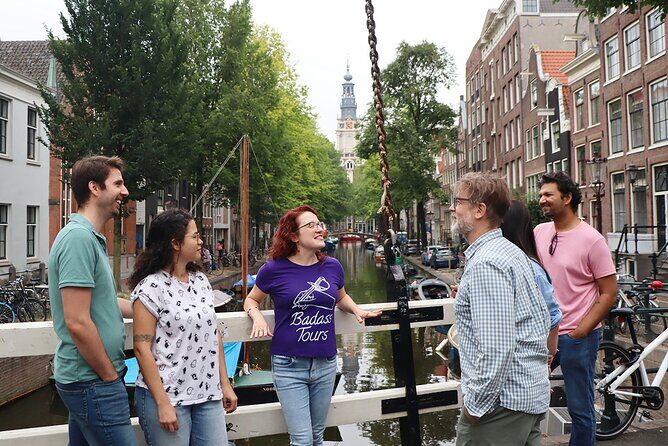
At Dam Square, the guide leans into one of the more “salacious” stories in the lineup—described as salacious but tasteful. You get the visual energy of the square while hearing a story from Amsterdam’s past that doesn’t treat women’s lives like something sanitized.
This stop is valuable for two reasons. First, it’s a reminder that history isn’t only polite. Second, it shows how public spaces can become stages for private ambition, pressure, and risk. You’ll likely hear the story in a way that connects to the city’s crowd-and-control dynamics.
Practical tip: the square can be busy, so be ready to pause and listen without trying to multitask. This is one of those “listen with your whole face” moments.
Beurspoortje: motorcycles, early gay nightlife, and resisting fear
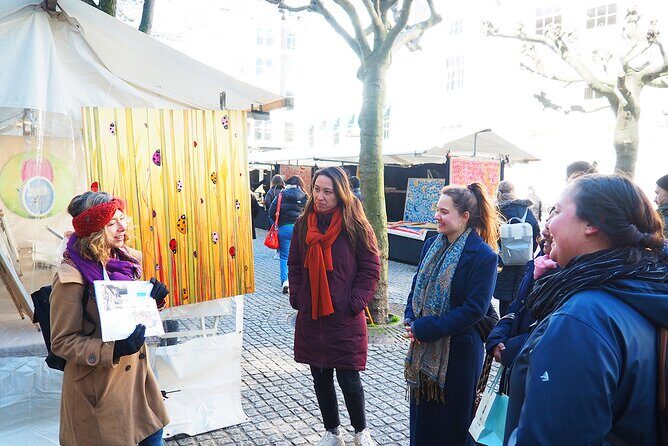
Near Beurspoortje, the tour takes you through sites where one of the guide’s favorite “badasses” comes to the spotlight. The story includes motorcycles, Amsterdam’s first modern gay bar, and a detail about drinking Nazis under the table.
That last part lands in the memory for a reason. It’s not there for shock value. It’s there to show nerve—how people kept living and joking and plotting even when the stakes were brutal. And it expands the tour beyond the idea that women’s history is only activism in the straightforward sense.
One caution: if you’re sensitive to references to Nazis or conflict-era behavior, it’s worth knowing this stop goes there. The tone is still framed as tasteful storytelling, but the topic isn’t fluffy.
Nes: the theater district and a headline-grabbing money story
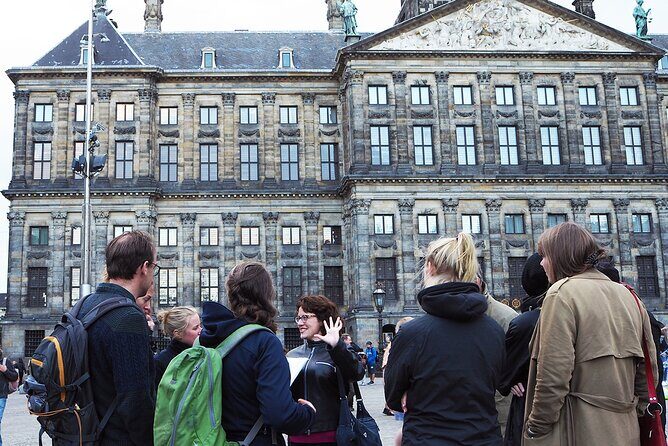
You then move to Nes, described as the hub for cutting-edge theater. That’s a smart pairing, because culture is one of the main lanes for women’s influence in this tour. Here you’ll hear about powerful women, including the first Black female millionaire in the Americas—with a helpful hint that she wasn’t in the US.
That “hint” is the point. The tour doesn’t let you assume the story must take place where you’re used to seeing it. You’ll get a clearer picture of how wealth, status, and visibility worked in Amsterdam’s world—sometimes in surprising directions.
This is also a nice pacing break: the theater area gives you a sense of Amsterdam’s modern creative identity while the guide keeps pulling the timeline backward.






The equestrian statue of Queen Wilhelmina: authority you can see
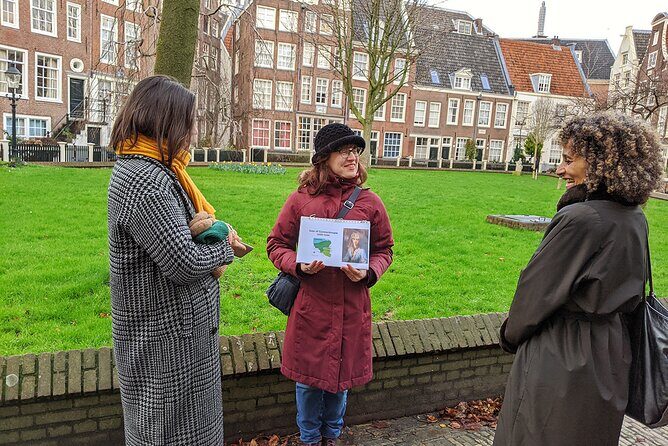
The stop at the Equestrian statue of Queen Wilhelmina is a change of mood. Instead of stories with side streets and nightlife details, you get royal symbolism made physical. The guide shares info about the Netherlands’ first Queen Regnant, which adds another layer to the theme: women’s history isn’t only about underdog resistance. Sometimes it’s about women holding top-level power.
I like this stop because it balances the emotional range of the tour. You go from street-level drama and courage to the image of a ruler looking forward—confident, composed, and impossible to ignore. It makes the theme feel bigger than one type of story.
The drawback? If you prefer action-focused stories, this part may feel more stately. But it’s still a useful counterweight.
Rokin: Amsterdam’s main waterway and the Women’s Riot

Walking along Rokin, Amsterdam’s first main waterway, the tour connects a key mythic idea—called the Miracle of Amsterdam—to a major turning point, The Women’s Riot.
This stop is where the tour earns its storytelling ambition. Waterways aren’t just pretty in Amsterdam. They’re routes for goods, people, and power. The guide uses that to explain why a “miracle” story matters and how it could feed into collective action.
What you’ll take away: women’s influence here isn’t only individual ambition. It’s also public mobilization tied to the city’s systems—food, survival, belief, and control. Even if you’ve heard the word riot before, you’ll feel the narrative logic in the way the tour frames it.
Tip: keep an eye on where you’re stepping. Rokin’s streets can be uneven, and the pace here can include a bit of walking between viewpoints.
Begijnhof finale: a quiet women’s enclave if the doors are open
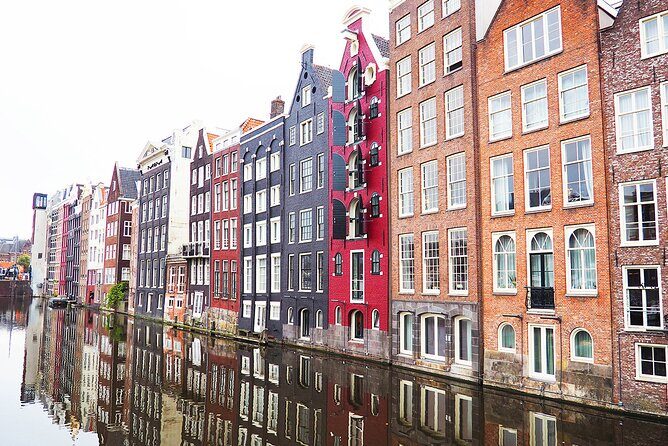
The tour ends outside the Begijnhof, and if you’re lucky it will be open for this final stop. This is the “breathe for a second” moment. You get a chance to see an idyllic women’s enclave in the heart of a noisy city.
Why this ending works: it brings the tour’s theme full circle. Earlier stops show women pushing against systems, navigating public spaces, and building cultural influence. Begijnhof gives you a different angle: a place designed around community life and women’s self-contained space.
A practical note: that final access depends on whether it’s open during your time. Even if you can’t go in, the guide can still frame what the enclave represents in Amsterdam’s story.
Price and value: what $47.47 buys you
At $47.47 per person for about 2 hours, you’re paying for three things at once: a guided story experience, a tight route through central Amsterdam, and a small-group format (up to 12). You’re not paying for museum admissions along the way either, since the stops list admission as free.
Is it a bargain? It’s not a $15 walking deal. But the value is in the focus. This tour is built around a specific theme—women’s history—with enough stops to show range, without feeling like you’re dragged across the city for hours.
If you love story-driven tours where the guide does the heavy lifting (context, connections, and pacing), this price makes sense. If you only want a quick overview of Amsterdam with minimal listening, you might decide a shorter self-guided walk fits better.
Who this tour suits best
I think this tour is a strong fit if you:
- Want a first-day Amsterdam plan that teaches you something new without feeling like homework.
- Prefer storytelling over reading placards.
- Like women’s history, but you want it to include more than one narrow lane.
- Enjoy humor and candor, including stories described as salacious but tasteful.
It might be less ideal if you:
- Want a quiet, strictly academic experience.
- Dislike walking for close to two hours with occasional crowding.
- Are not comfortable with references like Nazis (even when framed as part of a resistance story).
Should you book it?
Yes, I’d book it if you’re looking for Amsterdam that feels personal. The best part is the theme: women’s history told as variety, not a shortcut. You’ll get a route that hits major city landmarks, but the payoff is the angle—how women operated in finance-adjacent spaces, culture, public squares, and even royal symbolism.
Book it especially if you like guides who tell stories with energy and clarity, and if you want a tour that makes you look at familiar streets and suddenly see different characters moving through them.
FAQ
How long is the Small-Group Women’s History Tour in Amsterdam?
It’s about 2 hours (approx.). The route is designed as a walking tour with multiple short stops, so you’ll cover a lot of sights without it turning into an all-day commitment.
How much does the tour cost?
The price is $47.47 per person. It’s a small-group experience with a trained storyteller leading the walk.
What’s included in the tour?
You’ll get a passionate guide, described as an Amsterdam history nerd, sharing women’s history stories. The tour uses a mobile ticket, and the stops are listed as free for admission.
How many people are in the group?
The tour has a maximum of 12 travelers. That small size helps keep the experience more conversational and easier to follow.
Where do I meet the tour, and where does it end?
You start at Prins Hendrikkade 48, 1012 AC Amsterdam and the tour ends outside the Begijnhof. The end location is listed as Spui, 1012 Amsterdam.
Do I need a printed ticket?
No. The tour uses a mobile ticket, so you’ll have what you need on your phone.
Is confirmation immediate after booking?
You’ll receive confirmation at booking time unless you book within 2 days of travel. In that case, confirmation will arrive within 48 hours, subject to availability.
What happens if the weather is bad?
This experience requires good weather. If it’s canceled due to poor weather, you’ll be offered a different date or a full refund.
Can I get a refund if I change my plans?
Yes, you can cancel for free up to 24 hours in advance for a full refund. If you cancel less than 24 hours before the start time, the amount you paid will not be refunded.
Is the tour near public transportation, and are service animals allowed?
It’s near public transportation, and service animals are allowed. Most travelers can participate.