REVIEW · AMSTERDAM
Bruges Day Trip from Amsterdam
Book on Viator →Operated by Buendía · Bookable on Viator
Bruges in one day can work. This trip is built for time-crunched travelers, with guided sightseeing plus about 2 hours of free time in the UNESCO-listed Old Town. I especially like the tight route that hits major photo backdrops like Rozenhoedkaai, and the fact that you get a short chocolate tasting without turning the whole day into a food crawl. The main drawback: it’s a long day and some of the best streets are cobblestoned, so mobility can be an issue.
You leave Amsterdam early (8:30am) with an A/C coach, and you’ll hear the story as you go—on-bus and again during the walk. Depending on your group, you might be guided by professionals like Blanca, Pia, Pau, or Peter (names I’ve seen tied to this trip), and you’ll also likely use Belgium’s radio system for clearer sound when needed.
In This Review
- Key Highlights to Know Before You Go
- Price and Logistics: What You’re Really Paying For
- From AlohaDe Ruijterkade to Bruges: Early Start, Comfortable Ride
- The Morning Walk: Minnewater, Begijnhof, and Quick Stories That Stick
- Beer History, Medieval Streets, and Where to Pull Out Your Camera
- Saint John’s Hospital and the Church of Our Lady: Art and Everyday Life
- Bruges Families, Bridge Legends, and Rozenhoedkaai’s Postcard View
- Tanners Square, Burg Square, and Grote Markt: From Work to Power
- The Two-Hour Free Time: How to Spend It Without Missing the Bus
- Guide Audio, Radio Guides, and the Realities of a Group Day
- Is This Bruges Day Trip Good Value for You?
- Should You Book This Bruges Day Trip from Amsterdam?
- FAQ
- What time does this Bruges day trip start?
- Where do I meet for the tour?
- How long is the trip?
- Is the tour guided in English?
- Is there free time in Bruges?
- Are meals included in the price?
- Is the coach air-conditioned?
- Are there radio guides?
- Is this tour suitable for people with mobility issues?
- Can I cancel for a full refund?
Key Highlights to Know Before You Go
- A/C round-trip coach from Amsterdam, so you don’t spend your day commuting with train transfers
- A guided walking route that covers the major Bruges landmarks fast, not vaguely
- Photo-friendly stops at bridge viewpoints like Boniface Bridge and Rozenhoedkaai
- About two hours of free time to wander the Old Town at your own pace
- Short chocolate tasting built in, plus shopping tips around the Grote Markt
- Radio guides may be used in Belgium to improve audio, with options to use your own or request ones free
Price and Logistics: What You’re Really Paying For
At about $70.88 per person for a roughly 12-hour day, this isn’t a cheap “grab a bus and go” type of outing. You’re paying for three things that add real value: transport, a professional English-speaking guide, and a structured walking tour once you arrive.
The long-drive cost is baked in: Bruges is close enough for a day trip, but far enough that doing it independently still means planning. Here, you also get set moments of guidance and interpretation, plus the practical upside of being handled end-to-end—bus out, guided route in Bruges, then bus back.
One word of caution for expectations: this is not a slow, sit-and-stare Bruges marathon. It’s a well-packed day with short stops. If you want to linger at every corner, you’ll feel time limits. Use the free time window as your “slow travel” slot.
You can also read our reviews of more tours and experiences in Amsterdam
From AlohaDe Ruijterkade to Bruges: Early Start, Comfortable Ride
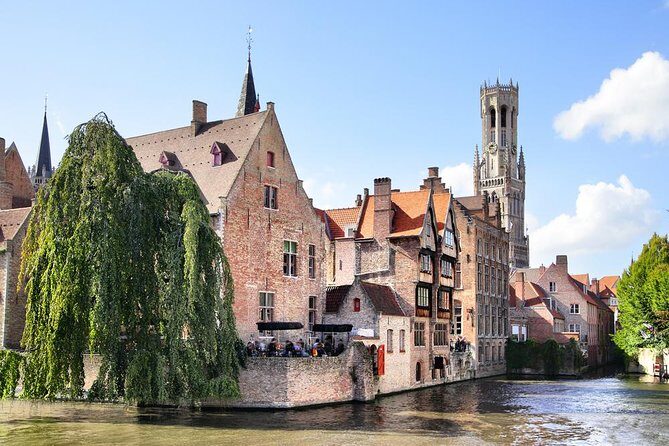
The trip meets at AlohaDe Ruijterkade 151, 1011 AC Amsterdam, and departures begin at 8:30am. You’ll want to arrive a few minutes early because you’re joining a group departure, not a flexible “show up whenever” situation.
The coach is round-trip with A/C, which matters on a long travel day. You also get an organized rhythm: you’ll hear information and then you’ll roll into Bruges without the stress of navigating from station to city center.
Timing is the real deal here. You’ll be in Bruges for a guided portion plus about 2 hours of free time, but that free time depends on traffic and the group pace. Plan your mindset accordingly: this is a “see a lot” day, then decompress.
And because this is a group tour, there’s a practical limit—up to 45 travelers. That’s large enough to feel social, small enough that you’re not in total chaos if instructions are clear.
The Morning Walk: Minnewater, Begijnhof, and Quick Stories That Stick
Once you arrive, your walk starts with a set of landmark stops designed to build Bruges context fast. The first one is Minnewater Lake, often called the Lake of Love. Even with limited time, it’s a great orientation point. You’ll get background on Bruges and a romance story tied to the lake, which is exactly the kind of detail that turns a pretty view into a real place.
Next is the Begijnhof, founded in 1245. This is one of those stops that can’t be reduced to a photo. You’ll hear about the women’s community history, which helps you understand why this space feels quiet and self-contained compared with the louder streets around it.
These early stops are short—think minutes, not long visits. The tradeoff is speed. The advantage is momentum. By the time you hit the bigger city-center sights, you already know what you’re looking at and why it matters.
Beer History, Medieval Streets, and Where to Pull Out Your Camera
After the quieter courtyards, you shift into Bruges street-town mode. One stop is Walplein, where your guide talks about Bruges beer history. It’s a reminder that this city wasn’t only about churches and canals—trade and brewing shaped daily life too.
Then you move to Stoofstraat, a street where the guide explains how to spot original medieval houses. This is useful in a practical way. Once you know the cues, you can look at façades while you walk and feel like you’re reading the city instead of just passing it.
There’s also a planned chance for beautiful photos from a little bridge—not a vague “look around.” The route includes other set photo moments later, but this early one helps you start strong before you’re deep in cobblestone navigation.
If you’re traveling with a camera-heavy plan, you’ll be happiest if you treat the stop times like “photo opportunities,” not “spend an hour here” invitations.
Saint John’s Hospital and the Church of Our Lady: Art and Everyday Life

Two of the most meaningful stops are Saint John’s Hospital and the Church of Our Lady (Onze-Lieve-Vrouwekerk).
In front of Old St. John’s Hospital, the guide explains how healthcare worked in medieval Bruges. That’s a different angle from the usual “royal and religious” focus. It connects daily survival to the institutions you see in front of you.
Then you’ll stand outside the Church of Our Lady while the guide shares curiosities tied to the white marble Madonna and Child sculpture created by Michelangelo inside the church. Even from the outside, this setup helps you know what to look for later if you choose to return or go in during free time.
A quick reality check: these stops are brief. You’re getting the story, not a slow museum visit. But the payoff is that the city’s biggest sights start to feel connected rather than random.

Bruges Families, Bridge Legends, and Rozenhoedkaai’s Postcard View
Next up is Gruuthusemuseum, where you’ll learn about one of the most famous and powerful Bruges families from the 17th to 18th centuries. Family power is one of those themes that makes Bruges’ architecture and wealth feel logical. You start seeing the city as a map of influence.
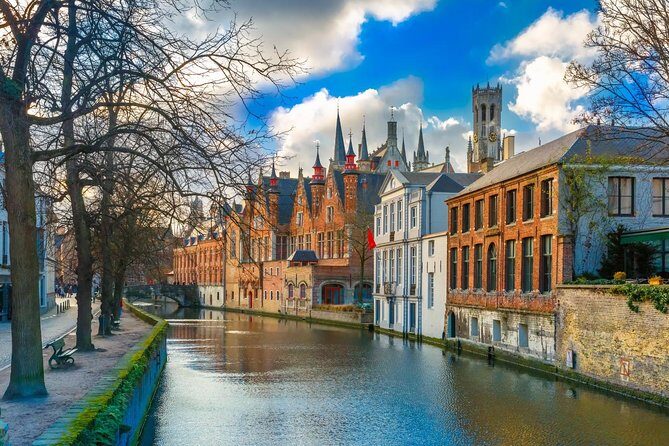
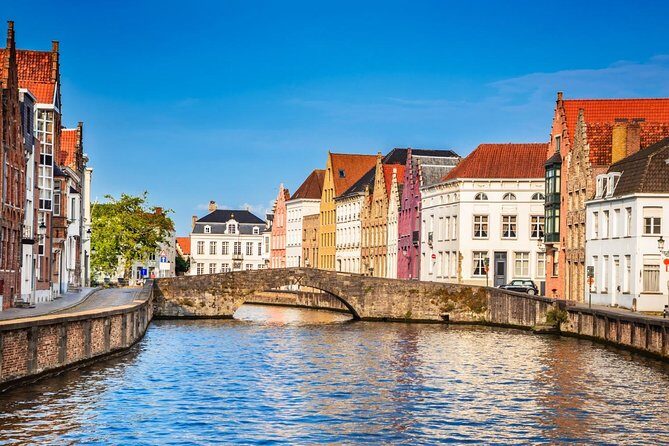
Then come the bridges and riverside icons. Your route includes Boniface Bridge, where you’ll hear a legend and get time for photos. After that, you reach Quai du Rosaire / Rozenhoedkaai, the most photographed part of Bruges. This is where you should expect that classic canal image to match the hype.
These stops are short, but they’re timed for maximum visual impact. If you’re the type who wants one perfect photo, target these bridge and quay moments rather than trying to get your best shot everywhere.
Also, remember: cobblestones can be uneven. Even if you’re walking fine, go slower than you think you need to. It’s not about difficulty; it’s about not tripping while juggling a camera, a drink, and your place in the group.
Tanners Square, Burg Square, and Grote Markt: From Work to Power

As you continue through town, the guide switches from personal stories to city systems and civic power.
You’ll hear about tanners at Huidenvettersplein, which brings you back to real medieval work. That kind of detail helps Bruges feel lived-in rather than staged.
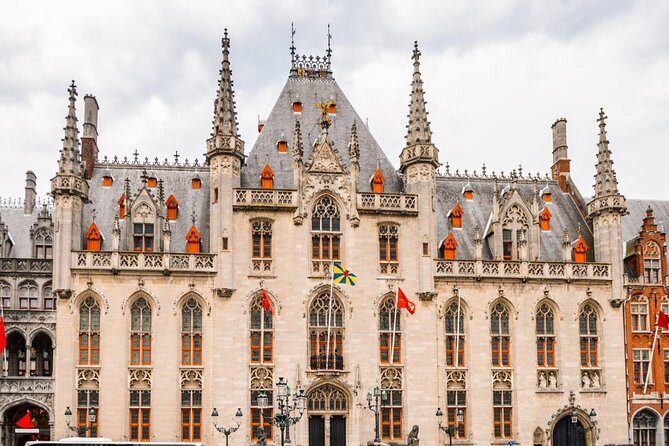
Then you reach Burg Square, where important sights cluster: the Gothic Town Hall, the Old Court House, and the Basilica of the Holy Blood. This is the “government and faith” center of the city. Even if you don’t go inside everything, you’ll understand why the square looks the way it does.
Finally, you end the guided portion at the Markt / Grote Markt. Here your guide wraps up with tips on where to eat and where to shop, especially for traditional Belgian chocolate. This is a high-value end to the walk because it gives you choices for your free time without leaving you guessing.
You’ll also be reminded about where and when to return for the bus back to Amsterdam. This matters more than it sounds, since Bruges is easy to get distracted in.
The Two-Hour Free Time: How to Spend It Without Missing the Bus
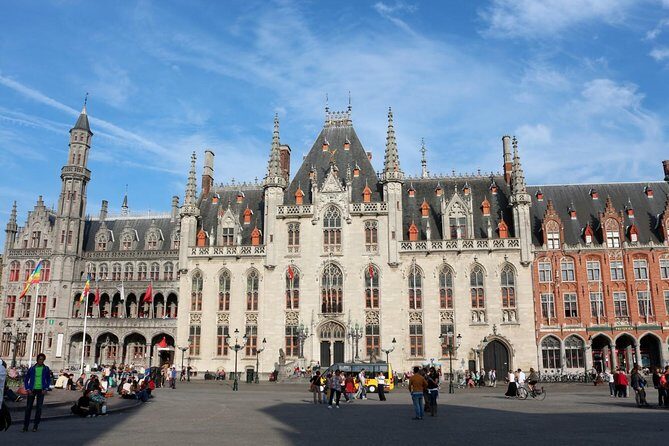
After the guided walking tour, you get about 2 hours of free time in Bruges. The exact amount can shift with traffic and group rhythm, but treat it like your personal exploration block.
Here’s how I’d use it:
- Pick one theme: canals/bridges, shopping for chocolate, or a deeper look at one church or museum area you liked during the guide’s stories.
- Plan your “must do” early so you’re not sprinting later. Bruges is pretty, but you can lose an hour fast just crossing streets for photos.
- Leave buffer time to get back to the meeting point calmly. It’s easier to enjoy your day when you’re not calculating the bus timing while you’re standing in a shop doorway.
The tour doesn’t include food, so you’ll want to eat on your own. Your guide will typically point you to good options, but bring your own common sense: if a place looks pricey for a quick stop, you can keep walking. Bruges has options.
Guide Audio, Radio Guides, and the Realities of a Group Day
Belgian regulations can require radio guides in certain situations. In practice, that means clearer audio for the guide’s commentary. You may use your own radio system, or the tour can provide them free of charge.
This detail is more important than it looks. On cobblestones and in busy squares, sound carries differently. If you rely on hearing every word to enjoy the stories, radio helps you get the full value of the guide work.
I also found it helpful that guides on this route have been praised for being professional and accommodating, and for giving specific recommendations for chocolate and food. Names that come up often in this context include Blanca and Pia, and in some cases José is mentioned as the driver.
Still, there’s a fair caution: language clarity and pacing can vary by guide assignment. Some people felt the English audio was harder to follow or that photos took a back seat. If you want the most smooth experience, aim for good radio setup and keep a flexible expectation about stop timing.
Is This Bruges Day Trip Good Value for You?
This tour makes sense if you’re trying to balance three goals in one day: big sights, local context, and time to wander.
You’ll like it if:
- you want a structured overview without planning transport
- you care about learning how Bruges connects—beer, work trades, civic power, and religious art
- you want a mix of guided time and free time
- you’re happy to walk for a few hours and then recharge
You might want to skip it (or at least reconsider) if:
- mobility is limited due to uneven cobblestones
- you want a slow, deep museum day
- you expect each viewpoint to be an extended visit
The overall format is efficient. Efficiency is great when you’re short on time. It’s less great when you’re traveling like a photographer with a tight shot list and lots of patience for waiting.
Should You Book This Bruges Day Trip from Amsterdam?
Book it if you want the best chance at seeing classic Bruges in a single day without the stress of routing yourself. The mix of a guided walking tour, photo moments, and about two hours of free time is a strong payoff for a day-trip format.
Don’t book it if you need lots of walking comfort or you dislike tight stop timing. Bruges is gorgeous, but you’re signing up for cobblestones and short segments.
If you do book, bring comfortable shoes, use the provided radio option if offered, and treat the bridges and Rozenhoedkaai area as your top photo targets. Then let the free time be truly yours.
FAQ
What time does this Bruges day trip start?
It departs at 8:30am.
Where do I meet for the tour?
The meeting point is AlohaDe Ruijterkade 151, 1011 AC Amsterdam, Netherlands.
How long is the trip?
The duration is about 12 hours (approximately).
Is the tour guided in English?
Yes, it’s offered in English with a professional English-speaking guide.
Is there free time in Bruges?
Yes. You’ll have about 2 hours of free time in Bruges (timing can depend on traffic and the group’s pace).
Are meals included in the price?
No. Food and drinks are not included, though the guide can suggest places to eat.
Is the coach air-conditioned?
Yes, the round-trip includes an A/C coach.
Are there radio guides?
Belgian regulations may require radio guides in certain situations. You can use your own, or you can receive them free of charge.
Is this tour suitable for people with mobility issues?
It’s not recommended for travelers with reduced mobility.
Can I cancel for a full refund?
You can cancel for a full refund up to 24 hours in advance of the experience start time. If you cancel less than 24 hours before, the amount paid is not refunded.