Amsterdam has quiet corners worth chasing.
This 2.5-hour small-group walk is built for people who want hidden streets without losing the thread of the city’s big story. I love how the guide explains major landmarks in plain language, then steers you into side lanes, courtyards, and shop streets off the main tourist routes. I also like the small-group size, which makes it easier to ask questions and keep things moving at a human pace. The main drawback: it’s still a walking tour, about 2.5 miles / 4 km, so you’ll want to be comfortable on city sidewalks for the whole loop.
You’ll start at Beursplein (by the world-famous old market square) and end near Elandsgracht—an easy way to see how Amsterdam connects its historic center to everyday neighborhoods. The tour is offered in English, with a mobile ticket and free entry at the featured stops that list ticket-free time.
If you’re traveling with friends, this is a good fit because the route makes natural “pause points” for photos and short explanations. If you want a nonstop checklist, you might feel slightly less satisfied—but if you like stories tied to places, you’ll be in your element.
In This Review
- Key highlights you’ll feel right away
- Beursplein to Dam Square: the fast route to Amsterdam’s origin story
- The canal ring crossing: learning the city’s medieval growth without a lecture
- Nine Streets: shopping streets, but calmer and more local-minded
- Jordaan’s hidden streets and squares: the neighborhood that still feels like itself
- Karthuizerhof courtyard: social housing from 1650, explained in human terms
- Westerkerk and Rembrandt: why this church has weight beyond its walls
- The walk’s ending at Elandsgracht: why the route matters
- Price and value: what $52.81 actually covers
- Best fit: who will enjoy this most
- Should you book this hidden-streets Amsterdam walk?
- FAQ
- How long is the walking tour?
- How far will I walk?
- Where does the tour start and where does it end?
- Is the tour offered in English?
- What’s the group size?
- Does the tour include admissions or entry tickets?
- Is it near public transportation?
- When will I receive confirmation?
- Is free cancellation available?
Key highlights you’ll feel right away
- World’s first stock market area to Dam Square context in a way that’s easy to follow
- Canal Ring crossing plus how the medieval city pushed outward
- Nine Streets and Jordaan for shopping streets, side alleys, and calmer squares
- Courtyard stops like Karthuizerhof, built for widows in 1650
- Westerkerk and Rembrandt’s burial connection without getting stuck in “too much church info”
- Max 10 people so you don’t just trail behind a crowd
Beursplein to Dam Square: the fast route to Amsterdam’s origin story
The walk starts at Beursplein 1–3, right in the area where Amsterdam’s commercial brain really comes into focus. The guide kicks things off with the origins of the city, then points you toward the key idea: Amsterdam helped set the stage for modern finance. You’ll hear how this is tied to the world’s first stock market—an unusual start for a walking tour, and honestly a smart one. It explains why Amsterdam built itself the way it did: trade first, wealth second, and architecture to match.
From there, the story shifts to the central square—Dam Square—where the city’s power gets staged in public. You’ll learn why it mattered historically and how it connects to the building that originally served as Amsterdam’s town hall. It’s the kind of explanation that makes the bricks feel less decorative and more functional. Instead of only looking up at facades, you learn what the place was used for and why people cared.
If you’re the type who hates vague “this is old” commentary, you’ll probably enjoy this. The early part gives you context so the later streets make sense, not just look pretty.
One practical note: since you’re starting in a major central zone, it can be busy before the route turns quieter. If you’re sensitive to crowds, keep your phone camera ready, but expect the calm to arrive as you head toward the Jordaan.
You can also read our reviews of more tours and experiences in Amsterdam.



The canal ring crossing: learning the city’s medieval growth without a lecture
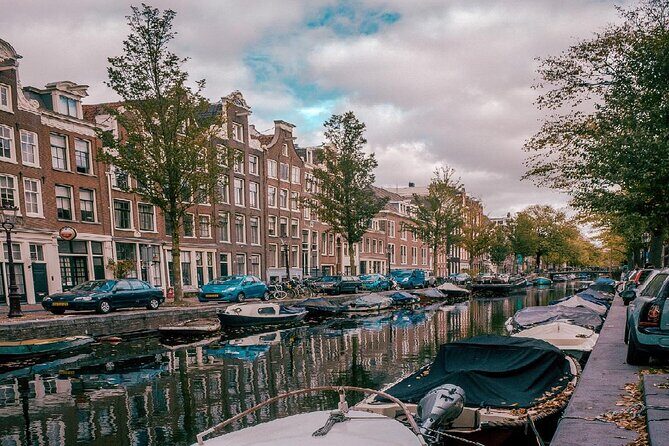
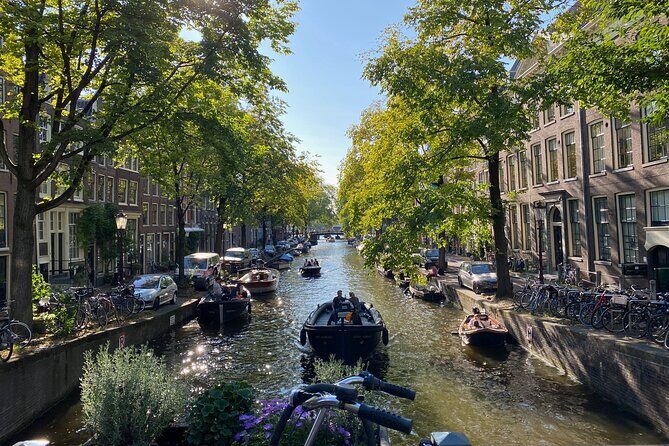
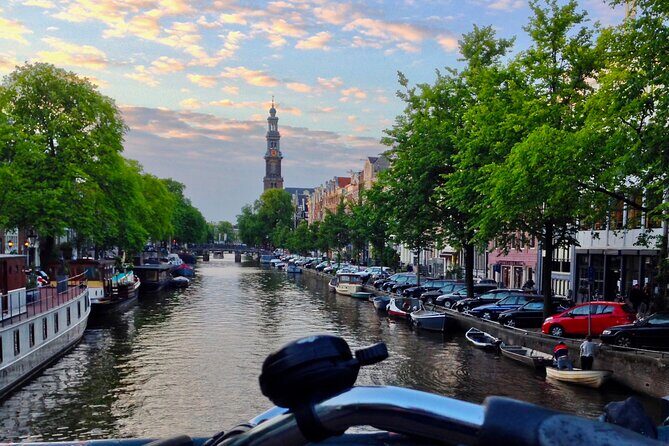
After Dam Square, you move toward the Canal Ring and cross it. This part matters because Amsterdam didn’t just sprawl randomly—it extended in phases, and the canal ring is a visible record of that growth. You’ll get the story of how the medieval city expanded, and you’ll see canals not as postcard scenery but as urban planning.
This is also where the tour earns its value: you’re not paying for “views only.” You’re paying for a guide who can connect the view to why it looks the way it does. When someone explains how trade and population pressure shaped the layout, it becomes easier to read the city while you walk.
The tour lists ticket-free admission time for this segment, so you can spend your energy on the walk rather than waiting around for entry details. You’ll also get brief “what to look for” cues—often the best part of canal-ring visits, because Amsterdam’s details are subtle when you’re walking at normal speed.
If you’re short on time in Amsterdam, this segment is a solid bet. Two and a half miles sounds modest, but adding the canal context helps you feel like you saw more than you actually walked.
Nine Streets: shopping streets, but calmer and more local-minded
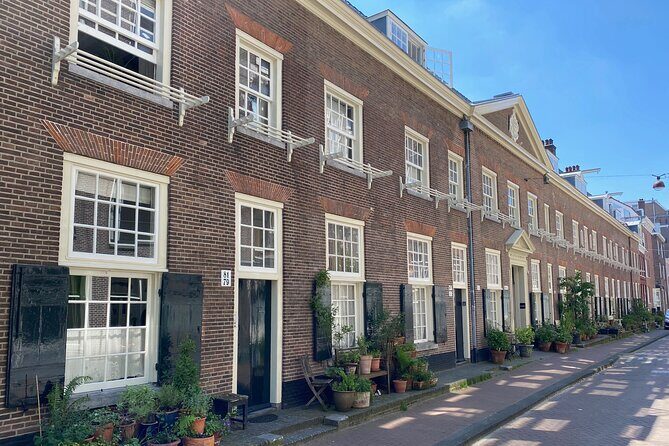
Next comes the Nine Streets area—Amsterdam’s twist on a “slow wander” zone. The tour frames the nine streets as a cozy shopping area away from the densest tourist flows. In practice, this means smaller lanes and storefront streets where you can actually browse without feeling like you’re moving through a theme park.
The value here is not the shops themselves. It’s how the guide uses this neighborhood to show how people live with the city’s historic layout. You’ll spot side streets that connect like puzzle pieces, and you’ll get a sense of the pedestrian rhythm—where you slow down, where you cut through, and what kinds of places cluster together.
If you’re traveling with friends, this is a good section to split attention: one person can spot interesting architecture while another checks café options or local stores. The guide’s job here is to keep it coherent, so the route doesn’t feel like a random stroll.
Jordaan’s hidden streets and squares: the neighborhood that still feels like itself
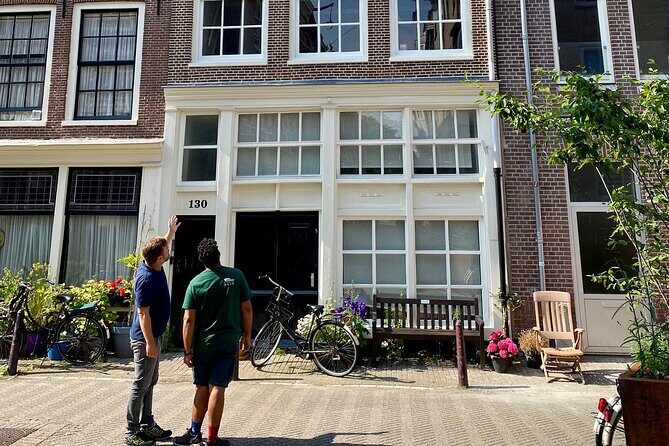
Then you get to the Jordaan, which is where the tour leans hardest into the “explore hidden streets with friends” promise. The Jordaan is described as an authentic remaining neighborhood, and that’s the energy you’ll find on this stretch: side streets, quiet squares, and courtyards that feel residential rather than performative.
The guide focuses on hidden streets and squares—places you might walk past on your own without realizing they matter. Even if you’ve studied Amsterdam maps before, it’s hard to replicate this kind of guided threading through small passages. That’s the whole point. You’re not just going to landmarks; you’re learning how the neighborhood is stitched together.
A big moment here is the church for the poor, including why it was constructed exactly there. That line is a clue to the tour’s approach: it doesn’t treat buildings like museum exhibits. It treats them like answers to real social needs. When you understand the “why,” the architecture starts to read differently.
You’ll also pass by the Anne Frank House during the Jordaan walk. The tour doesn’t say you enter; it specifically calls out passing by. Even so, this is a useful placement in the route. The area around a famous site can feel chaotic, but having the guide frame where you are in the broader neighborhood helps you avoid getting stuck in the headline moment only.
Karthuizerhof courtyard: social housing from 1650, explained in human terms
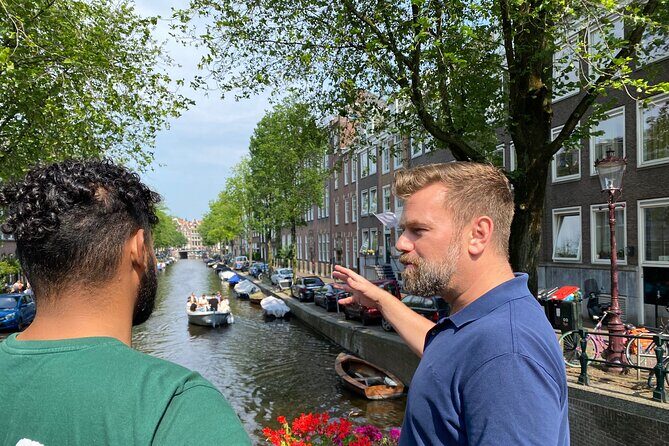
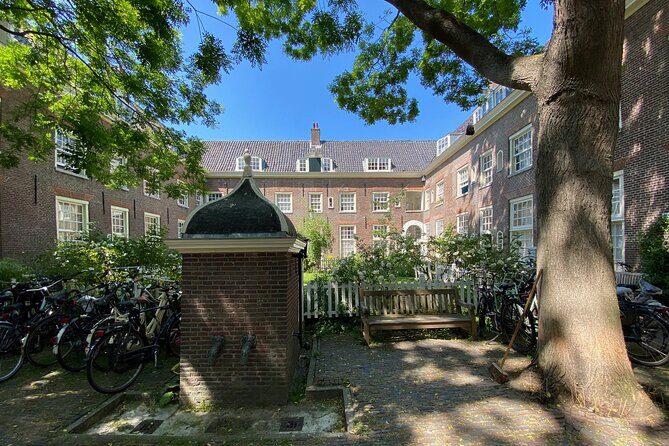
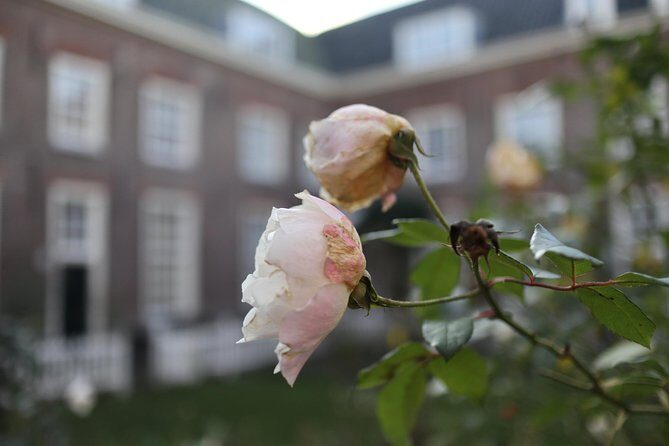
One of the most memorable stops is Karthuizerhof, a courtyard constructed in 1650 for widows. This is one of the first social housing projects in the world, and the way it’s framed during the walk makes it more than trivia.
You’ll spend only about 10 minutes here, but that timing is smart. Courtyards in Amsterdam can feel endless if you let them. A short stop keeps the focus on the meaning: why this place exists, who it served, and how people tried to solve hardship through shared built spaces.
From a value perspective, this is exactly where a guided tour beats a self-guided “photo run.” Without context, a courtyard is just a nice view. With context, it becomes an example of how Amsterdam addressed community needs centuries ago.
If your group likes architecture and “what life looked like,” this stop usually hits the right note. And because it’s a courtyard, it also gives you a visual break—less street noise, more calm.




Westerkerk and Rembrandt: why this church has weight beyond its walls
Later, you’ll reach the Westerkerk, described as a marvel of a church. The guide connects it to the merchants who financed it—rich merchants of Amsterdam had it built. That’s another theme you’ll keep seeing during the tour: money shapes institutions, and institutions shape the city’s look.
You’ll also hear the Rembrandt connection: he was buried there. Again, it’s not just “a famous person is linked.” The tour places this fact in the larger story of who funded Amsterdam and what they wanted to signal. If you like when art history and urban history overlap, this part tends to land well.
One practical benefit: the tour remains walking-focused. Even though churches can sometimes turn into long lessons, the route keeps the pace moving so you still have energy for the end section.
The walk’s ending at Elandsgracht: why the route matters
The tour ends at Elandsgracht. That’s not an accident. Ending near a canal and in a more neighborhood-style zone gives you options afterward—grab coffee, keep exploring the Jordaan edge, or connect to public transport without fighting the busiest center again.
This matters because a good walking tour doesn’t just dump you where the route started. It helps you continue. If you plan to see more Amsterdam later (museums, canal cruise, or just more wandering), ending at Elandsgracht is a nice springboard.
Price and value: what $52.81 actually covers
At about $52.81 per person for roughly 2 hours 30 minutes, this isn’t a bargain-priced “just walk around” deal. But it’s also not an expensive premium experience. The value mostly comes from three things:
- A guide who ties history to street-level details, so you learn faster than a solo read-through
- Small group size (max 10), which keeps the experience personal and question-friendly
- Ticket-free admission for the featured stop(s) listed on the route, meaning less time dealing with entrances
There’s also a note about group discounts, which can make the per-person cost shrink if you’re booking as friends. And because the tour uses a mobile ticket and confirmation comes at booking time, you’ll spend less time juggling papers.
If you’re deciding between a long city overview and something more specific, this choice leans toward “depth in a compact time window.” You’ll walk about 2.5 miles—enough to feel like you moved through neighborhoods, not so much that you’re wiped out.
Best fit: who will enjoy this most
This tour is a strong match if you:
- Want quiet streets and courtyards, not only big, famous squares
- Like history that’s explained clearly, not buried in lectures
- Travel with friends and want a shared route with natural conversation breaks
- Prefer small-group attention so you can ask questions as you go
You might want to rethink if:
- You can’t comfortably walk around 2.5 miles / 4 km
- You dislike city walking in general (Amsterdam’s sidewalks can be uneven in places)
Should you book this hidden-streets Amsterdam walk?
I’d book it if your goal is to get your bearings fast and then see Amsterdam through a more local lens. The route is structured: it starts with big ideas (origins, the stock market, central power), then rewards you with the neighborhoods where that history becomes visible in everyday streets.
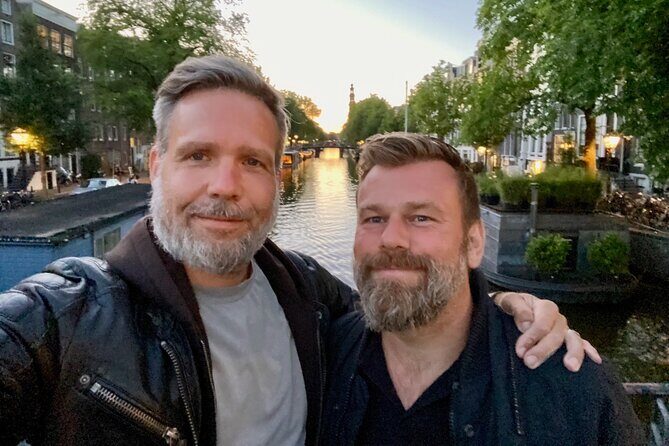
Two details that make me trust the value: the focus on Jordaan courtyards and hidden streets, and the presence of guides like Michael and Christian, who are noted for conversational, relaxed storytelling and for answering questions without rushing you. If you want to come away feeling like you actually learned how Amsterdam works—not just what it looks like—this is a good use of your time.
FAQ
How long is the walking tour?
The duration is about 2 hours 30 minutes.
How far will I walk?
You should be able to walk about 2.5 miles / 4 km.
Where does the tour start and where does it end?
It starts at Beursplein 1-3, 1012 JW Amsterdam, Netherlands, and ends at Elandsgracht, Amsterdam.
Is the tour offered in English?
Yes, it’s offered in English.
What’s the group size?
The tour has a maximum of 10 travelers.
Does the tour include admissions or entry tickets?
The stops that list admissions are marked as ticket free (for example, the Canal Ring segment), and the tour uses a mobile ticket.
Is it near public transportation?
Yes, it’s near public transportation.
When will I receive confirmation?
Confirmation will be received at the time of booking.
Is free cancellation available?
Yes. You can cancel for a full refund up to 24 hours in advance of the experience start time.