REVIEW · AMSTERDAM
Anne Frank Small Group Walking Tour
Book on Viator →Operated by Tours of Amsterdam · Bookable on Viator
One walk, and the city changes.
This Anne Frank walking tour strings together key Amsterdam landmarks with clear, human storytelling from an expert guide. I especially like the way the guide connects big events to specific places, and how the group moves in a steady rhythm so the heavy material has room to land. You’ll also get a smart start at the Portuguese Synagogue, where the architecture sets the tone before the Second World War story takes over.
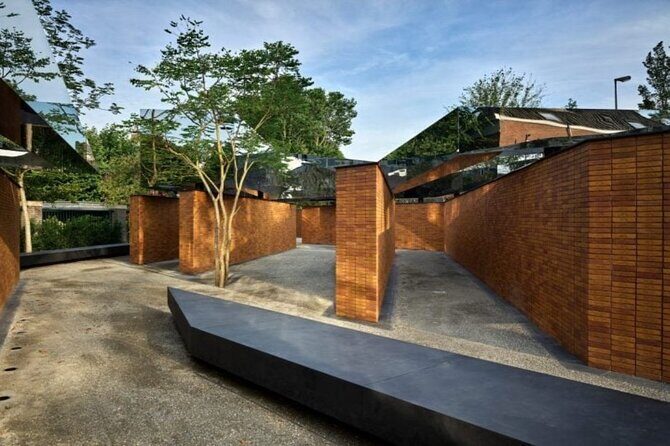
The biggest win for me is the mix of places like the Holocaust Memorial and the Auschwitz Monument, where design details (like the broken-mirror concept) make the meaning feel immediate. The one thing to plan for: this tour does not include entry to the Anne Frank House, and the Portuguese Synagogue, Rembrandt House Museum, and Zuiderkerk are visited without guaranteed interior access (you’ll be outside unless you buy tickets separately).
In This Review
- Key highlights you’ll actually feel on the walk
- A 2-hour route that connects Anne Frank to Amsterdam’s landmarks
- Where you start: Jonas Daniël Meijerplein to an ending near the Anne Frank House
- Stop 1: Portuguese Synagogue and the power of authentic architecture
- Stop 2: The National Holocaust Memorial by Daniel Libeskind (and why it’s worth seeing anyway)
- Stop 3: Wertheimpark’s Auschwitz Monument and Jan Wolkers’ broken mirrors
- Stop 4: Rembrandt House Museum area—art, technique, and a real sense of personhood
- Stop 5: Zuiderkerk (South Church) and the tower viewpoint
- Stop 6: Anne Frank Statue—ending near the house you’ll want to visit
- Price check: is $37 good value for this route?
- Best for: solo visitors, history lovers, and anyone who wants context (not just photos)
- What I’d do differently next time (so you get the most out of it)
- Should you book the Anne Frank Small Group Walking Tour?
- FAQ
- How long is the Anne Frank Small Group Walking Tour?
- Where does the tour start and end?
- What time does the tour begin?
- Is the Anne Frank House included in the tour price?
- Are tickets included for the Portuguese Synagogue, Rembrandt House Museum, and Zuiderkerk?
- Are the Holocaust Memorial and Auschwitz Monument included?
- What’s included in the tour?
- Is it accessible for most people?
Key highlights you’ll actually feel on the walk

- Expert historian guide: clear facts, thoughtful questions, and context that sticks.
- Time to process, not just to rush: each stop is paced at about 20 minutes.
- Design-forward Holocaust stops: you’ll encounter Daniel Libeskind’s memorial in progress and Jan Wolkers’ broken-mirror installation.
- Landmark variety in just 2 hours: synagogue, memorials, Rembrandt area, Zuiderkerk, then the Anne Frank Statue.
- Good “before the house” orientation: you end close to the Anne Frank House so you can decide your next step.
A 2-hour route that connects Anne Frank to Amsterdam’s landmarks
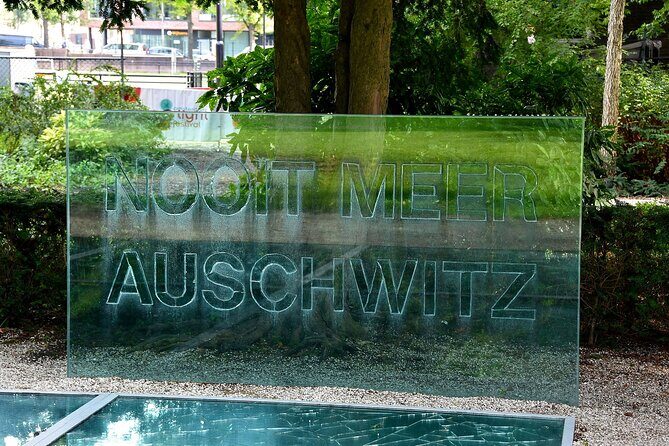
This tour works because it’s built like a story with stops. You’re not just ticking off sites—you’re walking through a sequence that helps you understand how Amsterdam’s Jewish life, architecture, and later wartime trauma connect to what happened to Anne and her community.
It lasts about 2 hours at a comfortable walking pace, with roughly 20 minutes per stop. That matters more than you’d think. Holocaust memorials need time, and a hurried “look-and-go” tour can make the experience feel thin. Here, the schedule gives you short pauses to absorb what you’re seeing before moving on.
You can also read our reviews of more walking tours in Amsterdam



Where you start: Jonas Daniël Meijerplein to an ending near the Anne Frank House
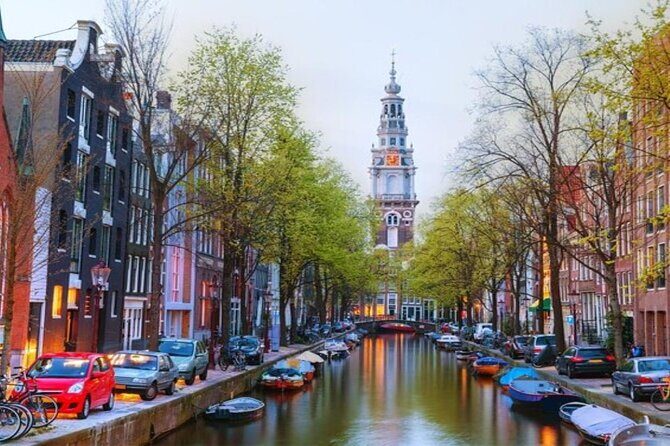
The tour meets at Jonas Daniël Meijerplein 21, 1011 RG Amsterdam, and the start time is 1:00 pm. It ends near Anne Frank House Westermarkt 20, 1016 GV Amsterdam, so you’re already positioned for whatever you want to do next.
A few practical notes that make this easier on your day:
- You’ll get a mobile ticket.
- It’s near public transportation, so you can build the rest of your itinerary around it without stress.
- The group size cap is up to 140 travelers, which keeps it from feeling like a free-for-all, though it’s still a busy city-side walking tour.
Also, no food is included. If you’re the type who gets a headache when you skip lunch, plan a snack before you start. The subject matter is heavy enough—your body shouldn’t add extra drama.
Stop 1: Portuguese Synagogue and the power of authentic architecture
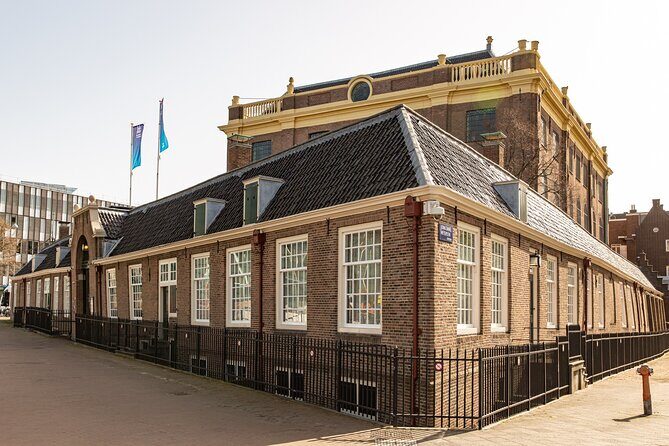
You begin at the Portuguese Synagogue, a 17th-century Sephardic synagogue known for its large interior and wooden vaulted ceilings. Even if you don’t go inside, the tour framing helps you understand what you’re looking at.
The standout detail here is that the synagogue is preserved without modern lights or heating to maintain authenticity. That doesn’t just sound like a museum rule—it changes how the space feels. You get a sense that this building was meant to be used as a real place of worship, not staged for modern tourism.
What you should know before you go: admission isn’t included, and the tour is conducted outside the buildings for this stop. That means you’ll get the history and context, but if you want the full interior experience, you’ll need to purchase entry separately.
Stop 2: The National Holocaust Memorial by Daniel Libeskind (and why it’s worth seeing anyway)
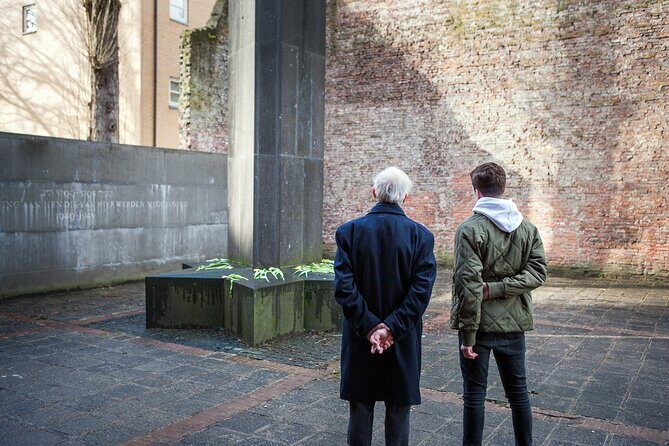
Next you’ll reach the National Holocaust Memorial, designed by Daniel Libeskind. The important detail: the memorial is still under development, so what you see is part of an ongoing project rather than a finished “final form.”
Even in progress, it has value because it’s an intentional architectural tribute to Dutch victims of the Holocaust. A good guide helps you connect the design approach to the historical purpose, so you don’t walk past it like another odd sculpture in the city. The story helps you read the site.
This stop is free, and it’s timed around 20 minutes, which is just enough to let the guide’s explanation sink in before you move toward the next, even more emotionally intense installation.
Stop 3: Wertheimpark’s Auschwitz Monument and Jan Wolkers’ broken mirrors
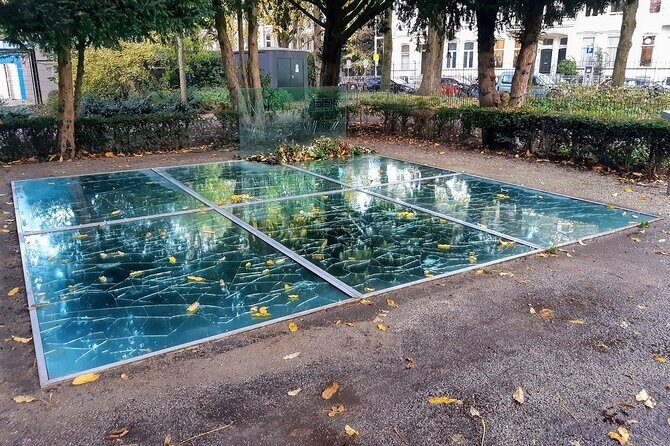
In Wertheimpark, you’ll visit the Auschwitz Monument, a moving installation by Jan Wolkers. The key visual is the broken mirrors that reflect the sky in fragmented pieces.
It’s one of those design choices that hits you quietly, then keeps hitting after you leave. The guide’s framing matters a lot here. Without context, the installation can look like an abstract art moment. With context, it becomes a symbol of shattered lives—made physical through reflection that can’t hold together.
This stop is free and also about 20 minutes. I like that the tour gives you time to stand with it. Some memorials are meant for a quick glance; this one is not. The pacing makes it feel respectful rather than rushed.





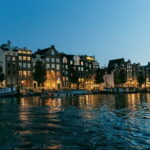
Stop 4: Rembrandt House Museum area—art, technique, and a real sense of personhood
After the memorials, you’ll shift to a lighter emotional register, not by skipping history, but by moving to a different part of Amsterdam’s cultural identity. The tour brings you to the Rembrandt House Museum, where Rembrandt lived and worked.
Admission is not included, and again the tour is conducted outside the building. Still, the museum context helps you understand what Rembrandt’s daily life might have looked like, and why the museum preserves more than paintings.
You’ll learn what the museum focuses on, including Rembrandt’s etchings, personal items, and painting techniques. That’s useful because it shows you that the city wasn’t only shaped by war and loss. It was also shaped by artists, craftspeople, and daily routines that had nothing to do with politics—until politics destroyed routines.
Stop 5: Zuiderkerk (South Church) and the tower viewpoint
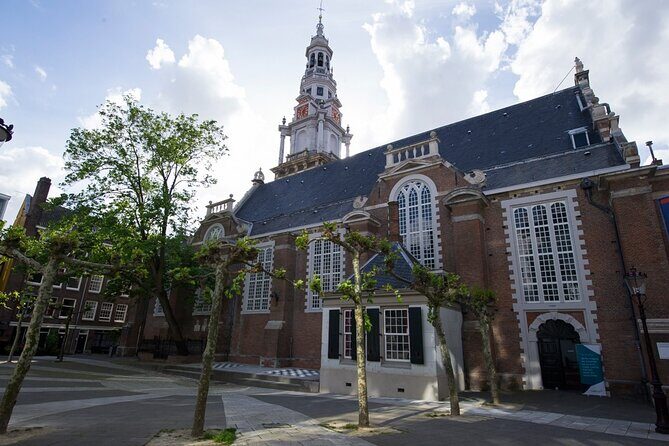
Now you head to Zuiderkerk, Amsterdam’s first Protestant church. The building’s story represents a shift in Amsterdam’s religious landscape—while also serving as a landmark for what the city chose to emphasize as it changed.
You’ll also get the practical part: Zuiderkerk has an iconic tower that’s associated with city views. On this tour, you’re not buying the tower ticket as part of the experience, but you’ll still be pointed toward why locals and visitors have long treated this church as a key reference point.
The tour notes that Zuiderkerk is now a municipal information center. That combination—religious landmark turned public-use space—helps you see how Amsterdam keeps working old buildings into modern life.
Again, no admission is included for this stop, and you’ll be outside. If you want the interior or the tower experience, you’ll need to add it separately.
Stop 6: Anne Frank Statue—ending near the house you’ll want to visit
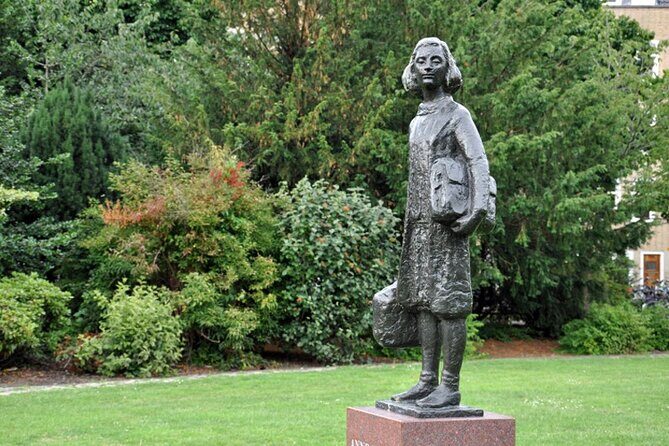
The final stop is the Anne Frank Statue, placed near the Anne Frank House. This is a fitting ending because it keeps the meaning focused on Anne’s legacy and the consequences of intolerance.
Here’s the critical planning point: the tour does not include entry to the Anne Frank House. You’ll end close by, so you can book the house visit if you didn’t already plan it. That’s a smart approach because the Anne Frank House is one of the most in-demand experiences in Amsterdam. Waiting until after your walk can be fine, but you might hit sold-out times depending on your dates.
Also, if the timing works, it can be powerful to visit the house right after the memorials. The walk helps you carry context into the site, rather than arriving cold.
Price check: is $37 good value for this route?
At $37, the big value question is: are you just paying for a walk, or for guidance and structure?
Here’s why I think the price is fair:
- You’re paying for an expert historian guide who connects multiple sites with clear storytelling.
- Several stops are free (the Holocaust Memorial and Auschwitz Monument), so the cost isn’t mainly buying museum entries.
- You get the route logic in about two hours, including time at each stop, rather than you trying to self-guide through the same locations with unclear context.
Now the trade-off: since major interiors aren’t included (Portuguese Synagogue, Rembrandt House Museum, Zuiderkerk), the tour is best seen as the historical “map” and emotional framing. If you want full interior access everywhere, you’ll pay extra on top. In other words, the $37 is great for the guided experience, but it won’t replace museum tickets.
Best for: solo visitors, history lovers, and anyone who wants context (not just photos)
This tour is a strong fit if you:
- Want a clear narrative that connects Anne Frank to Amsterdam’s places, not random sights.
- Prefer walking with a guide rather than trying to piece together the story on your phone.
- Like sites where design and symbolism matter, not just facts on a sign.
It’s also a good match if you’re traveling solo. The guide’s pacing and the guided questions help you stay engaged even when you’re not in a group with friends.
One consideration: the material is emotionally intense. If you’re looking for something light and casual, this won’t match that mood. But if you want a respectful, well-timed tour with room to think, it fits.
What I’d do differently next time (so you get the most out of it)
I’d plan two things up front:
- Decide on Anne Frank House tickets ahead of time if you can. Since the tour ends nearby but doesn’t include entry, having tickets ready can save you from timing stress.
- Pre-check which interiors you want. Portuguese Synagogue, Rembrandt House Museum, and Zuiderkerk are part of the story, but the tour itself doesn’t include their admissions.
Also, wear comfortable shoes. It’s a walking tour with multiple stops, and the time passes fast when you’re engaged.
Should you book the Anne Frank Small Group Walking Tour?
I’d book this tour if you want a well-structured walk with an expert guide who gives you context you can’t easily get from a standalone map. The strongest parts are the guide’s storytelling style, the pacing that lets you absorb the memorials, and the thoughtful details like the broken-mirror symbolism at the Auschwitz Monument.
I would not book it as your only plan if your top priority is visiting interiors—especially the Anne Frank House—because those tickets are separate. But if you treat this as the best “introduction” and then add the House visit, it’s a smart pairing.
FAQ
How long is the Anne Frank Small Group Walking Tour?
It runs for about 2 hours (approx.), with around 20 minutes at each of the main stops.
Where does the tour start and end?
It starts at Jonas Daniël Meijerplein 21, 1011 RG Amsterdam and ends close to the Anne Frank House, Westermarkt 20, 1016 GV Amsterdam.
What time does the tour begin?
The tour start time is 1:00 pm.
Is the Anne Frank House included in the tour price?
No. The tour does not include entry to the Anne Frank House. If you want to visit, you’ll need to purchase tickets separately.
Are tickets included for the Portuguese Synagogue, Rembrandt House Museum, and Zuiderkerk?
No. Admission for the Portuguese Synagogue, Rembrandt House Museum, and Zuiderkerk is not included, and the tour is conducted outside those buildings.
Are the Holocaust Memorial and Auschwitz Monument included?
Yes, those stops are free (the National Holocaust Memorial and the Auschwitz Monument in Wertheimpark).
What’s included in the tour?
You get an expert historian tour guide. The tour also uses a mobile ticket.
Is it accessible for most people?
It says most travelers can participate, and service animals are allowed. The meeting point and route are also near public transportation.