REVIEW · AMSTERDAM
Self Guided City Tour in Amsterdam – Amsterdam Tulip
Book on Viator →Operated by Train your Brain tours · Bookable on Viator
This self-guided Amsterdam experience turns big landmarks into a game: you follow a tulip-shaped route at your own speed, answer trivia for 35 points, and get audio + video stories that explain what you’re looking at. I like that it stays simple—no new app—and you can keep your own rhythm instead of matching a group’s pace. The setup works especially well for couples or small groups who want Amsterdam in manageable chunks, with breaks that don’t feel like you’re falling behind.
If you want one more reason to like it, the content is varied: 27 storytelling audio recordings, 5 video stories, historical pictures, and quiz prompts all built around the stops. One catch: the walking route can take longer than the estimate, and if your phone battery runs low, you’ll feel it fast—so bring a charger (or at least plan around a full battery).
In This Review
- Key things I’d plan around
- WhatsApp, not an app: how this self-guided tour stays easy
- The tulip-shaped idea: why the pacing feels like a game
- Stop-by-stop: 11 waypoints from Rembrandtplein to De Wallen
- Rembrandtplein: your starting signal
- Muntplein: quick facts to keep momentum
- Begijnhof: one of the longer listening moments
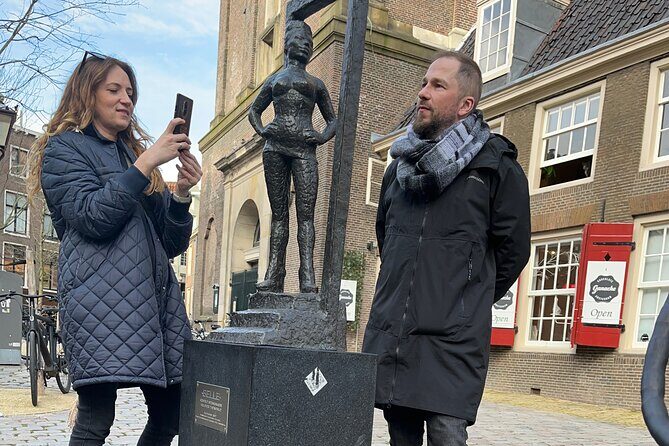
- Gay Monument: a fast stop with strong context
- Anne Frank House: a landmark you won’t want to rush
- Nieuwe Kerk: another major waypoint
- De Beurspassage: a short stop that adds variety
- Dam Square: the big central moment
- Oude Kerk: a shorter stop that still matters
- Red Light District (De Wallen): pause, choose, continue
- Equestrian statue of Queen Wilhelmina: the finishing piece
- What the media mix actually does for your experience
- Timing, distance, and phone power: the real logistics
- Where this fits best: couples, families, and curious solo walkers
- Price and value: why $9.63 can make sense
- A quick practical checklist before you start
- Should you book this Amsterdam Tulip self-guided walk?
- FAQ
- How long is the Amsterdam Tulip self-guided tour?
- Where does the tour start and end?
- Do I need to download an app?
- Is the tour available in English?
- What’s included in the game?
- Are tickets required for the stops?
- Is WiFi provided during the tour?
- What is the cancellation policy?
- Is it a private tour?
Key things I’d plan around
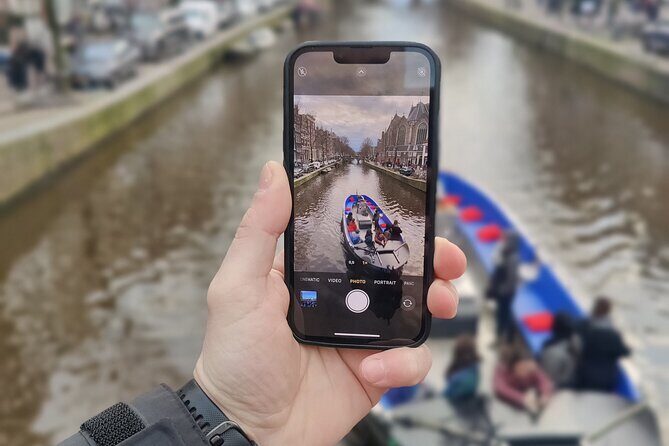
- WhatsApp-only setup: you don’t download a separate app
- No crowd pressure: walk in your own timing with your own group
- 35-point trivia game: keeps you paying attention without feeling like school
- 27 audio recordings + 5 videos: lots of media so stops don’t blur together
- Includes De Wallen guidance: the activity warns you when you approach the Red Light District
- The route can run long: a charged phone matters on a multi-stop day
WhatsApp, not an app: how this self-guided tour stays easy
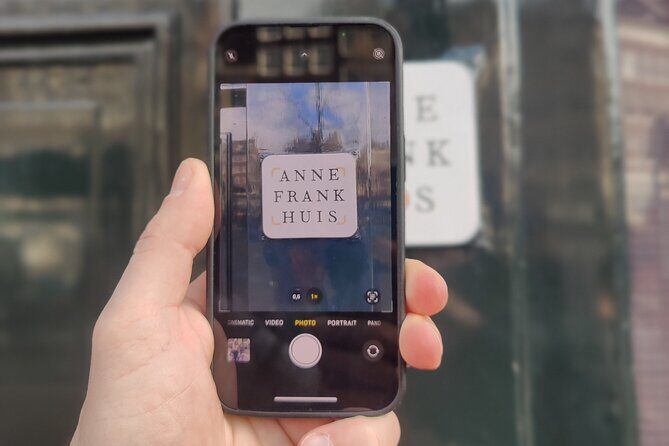
Amsterdam is easy to love, and this format keeps it easy to navigate. You start at Rembrandtplein, then work your way through a set route that mixes major squares with several iconic stops, including Anne Frank House and the Red Light District area (De Wallen). The big practical win is how you access the experience: you use WhatsApp plus the mobile ticket instructions instead of installing a new app.
That matters because app-heavy tours often come with real friction: new logins, permissions, and tiny screens you have to keep switching back and forth on. With WhatsApp, the flow tends to stay familiar. You also get instructions and login details, and the content stays reachable for 24 hours after you finish the game—helpful if you end up taking a slower day or want to revisit a story later.
A second value point: this tour is private for your group. You’re not squeezed into a crowd, and you’re not waiting for strangers to catch up. If your idea of a great Amsterdam day includes stopping for a snack, people-watching, or photos without guilt, this self-guided style fits.
You can also read our reviews of more guided tours in Amsterdam



The tulip-shaped idea: why the pacing feels like a game

The experience is called Amsterdam Tulip, and the route is designed to follow a tulip-shaped path. That turns a straightforward walk into something more playful: you’re not just moving from A to B, you’re trying to keep shape and timing as the route unfolds.
You’ll also get a game layer: trivia questions tied to the sights, with points scored along the way. It’s not the kind of quiz that punishes you for being distracted. Instead, it gives you a reason to listen closely to the audio stories and pay attention when the tour prompts you to. That makes the landmarks feel less like checkboxes and more like stops you actually remember.
One practical note: the tour is listed as about 2 to 3 hours. In the real world, that can expand if you pause often, stop to read, or simply move slower through busier streets. Also, one review experience matched this reality: the walk took longer than expected even without stopping much. So I treat it as a half-day plan and I build in buffer time.
Stop-by-stop: 11 waypoints from Rembrandtplein to De Wallen
Each stop follows the same basic rhythm: you’re at a sight, then you receive information (and often audio) connected to what you’re seeing. The entry at every listed location is free admission for the context provided by the activity. You’re not paying extra to access each stop as part of the game.
Here’s how the route feels in sequence, and what to watch for.
Rembrandtplein: your starting signal
You begin at Rembrandtplein (starting location). It’s a good place to kick off because it sets you up for the rest of the walk—you can get the game going, confirm your instructions, and fall into a comfortable rhythm right away.
Time listed: about 3 minutes. That brief start is useful. You’re not forced to commit to a long “warm-up.” It also helps the game quickly hook you into the story format.
Muntplein: quick facts to keep momentum
Next is Muntplein. The stop is short (about 3 minutes), and the purpose is more about staying in motion while still learning something. If you like tours that don’t drag, this part works well.
Drawback to consider: because it’s short, you have to be ready to listen and respond without fiddling with your phone for too long.
You can also read our reviews of more city tours in Amsterdam





Begijnhof: one of the longer listening moments
Then you reach Begijnhof, with a longer time window listed at about 6 minutes. Longer stops are where you can slow down, take a breath, and let the audio do its job.
What I like about this structure is that it avoids the “every stop is exactly the same” feeling. You get moments for quick info and moments that encourage a slower watch.
Gay Monument: a fast stop with strong context
The Gay Monument is next, about 3 minutes. This is the kind of waypoint where the media layer matters. A short time window means you’ll want to keep your attention on the story prompts so you don’t miss the context the tour gives you.
Anne Frank House: a landmark you won’t want to rush
Next comes Anne Frank House with about 3 minutes listed. This is one of the most emotionally charged stops on the itinerary, and the value here is that you’re not just walking past it—you’re getting guided storytelling audio as you’re there.
Practical tip: this stop can feel crowded in real life. The self-guided format helps, because you can pause as long as you want in your own pocket of space and then move on without negotiating with a group.
Nieuwe Kerk: another major waypoint
After that is Nieuwe Kerk, again with about 3 minutes listed. This is a classic Amsterdam stop in many visitor itineraries, but here the timing helps you treat it as part of a story chain rather than a standalone photo spot.
De Beurspassage: a short stop that adds variety
Then you’ll hit De Beurspassage for about 3 minutes. This kind of waypoint keeps the walk from turning into only open squares and “big sights.” You get variety, and the audio content helps the space feel more purposeful.
Dam Square: the big central moment
Dam Square is next, with about 10 minutes listed—longer than most stops. That longer window makes sense. Dam Square is a high-activity area where it’s easy to lose time. The tour giving you extra time here is a gift: it helps you watch what’s around you while still finishing the game.
A caution: if you’re prone to stopping for snacks, bathrooms, or photos, Dam Square is where those detours can quietly add up. So if you’re trying to keep to a tight schedule, plan your breaks wisely.
Oude Kerk: a shorter stop that still matters
Next is Oude Kerk at about 3 minutes. This is another place where the audio layer can make a big difference—short stops work best when the information is well packaged, and the experience uses audio storytelling and video snippets to keep it moving.
Red Light District (De Wallen): pause, choose, continue
Finally comes Red Light District (De Wallen), with about 10 minutes listed. This is the stop with the most sensitivity. The activity includes guidance: it warns you as you approach the Red Light District so you can decide whether you want to linger, keep walking, or adjust your own comfort level.
I like that the tour doesn’t force you into one “attitude.” You’re in control of your pace. Still, treat this section like the real-world area it is: pay attention, keep your phone secure, and move with intention if you’re feeling overwhelmed.
Equestrian statue of Queen Wilhelmina: the finishing piece
The route wraps with the equestrian statue of Queen Wilhelmina, about 3 minutes. It’s a strong final waypoint because it signals you’re near the end of the structured walk.
From there, you end at the canal-boat tour area listed as Rederij P. Kooij canal boat tours, near Oude Turfmarkt 125.
What the media mix actually does for your experience
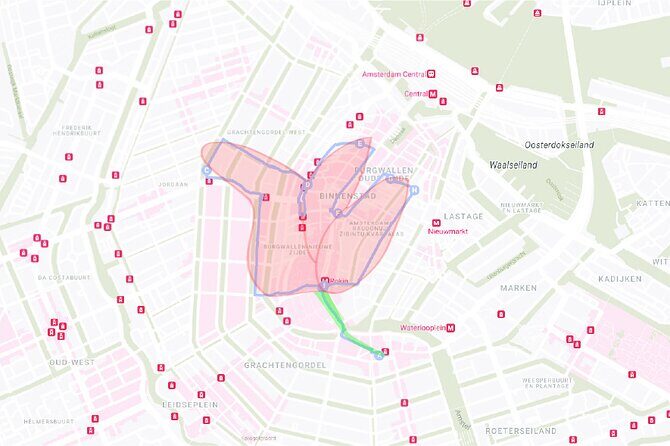
A lot of self-guided tours list audio and call it a day. This one stacks multiple formats so you don’t get tired halfway through.
You get:
- 27 storytelling audio recordings tied to sights along the route
- 5 video stories about objects you’ll tour
- Lots of historical pictures to support what you’re hearing
- A scoring layer through 35 points of trivia
Why that matters for you: audio tours can feel flat if they only tell you facts. Here, the blend of media keeps your attention. Short video clips and picture prompts can also help you understand what you’re looking at when the street view doesn’t match what your brain expects.
One more practical detail: you can access the tour content for 24 hours after the game. That’s useful if you’re the kind of person who likes to replay the best parts that you rushed through during the walk.
Timing, distance, and phone power: the real logistics
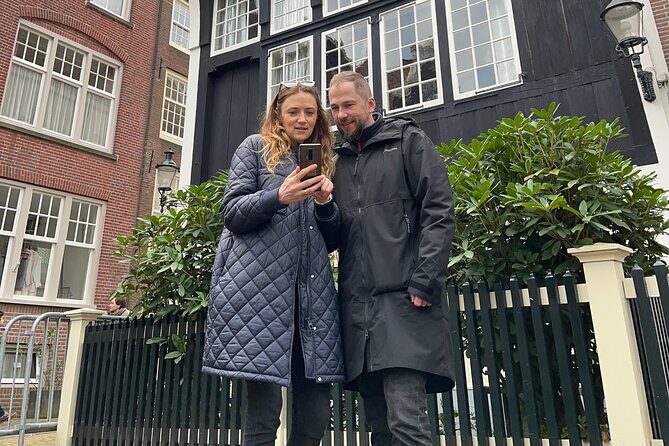
The tour is estimated at 2 to 3 hours, but the route is made of 11 stops with multiple time windows. That structure works best if you treat the experience like a half-day walking plan, not a quick two-hour hop.
The biggest risk isn’t map confusion—it’s your phone battery. One review notes the tour got interrupted when phones ran out of battery, and they couldn’t complete the tulip-shaped route. So I strongly recommend you:
- Start with a fully charged phone
- Carry a power bank if you have one
- Avoid running other heavy apps at the same time
Also remember there’s no “WiFi on board” included. So even if you’re connected sometimes, don’t plan on steady WiFi solving everything. The safer mindset is: rely on your phone’s own connectivity and power management, then hope for the best.
Where this fits best: couples, families, and curious solo walkers

Because it’s private and self-guided, it fits people who don’t want to follow a stranger’s pace. I especially like it for:
- Couples who want a shared activity but no group pressure
- Friends who want a walk with learning built in
- Solo travelers who like structure but still want freedom
It’s also described as suitable for kids in at least one of the experience notes, with a warning as you approach sensitive areas. If you’re traveling with children, that warning system can help you decide on the spot.
Moderate physical fitness is listed, which usually means you should be comfortable with an extended walking route on city streets. This is Amsterdam on foot, not a sit-down tour.
Price and value: why $9.63 can make sense

At $9.63 per person, the price looks low compared with many guided options. You’re not paying for a live guide, and that’s the point: you’re paying for the app-free content package—audio, video, photos, and quiz elements—plus the structured route.
For me, the value comes from two things you can actually feel:
- You cover a lot of major waypoints without crowd chaos
- You get media and trivia that turns sightseeing into something you’ll remember
If you were going to spend money anyway on a paid audio tour or a separate city activity, this can be a cost-effective way to stack learning onto your walking day. If you hate planning and want someone to handle everything, then a live guide might still feel better. But if you want control and you like learning at your pace, this pricing structure is easy to justify.
A quick practical checklist before you start
Before you begin at Rembrandtplein, do these small things that prevent big stress:
- Make sure you can access the tour content in English
- Confirm you have the mobile ticket and WhatsApp setup ready
- Pack a charged phone (power bank if you’re unsure)
- Wear comfortable walking shoes—this is a multi-stop city walk
- Decide in advance how you feel about the De Wallen section, then use the tour’s warning as your guide
If you do all that, you’ll spend your time on Amsterdam instead of troubleshooting your phone.
Should you book this Amsterdam Tulip self-guided walk?
I’d book it if you want a structured route without a guide dictating your pace. This is a great option when you like big sights but also want the learning layer that turns those sights into stories, not just photos. The WhatsApp approach lowers friction, and the trivia points add just enough play to keep you engaged.
I’d think twice if you know your phone battery usually struggles on long days, or if you strongly prefer fixed, tightly timed tours with no flexibility. The route can run longer than the estimate, and this experience depends on your device staying ready.
If you’re traveling for a first taste of Amsterdam and you like doing it your way, this is a solid, low-cost way to connect the dots—from Rembrandtplein through Dam Square and onward to De Wallen—while keeping the whole day in your control.
FAQ
How long is the Amsterdam Tulip self-guided tour?
It’s listed as about 2 to 3 hours, approximately.
Where does the tour start and end?
It starts at Rembrandtplein, 1017 Amsterdam, Netherlands, and ends at the Rederij P. Kooij canal boat tours area near Oude Turfmarkt 125, 1012 GC Amsterdam.
Do I need to download an app?
No. The experience uses WhatsApp on your phone, and that’s all you need according to the tour info.
Is the tour available in English?
Yes, it’s offered in English.
What’s included in the game?
You get a self-guided exploration game with 35 points, fun facts and information, 27 audio recordings, 5 video stories, historical pictures, and instructions/login details. Content stays reachable for 24 hours after the game.
Are tickets required for the stops?
The itinerary lists admission as free at each of the listed stops.
Is WiFi provided during the tour?
WiFi on board is not included.
What is the cancellation policy?
The experience is non-refundable and cannot be changed for any reason.
Is it a private tour?
Yes. It’s a private tour or activity, so only your group participates.