Two wheels, big street-art energy. This 3-hour Amsterdam bike tour strings together creative neighborhoods and smart viewpoints, from laid-back Oud-West streets to the industrial shipyard world of NDSM. You’ll cover real ground fast, with a guide steering you past places many first-timers never see.
I especially like that it stays small (up to 12 riders), so you get more attention when you need it. The other thing I love: you don’t just look at architecture—you actually experience it from the ride, including ferry crossings that make the river feel like part of the route. One consideration: you do need a reasonable level of bike skill and fitness, because the guide may decide you’re not ready for safety.
In This Review
- Key highlights at a glance
- First Pedal: From Mike’s Bike Tours to the Vondelpark-side start
- Amsterdam West: Oud-West’s wide streets and the local rhythm
- Westergas: the old gas factory turned Culture Park
- Westerpark: calmer park time with art in the background
- Pontsteiger and the ferry to Amsterdam North
- NDSM Wharf: street art on shipbuilding bones
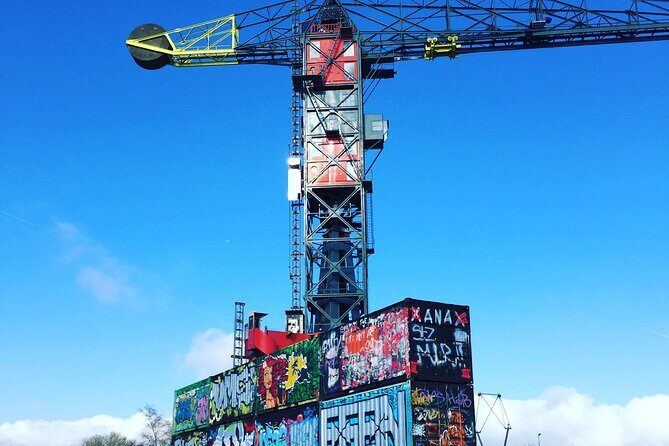
- Faralda Crane Hotel: the old crane that became a hotel
- Cycling the bikepaths of Amsterdam North and the Eye film theater
- Ferry back toward Central Station: finishing with river views
- Price and value: why $59.13 can make sense
- What you’ll need to enjoy it (and not hate it)
- Who this tour is best for
- Should you book it?
Key highlights at a glance
- Oud-West streets on bike-friendly routes with trendy bars, restaurants, and concert venues rolling past your shoulders
- Westergas Culture Park in a former gas factory turned arts space
- Ferry time to Amsterdam North for river views and a real change of scenery
- NDSM Wharf street-art terrain plus a included graffiti experience and photo stops near shipbuilding relics
- Faralda Crane Hotel for a jaw-drop moment in an old harbor crane structure
First Pedal: From Mike’s Bike Tours to the Vondelpark-side start
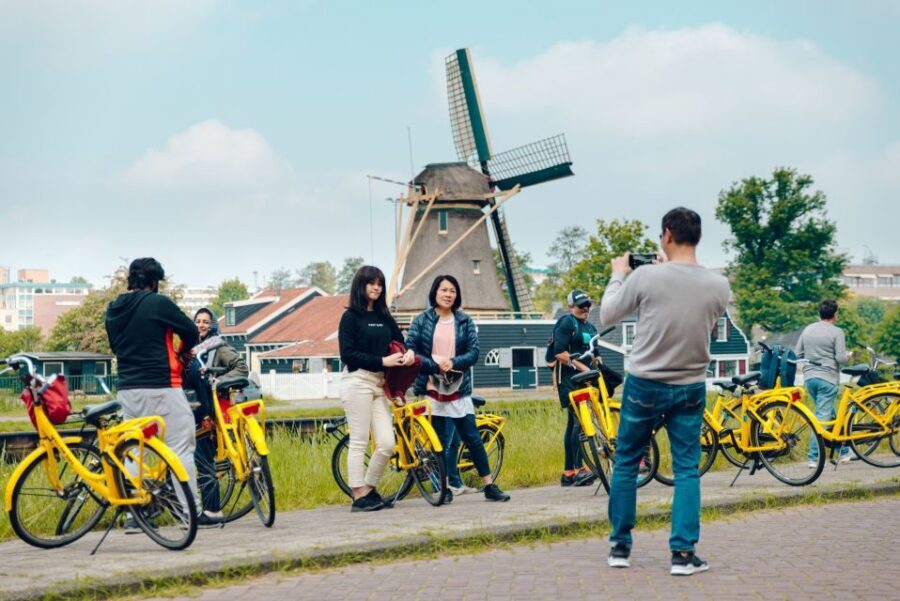
The tour meets at Mike’s Bike Tours Amsterdam, on Oosterdoksstraat 106 (near public transport). Once everyone’s sorted, you get your bike and gear and roll out from the tour’s starting area by Vondelpark (listed as A Bike Vondelpark). It’s a clean way to start: you’re not trying to figure out bikes and meeting points on your own while jet-lagged and hunting for the right street.
This first stretch matters because it sets the tone. Amsterdam bike routes can feel intuitive once you’re moving, and the guide’s job is to keep things smooth and safe from the first moments. You’ll also get a helmet and a rain jacket, which is a big deal in a city where weather can change its mind quickly.
If you’re the kind of traveler who hates feeling lost, this helps. You can just follow the group, ask questions, and let the city come to you. You’ll also be off the main tourist grid early enough that the ride feels like a morning of exploring, not a checklist.
You can also read our reviews of more cycling tours in Amsterdam
Amsterdam West: Oud-West’s wide streets and the local rhythm
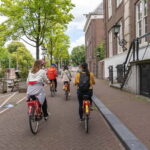
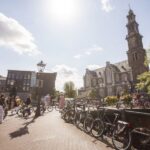
Your first neighborhood stop is Amsterdam West, riding through Oud-West. This area has a calmer, more everyday vibe than the center—wide streets, lots of space to breathe, and a steady stream of bars, restaurants, and venues. Even if you don’t stop anywhere, you still get the feel of where people actually hang out.
What I like about this part of the route is how it balances “fun scenery” with practical city navigation. You’re learning the flow of biking in Amsterdam in a relatively laid-back section, which makes the later industrial and ferry segments feel easier to handle.
Potential downside: because this is a real neighborhood, it can feel a bit less dramatic than the most famous canal views. The value is in the texture—street life, storefront energy, and the sense that you’re cycling through a lived-in city.
Westergas: the old gas factory turned Culture Park
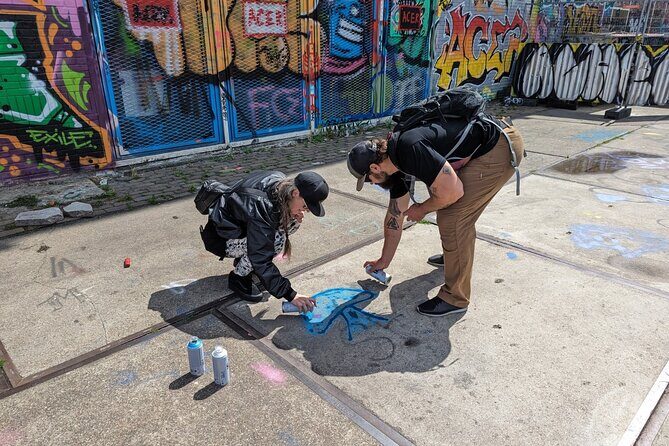
Next up is Westergas, where you visit the former gas factory that has been transformed into Culture Park. This is one of those Amsterdam conversions that makes the city so interesting: old infrastructure repurposed for creativity and community.
You don’t need to be an architecture superfan to enjoy it. Even from a short visit, you get the logic of the place. The industrial shell gives structure to the art and events that now fill it. It’s also a nice contrast to the more open-feeling streets of Oud-West.
This stop is short, which is exactly right for a bike tour. You get a quick look, a bit of context from your guide, and then you’re back on the saddle before the day turns into standing around.
Westerpark: calmer park time with art in the background
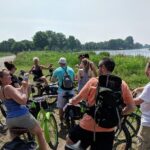
From there you ride into Westerpark, one of Amsterdam’s calmer city parks. You’ll cruise through 19th-century park grounds where art shows up in ways that feel integrated, not pasted on.
One of the most charming moments shared in a review was the surprise of seeing a pony in the park. That’s the kind of off-script detail this tour can deliver: not just murals and buildings, but living, everyday weirdness that feels like Amsterdam’s personality showing through.
Practical angle: this park segment is also a good breather. After streets and an artsy industrial stop, a quieter green pocket helps you reset your legs and keep enjoying the ride instead of bracing for the next segment.
Pontsteiger and the ferry to Amsterdam North
Then you shift toward modern waterfront architecture with Pontsteiger, where you cycle into the new Houthavens area. You’ll see the Pontsteiger building and more architectural traces of the old harbor world.
The highlight here is the ferry component. Taking the ferry isn’t just scenic—it changes how you experience the city. Your eyes get a new angle on the river, the skyline, and the scale of the neighborhoods you’re heading into. It also breaks the bike rhythm in a helpful way, like a built-in intermission.
When the route brings you back onto bikepaths, you’ll feel the transformation immediately. Amsterdam North tends to read as more industrial and experimental in vibe, and you’re not guessing—you’re moving through it.
You can also read our reviews of more tours and experiences in Amsterdam
NDSM Wharf: street art on shipbuilding bones
Now you hit the part of the tour that feels like it was designed for photos and curiosity. You go over the early 20th-century NDSM Wharf, where big ships were built until the 1980s. The place still carries that industrial backbone: big halls, ramps where ships once moved, and an old crane that anchors the whole scene.
One of the most meaningful details for art lovers is that this area is famous for its street art, and your route is shaped around it. This is not a random stop where you look at one mural and move on. The vibe is more like a street-art playground built into a working-historical site.
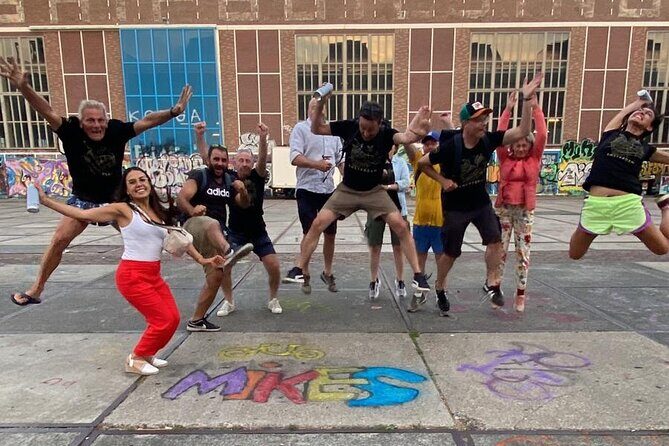
You also get an included Graffiti Experience. That matters because it turns “looking” into “doing,” even if it’s only an experience component within a short visit. It’s a more active way to understand why people paint here and how the visual language works.
You’ll also see that there are bars in the NDSM terrain where you can grab a drink, but drinks aren’t included. If you want to plan ahead, think about bringing a little cash or using a card you trust—just in case you decide you want a waterfront drink while you soak in the art.
Possible drawback: this stop is visually busy. If you’re the type who likes calm, quiet sightseeing, you might want to slow down and pick a few key spots to study. The payoff is that the area can look like an open-air museum without needing a ticket.
Faralda Crane Hotel: the old crane that became a hotel

After the shipyard segment, you reach the Faralda Crane Hotel. This is one of those Amsterdam moments that feels a little unreal: a special hotel built into an old crane structure. Even with just a brief stop, you get a strong sense of how creatively Amsterdam repurposes industrial forms.
This segment is short on purpose. You’re moving, you’re seeing, and you’re saving time for the ride northward. If your goal is to capture the most distinctive architecture in limited time, this is a high-value stop.
Cycling the bikepaths of Amsterdam North and the Eye film theater
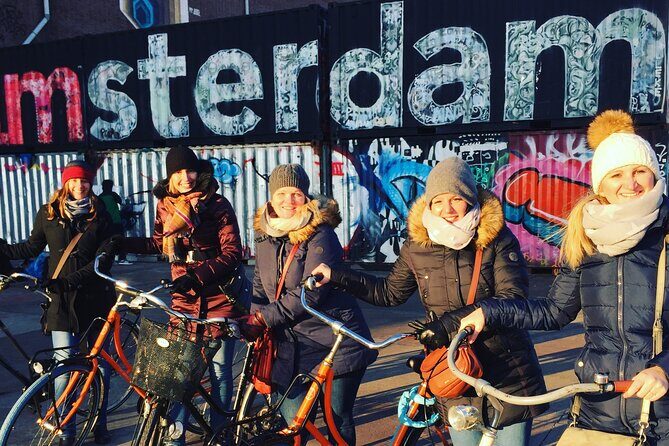
Once you’re through the North-side shift, the ride leans into modern architecture and bikepath cruising. You’ll cycle over bikepaths that cut through areas that feel more industrial and forward-looking. The point isn’t just to reach a destination—it’s to feel how Amsterdam uses bikes to connect different “faces” of the city.
You’ll also pass by the Eye film theater, a modern landmark that reads clearly from the bike route. It’s another contrast point: industrial NDSM to modern civic architecture, all connected by cycling infrastructure.
If you’re traveling with teens or friends who think bikes are only for leisure, this part helps change that belief. You’re not doing a random workout. You’re using cycling as your transport ticket into different sides of the city.
Ferry back toward Central Station: finishing with river views
The tour ends with another ferry segment. You take the ferry to cycle next to Amsterdam Central Station and learn more about cycling culture as you ride. That combination is smart: you get the river perspective again, then you transition into the city’s busiest edge with a clearer understanding of how cycling fits into daily Amsterdam.
It’s also a good closing move psychologically. Ending near Central helps you reorient fast once the tour finishes, especially if you’re planning dinner, museums, or a canal cruise afterward.
The ride ends back where you started, so you don’t feel stranded at a far-off end point.
Price and value: why $59.13 can make sense
At $59.13 per person for about 3 hours, this tour can feel like a fair deal—mainly because it bundles practical items and experiences, not just guiding.
Here’s what you’re paying for beyond “someone on a bike showing you streets”:
- A professional guide handling route flow and safety decisions
- Use of bicycle (no rental headaches on your schedule)
- Helmet and rain jacket, which is real money saved in a rainy city
- A ferry ride, which can be one of the pricier parts of an activity if you’d have to add it yourself
- A Graffiti Experience, which adds an active element rather than pure sightseeing
You’re not responsible for chasing entry tickets either, since the stops listed are ticket-free. Add in the small group size (maximum 12), and you’re buying time with a guide who can actually pay attention instead of talking over a crowd.
One more value angle: the route covers Amsterdam West plus Amsterdam North in a short window. If you’re trying to make the most of limited days, cycling is the fastest way to “see without sprinting.”
What you’ll need to enjoy it (and not hate it)
This is built for moderate fitness and a reasonable level of biking skill. The guide decides if your bike skills are good enough, and safety comes first. That means you should go in ready to ride comfortably, not just “sit and hope.”
A few practical tips that will help you enjoy the experience more:
- Dress in layers, even with a rain jacket provided. Wind on the river can make it feel colder than you expect.
- Plan to arrive early. They don’t wait more than 5 minutes, so late starts can turn into missed bike time.
- If you’re nervous about traffic, remember the tour includes calmer sections early on and guided pacing. Still, you need to be willing to ride.
Also: the tour operates in all weather, so expect it to run even when conditions are damp. Bring the right attitude—Amsterdam by bike is better when you dress like a local, not like you’re attending a museum.
Who this tour is best for
This works especially well if you want:
- A bike-centered way to see Amsterdam quickly
- Street art and industrial-to-modern contrast
- A small-group guide who can answer questions without turning it into a lecture
It also fits older adults who are comfortable biking. One review described two riders in their seventies in pretty good shape, highlighting that it can be a doable way to get a fun bit of exercise without feeling rushed.
Timing can matter too. A Sunday morning ride was described as having minimal bike and auto traffic, which makes the experience even easier.
If you hate biking, this won’t convert you. But if you enjoy motion and want real Amsterdam neighborhoods instead of a canal-only loop, this is a strong match.
Should you book it?
I’d book this if you want a structured, time-efficient way to experience Amsterdam’s creative sides, especially street art, industrial history, and modern waterfronts. The mix of Westergas, NDSM Wharf, and architectural stops like Faralda Crane Hotel gives you variety that feels earned, not random.
Skip it only if you’re unsure about your biking ability or you’re hoping for mostly passive sightseeing. This tour rewards people who like to move, look around, and ask questions while they ride.
If your goal is to feel how locals get around and see parts of Amsterdam that don’t show up in the shortest guidebook walks, this one is worth your afternoon.