REVIEW · AMSTERDAM
Alternative Tour Amsterdam | Drugs Story, Street Art & More
Book on Viator →Operated by Guided Tour Holland · Bookable on Viator
This tour talks about Amsterdam’s edges. In about two hours, you walk from Dam Square into the Jordaan, with planned stops that connect landmarks to the city’s counterculture side—street art, LGBTQ history, and context around prostitution and soft-drugs policy, without entering the Red Light District.
What I like most is the small group setup—max 10 people—so your guide can tell the story with room for questions. I also love the focus on what most standard sights skip, using storytelling that helps the city feel understandable, not just photogenic.
One thing to consider: the themes run adult-mature (prostitution and soft drugs policy), so it’s best for adults or for teens only with a guardian.
In This Review
- Quick hits before you go
- Dam Square to the Jordaan: a 2-hour counterculture walk
- Dam Square start: the National Monument as a grounding point
- Royal Palace stop: exterior history, plus a smart follow-up
- Jordaan: streets for people who like their cities with opinions
- Gay Monument: why Amsterdam’s reputation has a backstory
- Street art, graffiti, and houseboats—without the Red Light District entry
- Counterculture talk: prostitution and soft-drugs policy, handled with boundaries
- Cost and value: why $3.60 can still be worth your time
- Timing, meeting point, and walking logistics that matter
- Who this Amsterdam tour fits best
- Should you book this tour?
Quick hits before you go
- Small group, max 10: easier pacing and better back-and-forth with the guide
- Dam Square start and end: you get a clean loop with minimal shuffling
- Jordaan on foot for an hour: more than a quick drive-by neighborhood look
- Gay Monument stop: a needed reminder that liberal change came after persecution
- Street art + houseboats context: Amsterdam’s “other walls” get the spotlight
- Red Light District handled carefully: the subject is covered, but entry is not allowed
Dam Square to the Jordaan: a 2-hour counterculture walk
The whole experience is built around a simple idea: Amsterdam isn’t only canals and postcards. You start at the National Monument on Dam Square, right by the core of the city, and the tour finishes back at the same meeting point. That loop matters because you don’t lose time figuring out logistics—you’re already in the right pocket of town, and the guide keeps you moving at a human pace.
The tour is scheduled for 1:30 pm and runs about two hours on foot. That’s short enough that it won’t dominate your day, but long enough to cover several meaningful stops instead of just three quick photos. Also, the tour uses a mobile ticket, which is handy in a city where you’re walking anyway and juggling multiple stops.
If you’re the type of traveler who likes a bit of context—why a neighborhood feels the way it does, or how a reputation got earned—this format works. You’ll feel the logic of the route as the guide ties together landmarks with themes of freedom, conflict, and street-level life.
You can also read our reviews of more tours and experiences in Amsterdam


Dam Square start: the National Monument as a grounding point
Starting at the National Monument on Dam Square gives you instant scale. This is where Amsterdam’s story is anchored, close to where the city formed. You’re not going in blind; you get a baseline before the tour moves into the neighborhoods and topics most people avoid.
What’s useful here is timing. You start at the city’s center and then peel outward. That helps you notice patterns—how the city’s different sides sit near each other, and how “big ideas” land in real streets.
This stop is short—about 5 minutes—but it sets the tone. You’re meant to leave with more than facts. You’re meant to leave with a sense that Amsterdam’s famous looseness didn’t appear out of nowhere.
Royal Palace stop: exterior history, plus a smart follow-up
You’ll also pause at the Royal Palace Amsterdam. The key point isn’t that you’re getting a full museum visit inside. The stop is brief (around 5 minutes) and the tour keeps it practical.
Here’s the advantage: you get the explanation you usually only hear after paying for a separate attraction. The palace began as a town hall, and it’s widely recognized as one of the Netherlands’ most culturally significant buildings—so even a short stop gives you a useful frame.
If you want to go further, the tour explicitly points you toward booking an actual palace visit after the walk (you can use the Royal Palace website). That’s a solid approach because you’re not boxed into an entry time during your tour. You decide if the palace is your priority, based on how the morning or afternoon has been going.
Jordaan: streets for people who like their cities with opinions
The Jordaan is where this tour shifts gears from landmark talk to lived-in Amsterdam. You’ll spend about one hour exploring narrow streets lined with cafes, art studios, and independent boutiques. That’s the pretty side, yes—but the guide’s job here is to connect the scenery to people and pressure.
Expect the Jordaan to come alive through themes like rebellious artists, working-class heroes, and the kinds of struggles that shaped the area when “having a future” wasn’t guaranteed. This is one of the best stops for travelers who enjoy neighborhoods more than official attractions. It’s walk-friendly, and the pace is long enough to notice small details without feeling rushed.
A small caution: since it’s a walking portion, comfortable shoes matter. Also, if you’re expecting the tour to function like a shopping stroll, keep your expectations realistic. You’re moving through the area with a guide’s narrative in your head, not following a free-form wander map.
Gay Monument: why Amsterdam’s reputation has a backstory
Then you’ll hit the Gay Monument, and the stop is around 10 minutes. This is a quick stop with serious context: Amsterdam is known for liberal attitudes now, but it wasn’t always that way. The guide pays tribute to LGBTQ people who were persecuted for gender or sexual preference.
This moment is valuable because it corrects the common tourist shortcut. People often treat liberal progress like a natural outcome, when it was actually won through real suffering and resistance. Even in a short stop, it lands an important truth: reputation is earned, not inherited.
If you want your city experience to feel grounded in real history—especially in places where culture feels casual—this stop is one of the highlights. It’s also a good anchor for later street-art and counterculture discussion.





Street art, graffiti, and houseboats—without the Red Light District entry
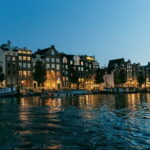
One of the most distinctive parts of the itinerary is the focus on street art, graffiti, and even houseboats. You’ll spend about 40 minutes at various locations showing street art and related scenes. This is where the tour feels like Amsterdam has fingerprints.
The other big detail: the tour addresses the Red Light District topic and gives relevant backstory, but you won’t enter. As of 2020, tour operators are restricted from entering the district, so your guide covers what you need to know from outside the area.
That’s actually a plus for many people. You get context without turning your day into a chaotic walkthrough. You’ll still understand why this area is part of the city’s story—without pretending it’s a theme park.
Practical tip: street art areas can change block by block. Keep your phone ready for photos, but listen first. The guide’s framing is what turns graffiti into meaning.
Counterculture talk: prostitution and soft-drugs policy, handled with boundaries
This tour is explicitly aimed at adults or teens with a guardian because the themes include prostitution and the soft drugs policy. The good news is that it’s not just name-dropping. The guide provides an educational take, framed through storytelling rather than shock value.
This matters because Amsterdam’s “anything goes” reputation can be misunderstood. When you get context from a licensed guide, you start seeing the difference between freedom, regulation, and human impact. That helps the city feel coherent, even when it gets uncomfortable.
If mature themes make you uneasy, it’s better to know that up front and decide. The tour doesn’t hide the topics, and it doesn’t try to pretend they’re painless. For the right audience, that honesty is exactly what makes the walk feel like it gets behind the facade.
Cost and value: why $3.60 can still be worth your time
At $3.60 per person, this is priced more like a city walk subsidy than a traditional paid attraction. The math works because you’re paying primarily for the guide, the narrative structure, and the small-group format—not for expensive entry tickets.
There are no paid admissions for the stops described in the itinerary, so you’re not stacking costs. You’re also walking everything, which means you’re building in free movement through the city. If you were planning similar stops on your own, you’d still need to spend time reading or searching for context. This tour hands you the context in real time.
A couple of value notes:
- You’ll want water. Food and drinks aren’t included, and you’re walking.
- Since it’s only about two hours, you’ll need to show up on time to get the full flow.
Timing, meeting point, and walking logistics that matter
Meet at the National Monument Dam, 1012 JS Amsterdam. The tour ends back at the same place, so you can plan your next activity without panic.
It runs starting at 1:30 pm, and the experience lasts about two hours. If you’re late, you can’t catch up with the group. You’d need to book a new time slot. That policy is worth taking seriously—especially in Amsterdam, where trams and walking can both eat time.
The tour is near public transportation, which helps if you’re combining it with other plans. It also allows service animals. Most people can participate, so don’t overthink it if you’re traveling normally—just expect it to be a walking-heavy city tour.
Who this Amsterdam tour fits best
This is a strong match if you:
- want street art and neighborhood flavor with actual narrative context
- like small-group tours where your questions aren’t lost in a crowd
- are comfortable with adult themes and want a guide to frame them responsibly
It’s also a good option for teens, but only with a guardian, because the tour covers mature topics related to prostitution and soft-drugs policy. If you’re traveling with a group that includes younger kids, I’d skip it or choose something lighter.
You’ll likely enjoy it most if your Amsterdam style leans toward people and systems—how a city gets its reputation, and what’s underneath it.
Should you book this tour?
Book it if you want Amsterdam to feel more like a story than a scrapbook. The best reason is the combination of a small group, focused route, and guide-led counterculture context—street art, Jordaan life, LGBTQ remembrance at the Gay Monument, and responsible explanation around sensitive topics without entering restricted areas.
Skip it if you prefer purely family-friendly sightseeing with no mature themes, or if you absolutely need lots of museum time and indoor stops. Also skip if the walking pace would be a problem for you.
If you’re aiming for an Amsterdam day that helps you understand what makes the city tick—this is a smart, cost-effective way to do it.