REVIEW · AMSTERDAM
Amsterdam Red Light District and City Center Walking Tour
Book on Viator →Operated by Trigger Tours · Bookable on Viator
Walking De Wallen with a good guide changes everything. This 2-hour group tour blends Amsterdam’s most talked-about streets with key old-town stops, so you get answers and context, not just scenery. It runs with multiple start times, and the guide leads you step-by-step through De Wallen at night, when the district is at its most real.
I love how the guide explains the practical rules around the windows and how the coffeeshop culture fits into the wider picture. I also love the way the walk jumps from adult subject matter to everyday history you can still see, like Pub The Ape and the Waag area. One possible drawback: this is not for you if you want a quiet, strictly family-friendly stroll—some parts will feel uncomfortable or serious.
In This Review
- Key things to know before you go
- Why this De Wallen and city-center combo works
- The adult-themed parts: what to expect and how to handle it
- Price and value: what $31.24 buys you
- Getting there: Geldersekade 2 and choosing the right start time
- Stop 1: De Wallen at night and the real stories behind the windows
- The Dam area: wooden-pile Amsterdam and why the city looks stable
- Old Town context: the area’s age and why history shows up everywhere
- Pub The Ape: the 1540 wooden building and the 1452 fire lesson
- Waag: from city gate to guild hub
- The smallest house and the VOC-era twist
- The condom shop since 1987: practical, frank Amsterdam
- Guides, pacing, and how the tour feels in a small group
- Who this tour is best for
- Should you book this Amsterdam Red Light District and City Center walking tour?
- FAQ
- FAQ
- How long is the Amsterdam Red Light District and City Center walking tour?
- Where do I meet, and does the tour end nearby?
- What language is the tour offered in?
- What is the group size limit?
- Is there an admission fee for the stops?
- Do I get a mobile ticket?
- Is the tour recommended for travelers with limited mobility?
- Are service animals allowed?
- When can I cancel for a full refund?
Key things to know before you go
- A night-focused De Wallen walk that gives context on how the district actually works
- Rules explained in plain language, including how the windows and the broader system are treated
- Old Amsterdam you can see and picture: wooden foundations, historic gates, and landmark buildings
- Stop-by-stop variety in just 2 hours, with quick, memorable sights rather than long museum time
- Small group size (max 16), which helps questions stay on track
- Past guides like Robin, Gio, and Aaron were praised for friendly, clear storytelling
Why this De Wallen and city-center combo works

Amsterdam can feel like two cities at once. You’ve got the party-and-people vibe, and then you’ve got the old engineering, the old neighborhoods, and the old buildings that still shape how the city looks today. This tour links those worlds.
You’ll start with De Wallen at night, when the streets are lively but still understandable. Then you’ll move through the city-center history that explains why Amsterdam looks the way it does, from its wooden-pile foundations to its historic trading-era buildings. It’s a smart way to get your bearings without spending half a day hopping between disconnected sights.
And because it’s about walking, you learn the layout by moving through it. You notice where you turn, where the streets tighten, and where landmarks anchor the area. That is huge on a first visit.
You can also read our reviews of more walking tours in Amsterdam



The adult-themed parts: what to expect and how to handle it
Let’s be honest: you’re walking through an area tied to sex work. The tour doesn’t try to pretend otherwise, and that matters. The guide uses the real stories of the district and connects them to how things are regulated.
You’ll also hear about coffeeshop culture—not as a cliché, but as part of the Amsterdam system around rules, commerce, and public life. One of the strongest values here is that the guide gives you the legal and practical framework in a way you can actually understand, including how rights and boundaries play out in the district.
How to make it easier on yourself:
- Decide ahead of time what your comfort level is, so you’re not surprised mid-walk.
- If you’re sensitive to adult topics, keep your focus on the historical context and the guided explanation rather than the street-level spectacle.
- Come in expecting a thoughtful adult-oriented walking tour, not a comedy show and not a lecture hall.
Price and value: what $31.24 buys you
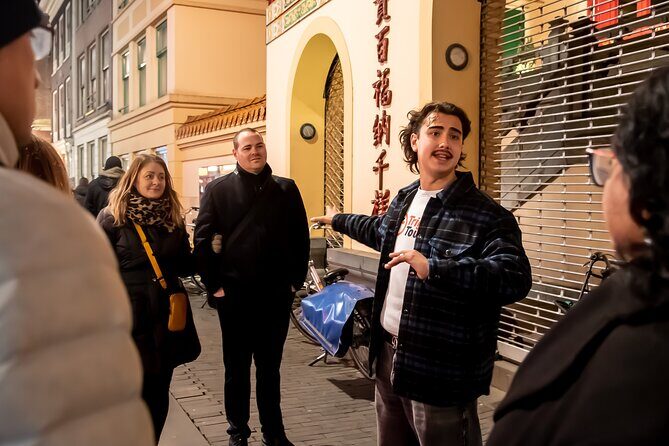
At about $31.24 per person for roughly 2 hours, the price isn’t trying to be the cheapest thing in Amsterdam. It’s paying for something you can’t easily replicate on your own: a live guide who can stitch together the district’s social reality and the city-center history.
This is also a small-group experience (max 16), which usually means you can ask questions without feeling lost in a crowd. Plus, you get a mobile ticket, which makes it easier to show up and get started without extra steps.
A useful planning clue: this tour is often booked far ahead (around 86 days on average). If your schedule is tight, treat that as a sign to reserve early rather than hoping for luck.
Getting there: Geldersekade 2 and choosing the right start time
You meet at Geldersekade 2, 1012 BH Amsterdam, and the tour ends back at the meeting point. That round-trip setup is a nice convenience. You’re not left searching for the nearest tram or figuring out where the guide vanishes.
You’ll also be close to public transportation, so you can build the walk into the rest of your day without spending half your time commuting. The tour offers multiple start times, which is key because night walking changes the feel of everything.
A practical tip: if you want the best mix of “district atmosphere” plus “city-center clarity,” choose a time that keeps you comfortable in the evening. The district is the main night element, but the historic walking parts still benefit from good visibility.
Stop 1: De Wallen at night and the real stories behind the windows
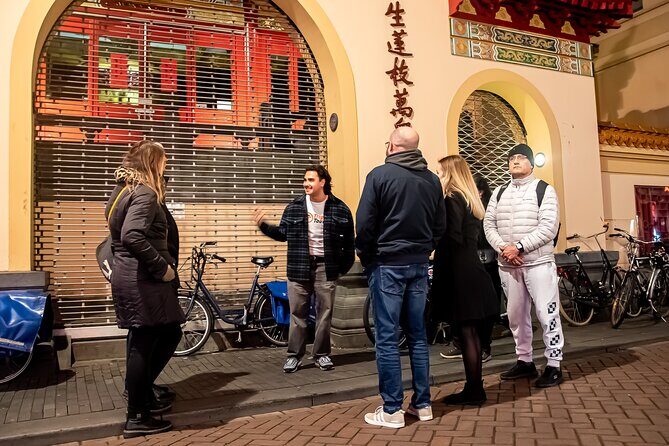
De Wallen is the headline here, and you’ll experience it as a guided walk through narrow streets. The guide’s job is to translate what you see into what it means, and that’s where the tour earns its value.
You’ll learn about the sex work industry in Amsterdam and how it connects with the district’s rules and public expectations. The strongest payoff is that the guide explains how the system works, including the laws around the windows and how things are handled. You’re not just hearing anecdotes; you’re getting structure.
You’ll also hear about coffeeshop culture as part of the broader street-level ecosystem. That matters because Amsterdam’s famous reputation can make it easy to treat everything like a single theme. This tour helps you separate the pieces—what’s regulated, what’s tolerated, and what’s simply part of local life.
What to watch for as you walk:
- Look for how the street rhythm changes—where people linger, where attention shifts, and how the district stays active but still organized.
- Keep questions in mind as you go. The guide will have a better answer once they’ve set up the background.
- If you’re the type who likes to understand before judging, this stop is built for you.
You can also read our reviews of more city tours in Amsterdam






The Dam area: wooden-pile Amsterdam and why the city looks stable
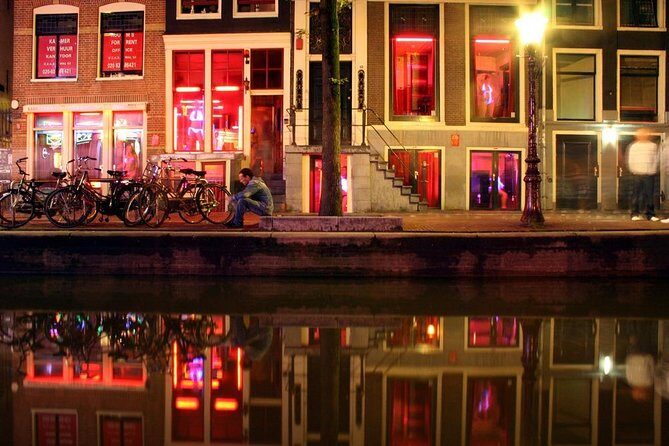
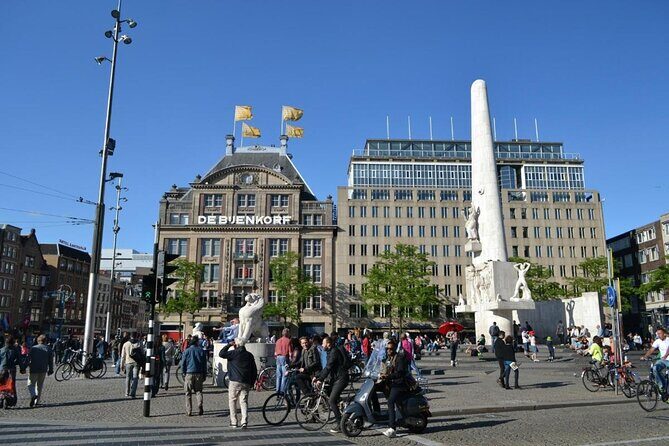
After De Wallen, the tour shifts toward the heart of Amsterdam. You’ll reach the Dam area, and the guide explains Amsterdam’s famous foundation story: the city is known for being built on wooden poles driven deep into the soil.
Here’s the idea in simple terms. Amsterdam’s ground includes layers of fen and clay, so the city needed a foundation that could reach down to a more solid layer. The wooden piles were fixed through the weaker layers and into sand, with estimates around 11 meters deep before reaching solid ground.
That explanation isn’t trivia. It helps you understand why Amsterdam’s buildings have lasted, and why the city’s layout feels the way it does. When you know the engineering, you stop thinking of canals and narrow streets as random scenery and start seeing them as a system.
Old Town context: the area’s age and why history shows up everywhere
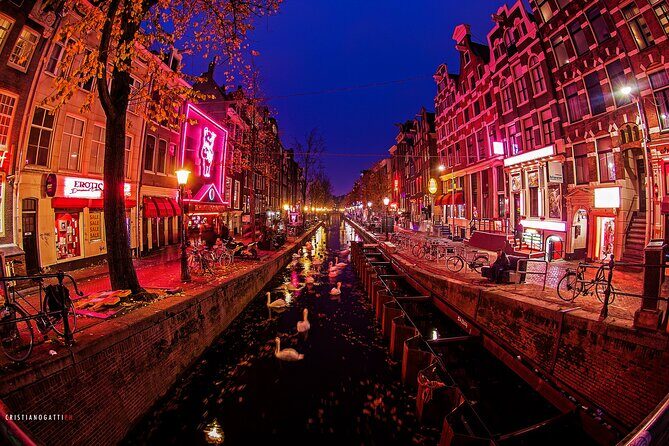
You’ll also hear that you’re walking through the oldest part of the city. That’s not a vague brag. It explains why you see architectural layers and why the streets feel like they’ve carried on for centuries.
This is where the tour avoids turning into only adult-content sightseeing. The guide threads the district into the bigger Amsterdam story: old trade routes, old buildings, and old civic decisions that shaped what the city became.
If you like cities where the past is physically present, this is a good match. You’re walking through places where the history isn’t behind glass. It’s in the street line, in the building materials, and in the way the city still works.
Pub The Ape: the 1540 wooden building and the 1452 fire lesson
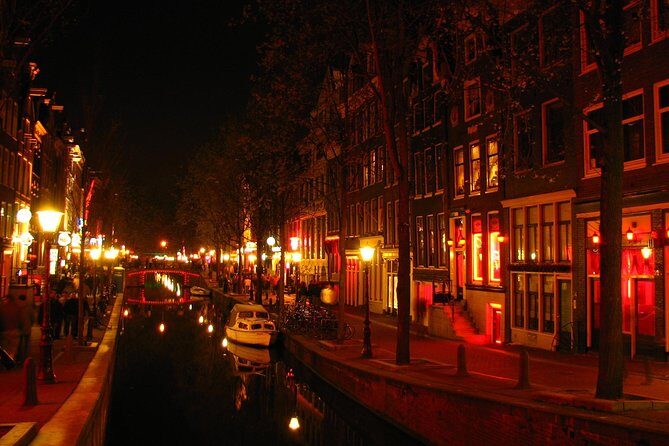
One of the most memorable stops is Pub The Ape—also known by its Dutch name, Int Aepjen. The guide points out that it dates to around 1540 and is one of only two remaining wooden buildings in Amsterdam.
That detail is a big deal because it ties directly to a turning point in Amsterdam’s building rules. After a major fire in 1452, the government pushed for buildings with brick facades. So when you see a surviving wooden structure, you’re seeing more than a pub. You’re seeing a survivor from a different era of materials and risk.
Even if you’re not stopping for a drink, the stop is valuable because it gives you a physical story. You can stand there and picture how Amsterdam’s approach to building changed.
Waag: from city gate to guild hub
The tour also includes the Waag, a historic building that used to function as a city gate. The Waag was built around the 1400s, and it served as part of the defensive wall. Later, its role shifted as Amsterdam’s needs evolved.
The guide explains how it was used as a meeting place for guilds, the craft and trade organizations. Guilds and civic defenses might sound like separate worlds, but the Waag shows how quickly cities adapt. The same structure that once blocked and controlled movement became a place where craftspeople organized their work.
If you enjoy seeing how civic planning changes over time, this stop will click. It also helps you connect the canal-town vibe to the practical realities of trade and city defense.
The smallest house and the VOC-era twist
You’ll visit the smallest house of Amsterdam, built around the 1700s. The guide explains its early purpose as storage space for the VOC trading company before it became a long-term residence.
This is one of those stops that makes you look twice. You expect grand merchant houses or dramatic canal mansions, and instead you get a tiny structure tied to major international commerce.
It’s also a reminder that history often lives in the scale you don’t expect. The guide’s framing helps you see everyday spaces as part of a global story, not just a quirky footnote.
The condom shop since 1987: practical, frank Amsterdam
The walk ends with a very Amsterdam detail: the world’s first condom shop, described as a dedicated specialty shop since 1987. The guide also notes you can get customized sizes and different kinds of condoms.
This stop lands best if you’re paying attention to the tour’s theme: how Amsterdam handles adult realities with rules, systems, and commerce. Instead of treating the district as shock value only, the tour shows you how it’s woven into public life.
Whether you’re curious, amused, or just grateful for the context, this final stop helps close the loop. You leave with a clearer sense that Amsterdam doesn’t only tolerate adult topics—it organizes them.
Guides, pacing, and how the tour feels in a small group
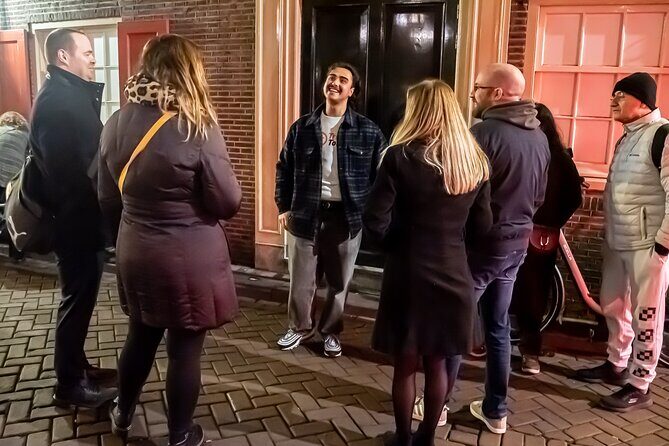
Group size matters on a walk like this. With a maximum of 16 people, the guide can keep track of everyone and move you along without turning it into a shuffle. In the past, guides such as Robin, Gio, and Aaron were praised for being friendly and for keeping the whole group together.
You’ll also want to ask questions as they come up. This kind of tour works best when you treat it like a conversation with context, not a series of landmarks you rush past.
Pacing note: it’s a walking tour, so plan on moving steadily. It’s short enough that you won’t feel stuck for hours, but long enough that you’ll absorb the story beats if you stay present.
Who this tour is best for
This is a strong first-timer tour if you want to understand Amsterdam beyond postcards. It’s especially good if you:
- want context for De Wallen that doesn’t rely on myths
- care about how laws and public life connect
- like pairing adult-oriented subject matter with genuine city-center landmarks
It’s less ideal if:
- you need a strictly quiet walk with no adult topics
- you want museum-style time and sitting down
Also, it’s not recommended for travelers with limited mobility. The tour is described as a walking experience, and you’ll be on the move through streets that may be awkward for mobility needs.
Should you book this Amsterdam Red Light District and City Center walking tour?
I think it’s worth booking if your goal is understanding. If you want to see De Wallen and leave with clear explanations—especially about how rules around windows and the wider system work—this format is practical. The added city-center stops make it better than a one-note district walk.
But if adult topics make you tense, don’t guess. Pick this only if you can handle a respectful, guided conversation about real life in the district. For the right mindset, this is a smart way to get oriented fast and still cover historic Amsterdam basics in the same 2-hour window.
FAQ
FAQ
How long is the Amsterdam Red Light District and City Center walking tour?
It’s listed as about 2 hours.
Where do I meet, and does the tour end nearby?
You meet at Geldersekade 2, 1012 BH Amsterdam, Netherlands, and the tour ends back at the meeting point.
What language is the tour offered in?
The tour is offered in English.
What is the group size limit?
The tour has a maximum of 16 travelers.
Is there an admission fee for the stops?
Admission is shown as free for the Red Light District (De Wallen) stop.
Do I get a mobile ticket?
Yes, this experience uses a mobile ticket.
Is the tour recommended for travelers with limited mobility?
It is not recommended for travelers with limited mobility.
Are service animals allowed?
Yes, service animals are allowed.
When can I cancel for a full refund?
You can cancel up to 24 hours before the experience’s start time for a full refund.