Amsterdam has a second face. This private 2-hour walking tour helps you read the city like a local, moving through the Old Town, the Red Light District, and the Jordaan with an English-speaking guide. I like the local perspective that ties streets and buildings to real Dutch daily life, and I also like that it’s a short, focused route you can fit into a busy trip. One thing to consider: this walk packs a lot of big landmarks and church exteriors, so if you expect lots of ultra-tiny surprises, you may want to set that expectation with your guide.
What you’ll get is a practical orientation plus cultural context. You’ll pass recognizable stops like Dam Square and the Nieuwe Kerk, then shift into areas such as Noordermarkt, Westertoren, Anne Frank’s House surroundings, and Westerstraat. A respectful note: part of the route goes through the Red Light District, so go in with patience and keep things calm—this is a place where the city’s tourist energy meets real adult industry storefronts.
In This Review
- Key Things I’d Plan for on This Walk
- A Private 2-Hour Walk That Helps You Read Amsterdam
- How the Route Flows: Old Town to Jordaan Without the Random Wander
- Old Town and the Red Light District: Learn First, React Second
- Dam Square’s Palace: Where Civic Power Started
- Nieuwe Kerk and the Canal-Age Story: Why Amsterdam Was So Busy Building
- Noordermarkt, Westertoren, and Westerstraat: Where the Tour Gets More Local
- Anne Frank’s House Area: See It in Context, Not in a Rush
- What the Guide Actually Adds: Ask, Then Notice
- Price and Value: Is $35 Worth Two Hours of Walking?
- Who This Tour Suits Best (and Who Might Want Something Else)
- Should You Book This Amsterdam Discovery Tour?
- FAQ
- How long is the Amsterdam private walking tour?
- What areas of Amsterdam does the tour cover?
- What sights will I pass by during the walk?
- Is the tour private?
- What’s included in the price?
- Are food and drinks included?
- What languages are available?
- Where do I meet the guide?
- What are the cancellation and payment options?
Key Things I’d Plan for on This Walk
- A local guide who can steer the pace: past guides named Peter, Andrea, and David have been praised for making the tour work for the group.
- Dam Square is more than a photo stop: you’ll learn why the building there started life as Amsterdam’s city hall.
- You’ll connect canals to power and royalty: the story of the canal district and the Dutch Royal Family gets tied to what you see.
- Jordaan streets are the payoff: you spend time around Nordermarkt, Westertoren, and Westerstraat—less postcard-only than the center’s busiest corners.
- Expect church exteriors: the tour is known for giving time to churches, which may be a plus or a mismatch depending on your priorities.
A Private 2-Hour Walk That Helps You Read Amsterdam
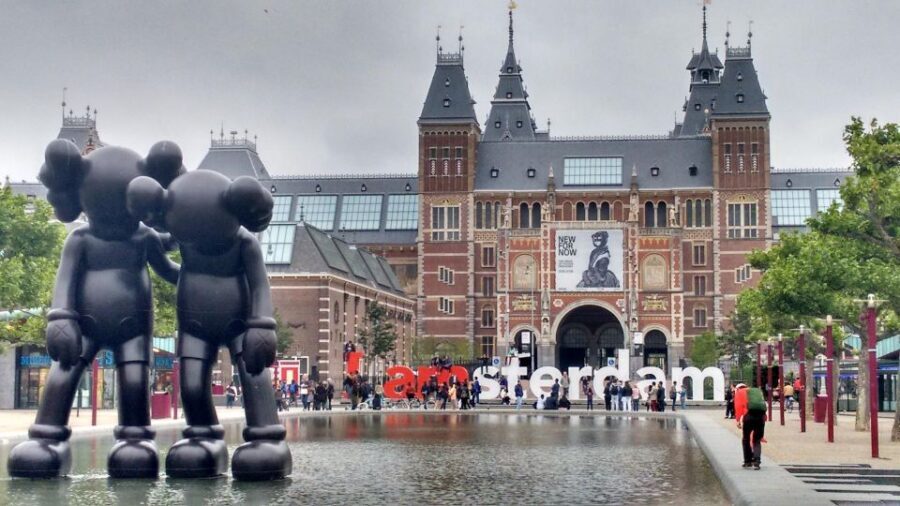
Amsterdam can feel like it’s all one big blur: boats, bridges, bicycles, and a wall of facades. This tour gives you a way to slow down without losing the day. In two hours, you’re not just walking from landmark to landmark—you’re learning how the city grew, how power showed up in buildings, and why certain streets became social hubs.
For me, the win is the guide-led context. A city like Amsterdam rewards attention: the same canal edge can tell multiple stories depending on what century you’re looking at. With a guide walking beside you, you can actually connect the dots fast. And at $35 per person for a 2-hour private walking tour, it’s priced like a “do-it-now” orientation—especially useful if you’re here for a short visit and don’t want to spend your first day figuring it out solo.
This is also a flexible format. The tour is private-group friendly, and the guide can adjust for your group’s interests. That matters in Amsterdam because everyone arrives with a different agenda: some people want architecture, some want social history, and some just want to understand the canal-city logic in plain terms.
You can also read our reviews of more private tours in Amsterdam



How the Route Flows: Old Town to Jordaan Without the Random Wander
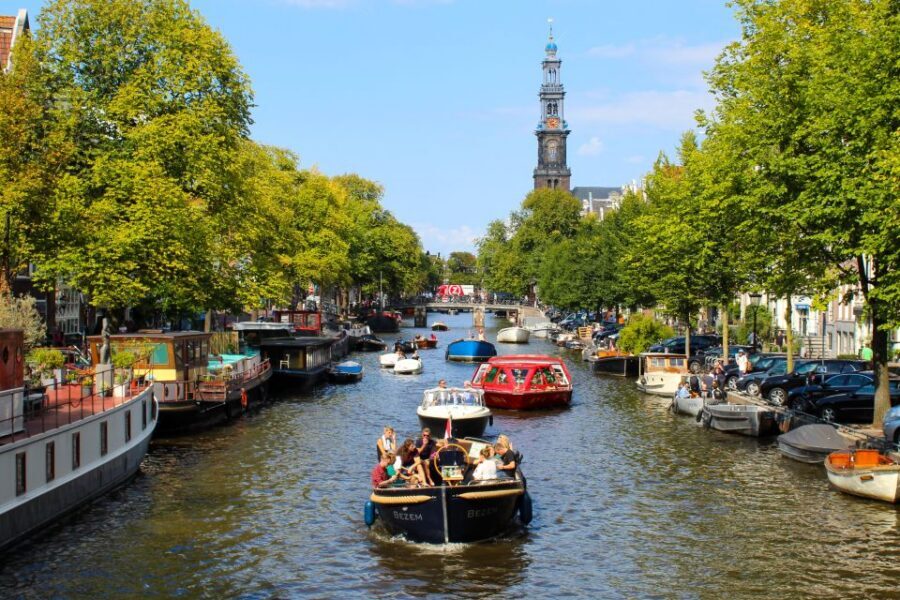
The tour moves through the historic center, taking you along three main areas: the Old Town, the Red Light District, and the Jordaan. That sequencing is smart. You start with the core that gives you orientation, then you hit the streets that are more complicated socially and historically, and finally you end in neighborhoods where the city feels more everyday and lived-in.
You’ll walk past:
- the Old Town’s core streets
- the Red Light District area
- the Jordaan District
- Noordermarkt
- Westertoren
- the Anne Frank’s House area (you pass by)
- Westerstraat
- Dam Square landmarks
- the Nieuwe Kerk
- the former main post office area (you pass by)
Even if you’ve seen Amsterdam photos, seeing the layout in motion is different. It’s one thing to recognize a building in a picture. It’s another to learn what role the building played and how that role shaped the surrounding street network.
Also, because it’s a walking tour, you get a steady rhythm. You’re not waiting around for transport or stacking multiple ticketed stops. You just cover ground, then let the guide help you notice what you’d otherwise miss.
Old Town and the Red Light District: Learn First, React Second
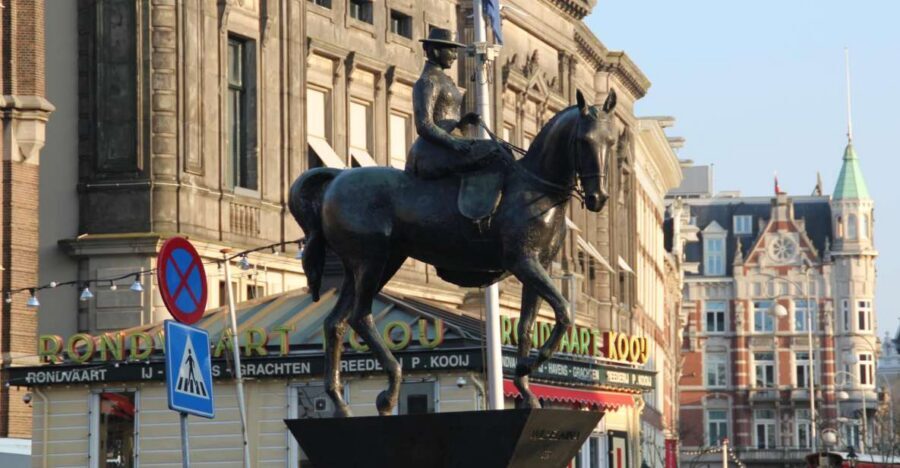
Part of this experience takes you through the Red Light District. That can be uncomfortable for some people if they show up expecting a themed attraction. The better approach is mindset: treat it as a real neighborhood with a real history, not a show.
What makes it worthwhile in a guided format is context. You’ll learn cultural and historical background while you pass through streets where the present day is very visible. That helps you avoid the mental gap between what you see and what it means.
In practice, you’ll want to use the guide’s framing. The city’s atmosphere here can change block by block, and it’s easy to get distracted by what’s immediately in front of you. A good guide keeps you grounded on what matters: how Amsterdam’s social life evolved, and why the city’s rules and design shaped the way neighborhoods function today.
If you’re hoping for a tour that skips this area entirely, this one won’t. But if you want to see the full spectrum of Amsterdam and understand it, this is one of the most efficient ways to do it in only two hours.
Dam Square’s Palace: Where Civic Power Started
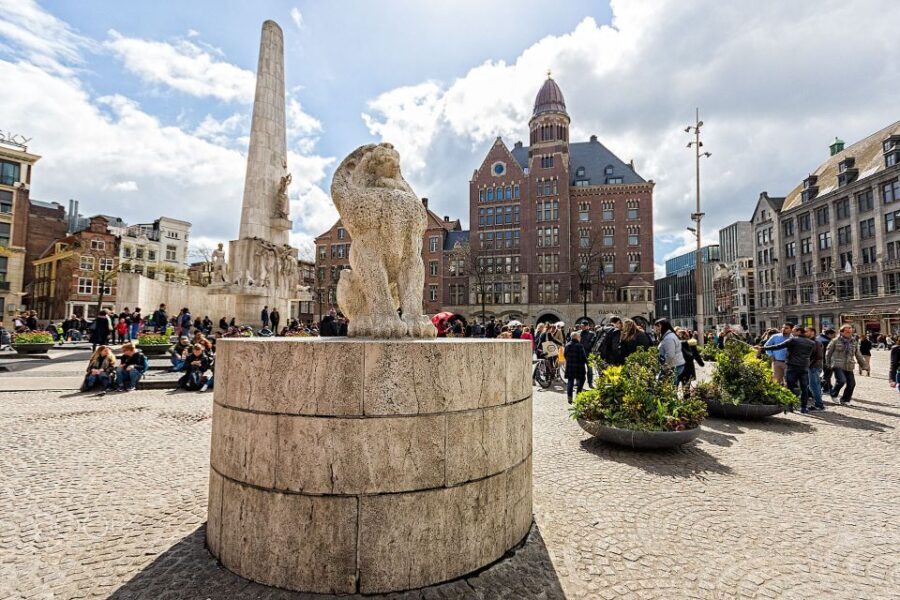
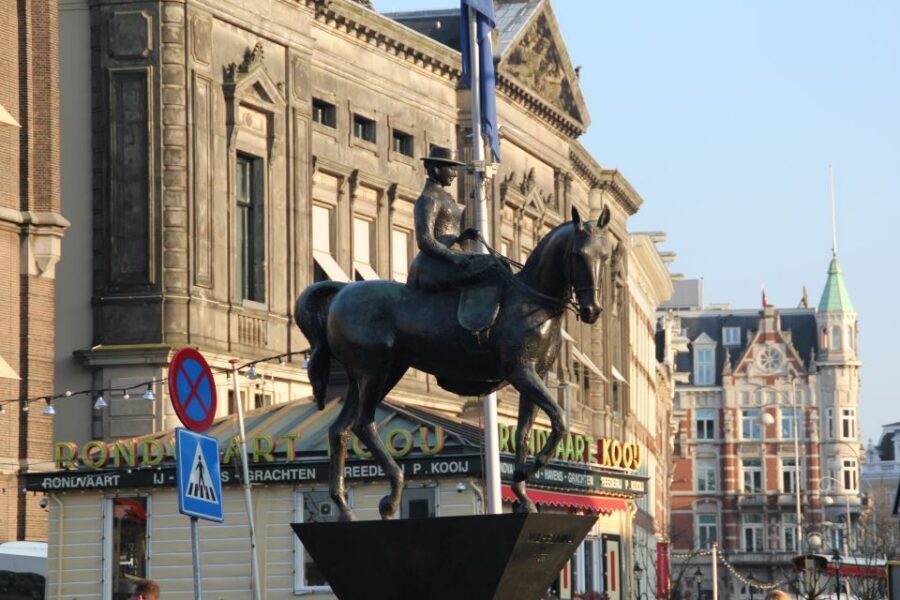
Dam Square is the kind of place you already think you know. Then the guide gives you the missing detail. You’ll see the palace on Dam Square, and you’ll learn that it was originally built as the city hall.
That single fact changes how you look at the whole square. A building built as a civic center says something about what the city valued at the time: public life, governance, and gathering. Standing in the square with that context in mind makes it feel less like a background and more like the city’s political heart.
You’ll also pass nearby points tied to Amsterdam’s public institutions. Even when you’re only seeing exteriors, learning the original function helps you understand why the surrounding buildings and streets are arranged the way they are.
Nieuwe Kerk and the Canal-Age Story: Why Amsterdam Was So Busy Building
The Nieuwe Kerk is another stop that works well with a guide, because churches in Amsterdam aren’t just about religious architecture. They’re also landmarks that reflect eras of wealth, power, and social priorities.
On this walk, you’ll visit the Nieuwe Kerk as part of the broader story of Amsterdam’s development. The tour also links the canal district’s origins to the Dutch Royal Family. That connection is useful because it turns the canals from postcard scenery into a timeline you can picture.
Here’s the practical benefit: after this, you’ll likely be able to look at canal-house fronts, canal edges, and bridge rhythms and think, This is how a city organizes itself around trade, status, and planning.
One potential mismatch: if you’re the type who wants big time inside churches with ticketed access, you may find this tour leans more toward exterior seeing and guided narration. That can still be great if you enjoy explanations and street-level viewpoints.





Noordermarkt, Westertoren, and Westerstraat: Where the Tour Gets More Local
The middle of the walk is where you start to feel the tour’s name idea in a better way—without needing to sprint through everything. Stops like Noordermarkt, Westertoren, and Westerstraat bring you into streets that feel more like real neighborhood space rather than pure sightseeing corridors.
- Noordermarkt gives you a sense of daily rhythm in the center.
- Westertoren adds a recognizable landmark you can use as a visual anchor while the guide talks about what Amsterdam prioritized as it grew.
- Westerstraat helps you experience the city as a set of connected streets, not just isolated icons.
These parts matter because Amsterdam isn’t only about its famous buildings. The city’s character comes from the way neighborhoods sit next to each other. A guide helps you notice transitions: when a street changes tone, when the architecture signals a different era, and when a plaza-like spot tells you that people once gathered there for a reason.
This is also where you can ask targeted questions. If something doesn’t feel clear—like why the canal district took shape where it did, or what the guide means by Dutch culture in everyday terms—this is the moment to ask.
Anne Frank’s House Area: See It in Context, Not in a Rush
You’ll pass by Anne Frank’s House during the tour. Even if you’ve seen it on posters, there’s a big difference between walking past it with no context and walking past it with a guide’s story attached.
The value here isn’t about getting a special entrance. It’s about perspective. When you understand the surrounding city setting and the historical frame the guide provides, the location becomes more than a marker. It becomes part of the city’s narrative.
If you plan to visit inside later, this tour can still help. You’ll walk away with a clearer sense of where everything sits in relation to the streets around it, so your later self-guided time feels more intentional.
What the Guide Actually Adds: Ask, Then Notice
A key part of this experience is the guide’s role as a translator. Amsterdam is full of details, but details don’t automatically explain themselves. With a live guide, you get meaning: why a building originally existed as something else, how neighborhoods formed, and how Dutch culture shows up in city layout and daily life.
From past groups led by guides named Peter, Andrea, and David, the consistent theme is that the tour can feel personalized. One guide adapted the tour to the group. Another was praised for adjusting the flow and making it interesting. And in at least one case, the tour became especially informative when the group asked lots of questions.
So here’s my practical advice: don’t just listen. Ask. If you care about architecture, ask for what to notice next. If you care about how Amsterdam works day to day, ask how people used to live in these areas compared with today.
And because this is only two hours, your best chance to get a tailored experience is early. If you have priorities—like fewer church stops, more time in the Jordaan, or more focus on canals—say so near the start.
Price and Value: Is $35 Worth Two Hours of Walking?
At $35 per person for a 2-hour private walking tour, you’re not buying transportation, tickets, or food. You’re buying a guide plus structure. That’s a very common way to get value in Amsterdam: spend money on clarity, save time on researching everything yourself.
Here’s how to think about it:
- If you enjoy guided context, the price can feel like a bargain. Amsterdam’s layout is dense, and you can burn hours just trying to understand the city’s geography and history.
- If you prefer deep, museum-style experiences, this might feel too short. Two hours is designed for orientation, not for slow sightseeing and long stops.
- If you expect a tour that only shows ultra-offbeat corners, you might find it leans toward the most recognizable landmarks too. This doesn’t make it bad—it just makes your expectation matter.
For the best value, match the tour to your trip style. If Amsterdam is one of many cities on your itinerary, this is a smart use of time. If Amsterdam is your main destination and you love long wandering, treat this as your quick “get oriented” day, then explore afterward.
Who This Tour Suits Best (and Who Might Want Something Else)
This tour fits you if:
- you want a short, guided orientation covering Old Town, Red Light District area, and the Jordaan
- you enjoy architecture and street-level storytelling
- you like asking questions and getting pointed explanations
- you want a private guide format, not a big group
You might want to choose a different option if:
- you’re hoping to spend a lot of time inside church buildings
- you only want lesser-known alleyways and courtyards and not major city landmarks
- you dislike walking through the Red Light District area at all
One more reality check: it’s a walking tour. Wear shoes you trust. Amsterdam streets can be uneven, and two hours on foot will feel longer if you’re in the wrong footwear.
Should You Book This Amsterdam Discovery Tour?
Book it if you want a fast, guided way to understand central Amsterdam without turning your whole day into research. The mix of Dam Square, Nieuwe Kerk, canal-area context, and Jordaan streets like Noordermarkt, Westertoren, and Westerstraat gives you a well-rounded snapshot.
Skip it or adjust expectations if you want lots of church interiors or if you’re chasing only the tiniest local corners. The best way to make it work for you is to tell the guide what you care about early—especially if you want fewer churches or more time in residential-feeling streets.
If you’re the kind of person who likes to leave a city with a mental map and a few solid stories, this is a solid use of two hours. And for $35, that’s exactly the kind of value that makes sense on a first or second day in Amsterdam.
FAQ
How long is the Amsterdam private walking tour?
The tour lasts 2 hours.
What areas of Amsterdam does the tour cover?
It goes through the historic center, including the Old Town, the Red Light District, and the Jordaan District.
What sights will I pass by during the walk?
You’ll see and pass by Dam Square (including the palace), the Nieuwe Kerk, the former main post office, Noordermarkt, Westertoren, Anne Frank’s House, and Westerstraat.
Is the tour private?
Yes, private group options are available.
What’s included in the price?
The tour includes a local guide and a 2-hour walking tour.
Are food and drinks included?
No. Food and drinks are not included.
What languages are available?
The live tour guide is available in English, German, Spanish, and Dutch.
Where do I meet the guide?
The meeting point may vary depending on the option booked.
What are the cancellation and payment options?
You can cancel up to 24 hours in advance for a full refund. You can also reserve now and pay later.
—
If you tell me what month you’re going and whether you prefer architecture, canals, or neighborhood life, I can suggest what to prioritize on this 2-hour route.