REVIEW · AMSTERDAM
Amsterdam Private Walking Tour
Book on Viator →Operated by Amsterdam Guías & Tours · Bookable on Viator
You’ll get your bearings in fast time. This private Amsterdam walk strings together the key inner-city sights in a smart route, so you’re not wasting hours guessing where to go next. I really like the private-guide approach, and you’ll see how the guide connects places like Dam Square and Nieuwmarkt to real-life local culture. The tour is also easy to shape around your interests, so it can feel personal even with a set route.
Two big wins for me: you’ll cover major stops at a walking pace, and you’ll get context that makes those stops make sense. I also appreciate the option for pickup (or a clear meeting point) and the handy mobile ticket, which keeps things smooth when you’re in a new city.
One thing to consider: with just 2 to 3 hours and lots of terrain, this is best if you want an overview plus stops, not a slow, sit-and-stare museum day. If you’re the type who needs long rests every 20 minutes, you’ll want to plan accordingly.
In This Review
- Key highlights worth planning around
- Private walking tour: how you turn time into Amsterdam
- Beursplein to Centraal: starting with the city’s main energy nodes
- Zeedijk’s Chinese Quarter and Nieuwmarkt’s gate-and-market vibe
- Jodenbuurt and Zuiderkerk: where the WWII story lives in the streets
- Muntplein and Begijnhof Gardens: flower market energy and quiet courtyards
- Dam Square: Amsterdam’s centerpiece with royal and national landmarks
- Where the walk ends: Westerkerk and the Anne Frank area radius
- Price and value: what $277.64 buys you here
- The guides: what stands out from the real experience style
- How customization works without derailing the route
- Practical details you should plan around
- Should you book this Amsterdam private walking tour?
- FAQ
- How long is the Amsterdam private walking tour?
- What is the group size for this private tour?
- Where does the tour start?
- Where does the tour end?
- What time does the tour start?
- Can I get picked up at my hotel?
- Is food or drinks included?
- Are there admission tickets required for the stops?
- Is the tour suitable for children and service animals?
- Is there a refund if I cancel?
- What if I need confirmation before the tour?
Key highlights worth planning around
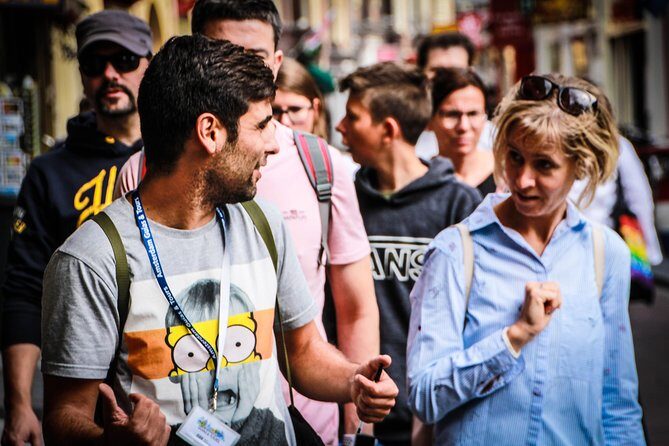
- Private guide for your group up to 10, so the pacing and questions stay focused on you
- Dam Square to Westerkerk route, hitting major landmarks without backtracking
- Jodenbuurt and Zuiderkerk WWII context, handled through neighborhood-and-site storytelling
- Chinese Quarter stops around Zeedijk, including the Buddhist Temple of Amsterdam
- Flower market area around Muntplein and Begijnhof, plus stops around Spui Square
- Meet under a blue umbrella at Beursplein, a simple start point you can find quickly
Private walking tour: how you turn time into Amsterdam
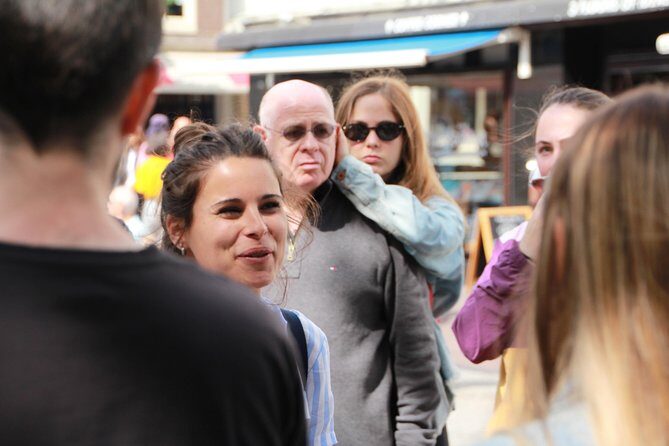
A private walking tour is a small luxury in Amsterdam, and for good reason. In a city with canals, trams, and bikes flying past like they own the place, a guide helps you move with purpose instead of wandering until you accidentally end up somewhere you didn’t mean to go.
This tour is designed for 2 to 3 hours of walking through the inner city, which is the sweet spot for many trips. You’ll get an intro that covers famous sights plus the neighborhoods between them, so the city feels connected instead of like a checklist.
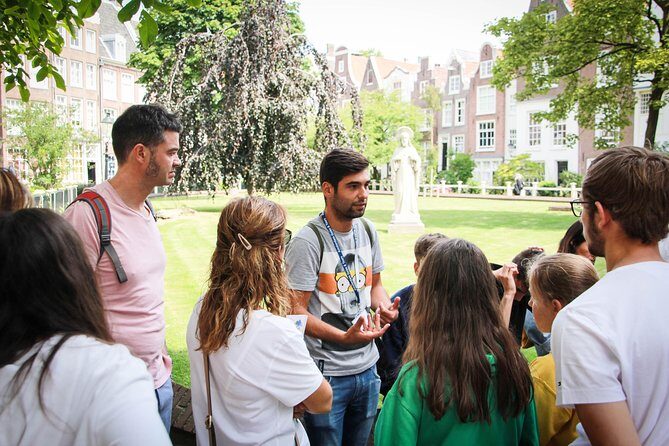
Because it’s private for just your group (up to 10 people), it works well for couples, friend groups, and small families who want to ask questions without feeling rushed. And if you have a theme—history, neighborhoods, or market culture—you can ask to shape the route while still hitting the big landmarks.
You can also read our reviews of more walking tours in Amsterdam



Beursplein to Centraal: starting with the city’s main energy nodes
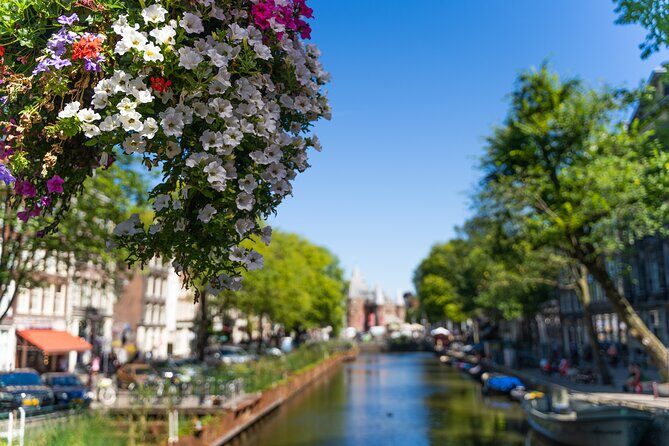
The tour begins at Beursplein 1–3, next to the stock exchange area. The meeting point is easy to spot: you’re looking for the guide waiting under a blue umbrella with the company logo. That little detail matters more than you’d think when you’re arriving in a city where landmarks can look similar at street level.
From there you move to Amsterdam Centraal Station, one of the city’s most important landmarks. It was designed by Dutch architect Pierre Cuypers and opened in 1889. Even if you’re not a train-spotter, this stop helps you understand Amsterdam’s structure: rail lines, commerce, and the way the city pulls people inward.
This is also a smart early choice. Centraal gives you a powerful first reference point, and it helps you mentally map the rest of the walk.
Zeedijk’s Chinese Quarter and Nieuwmarkt’s gate-and-market vibe
Next you head toward Zeedijk, where the route passes through the Chinese Quarter. This is one of those Amsterdam contrasts that makes the city feel real, not just postcard-perfect. You’ll also see the Buddhist Temple of Amsterdam, a standout stop that adds a different cultural layer beyond the canal-tour stereotype.
Then you reach Nieuwmarkt, which is known locally for its market atmosphere and street-level life. Here you’ll pass the San Antón Gate, right near the Chinese Quarter. The gate-and-market pairing is a useful combo because it shows you how Amsterdam mixes old community identity with everyday commerce.
One practical note: market areas can be crowded, and you’ll likely feel more foot traffic here than at quieter canal streets. If your group prefers wide-open walking space, just be ready for a bit more movement around Nieuwmarkt.
Jodenbuurt and Zuiderkerk: where the WWII story lives in the streets

The walk brings you into Jodenbuurt, which is described as a must-see area full of history and culture. This isn’t treated as a vague “this is sad” stop. The tone shifts toward specific World War II context, and that matters.
You also visit Zuiderkerk, where the guide talks about the Jewish Quarter and its WWII history. This is the part of the tour where you’re most likely to feel your attention sharpen. The guide’s job here is to connect what you see on the street to what happened, without turning the walk into something cold or overly dramatic.
If your group likes historical storytelling, this section is often the reason people book a private guide instead of doing a self-walk. And if your group is sensitive to heavy topics, you can ask the guide how they pace the conversation so it stays respectful for everyone.
Muntplein and Begijnhof Gardens: flower market energy and quiet courtyards

After the heavier stops, the route shifts into lighter, more everyday Amsterdam life. You’ll reach Muntplein, one of the city’s famous squares, and it’s especially popular because the flower market is located there.
That change of scene is not accidental. It gives you a mental reset after the WWII context, and it also shows how Amsterdam functions as both memorial space and daily-life city.
Next you visit Begijnhof, with time around the Begijnhof Gardens. This area is a quieter pocket, and it’s a great contrast to the square-life outside. You’ll also talk about the flower market and the San Francisco Church, giving you a wider view of how religious and community spaces fit into modern Amsterdam streets.
One consideration: the quieter courtyards can feel smaller once crowds build up. If your group prefers less time in busy lanes, you might ask the guide to manage pacing around the busiest edges.
You can also read our reviews of more private tours in Amsterdam





Dam Square: Amsterdam’s centerpiece with royal and national landmarks
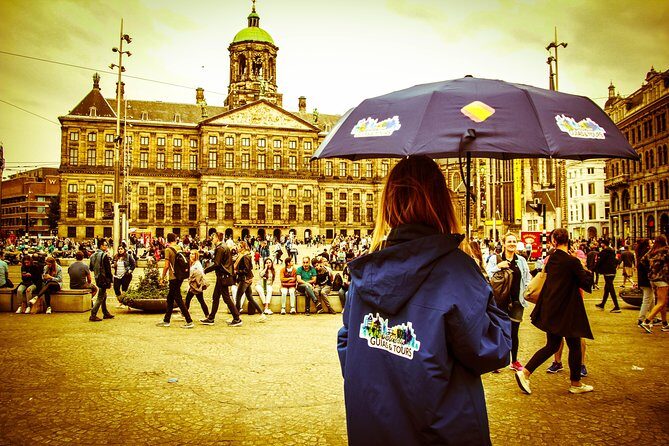
You’ll finish this main stretch at Dam Square, the heart of Amsterdam. It’s a big, visually confident place, and the guide helps you read what you’re looking at instead of just photographing it and moving on.
At Dam Square, you’ll see the Royal Palace, the Nieuwekerk, and the National Monument. Those are not just pretty buildings. They anchor how Amsterdam views itself: royalty and governance, church presence, and national remembrance all packed into one central public space.
This stop tends to work well at the end of a walking tour because it gives you a clear finale. You know you’ve reached the “main stage,” and the guide’s explanation helps you understand why locals treat it as a central point.
Where the walk ends: Westerkerk and the Anne Frank area radius
The tour ends near Westerkerk, with the end point listed as Westermarkt 64, 1016 DR Amsterdam. This positioning is convenient if you’re continuing your day with more landmarks close by.
You’ll finish near places like Anna Frank’s House, the Hommomonument, and the Westerkerk itself. In practice, that means you can transition from guided storytelling into your own exploration without needing to relocate across town.
If you’re planning museum tickets or timed entries later, this ending location is useful because it keeps you in the same general area rather than forcing another transport hop.
Price and value: what $277.64 buys you here
The price is $277.64 per group, up to 10 people. That sounds like a lot if you compare it to a museum ticket, but you should compare it to what you get: a professional guide, private pacing, and a route that hits multiple major stops in a short window.
Here’s the value math that usually helps me make decisions. If you fill the group with 10 people, you’re effectively paying about $28 per person. If you’re only a duo, it feels more like a private consultation where you’re paying for two people’s time with a guide.
This is a great deal when:
- you have a group large enough to spread the cost,
- you want a guided overview rather than planning everything yourself,
- you appreciate historical and neighborhood context that changes how you see the city.
It’s less of a bargain if you’re traveling solo and you’re happy with a self-guided walk using a map and a few reading stops. In that case, you might decide whether you’d rather spend on museums or a different experience.
The guides: what stands out from the real experience style
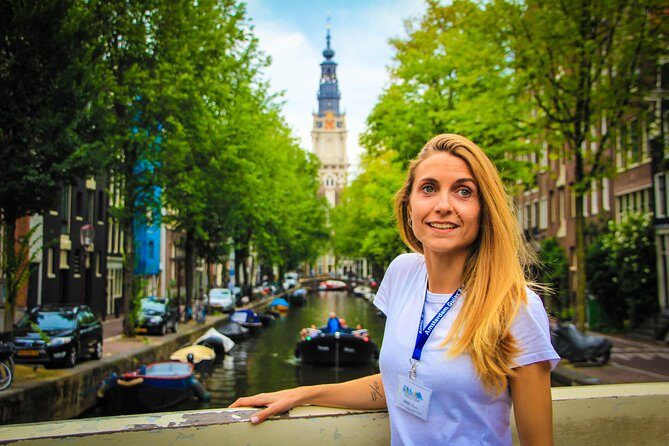
The private nature of the tour is a big part of why it works. People have described guides like Xavier, Karl, Laura, and Zara as engaging and strongly informed. What matters most is not just facts, but the way the guide makes Amsterdam feel understandable, including the quirks that you’d miss if you were just following a route.
If your group loves conversation, you’ll probably enjoy the guide-led pace. If you prefer quieter explanations, you can still do that with a private format, because you control the questions and the flow.
Since the tour can be customized according to your interests, I recommend telling your guide early what you care about most: history, markets, or neighborhood culture. Then ask them to adjust small parts without losing the key landmarks.
How customization works without derailing the route
The route is built around major inner-city sites, but the experience is described as customizable. In practical terms, that usually means you can spend a bit more time where your group’s curiosity lives and trim moments that don’t matter as much to you.
I’d use customization for things like:
- adding a bit more focus on the market areas near Nieuwmarkt or the flower market stops,
- spending more time on the WWII storytelling components around Jodenbuurt and Zuiderkerk,
- asking for extra context at squares like Dam Square and Muntplein.
Your best move is to ask one clear question at the beginning, such as what part of the city tells the most about Amsterdam today, not just in textbooks. That helps the guide aim the explanation.
Practical details you should plan around
This tour offers a choice of pickup at your hotel or meeting at a specific location, which is helpful if you’re staying in a busy area and don’t want to battle navigation. If you’re meeting the guide, the Beursplein start is clear and marked by the blue umbrella.
You’ll also have a mobile ticket, which is convenient on a day when you’re already carrying a phone, map apps, and maybe a tram card. For stops along the route, admission tickets aren’t required for the listed sights, so your money stays focused on the tour itself rather than adding surprise entry fees.
Comfort-wise, assume it’s a walking tour through city streets and squares, so comfortable shoes are a must. The tour is short enough to be realistic, but it still adds up.
The tour notes that most travelers can participate, and service animals are allowed. Children must be accompanied by an adult, so plan that if your group includes kids.
Should you book this Amsterdam private walking tour?
Book it if you want an efficient, human-scale introduction to Amsterdam. The route connects iconic landmarks with neighborhood storytelling, and the private setup helps you ask questions and steer the focus without sacrificing the essentials.
Skip it or rethink it if your goal is long museum time, heavy shopping, or a totally flexible day with no structure. This is a walking overview, not a free-form wander.
My recommendation: if you’re visiting for a first time, traveling with a group that can share the cost, or you care about the story behind places (not just what they look like), this tour is a strong value. It’s the kind of guide-led start that makes the rest of your Amsterdam day easier to enjoy and understand.
FAQ
How long is the Amsterdam private walking tour?
The tour runs about 2 to 3 hours.
What is the group size for this private tour?
It is a private tour for your group, up to 10 people.
Where does the tour start?
It starts at Beursplein 1–3, 1012 JW Amsterdam, Netherlands.
Where does the tour end?
The tour ends near Westerkerk at Westermarkt 64, 1016 DR Amsterdam.
What time does the tour start?
The listed start time is 10:00 am.
Can I get picked up at my hotel?
Yes, pickup is offered, or you can meet the guide at the meeting point.
Is food or drinks included?
No, food and drinks are not included.
Are there admission tickets required for the stops?
The listed stops show admission ticket free.
Is the tour suitable for children and service animals?
Service animals are allowed. Children must be accompanied by an adult.
Is there a refund if I cancel?
No. The experience is non-refundable and cannot be changed for any reason.
What if I need confirmation before the tour?
You receive confirmation at the time of booking.