REVIEW · AMSTERDAM
Amsterdam Private Walking Tour of Famous Painters
Book on Viator →Operated by Snurk.Travel · Bookable on Viator
Amsterdam’s art shows up in plain sight.
This private walking tour strings together Dutch painting history with real city locations, so the stories feel practical, not museum-theory. I like how the guide keeps the conversation flexible with themes you can steer toward, like maritime trade routes or women’s rights in Dutch society, while still grounding it in artists such as Rembrandt. I also like the tone: you get wins and failures of Dutch artists, not just the glossy success stories.
One thing to plan for: the route ends in the Jewish quarter with the Portuguese Synagogue, and admission there is not included. You should also expect no built-in stops for coffee or snacks, since those aren’t part of the package—easy enough to fix, but worth thinking about before you start.
In This Review
- Key highlights that matter on the ground
- A 3-hour painters route that walks you into the Golden Age
- Starting at Amsterdam Centraal: history before you even move
- St. Nicholas Basilica and the Catholic–Protestant storyline
- In ’t Aepjen: Dutch drinking culture through Jan Steen and friends
- Chinatown plus Nieuwmarkt and De Waag: myths, punishments, and family leisure
- Rembrandt House: why one artist became a reference point
- Portuguese Synagogue and the Jewish neighborhood on the quiet side
- Price, languages, and what you’re really buying for $231.52
- Who should book this Amsterdam painters tour
- Should you book it?
- FAQ
- How long is the Amsterdam private walking tour of famous painters?
- Where does the tour start and end?
- Is this a private tour?
- What languages is the tour offered in?
- Is the guide included in the price?
- Are coffee or snacks included?
- Is there mobile ticketing?
- Are all admissions included?
- Where can I meet the guide?
- Can I cancel for a full refund?
Key highlights that matter on the ground
- Private for your group: only your people, so you can set the pace and ask sharper questions.
- English and Russian guide option: choose the language that helps you follow the painter-to-place connections.
- Golden Age context around major landmarks: churches and squares become part of the art story.
- Frans Hals and Jan Steen brought to life: you don’t just hear names—you connect them to everyday culture.
- Nieuwmarkt to De Waag storytelling: family leisure and darker myths meet in the same walk.
- A strong lead-in to Rijksmuseum day: it sets you up to notice details when you go look at paintings.
A 3-hour painters route that walks you into the Golden Age
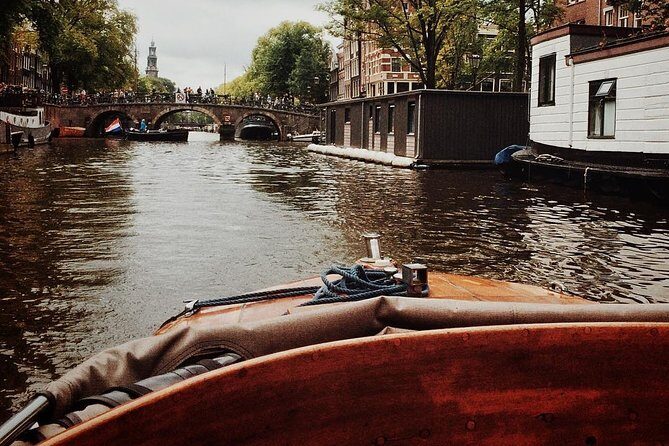
This tour is built for people who want art history without getting stuck in one room. You’re moving through central Amsterdam with a guide, linking painters to the era’s politics, faith, trade, and daily habits. That’s a big reason it works: art from the Dutch Golden Age doesn’t come from nowhere, and the tour keeps reminding you of that.
The route is also designed for timing. In about three hours, you’ll cover several key areas—enough to get oriented and leave curious for the next museum visit. And since it’s private, you’re less likely to feel rushed by a big herd following the same questions.
You’ll need comfy shoes, though. This is a walking experience through mostly outdoor, street-level stops, and a few are tied to older neighborhoods where sidewalks can be uneven.
You can also read our reviews of more walking tours in Amsterdam


Starting at Amsterdam Centraal: history before you even move
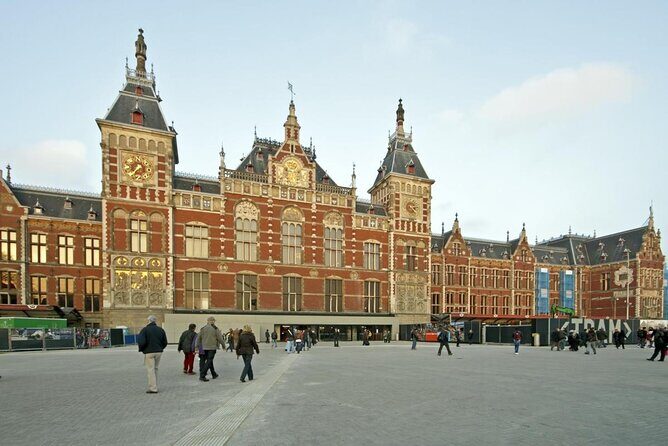
Your meeting point is Amsterdam Central Railway Station, where the guide sets the stage for the Netherlands in the Golden Age. This start matters because it primes your brain before you start seeing the visuals. If you begin with the basics—what the era looked like, what people believed, and what power looked like—you’ll follow the later artist stories much faster.
Centraal is also practical. You’re in a place with strong public transport options, so it’s easy to reach even if your hotel is outside the center. And because the meeting time is tied to a central hub, you can usually align your day with other plans like museum visits afterward.
There’s no special admission here, and the stop is short—about 15 minutes—so it functions like a quick briefing, not a time sink. Get your bearings, then walk.
St. Nicholas Basilica and the Catholic–Protestant storyline
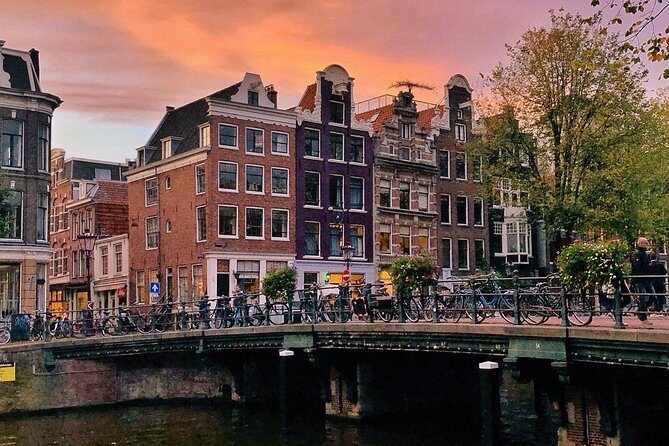
Next you head to St. Nicholas Basilica (St. Nicholas Cathedral). It may not be from the Golden Age itself, but that’s part of the point. The guide uses the church to explain what Catholicism and Protestantism meant during the Eighty Years’ War and how those conflicts shaped Dutch life afterward.
This is one of those moments where the tour turns “art history” into “people history.” Paintings don’t float above real conflict. When you understand the religious and political divide, you’re better prepared to read what artists were responding to—directly or indirectly.
The visit is free and stays brief (about 15 minutes). The drawback? If you’re hoping for a long, quiet church moment, this stop won’t be that. It’s a narrative stop, aimed at setting context for later painting themes.
In ’t Aepjen: Dutch drinking culture through Jan Steen and friends
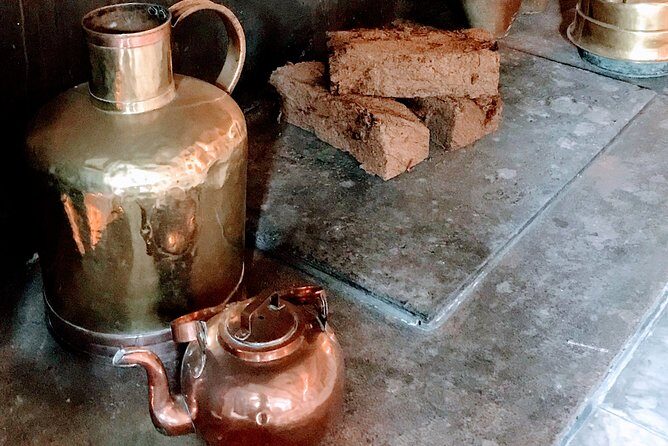
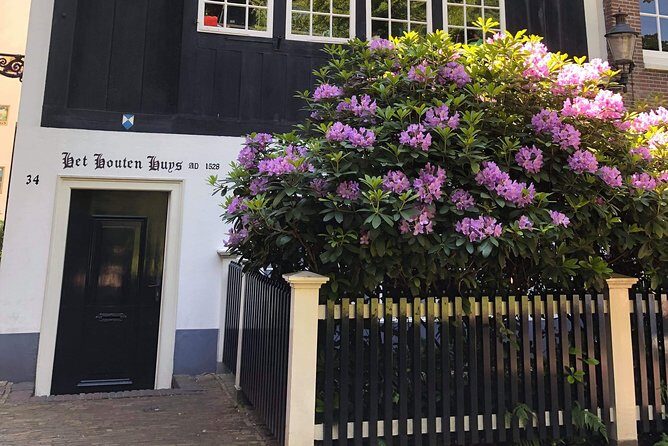
One of the most memorable parts is the stop at In ’t Aepjen, an authentic bar in the oldest wooden house of Amsterdam. This is where the tour gets less formal and more human. The guide connects Dutch favorite drinks and drinking traditions to national mentality, games, and big celebrations.
And the art angle stays grounded. You’ll use paintings by Jan Steen and Frans Hals (and other artists mentioned in the storytelling) to make the point that the Golden Age wasn’t only about portraits and serious scenes. It was also about everyday life—celebrations, humor, and social behavior.
The time window is short—around 15 minutes—so you’re not turning this into a long tasting session. You’re there for atmosphere and interpretation, not for a full drink break. Since coffee and snacks aren’t included, you might want to eat before or plan a quick bite after, especially if you’re walking with kids or teenagers.
Chinatown plus Nieuwmarkt and De Waag: myths, punishments, and family leisure

As you continue, you pass through Chinatown for a brief look—about 15 minutes—which gives your walk a “city of layers” feel. The tour doesn’t frame it as a deep cultural lecture; it uses the neighborhood shift to keep the day moving and to reinforce that Amsterdam’s history isn’t one straight line.
Then the tour turns to Nieuwmarkt and De Waag, where you’ll spend about 30 minutes. This square carries myths and secrets, and the guide points out why families were drawn there for leisure near the former anatomical theatre. That blend—family fun next to scientific spectacle—helps you understand the era’s curiosity, boundaries, and contradictions.
The story gets darker in a controlled way. You’ll hear about witches, prisoners, and punishments of the Golden Age, tied back to Rembrandt through the guide’s interpretation. If you prefer your art history light and uplifting, this is the section you’ll want to manage emotionally. It’s still handled as historical storytelling, not shock tourism.
You can also read our reviews of more private tours in Amsterdam



Rembrandt House: why one artist became a reference point
After the square storytelling, the tour shifts into a more focused Rembrandt House moment. The guide puts special attention here, talking about Rembrandt’s life, talent, and fate, plus what mattered for a successful artist during the Golden Age.
This part is valuable even if you’re not a hardcore Rembrandt fan. He’s one of the easiest painters to use as a lens for the entire era: patronage, reputation, technique, and the way public perception could help or hurt. And because the tour has already wired in religion and politics, Rembrandt’s position in society feels more understandable.
One practical note: the time allocation for Rembrandt House isn’t clearly listed in your info, so you should expect it to be “guide-dependent” within the overall three hours. If you’re the type who wants extra museum time afterward, plan for that—this stop is meant to set up your next look, not replace a full museum visit.
Portuguese Synagogue and the Jewish neighborhood on the quiet side
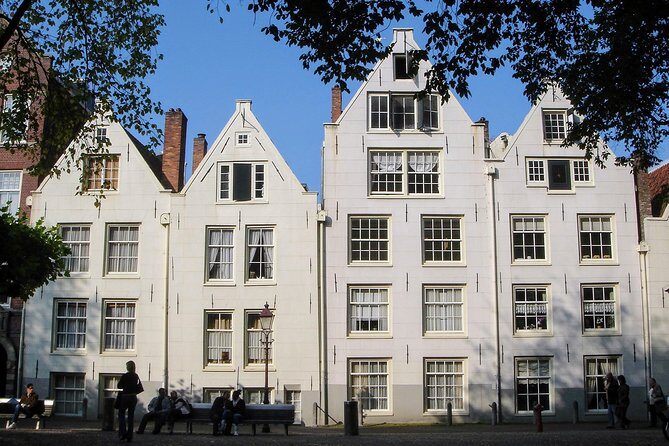
The end of the tour takes you into the Jewish neighborhood, where things feel slower and more local. You’ll pass key sights in the area such as the Jewish Historical Museum, the Portuguese synagogue, and the famous flea market (as part of the broader district experience).
The guide connects this stop to the Jewish diaspora in the Netherlands, focusing on traditions, lifestyle, and rights. This is a strong contrast to the earlier sections about war and religious conflict, because it shows how communities lived, adapted, and organized themselves over time.
Timing-wise, you’ll spend about 20 minutes here, and admission is not included for the Portuguese synagogue. That’s the main drawback of the ending: you may need to pay separately if you want to go inside. If you’re short on time that day, you might choose to prioritize street-level viewing and the guide’s narrative rather than synagogue admission.
Price, languages, and what you’re really buying for $231.52
At $231.52 per person for a roughly 3-hour private experience, you’re paying for three things at once: a guide, a paced walking route across central Amsterdam, and an art-history framework you can steer toward your interests. This price can feel high if you’re thinking only in terms of time. But it starts to make sense when you consider that a private guide can tailor the themes—like art through trade or through women’s rights—rather than giving you one fixed script.
What’s included is straightforward: the guide, plus a mobile ticket. Several stops are free of admission, including the start at Centraal, St. Nicholas Basilica, and the bar and square moments mentioned in the route details.
What’s not included: coffee/snacks, and Portuguese synagogue admission. For value, I’d treat this tour like the “smart appetizer” before museum-heavy days. Then add your own food break and any paid entrance you care about most.
Also, the tour is offered in English and Russian. Pick the language you’ll feel most comfortable with, because the art storytelling depends on details.
Who should book this Amsterdam painters tour
Book it if you want art history that actually links to place. This tour is especially good for you if you like theme-based learning—artists tied to trade, faith, politics, and social life. It also suits mixed-interest groups because the route has multiple angles: painters like Frans Hals and Jan Steen, darker Golden Age stories, and Jewish neighborhood context.
You should think twice if you want a long museum experience. This is a walking guide format, and some stops are intentionally short. It also includes conflict-and-punishment topics in the Nieuwmarkt/De Waag area, so if you strongly prefer only upbeat art context, you may not love that tonal shift.
If you’re trying to plan one great day that sets up later visits to major museums, this tour is a strong way to get your bearings fast—artist names start to attach to buildings and stories instead of staying as detached labels.
Should you book it?
Yes, if your goal is a focused, guided introduction to Amsterdam through the Dutch Golden Age painters lens. The route is private, flexible with themes, and gives you artist storytelling connected to the city’s real landmarks.
Skip it or re-think if you hate walking for three hours, dislike churches or historical conflict topics, or if synagogue admission matters a lot and you don’t want any extra on-site payment.
If you do book, do one thing that pays off: wear comfortable shoes and plan a food stop outside the tour, since coffee and snacks aren’t included.
FAQ
How long is the Amsterdam private walking tour of famous painters?
It lasts about 3 hours.
Where does the tour start and end?
It starts at Amsterdam Central Railway Station (Stationsplein 13a, 1012 AB Amsterdam) and ends at the Portuguese Synagogue of Amsterdam (Mr. Visserplein 3, 1011 RD Amsterdam).
Is this a private tour?
Yes. Only your group participates.
What languages is the tour offered in?
It is offered in English and Russian.
Is the guide included in the price?
Yes, the guide is included.
Are coffee or snacks included?
No. Coffee and/or tea, and snacks are not included.
Is there mobile ticketing?
Yes. A mobile ticket is used.
Are all admissions included?
Most stops have free admission based on the provided details, but admission for the Portuguese Synagogue is not included.
Where can I meet the guide?
You meet at Amsterdam Central Railway Station at Stationsplein 13a.
Can I cancel for a full refund?
Yes. You can cancel up to 24 hours in advance for a full refund. If you cancel less than 24 hours before the start time, the amount paid is not refunded.