REVIEW · AMSTERDAM
Amsterdam: “Operation 45 ” Treasure Hunt Walking Tour
Book on GetYourGuide →Operated by Mystery City · Bookable on GetYourGuide
A missing cache of diamonds is a great excuse to explore Amsterdam. This Operation 45 walking tour turns the city’s details into clues as you follow a WWII-style trail through the old Jewish District and several famous stops.
I like that it’s not an app game. You work with a real backpack of maps, boxes, and locks, and the puzzles are designed around what you can actually see on the street. I also like the way the story uses places you might miss if you stick to the central canal loop. One downside to plan for: it’s easier to finish in about 2 hours if your group is puzzle-motivated, but a calmer pace can stretch it closer to 2–3 hours.
In This Review
- Key Things I’d Prioritize Before You Go
- The WWII Diamond Mystery: What Operation 45 Actually Is
- Starting at Mystery City Games: The HQ + Your Backpack Toolkit
- The Route: A 3 km, 2-Hour Puzzle Walk Through Amsterdam’s Jewish District
- Stop 1: Shadow Wall and the Skill of Spotting Clues
- Stop 2: Portuguese Synagogue Area and the Story Behind the Details
- Stop 3: Artis Zoo Stop for a Different Amsterdam Mood
- Stop 4: Diamond Factory Stop and the WWII-Heist Finale Feeling
- The Fifth Location: One More Puzzle Stop That Keeps You Honest
- How Hard Is It, and Will You Finish in 2 Hours?
- Why This Feels Different From App-Only City Games
- Value: Is $29 Worth It for an Amsterdam Walking Tour?
- Who This Tour Fits Best (and Who Might Want to Skip)
- Quick Booking Checklist Before You Show Up
- Should You Book Operation 45 in Amsterdam?
- FAQ
- Where do I meet for Operation 45?
- How much does the Amsterdam Operation 45 treasure hunt cost?
- How long is the tour and how far do you walk?
- Is this tour an app-based game?
- What locations will we visit during the hunt?
- What do I get when I pick up the game backpack?
- What language is the tour hosted in?
- Is it suitable for young children or people with mobility issues?
- Is a prize included?
Key Things I’d Prioritize Before You Go
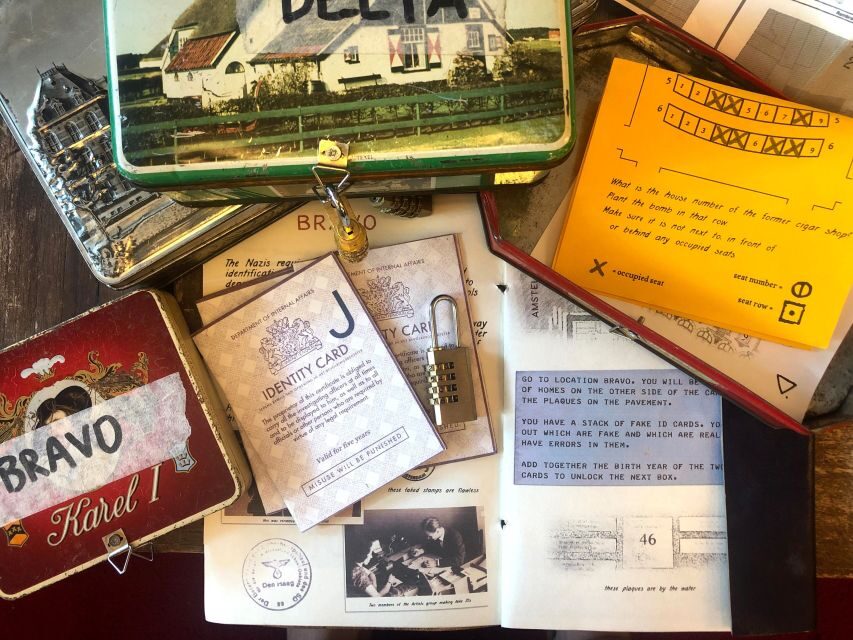
- Physical puzzles, not a phone: boxes, locks, printouts, and other tactile items make it feel like an outside escape room.
- WWII diamond-heist story with real location context: the hunt connects clues to what you’re seeing in Amsterdam.
- Former Jewish District route: you’ll spend time away from the busiest city-center feel.
- Five puzzle locations on a 3 km walk: it’s short enough to be manageable, but still enough walking to stay engaged.
- Designed for adults and kids 6+: under 6 isn’t recommended, and mobility needs may be a factor.
- Prize included for all participants: you finish the game with something in hand, not just a photo.
The WWII Diamond Mystery: What Operation 45 Actually Is
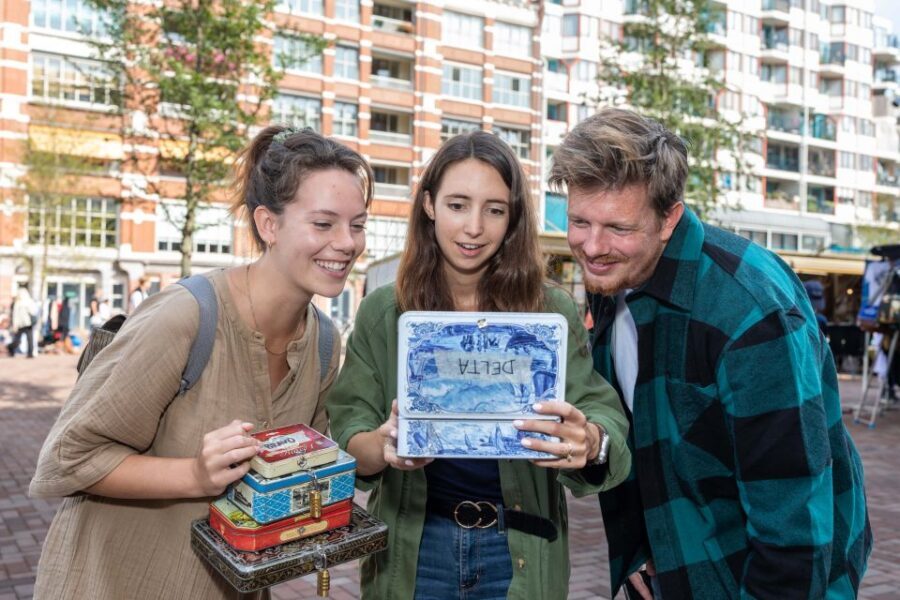
Operation 45 is a treasure hunt walking tour in Amsterdam built like a story-driven puzzle game. The premise is simple and intriguing: early in WWII, diamonds go missing in the city. From there, you follow a trail tied to the Dutch Resistance and gradually solve your way toward the answer.
What makes this worth your time is the structure. Instead of “walk here, take a look,” you’re actively noticing details. The tour uses clues hidden in the city’s architecture and gives you tools in a backpack so you can translate what you see into what the game needs next.
And because it’s history with a mission, the places don’t feel like random landmarks. You’re walking through neighborhoods with meaning, and you’ll get stories along the way that explain why the stops matter—especially in the former Jewish District, where the tour spends its time.
You can also read our reviews of more walking tours in Amsterdam



Starting at Mystery City Games: The HQ + Your Backpack Toolkit
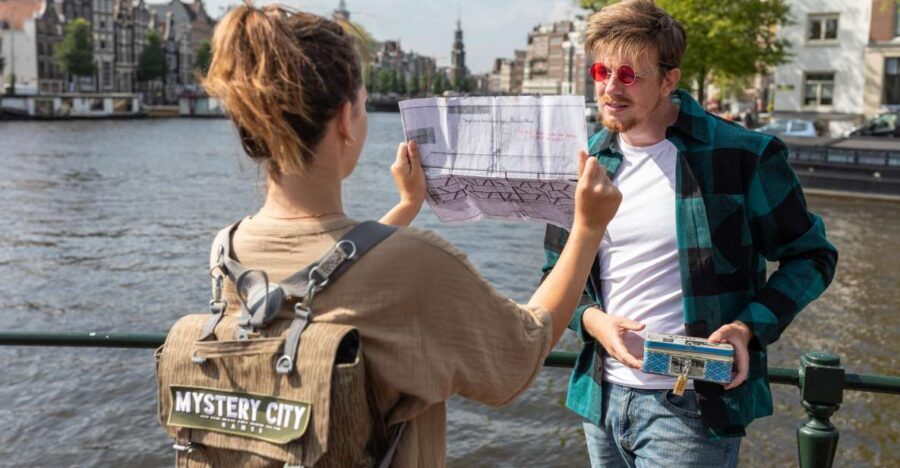
You’ll meet at Mystery City Games, Zwanenburgwal 178, 1011 JH Amsterdam. Look for the Mystery City Games sign—this is your secret headquarters.
At the start, you’ll meet the Game Master, get into the story, and pick up your backpack of game materials. The big practical win here is that it’s explicitly not an app. You’re given physical items—treasure maps, boxes, and locks—plus the puzzle materials needed at the stops.
That format changes the vibe in a good way. With a phone-based game, you’re always juggling screen time and street navigation. With a backpack-and-box system, you’re forced to slow down and actually read, observe, and solve. It also keeps groups more “together” because you’re working off the same objects, not competing with individual device screens.
Tip: bring comfortable shoes. You’re walking about 3 km total, and the pacing depends on how fast your group solves.
The Route: A 3 km, 2-Hour Puzzle Walk Through Amsterdam’s Jewish District
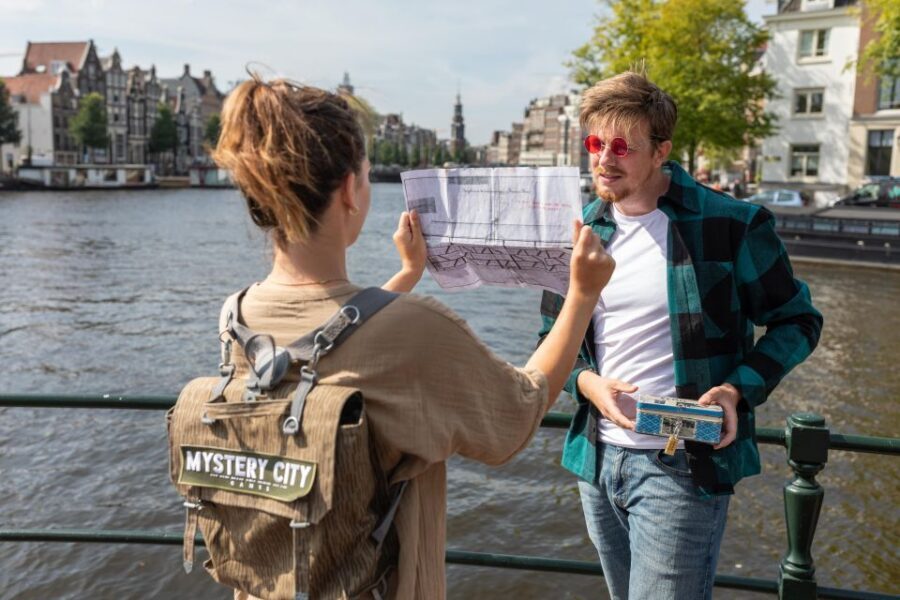
The route is about 3 km and typically takes around 2 hours to complete. The tour story guides you through five different locations in Amsterdam’s old Jewish District.
In plain terms, this is a compact day activity. It’s long enough to feel like you did something special, but short enough to slot between major sightseeing plans. If you’re building an itinerary around museum time, boat tours, or canal wandering, this is a good “in-between” experience.
The stops you’ll work through include:
- Shadow Wall
- Portuguese Synagogue
- Artis Zoo
- A diamond factory
- One additional puzzle location in the area (you’ll be given the full sequence as part of the game)
Even with a short total walk, it doesn’t feel like you’re rushing. The puzzles add time at each stop, so you’re not just covering ground—you’re processing what you see.
Stop 1: Shadow Wall and the Skill of Spotting Clues
Shadow Wall is one of the named puzzle stops, and it’s a great choice for a game like this. Places like this reward attention: you’re not just looking at a building; you’re looking for specifics the puzzle can use.
Here’s what you should expect at this stage. You’ll likely use the items in your backpack—tools like boxes/locks and whatever paper or map materials you’re given—to turn architectural details into puzzle answers. The game is designed so the city itself becomes the “interface,” so the more carefully you scan edges, shapes, and features, the smoother the solve tends to go.
Potential drawback: if your group hates puzzles or expects a sightseeing tour with zero brainwork, the beginning can feel like a quick shift. But if you’re even mildly curious about how clues connect to real places, this stop sets the tone well.
Stop 2: Portuguese Synagogue Area and the Story Behind the Details
Next up is the Portuguese Synagogue stop. Synagogues and Jewish historical sites are powerful even on a casual visit, and in a treasure hunt format they become more than background scenery.
This is where I think the tour does its best job connecting “game action” to “why it matters.” You’ll be moving through the former Jewish District while learning WWII-era stories related to the Dutch Resistance and the diamond heist premise. Because the hunt relies on clues, you’re paying attention in a way you might not on a normal walk.
At this stage, the best strategy is to keep the group moving but not steamrolling. Work together, try the clue checks suggested by the puzzle materials, and don’t lose time on one dead end without swapping roles. In most puzzle walks like this, the group dynamic matters as much as the clues.






Stop 3: Artis Zoo Stop for a Different Amsterdam Mood
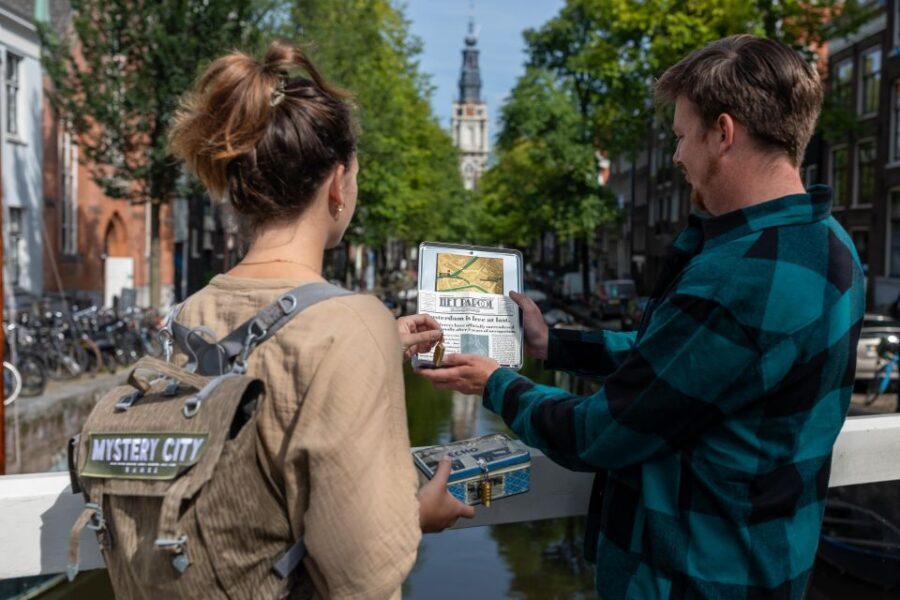
Artis Zoo is one of the stops, and it gives the route a refreshing change of pace. Instead of the hunt staying purely in street-history mode, you get a well-known Amsterdam landmark area mixed into the storyline.
For you, this matters because it breaks up the emotional intensity of WWII history with a setting people recognize. It also helps the walking tour feel less like a “single-theme slog.” You’ll still be doing puzzles, but the environment and atmosphere help keep energy up.
What I’d watch for: the puzzle challenge still expects attention. Don’t assume a familiar location means the game becomes easier. In fact, these are often the stops where teams get surprised—because landmarks can trick you into looking too broadly instead of reading the specifics the game wants.
Stop 4: Diamond Factory Stop and the WWII-Heist Finale Feeling
The tour includes a stop at a diamond factory, which is exactly the kind of place you expect for a story about a missing cache. Even if you don’t have industry knowledge, the narrative framing makes this segment feel purposeful.
This is also typically where the game ramps up psychologically. Early puzzles train your eyes. Midway puzzles push you into using the backpack tools efficiently. Toward the diamond-factory stage, your group’s confidence tends to rise—until you hit the next clue and realize you still have to solve to continue.
Practical advice: take a quick breath when you arrive. Sort your materials, confirm you’ve got the right item(s) ready, and then tackle the clue methodically. In puzzle hunts, half the difficulty comes from scramble, not from the puzzle itself.
The Fifth Location: One More Puzzle Stop That Keeps You Honest
You’ll also visit one additional puzzle location as part of the five-location trail through the old Jewish District. That missing-from-the-name detail is actually useful for your planning: it means the tour isn’t just “hit the famous spots.” It’s building a sequence that matters to the story.
In other words, you shouldn’t treat this like a checklist of well-known attractions. Your job is to complete the chain of logic across all stops. If you do that, you’ll get a stronger sense of the full WWII diamond-heist narrative rather than disconnected photo stops.
How Hard Is It, and Will You Finish in 2 Hours?
This tour has a clear target time: about 2 hours for the 2-hour duration and roughly 2 hours typical completion, with a route length of 3 km.
But the real-world difference is pacing. People who already like escape-room-style games tend to finish close to the target. If you go slower, or you pause often to admire details (or you’re traveling with kids who need more back-and-forth), plan on 2–3 hours.
Based on reviews, two things stand out:
- It can be straightforward if you’re motivated and enjoy puzzles.
- If you prefer a relaxed walk with minimal problem-solving pressure, give yourself extra time.
If you’re scheduling the rest of your day, I’d build in buffer time. You’ll feel better if you don’t rush the final stage.
Why This Feels Different From App-Only City Games
I love the “physical item” approach for one reason: it slows you down in the best way. When the game requires boxes, locks, and paper-based clue work, you’re less likely to wander past things without noticing them.
One review called it like an outside escape with two people—same idea: the activity is designed to be solved by interacting with real game components in the real city. That’s a big plus if you’ve ever done phone scavenger hunts where the city becomes a backdrop.
Also, because it’s story-based and location-based, you’re not just collecting answers. You’re learning through the walk. The clues push your attention toward architectural details, and the guide (Game Master) adds context to the WWII narrative as you progress.
Value: Is $29 Worth It for an Amsterdam Walking Tour?
$29 per person is a reasonable price for what you get here—especially because the tour includes more than just “access.” You’re getting:
- A guided Game Master story start
- A real physical backpack with puzzle tools (not an app)
- Puzzle stops at multiple key locations
- A prize at the end for all participants
The value is strongest if you actually enjoy puzzle solving or escape-room-style thinking. If you want pure sightseeing with minimal brainwork, you might feel the price is paying for something you won’t use fully. But if you like the idea of learning history while solving, $29 doesn’t feel overpriced.
Remember, you’re also paying for the format. Physical puzzle materials take setup and staff work. In a market where many city games are cheap app downloads, this one costs a bit more because it’s designed to be hands-on.
Who This Tour Fits Best (and Who Might Want to Skip)
This is a strong match if:
- You like walking through historic neighborhoods with a purpose.
- You enjoy puzzles that require attention to detail.
- You want a break from the usual canal/central-attractions rhythm.
- You’re traveling with family members old enough to do light puzzle work.
It’s not suitable for children under 6. So plan for ages 6+ if you’re bringing kids.
On mobility: the info you’ll see says wheelchair accessible, yet it also says it’s not suitable for people with mobility impairments. That’s a real conflict. My practical advice: before you book, contact the operator and ask how the walking route and puzzle stops handle mobility needs for your specific situation.
Quick Booking Checklist Before You Show Up
- Wear comfortable shoes.
- Expect a 3 km walk with puzzle stops.
- Bring a puzzle mindset—not just curiosity.
- If you’re sensitive to timing, assume the hunt could run closer to 2–3 hours.
- Go with a group energy that can cooperate. This type of game is smoother with teamwork.
Should You Book Operation 45 in Amsterdam?
If you’re the kind of traveler who likes doing something active instead of only looking, I’d book it. The best part isn’t one single famous stop—it’s the way the game forces you to look closely at Amsterdam’s architecture while telling a WWII story tied to the diamond heist and the Dutch Resistance.
Skip it if you want a low-effort museum-style walk, or if your group doesn’t enjoy puzzles. Also, if mobility is a concern, don’t assume the mixed accessibility notes will match your needs—ask first.
But if you want a memorable Amsterdam experience that feels like an outdoor escape room with history built in, Operation 45 is a smart pick.
FAQ
Where do I meet for Operation 45?
Meet at Mystery City Games, Zwanenburgwal 178, 1011 JH Amsterdam, Netherlands. Look for the Mystery City Games sign.
How much does the Amsterdam Operation 45 treasure hunt cost?
The price is $29 per person.
How long is the tour and how far do you walk?
The tour takes about 2 hours and follows a route of about 3 km.
Is this tour an app-based game?
No. You get physical puzzle materials in a backpack, including items like maps, boxes, and locks.
What locations will we visit during the hunt?
You’ll visit stops including Shadow Wall, the Portuguese Synagogue, Artis Zoo, and a diamond factory, plus one additional puzzle location in the old Jewish District.
What do I get when I pick up the game backpack?
You’ll receive a backpack with treasure maps, boxes, and locks, along with other puzzle materials used at the key stops.
What language is the tour hosted in?
The host and the experience are in English.
Is it suitable for young children or people with mobility issues?
It is not suitable for children under 6 years. The info also lists wheelchair accessibility, but it separately says it’s not suitable for people with mobility impairments, so it’s worth checking directly for your situation.
Is a prize included?
Yes. A prize is included at the end, and it’s for all participants.