REVIEW · AMSTERDAM
Amsterdam: Must-See Attractions Guided Walking Tour
Book on GetYourGuide →Operated by Guydeez Tours · Bookable on GetYourGuide
Amsterdam can feel like a puzzle. This walk gives you the picture.
You’ll start in the city center and follow a tight, easy pace to major sights on cobblestones, from Dam Square and the UNESCO-listed canals to the calmer pocket of the Begijnhof. Two things I especially like: you can shape the route to your interests with a real local guide, and you get practical, on-the-ground ideas for where to go afterward for food and nightlife. One thing to consider: the quality of your experience will depend a lot on your guide’s style, so if you want more energy or storytelling, choose carefully (or book private).
This is a straightforward, 3-hour plan with enough stops to feel like you learned something, but not so packed that you miss the atmosphere. If you like walking, photos, and explanations that connect places to the people who lived there, this tour makes a smart first-day move.
In This Review
- Key things that make this tour worth your time
- Starting in the center: Dam Square sets the tempo
- Kalverstraat and Westerkerk: the street vibe and the church silhouette
- Begijnhof courtyard: where Amsterdam gets quiet fast
- Red Light District: seeing the area with context
- UNESCO canals and 17th-century gabled houses: the city’s main stage
- Portuguese Synagogue and Nieuwmarkt Square: layers you can still feel
- Maison Descartes (Salle André Citroën) and the smart back half
- Royal Palace and Dam Square: power in the same frame
- What the guide does (and why your experience can vary)
- Price and value for a 3-hour landmark sprint
- Who should book this tour, and who might not love it
- Should you book Amsterdam: Must-See Attractions Guided Walking Tour?
- FAQ
- How long is the Amsterdam walking tour?
- Where does the tour meet?
- How much does the tour cost?
- Is it a private or group tour?
- What languages are the guides available in?
- Is food included?
Key things that make this tour worth your time

- Dam Square to Royal Palace: power, symbolism, and the everyday crowd in the same block-by-block route
- Begijnhof courtyard: a quiet church and hidden-in-plain-sight vibe you won’t find just by wandering
- Canal views with context: gabled façades and UNESCO canals explained so they make sense
- Red Light District stop with framing: you’ll see the area, but with guide-led context instead of shock value
- Portuguese Synagogue and Nieuwmarkt Square: learning about communities you’d otherwise skip
- Guide tips for bars and restaurants: not generic trivia, but real suggestions for your next hours in town
Starting in the center: Dam Square sets the tempo

Most Amsterdam tours treat the center like a backdrop. This one uses it like a starting point, which I like. You begin at Oudekerksplein 4 (the walking route around here makes it easy to connect landmarks fast), with the meeting point described as outside Quartier Putain. Either way, you’re in the thick of things right away.
From there, the big idea is simple: you get a thread that ties streets to stories. Dam Square isn’t just a photo stop. It’s the heart of downtown, where political symbolism and daily life overlap. Your guide frames what you’re seeing so you’re not just clocking buildings—you’re understanding why these places matter.
Practical note: in a city built for bicycles and foot traffic, a “3-hour walking tour” can still feel like a real workout if you’re not used to Dutch cobblestones. Wear shoes you trust.
You can also read our reviews of more walking tours in Amsterdam



Kalverstraat and Westerkerk: the street vibe and the church silhouette

Next you’ll move into Kalverstraat, one of the classic central shopping streets. Expect a focused stop that’s part orientation, part sightseeing, with time for photos and commentary on what you’re walking through. This is useful if you’re the type who wants to know why a street feels the way it does—busy, commercial, and historically important all at once.
Then comes Westerkerk. Even if you’re not a church person, this stop helps you “read” Amsterdam’s skyline. The Westerkerk area gives you scale: the city’s old-world architecture is never far from daily life, and your guide can point out what to notice beyond the main structure—like how the surroundings shape views from street level.
This is the part of the tour where the pace usually starts to feel comfortable. You’re walking, you’re getting your bearings, and you’re learning the names of places you’ll keep seeing after the tour ends.
Begijnhof courtyard: where Amsterdam gets quiet fast
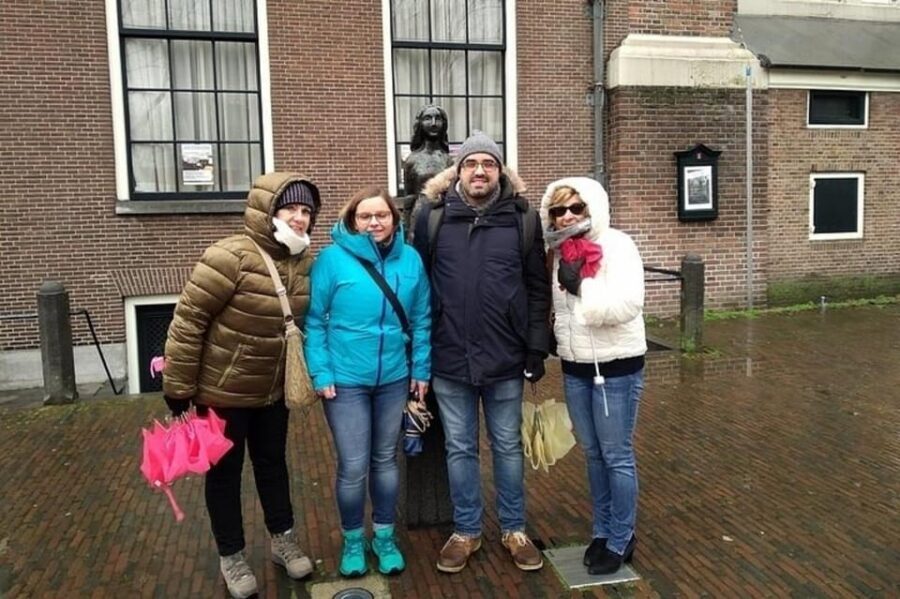
The Begijnhof courtyard is the kind of place you could walk past without realizing what it is. That’s exactly why a guided stop here works. The courtyard is described as serene, with a concealed church you’re meant to notice once your guide points it out. That “wait, it’s right there?” feeling is half the fun.
What makes Begijnhof special for a visitor is the contrast. Amsterdam is often loud—crowds, bikes, tour groups. But this courtyard is more still. It’s a reminder that the city didn’t always grow outward at the speed it does today. You’re seeing space designed for a different pace of life.
A small drawback: courtyards can feel tight when several groups stop at once. If you hate crowds, arrive with patience. The tour schedule is paced to keep you moving, but you might still have to wait for a clear moment to look closely.
Red Light District: seeing the area with context
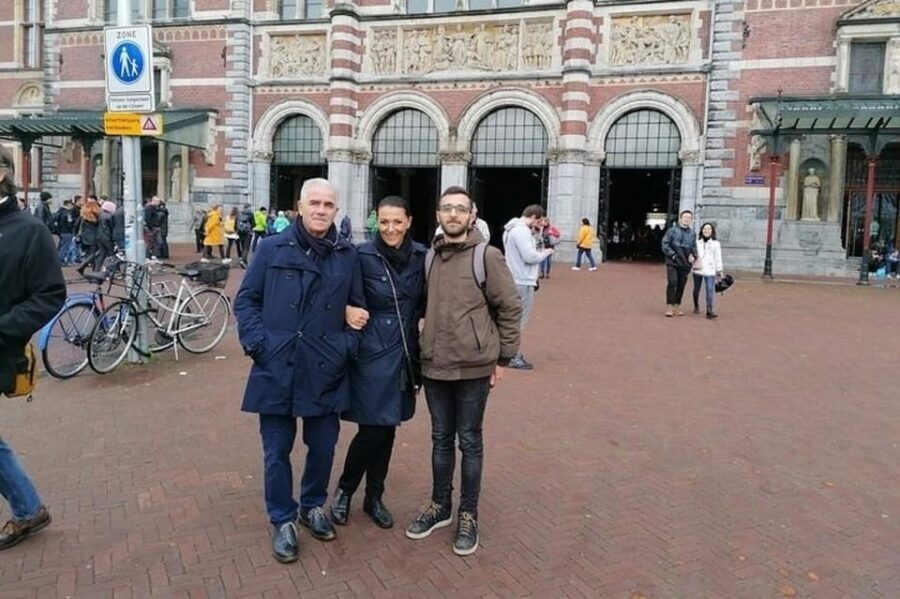
The itinerary includes an Amsterdam Red Light District photo stop and a guided walkthrough. This isn’t listed as “party time,” and that’s a good sign. You’re not just taking a picture and moving on. You’ll get guide-led context while you’re in the area, which helps you understand what you’re seeing instead of treating it like a spectacle.
If you’re sensitive to adult-themed visuals or prefer not to spend time there, this stop can be the roughest part of the route emotionally. On the flip side, for many people it’s also the most educational moment, because your guide can put it into a broader view of the city.
My practical advice: if you feel uncomfortable, tell your guide early. A good guide will adjust how much time you spend lingering for photos and how you move through the streets.
UNESCO canals and 17th-century gabled houses: the city’s main stage
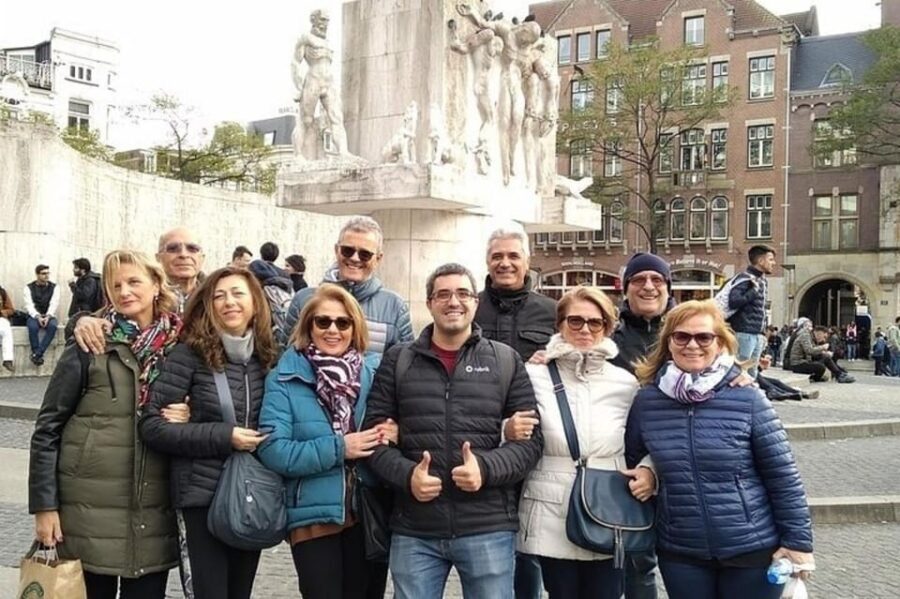
The tour then shifts to the Canals of Amsterdam, including a UNESCO canal experience and classic views of 17th-century gabled houses. This is where the “walking tour” format really pays off. From the street, you get a better sense of how the canal grid shapes neighborhoods, and you see façades in a way you can’t from inside a cruise boat.
This part of the tour is built around noticing: bridges, canal edges, and those steep gables that make Amsterdam look instantly recognizable on any postcard. With a guide, you’re not stuck with random facts. You’re learning what to look for and why those old structures came to define the city.
If you’re a photographer, bring a phone/camera you’re comfortable using in public spaces. If you’re visiting in busy seasons, expect stop-and-go flow. The tour keeps moving, but canal areas tend to attract crowds.
You can also read our reviews of more guided tours in Amsterdam




Portuguese Synagogue and Nieuwmarkt Square: layers you can still feel
Next you’ll visit the Portuguese Synagogue area for a photo stop and guided sightseeing. The advantage of having a guide here is that it’s easy to treat this stop as just another landmark. With context, it becomes a doorway into the idea of Amsterdam as a place where different communities formed and left marks.
Then you’ll move to Nieuwmarkt Square. This stop helps you connect the canal-world to the more street-level Amsterdam you might experience in markets and everyday hangouts. It’s one of those squares that can look like a simple open area until someone points out how the surrounding layout and history create the feel.
A consideration: if your main goal is canals only, you might be tempted to skim these. Don’t. This is the “people geography” side of Amsterdam—where you learn the city isn’t just architecture, it’s communities.
Maison Descartes (Salle André Citroën) and the smart back half

The itinerary includes Maison Descartes Salle André Citroën. Even without deeper specifics provided, this kind of stop can be valuable because it breaks the tour out of the “old streets only” mode. Amsterdam isn’t only centuries-old scenes; it also has modern culture layered into the walking route.
What I like here is pacing logic. Toward the back half of a tour, people often get tired and stop paying attention. A different type of stop—one tied to a distinct building or cultural reference—helps your brain stay engaged. You also get a reset so the final landmark moments feel worth it.
If you’re the type who prefers only the biggest famous sites, this stop might feel slightly less central than, say, Royal Palace. But it’s also a nice reminder that the city’s identity is still evolving.
Royal Palace and Dam Square: power in the same frame
The tour closes with Royal Palace, Amsterdam and then another stop at Dam Square. That repetition matters. Starting at Dam Square gives you the heart of the area; returning near the palace gives you a second perspective where you can compare what you noticed earlier with what you learned from your guide.
Your guide uses this portion to connect the dots—Royal Palace as a symbol of governance and state, and Dam Square as the lived-in center around it. It’s easy to walk into this part of Amsterdam thinking it’s all about grand buildings. With the guide’s framing, you can see how the space functions in real life too.
One more practical note: if you want entry into certain spots, the tour includes help booking entry tickets (it’s not automatically described as included for all stops). So if the palace interior or other sites are on your wish list, ask your guide what they can arrange or recommend.
What the guide does (and why your experience can vary)
This tour is built around the idea of a customized walking route. You can work with your guide to shape the walk based on what you care about, and that’s a huge quality factor. It also helps explain why the tour can feel amazing for one person and just okay for another.
From the guide names and feedback, it’s clear guide style matters. For example:
- An Italian-language guide named Emanuele got praise for being prepared and helpful.
- A Spanish-speaking guide named Carlos was commended for strong history knowledge and being an excellent conversationalist.
- An English-language guide named Sunil was liked for pace control and for sharing interesting and funny anecdotes, with the 3 hours described as flying by.
That same feedback set also includes one lower score where someone felt the tour had limited city information and wasn’t very exciting. The most sensible takeaway for you: if you want a specific style—more stories, more architecture, more canal explanations—plan to ask for it at the start. The tour is designed to respond to preferences, so use that.
Price and value for a 3-hour landmark sprint
The price is $32 per person for a 3-hour guided walking tour. That’s not cheap-cheap, but in Amsterdam it can be decent value when the alternative is hiring multiple guides, paying for separate tickets, or spending your first day wandering without a plan.
Here’s what you’re paying for:
- A guide who leads you through multiple top areas in a single block
- A route that can be tailored to your preferences
- Help with booking entry tickets if you want to go inside certain places
- Practical add-ons like local suggestions for bars, restaurants, and clubs
What isn’t included: food and drinks. So budget for at least a coffee break or snack afterward. Also, public transportation costs only apply if you select that option.
My advice on value: treat this as your “setup tour.” Do it early in your stay so you can use the guidance immediately. Then you’ll feel like you got more out of each later hour you spend on your own.
Who should book this tour, and who might not love it
This tour is a good fit if you:
- Want a first-time visitor plan that hits big names without spending all day in transit
- Like walking, street-level photos, and hearing what to notice
- Enjoy guides who explain city history through places rather than textbook facts
- Want local recommendations you can use the same night
It might not be the best match if you:
- Want only canal views and would rather skip other neighborhoods
- Dislike guided group energy (even though you can choose private)
- Are very focused on interior access for every stop (the tour includes help booking entry tickets, but entry isn’t described as automatically included everywhere)
Also, the tour is described as wheelchair accessible, with private group available, and guides operate in English, French, Italian, and Spanish. If any of those factors matter for your group, this is a strong point.
Should you book Amsterdam: Must-See Attractions Guided Walking Tour?
If you want a smart, paced introduction to central Amsterdam—Dam Square, Royal Palace, canals, and the quieter Begijnhof—this tour is an easy yes. The biggest reason is the guide-led structure: you don’t just see places, you get help interpreting them, plus practical suggestions for what to do next.
Book it if you can use the customization and you’ll engage with your guide. If you’re picky about storytelling style, consider going private (or make your expectations clear right away). And plan your footwear and snack strategy so the 3 hours feel like a win, not a slog.
FAQ
How long is the Amsterdam walking tour?
It lasts about 3 hours.
Where does the tour meet?
The meeting point is outside Quartier Putain.
How much does the tour cost?
The price is $32 per person.
Is it a private or group tour?
Both are available, including a private group option.
What languages are the guides available in?
The live tour guide is available in English, French, Italian, and Spanish.
Is food included?
No. Food and drinks are not included. The tour includes a walking tour, and it can help with booking entry tickets.