REVIEW · AMSTERDAM
Your Own Amsterdam: The Art Underground
Book on Viator →Operated by Snurk.Travel · Bookable on Viator
Art has a way of surviving underground.
This private Amsterdam tour focuses on the city’s public spaces—rail stations, old metro corners, and outdoor art—so you get a side of Amsterdam most people speed past. I like the way it connects art to big local themes like tulip mania, the Dutch East-India era, and colonialism, instead of keeping things stuck in aesthetics.
Two things I really appreciate: first, you move station to station and keep the story going, so it feels like you’re reading Amsterdam in layers. Second, the guide experience can be excellent—one review highlighted Maria as both patient and well prepared, and she didn’t just talk about art, she pointed out specific local-interest moments like de Pijp market along the route.
One possible consideration: this is not a museum ticket day. You’ll likely pay extra for metro access (listed as 9 euros per person) and some stops note admission tickets aren’t included, so budget for that before you go.
In This Review
- Key highlights I’d plan around
- What This Amsterdam Art-Underground Tour Really Shows
- Timing, pacing, and how the route fits a 2-hour window
- Starting at Stationsplein 13a: the meeting point and what to expect first
- Centraal Station: turning station art into stories about money, power, and change
- Rokin Station excavations: when 2000+ years of Amsterdam is visible
- Vijzelgracht and Nieuwemarkt: music in public space and metro politics
- Vijzelgracht: 20th-century Dutch music
- Nieuwemarkt: why metro construction met resistance
- Noorderpark and Amsterdam School architecture: from station art to city design
- Amsterdam-Noord: ecosystems, flora and fauna, and public art
- Price, value, and what costs extra on the ground
- Why this tour feels better than a normal station stroll
- Who should book The Art Underground (and who might skip it)
- Should you book this private art-and-archaeology tour?
- FAQ
- How long is the tour?
- Is this a private tour?
- What language is the tour offered in?
- What is included in the price?
- Do I need metro tickets?
- Are admission tickets included?
- Where do I meet the guide?
- Where does the tour end?
- How and when do I get confirmation?
- What is the cancellation policy?
Key highlights I’d plan around
- Private tour, only your group: no joining random strangers and hoping for good pacing.
- Art tied to real Amsterdam history: climate, Dutch trading history, and colonialism show up through station artworks.
- Archaeology you can actually see: Rokin includes excavations said to be over 2000 years old.
- Free stops mixed in: several segments are admission free, which helps the overall value.
- Architecture education in public space: Amsterdam School and its later influence are part of the walk.
- Ecosystems and public art: Amsterdam-Noord adds nature and wildlife themes instead of going all “city only.”
What This Amsterdam Art-Underground Tour Really Shows
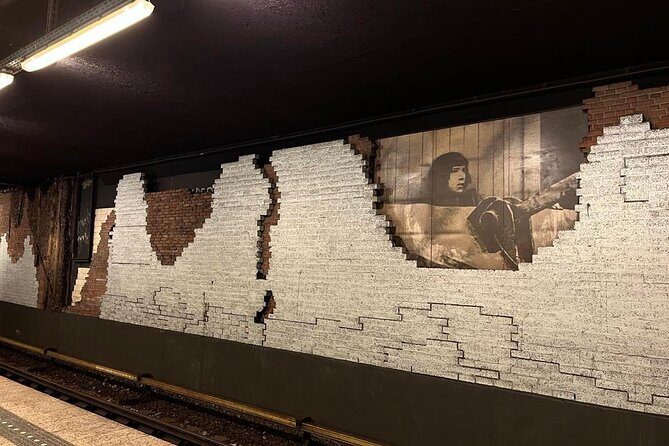
This is a guided, station-to-station experience that treats public art like a map. Instead of handing you a list of famous works, it asks you to notice how Amsterdam uses art in the places people actually pass through—stations, older metro spaces, and park architecture.
You’ll get short stops (about 15 minutes each) that are designed to keep you moving without feeling rushed. The payoff is context: you learn what the art is responding to, and why it belongs in that exact location.
If you like culture that feels woven into everyday life—rather than kept behind ticket barriers—this kind of tour works well. It’s also a smart option when you want something more creative than a straight canal cruise, but still practical in a limited time window.
You can also read our reviews of more tours and experiences in Amsterdam.

Timing, pacing, and how the route fits a 2-hour window
The tour runs about 2 hours and breaks into six main stops, each timed around 15 minutes. That structure matters, because it keeps the story tight: you’re not stuck in one spot for long, and you won’t lose the thread after a single photo stop.
It’s also marked as near public transportation. That’s useful in Amsterdam, where walking is great but weather can be unpredictable and distances can add up quickly. Expect a mix of station areas and transit-area walking.
One more practical note: the tour ends in Amsterdam-Noord. That’s great if you like a “finish somewhere different” feeling, but you should plan your return from Noord rather than thinking it will naturally drop you back near Centraal.
Starting at Stationsplein 13a: the meeting point and what to expect first
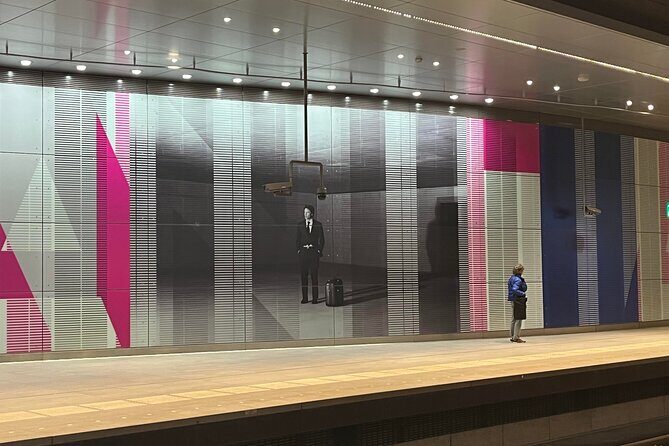
You meet at Stationsplein 13a, 1012 AB Amsterdam. It’s in the Centraal Station area, which is convenient because you can connect by tram or train and still show up on time.
In many station-based tours, the first moments are about “getting your bearings.” Here, you start with Centraal Station itself, using the artworks to open up broader themes. It sets the tone quickly: art isn’t treated as decoration—it’s treated as evidence.
Then you move on. Since this is a private tour for just your group, the guide can adjust pacing a bit based on your questions and how photos are going. If you like asking why something was placed somewhere, this format tends to reward that energy.
Centraal Station: turning station art into stories about money, power, and change
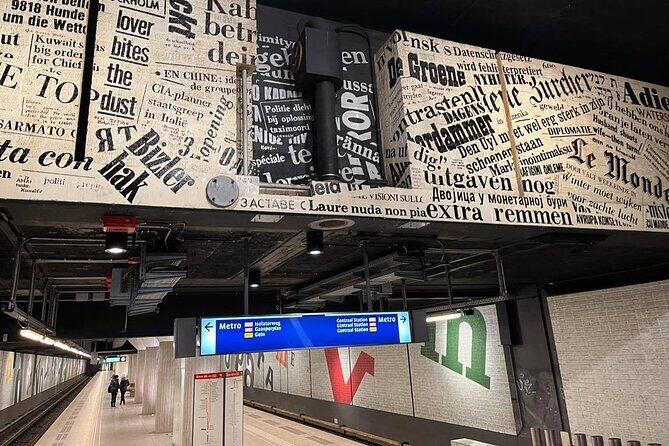
At Centraal Station, the tour leans into scale: more than ten million people pass through each year, so the art is working on a huge audience. The fun part is that you’re not just looking at artworks—you’re learning what they’re trying to say about the city.
You’ll connect station artworks to themes like:
- local climate and how Amsterdam developed around it
- historic changes in daily life
- tulip mania and the kinds of economic stories Amsterdam tells
- the Dutch East-India period and colonial connections
The drawback here is simple: with so many commuters, the art itself can feel like it’s competing with real-life movement. If you’re the type who needs total quiet to focus, you might want a few extra minutes to study each work.
Still, I like this start because it gives you a lens. By the time you leave Centraal, the rest of the stops feel like chapters of one larger story.
Rokin Station excavations: when 2000+ years of Amsterdam is visible
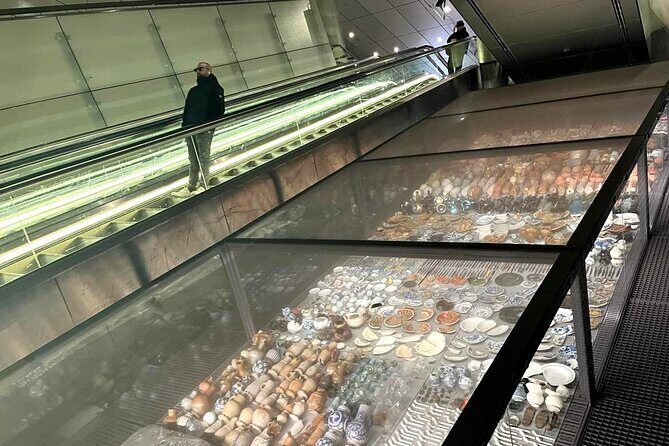
Next is Rokin. This stop shifts from artworks-as-stories to artworks as literal overlays on older layers of the city.
The highlight is the archaeological excavations found here—some said to be over 2000 years old. That detail matters. It turns the modern station experience into something like a living timeline, where what’s underfoot still shapes what you see now.
In a place like Amsterdam, “old” can feel abstract. Excavations make it concrete. You can stand there and understand that today’s street-level Amsterdam is built on earlier Amsterdam layers—people, trade, and city growth all accumulating over time.
Practical consideration: this stop is still in a transit-zone setting. That means you’ll get the story quickly and efficiently, but you may not have the luxury of long wandering.



Vijzelgracht and Nieuwemarkt: music in public space and metro politics
These two stops are a nice contrast: one uses art to talk about sound, and one uses an older metro location to talk about public pushback.
Vijzelgracht: 20th-century Dutch music
At Vijzelgracht, the tour points you toward popular Dutch music from the 20th century. It’s a clever way to make music tangible. Instead of hearing songs in a headphones bubble, you experience them as part of the station’s visual language.
This segment is also listed as free for admission, which helps you keep the day’s costs under control.
Nieuwemarkt: why metro construction met resistance
Then comes Nieuwemarkt, described as an old metro station. The story here is how the construction of the first lines in the 1980s sparked strong resistance from locals—and how that debate still affects city life.
I like this stop because it reminds you that infrastructure is also politics. Amsterdam’s transit isn’t just engineering. It reflects how people negotiate change, noise, space, and priorities.
Admission for this stop is also free, which makes it a good “high value per minute” segment.
Noorderpark and Amsterdam School architecture: from station art to city design
At Noorderpark, the focus shifts to architecture: Amsterdam School is one of the key styles discussed here, along with its influence on modern architecture and society.
This is where the tour does a smart thing for your brain. After you spend earlier stops on history, trade, and layers of the city, you move into design choices—how a style communicates values and how architecture becomes social.
You’ll likely notice how the guide connects specific artistic details to a broader idea: buildings and public spaces don’t just hold people. They also shape behavior and community identity.
One consideration: this stop lists that an admission ticket is not included. You’ll want to check what that means on the ground with your guide or your mobile ticket materials, so you don’t get surprised if an entry fee is involved.
Amsterdam-Noord: ecosystems, flora and fauna, and public art
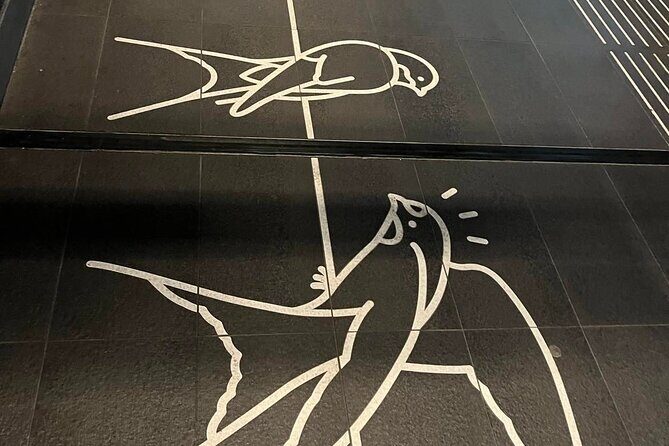
The final stop is Amsterdam-Noord, and it takes a different angle than the earlier station-heavy sections. The theme here is the local ecosystem—flora and fauna—and how public art reflects that relationship with nature.
I like ending here because it gives you mental air. By the time you’re in Noord, the tour has already taught you how art can hold history and politics. Now it’s showing art that relates to living systems and place.
Also, this stop is listed as free for admission. That’s a nice way to land the experience without additional costs at the end.
Logistics note: since the tour ends in Amsterdam-Noord, plan your onward plans accordingly. If you’re going to dinner, consider it an excuse to grab food nearby rather than rushing back immediately.
Price, value, and what costs extra on the ground
The price is listed at $236.59 per person for about 2 hours, offered in English, with a guide and a mobile ticket. There’s also mention of group discounts.
At this price point, value comes from two places:
- Private format: you’re paying for your group’s time with a guide and the freedom to ask questions at each stop.
- Topic depth without a museum overload: you get history, archaeology, music, architecture, and metro politics in a tight schedule.
Now the “watch your budget” part. The tour notes that underground metro tickets are not included and are listed as 9 euros per person. Some stops also say admission tickets aren’t included (including Centraal Station and Noorderpark).
So, the best way to think about this cost is: the tour fee covers the guide and the guided experience, while transit access and certain admissions are additional. If you’re already planning to use public transport anyway, that helps justify the total.
Why this tour feels better than a normal station stroll
The standout praise from one review is about the guide’s approach—Maria was described as knowledgeable and patient, and she made the explanation click. The review also mentions she took the group around several metro stations and explained the democratic nature of choosing art for those spaces.
That last point matters more than it sounds. “Democratic” here means the art isn’t randomly installed. It’s connected to how decisions get made, and how public spaces are shaped for shared use.
Another practical win from that same review: Maria didn’t only talk about what was in front of us. She pointed out specific interest points in the areas visited, including de Pijp market. That kind of local guidance is what turns a walk into something you can use after the tour.
For your day, you’ll likely leave with:
- a better sense of what to notice next time you pass a station artwork
- a story to connect Amsterdam’s past trading power and modern city choices
- concrete “where should I go next” hints for nearby neighborhoods
Who should book The Art Underground (and who might skip it)
This tour fits best if you:
- love art, but you also love explanations that connect art to context
- enjoy city history that’s not stuck in one museum building
- like architecture and want to understand Amsterdam School beyond a quick mention
- want a compact, 2-hour experience that still feels like it has layers
You might skip it if you:
- mainly want famous museum masterpieces and a lot of time indoors
- hate transit-area environments (busy stations can be noisy)
- don’t want to handle extra costs for metro access and possible admissions at certain stops
If you’re traveling with someone who likes art but isn’t into long museum days, this can be a sweet compromise.
Should you book this private art-and-archaeology tour?
I’d book it if you want a clever, time-efficient way to see Amsterdam differently. It’s not only about pretty stations. It uses public art to teach you how Amsterdam thinks: money and trade, politics and infrastructure, architecture and design, and even nature’s place in the city.
Just go in with the right expectations: bring a little budget for metro tickets and possible admission tickets at specific stops. If you do that, the private guide time and the variety of themes are a good match for a strong 2-hour outing.
If you’re the type who likes asking questions, Maria-style guided patience is exactly the kind of experience that makes this tour worth your attention.
FAQ
How long is the tour?
The tour is listed as approximately 2 hours.
Is this a private tour?
Yes. It is described as a private tour/activity, and only your group participates.
What language is the tour offered in?
The tour is offered in English.
What is included in the price?
The guide is included.
Do I need metro tickets?
Underground metro tickets are not included, and they’re listed as 9 euros per person.
Are admission tickets included?
Admission tickets are not included for some stops (for example, Centraal Station and Noorderpark). Other stops are listed as admission free.
Where do I meet the guide?
The meeting point is Stationsplein 13a, 1012 AB Amsterdam.
Where does the tour end?
The tour ends in Amsterdam-Noord.
How and when do I get confirmation?
Confirmation is received at the time of booking.
What is the cancellation policy?
You can cancel for a full refund up to 24 hours in advance of the experience start time. If you cancel less than 24 hours before, the amount paid is not refunded.