REVIEW · AMSTERDAM
Amsterdam: Jewish Quarter and History Guided Tour
Book on GetYourGuide →Operated by Trigger Tours · Bookable on GetYourGuide
WWII left scars you can still read.
This 2-hour guided walk through Amsterdam’s Jewish Quarter turns streets into a real timeline, starting along the Amstel River and moving through Nazi-occupied life from 1940 to 1945. I love how guides like James and Aaron explain day-to-day Jewish life under occupation, not just big dates. I also love the heavy-hitter stops—Portuguese Synagogue, Jewish Historical Museum, the Dokwerker area, and memorials—so you see the story behind each corner.
One thing to know: this is a serious tour. You’ll retrace brutal history, and the pace can feel brisk if you like to linger for photos or a quiet moment at each memorial.
Expect a clear, sensitive guide with room for questions. Many groups report the tone is factual and respectful, and guides such as Aaron, Joshua, Jyry, and Masha are praised for handling tough topics with care. If you want a guided route through Amsterdam that connects the city you see today to what happened here, this one is built for that.
In This Review
- Key things to look forward to
- Why the Jewish Quarter Walk Changes How You See Amsterdam
- From the Amstel River to Nazi-Occupied Netherlands: Getting the Timeline Right
- Portuguese Synagogue and the Jewish Historical Museum: How Community Life Shows Up in Stone
- Jewish Council Headquarters and the Reality of Day-to-Day Life
- Dokwerker and Auschwitz Monument: Memorials With Clear Weight
- Anne Frank House Finish: The Diary Story and What You Can Do Next
- How 2 Hours Really Works: Pace, Group Size, and Question Time
- Price and Value: What $23 Buys You (and What It Doesn’t)
- Who This Tour Is Best For
- Should You Book This Amsterdam Jewish Quarter Tour?
- FAQ
- How long is the Amsterdam Jewish Quarter and History guided tour?
- How much does the tour cost?
- Is the tour private or shared?
- What languages are the live guides speaking?
- What’s included in the ticket price?
- Are food and drinks included?
- Where do we meet for the tour?
- What are the cancellation and payment options?
Key things to look forward to
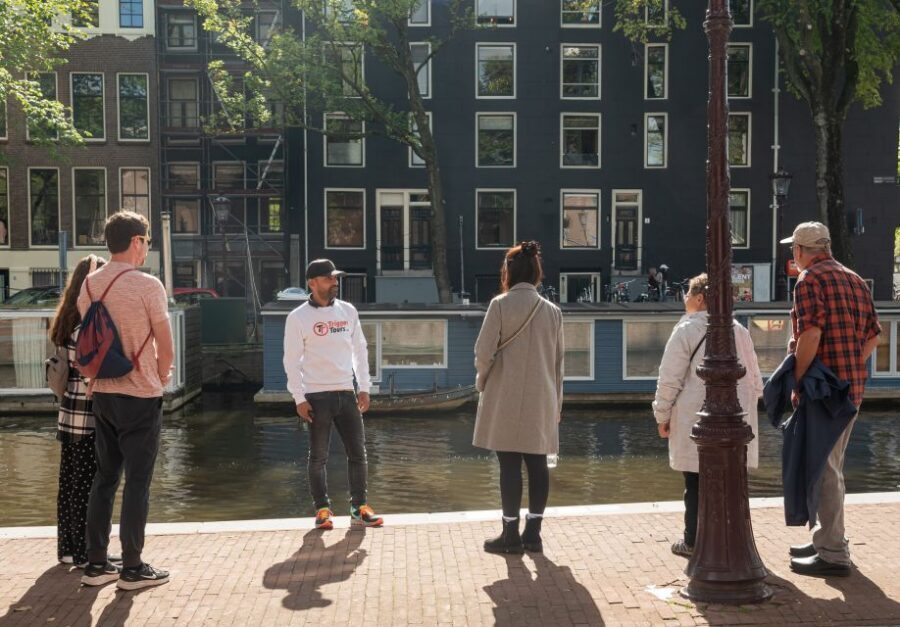
- Amstel River start that sets the WWII context fast
- Portuguese Synagogue and Jewish Historical Museum explained in plain, human terms
- Jewish Council headquarters tied to what occupation meant day to day
- Auschwitz Monument and Dokwerker framed as memorials with specific meaning
- Anne Frank House ending with diary context and how it became known worldwide
Why the Jewish Quarter Walk Changes How You See Amsterdam
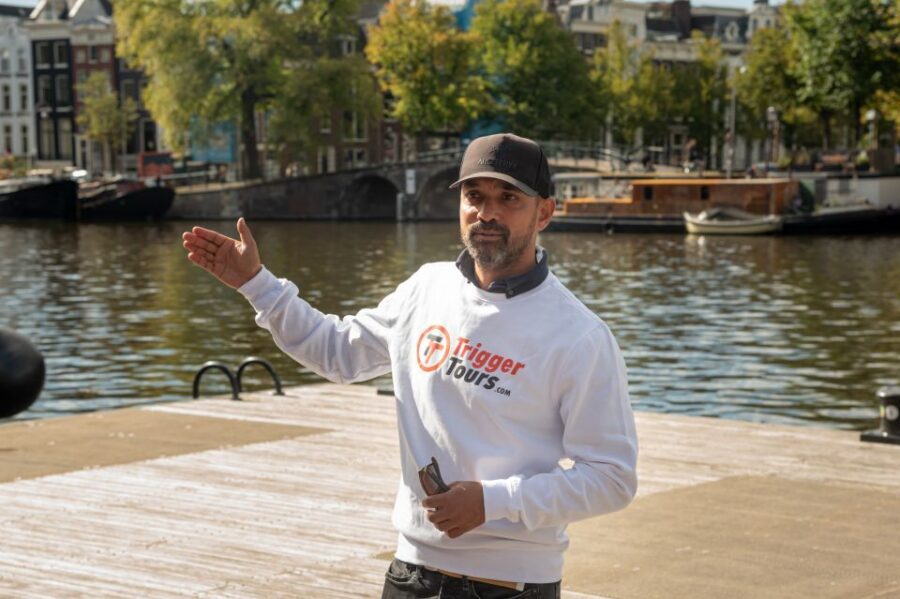
Amsterdam is easy to love on a postcard level: canals, bikes, gabled houses, quick coffees. This tour asks you to look again. The Jewish Quarter isn’t treated like a museum district where you just check boxes. Instead, the guide connects buildings to the people who lived there—before the occupation, during the occupation, and in the memory work that followed.
That framing matters because Amsterdam’s center can look timeless. But time is exactly the point here. In a relatively short walk, you’ll hear how the Nazi occupation reshaped daily routines, forced choices, and safety. And you’ll see how memorials like the Auschwitz Monument keep the story from becoming vague or abstract.
The best part is that the tour doesn’t reduce everything to one famous story. Yes, you’ll finish near Anne Frank House and talk about her diary and how it was later published by her father, Otto Frank. But you’ll also cover institutions and landmarks tied to community life—things you’d otherwise miss if you only wandered on your own.
You can also read our reviews of more guided tours in Amsterdam



From the Amstel River to Nazi-Occupied Netherlands: Getting the Timeline Right
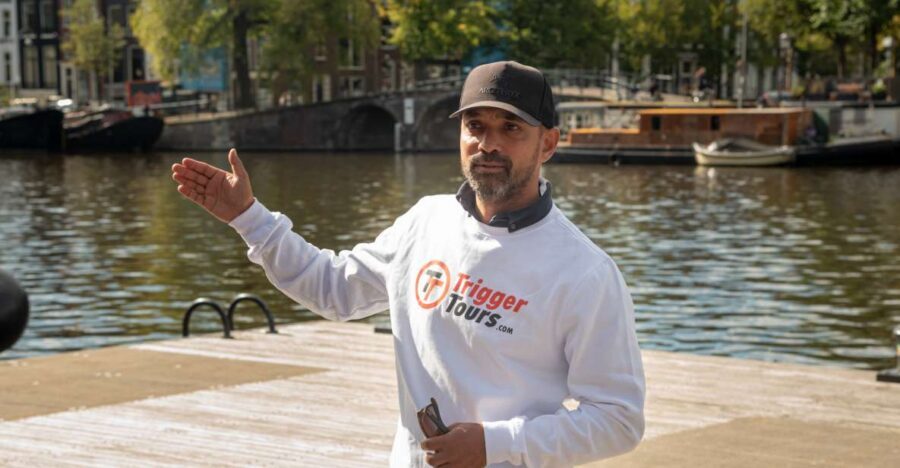
The tour begins by the Amstel River, which is a smart way to start. It gives you a geographic anchor and helps you understand why the capital mattered so much during the occupation. From there, the guide lays out the Nazi occupation of the Netherlands from 1940 until 1945, and what that timeline meant for people in Amsterdam.
You’re not just hearing the story in general terms. The route is built around points where the occupation’s effects show up in real space—streets, institutions, and memorials. This is one reason guides like James and Aaron get mentioned so often: they connect history to specific locations you can see, so you don’t end up with a pile of facts that never clicks.
If you come into this with only a light background—say, you know Anne Frank and maybe a few WWII basics—you’ll still get a lot. If you come in with deeper curiosity, you’ll get a different kind of reward: context that helps explain why some sites are remembered the way they are.
Portuguese Synagogue and the Jewish Historical Museum: How Community Life Shows Up in Stone
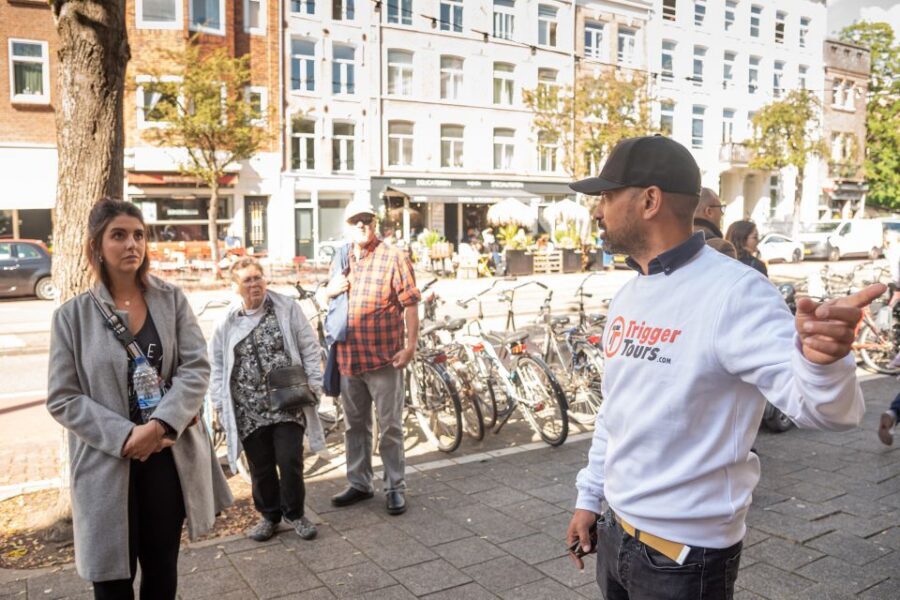
One of the most valuable things about this tour is that it treats Jewish Amsterdam as something alive, not only something harmed. You’ll pass the Portuguese Synagogue and the Jewish Historical Museum, and the guide explains what these places meant to the community.
Even if you’ve seen famous European synagogues before, this portion feels different because the conversation isn’t just architectural. The guide keeps returning to what community life looked like in the Netherlands—how institutions served people, how identity was maintained, and how the occupation disrupted that.
This is where I’d recommend paying attention to the “why” behind each stop. For example, when you learn what the Jewish Historical Museum represents, you’re not just learning where artifacts sit. You’re learning that memory has a structure. That structure is part of how the community has continued its story after the worst of the war.
Jewish Council Headquarters and the Reality of Day-to-Day Life
You’ll also see the Headquarters of the Jewish Council. That’s not just a landmark on a map; it’s a key part of how occupation governance played out inside the community.
This section is often the emotional center of the tour. Not because it’s sensational, but because it’s specific. The guide explains what these structures meant for everyday decision-making and survival pressures. You’ll also hear about Dutch behavior toward Jewish people—how actions ranged from complicity to help, and how complicated “normal life” became under occupation.
Here’s a practical tip: if you have personal questions—maybe related to family history or how events unfolded in different towns—ask them. Multiple guides are praised for being patient and willing to answer sensitive questions without turning the tour into a debate club. A small group helps too, because you’re not squeezed into silence.
Dokwerker and Auschwitz Monument: Memorials With Clear Weight
Two stops help you understand the physical language of remembrance: the Auschwitz Monument and the Dokwerker.
The Auschwitz Monument is a place where the guide explains meaning in a way that keeps you from treating it like a photo backdrop. It connects the monument to the broader story of persecution and extermination, and it helps you read why the monument is positioned and named the way it is.
The Dokwerker gets its own spotlight, too. The guide frames it as a site with a specific role in how deportations and suffering are remembered. This matters because people often think they know what happened in WWII, but they don’t know how the story appears in everyday geography.
I liked that the guide doesn’t rush past the memorials as quick checkmarks. Even with a tight 2-hour window, guides are praised for pacing that supports understanding. Still, keep your expectations realistic: one review suggested the pace can be a touch fast for those who want more time to stand and absorb. If that’s you, pause early rather than waiting until the final minute.
You can also read our reviews of more historical tours in Amsterdam






Anne Frank House Finish: The Diary Story and What You Can Do Next
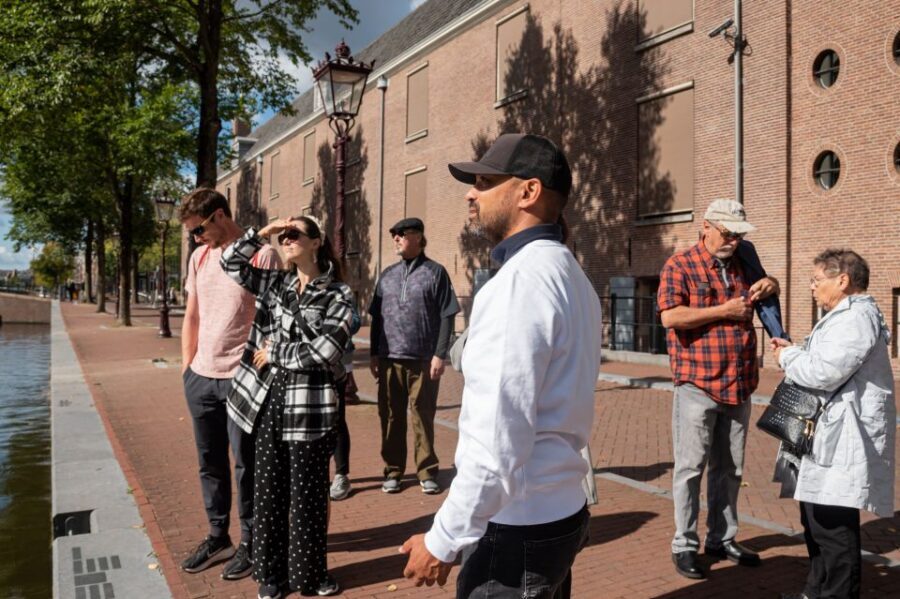
The walk ends in front of Anne Frank House, with time to connect the location to her diary. You’ll hear about Anne’s best-selling diary and how it was published by her father, Otto Frank, and how it gained worldwide fame.
This ending works well because it provides a bridge between the local story and global recognition. Before you get there, you’ve already seen other landmarks and learned how the occupation affected the larger Jewish community. So when Anne Frank enters the conversation, it doesn’t feel like a sudden shift to a single famous narrative. It feels like the culmination of a much wider set of realities.
Important note for planning: the ending point can vary slightly by group logistics. The tour’s description points to Anne Frank House, but some groups have reported that the ending location can be closer to the Holocaust memorial area depending on the exact flow. To avoid surprises, double-check your confirmation details for where your group finishes.
After the tour, you’ll probably want to re-walk a few streets with a new mental map. That’s part of the value here. You’re not just leaving with facts; you’re leaving with bearings.
How 2 Hours Really Works: Pace, Group Size, and Question Time
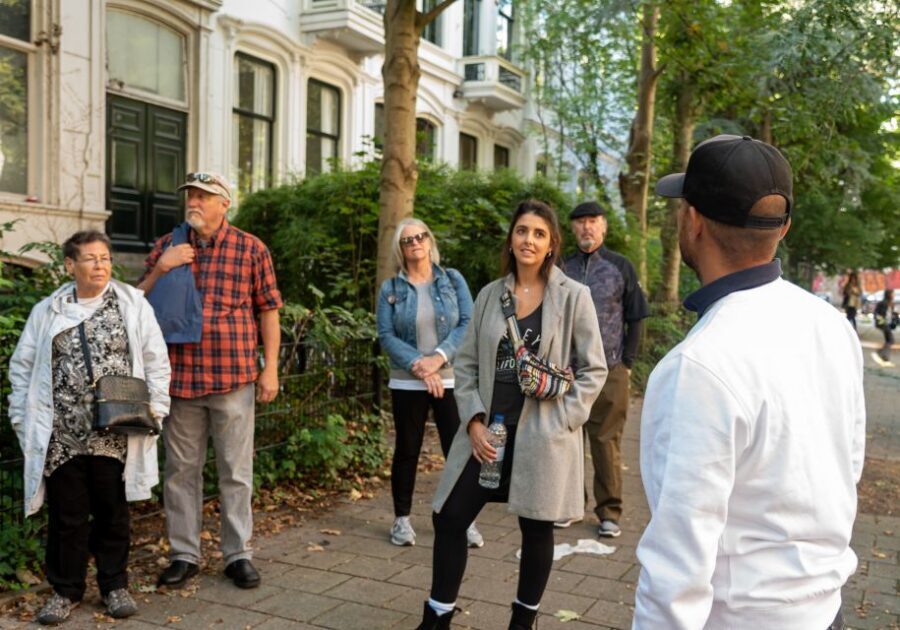
This is a compact tour: 2 hours on foot. That’s long enough to get context and see several major Jewish landmarks, but short enough that you’ll be walking most of the time.
Group type is either private or shared/small-group. Small groups tend to shine for two reasons. First, you can hear every answer clearly. Second, you’re more likely to get time for questions. Many people mention that guides calibrate their talking points to the group and stay patient with questions, even when they’re personal or sensitive.
Pace is the trade-off. Many participants praise the tour’s balance and sensitivity, but at least one person suggested slowing down a bit so monuments can be observed more carefully. If you prefer a slower rhythm, consider visiting when the area is quieter.
One practical suggestion from experience: if you can choose a day, a Sunday morning booking has been recommended for fewer people. Even when the tour is well-run, your ability to reflect improves if you’re not fighting crowds.
Price and Value: What $23 Buys You (and What It Doesn’t)

At about $23 per person for a 2-hour guided walking tour, the value is strong—mainly because your “product” here is interpretation. You’re paying for a guide who can connect the occupation years to specific sites you’d otherwise see as scenery.
This isn’t a tour where you only get a route and a few captions. The consistent praise is about turning buildings into stories with meaning. That kind of context is hard to replicate on your own when you don’t already know what each site represents.
What’s not included is also important: there’s no food or drinks. So you’ll want to plan a meal before or after. Also, the tour is focused on seeing key landmarks and hearing history; you shouldn’t expect this to replace a separate ticketed visit to every attraction in the area.
If you’re choosing between a quick self-guided walk and this guided experience, I’d lean toward the guided tour for one simple reason: it keeps you from missing why each stop matters. Amsterdam is good at hiding its own meaning in plain sight.
Who This Tour Is Best For
I’d recommend this tour if you want:
- a structured way to understand Jewish history in Amsterdam through WWII
- a route that includes both major landmarks and memorials
- a guide who handles sensitive material in a respectful, factual way
- a short walk that gives you enough context to explore later on your own
It may be less ideal if you hate heavy subjects or you need a light, casual history experience. The tour is designed to retrace the darkest moments in human history and to focus on resilience under occupation. That’s the point.
It also fits well if you like having a real conversation. Guides such as Aaron, Joshua, Jyry, and Masha are repeatedly described as approachable and able to answer questions without making the mood awkward.
Should You Book This Amsterdam Jewish Quarter Tour?
Book it if you want a guided route that connects the Amsterdam you walk through today to what happened here between 1940 and 1945. The price is reasonable, the route is packed with meaningful stops, and the guides are consistently praised for sensitivity, clarity, and patience.
Skip or reconsider if you’re looking for an easy-going tour with minimal emotional weight, or if you strongly prefer long stops where you can linger at every memorial for extended periods. In that case, you might pair this with a quieter self-guided follow-up later—so you get both context and your own pacing.
If you book, do yourself a favor: wear comfortable shoes, come ready to listen, and save your biggest questions for when the guide has just finished explaining a specific landmark. That’s when the answers will be most useful—and that’s when the tour’s meaning will really stick.
FAQ
How long is the Amsterdam Jewish Quarter and History guided tour?
It lasts 2 hours.
How much does the tour cost?
The price is $23 per person.
Is the tour private or shared?
You can choose a private or shared walking tour (also described as private or small groups available).
What languages are the live guides speaking?
The tour offers live guides in English and Spanish.
What’s included in the ticket price?
The tour includes the walking tour and a guide.
Are food and drinks included?
No, food and drinks are not included.
Where do we meet for the tour?
The meeting point may vary depending on the option booked.
What are the cancellation and payment options?
You can reserve now and pay later, and you can cancel up to 24 hours in advance for a full refund.