REVIEW · AMSTERDAM
Amsterdam : Guided Cultural Food Tour
Book on Viator →Operated by Amsterdamliebe · Bookable on Viator
Amsterdam can feel like a maze.
This small-group cultural food tour helps you sort the city’s past and present in a smart walking loop. You get landmark-to-landmark storytelling, plus snacks along the way, so it’s not just look-and-walk sightseeing.
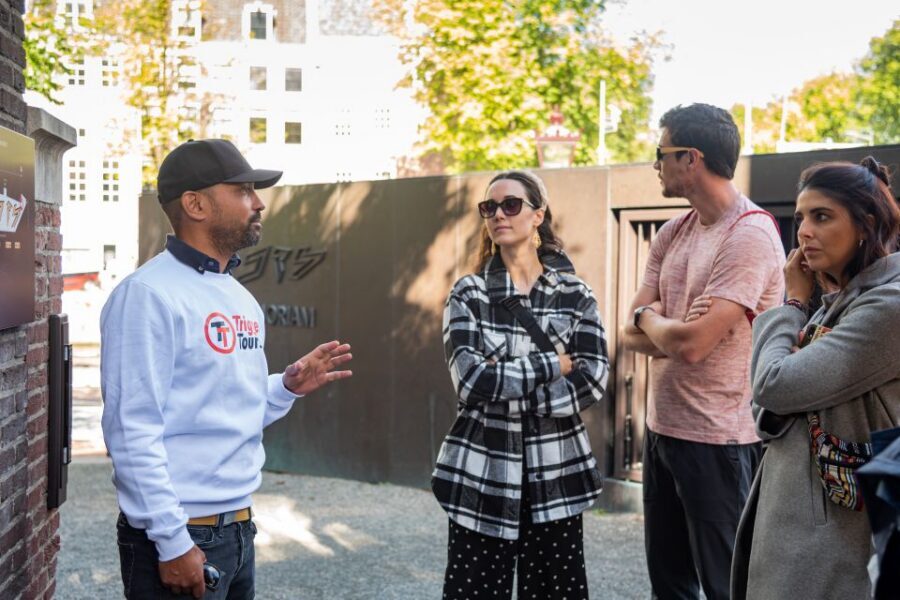
I especially liked the guide style: friendly, easy to follow in English, and quick to answer your questions like you’re chatting with a local. I also like the group size, capped at 15 travelers, which keeps the pace human and makes it easier to actually hear what matters.
One thing to consider: you’re seeing several major sites from the outside or with brief stops, and some places (like Anne Frank House, Westerkerk, and Begijnhof) are not included for entry. If you’re hoping for long interior time, you’ll want to plan that separately.
In This Review
- Key things I’d plan around
- Why This 2.5-Hour Amsterdam Food-and-Culture Walk Works
- From National Monument to Dam Square: Amsterdam’s Core Story in One Stretch
- Royal Palace and Oude Kerk: Power, Monarchy, and the Oldest Church
- Beurs van Berlage and Magna Plaza: Golden Age Money and Repurposed Buildings
- Multatuli’s Statue: Colonial Wealth, Criticism, and a Dutch Author
- Jordaan and Negen Straatjes: Neighborhood Life and Where to Go Next
- Brief Glimpses of Anne Frank House, Westerkerk, and Begijnhof
- Price and What You’re Really Paying For
- Who This Amsterdam Cultural Food Tour Suits Best
- Should You Book This Amsterdam Guided Cultural Food Tour?
- FAQ
- How long is the Amsterdam guided cultural food tour?
- Is the tour offered in English?
- What is the group size limit?
- What’s included in the price?
- Are admission tickets included for the major stops?
- Where does the tour start and end?
- What format is the ticket in?
Key things I’d plan around
- Max 15 people means questions don’t get lost and the pace feels relaxed
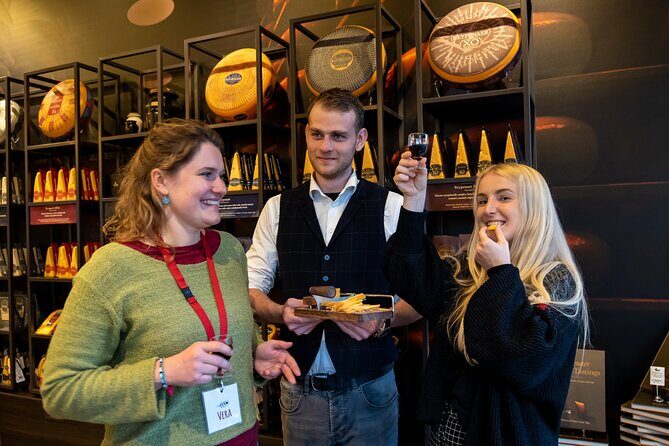
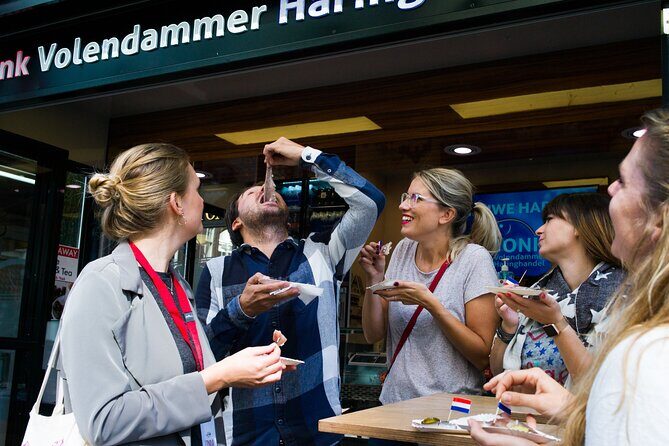
- Snacks are included, so you’re not just sightseeing on an empty stomach
- A tight historic route links Amsterdam’s foundations, Golden Age trade, and modern neighborhood life
- Jordaan + Negen Straatjes gives you both character and practical tips for food and shopping
- Colonialism and WWII context show up in the story, not just the scenery
- Some major sights are outside-only, so manage your expectations if you want to enter
Why This 2.5-Hour Amsterdam Food-and-Culture Walk Works
This tour is built for people who want Amsterdam to make sense fast. You start at the civic heart near National Monument and Dam Square, then move through the layers: power, religion, commerce, colonial wealth, and the neighborhoods that still shape daily life.
The format is simple: you walk, you pause, you taste a bit, and your guide stitches the story together. The 2 hours 30 minutes timing also matters. It’s long enough to feel like you did something real, but short enough that you still have plenty of energy for the rest of your day.
You also get a practical advantage: because the group is small and the stops are close together, you’re less likely to spend the whole day figuring out what you’re looking at. Your guide helps you notice details you might skip on your own.
If your goal is an Amsterdam intro that blends culture and food, this is one of the more efficient ways to do it.
You can also read our reviews of more food & drink experiences in Amsterdam


From National Monument to Dam Square: Amsterdam’s Core Story in One Stretch

You begin at the steps of the National Monument at Dam, and the tone is set right away. Your guide explains how the city grew from the 13th century and why this area matters. It’s a good starting point because the monument area acts like a public “timeline” for the city’s identity.
From there, you move to Dam Square, the center where Amsterdam’s transformation becomes easier to understand on foot. You’ll hear the story of how Amsterdam went from a small fishermen village to a city people would build whole institutions around.
This is also where the tour gets emotionally grounded. As you walk past the monument, you’re encouraged to empathize with victims of World War II. That doesn’t mean the tour becomes heavy all day—it just means the guide gives you a real human frame, not just dates and architecture.
Practical tip: this early segment is where you should be most alert. If you’re jet-lagged, still try to listen closely here. The rest of the route will land better once you understand why this square sits at the center of everything.
Royal Palace and Oude Kerk: Power, Monarchy, and the Oldest Church
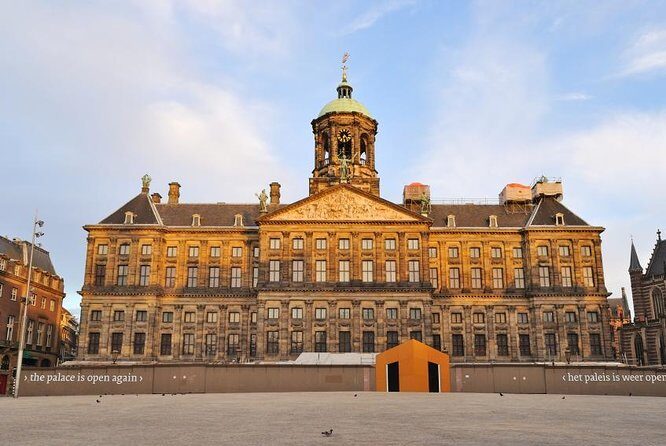
Next comes the Royal Palace Amsterdam area. Even from the outside, you’ll get the key idea: monarchy isn’t just a historical detail, it plays a role in how the Netherlands views itself today. It’s a smart stop because it connects politics to public space. You see how a ruling system leaves physical marks.
Then you head to the Oude Kerk, Amsterdam’s oldest church. The tour ties the site to the city’s changing social map, including how the red light district emerged in the 14th century. The point isn’t shock for shock’s sake. It’s context: Amsterdam has always been shaped by trade routes, wealth, and social change, and your guide explains that continuity.
Watch your timing here. The church stop is brief, so treat it like a way to orient yourself rather than a full religious deep reading. If you later want more, you’ll know what to focus on because you’ll have the “why” first.
Beurs van Berlage and Magna Plaza: Golden Age Money and Repurposed Buildings
If you’re a history buff, this part is a treat. The Beurs van Berlage stop points you toward the trade history that helped Amsterdam become extremely wealthy during the Golden Age. The building itself feels like a statement: commerce wasn’t a background activity. It was part of the city’s identity.
Then you move to Magna Plaza, a former post office turned shopping and public space. This is where the tour becomes fun in a practical way. You start to see how Amsterdam reuses strong old infrastructure instead of wiping it clean and starting over.
Why this matters for you: when a city does reuse well, it saves money, time, and character. You get to experience the same street-level energy without the city feeling like a theme park version of itself.
Also, these stops fit well between longer emotional beats. After monarchy and early social stories, you get commerce and building reuse, which makes the whole day feel balanced.
Multatuli’s Statue: Colonial Wealth, Criticism, and a Dutch Author

At the Statue of Multatuli, the tour shifts from architecture to ideas. You learn about the dark sides of colonialism that helped create Dutch riches—and how that same story led to criticism. It’s not only about empire. It’s also about what writers did with their role in public debate.
You’ll also hear about Multatuli as one of the Netherlands’ important authors. This is a great stop if you like seeing how culture and politics cross over. A statue is never only a statue. It’s a reminder that public memory has arguments inside it.
If you prefer tours that stay strictly positive or purely scenic, this stop may feel like a pivot. But it’s also one of the more adult moments on the route. Amsterdam isn’t one note, and the guide doesn’t pretend it is.
You can also read our reviews of more tours and experiences in Amsterdam






Jordaan and Negen Straatjes: Neighborhood Life and Where to Go Next

This is the part you’re likely to remember after the trip. You head into the Jordaan, described as one of Amsterdam’s most picturesque neighborhoods. Your guide explains the story behind the neighborhood and the smaller houses that define its character.
Then you reach 9 Little Streets (Negen Straatjes). This area is where the tour turns from history into “what do I do now?” You get practical tips for bars, restaurants, and shopping opportunities. It’s also an easy transition if you’re hungry, because the route keeps you close to places you can walk into right afterward.
Here’s how I’d use this segment: don’t treat it like a shopping sprint. Use it like a scouting mission. Note the streets that feel like your style. If you like cozy and quiet, lean toward smaller side streets. If you want more energy, you’ll spot it quickly once you’re there.
Also, this part of the walk is where the small-group format really helps. When you ask a question about where to eat or what to skip, your guide can tailor the suggestion to your interests, not just give generic advice.
Brief Glimpses of Anne Frank House, Westerkerk, and Begijnhof

The last phase is more about getting oriented than fully touring interiors. You’ll take brief looks at the Anne Frank House on your route, and you’ll hear about her moving story. Because the stop is short, you’re not meant to experience it like a standalone visit with full time inside. It’s more like a respectful preview.
Next, you pass by Westerkerk, one of the biggest churches in Amsterdam, and you get a quick look. After that, you visit the Begijnhof, including a chance to spot a hidden church inside. The Begijnhof stop is short too, so think of it as a calm pocket you learn the significance of, not a long wander.
Practical consideration: since these last stops are not included for admission, plan your expectations. If you want entry, you’ll need to arrange that separately. The tour does a good job of pointing you toward what you might want to see deeper later.
Price and What You’re Really Paying For

At $102.41 per person for about 2.5 hours, this isn’t the cheapest way to walk Amsterdam. But it’s also not priced like a luxury “chauffeur plus a museum” day.
Here’s what you’re buying:
- A guided route through major landmarks that cover both civic history and neighborhood life
- Snacks included, which adds real value during a walking-focused morning/afternoon
- A small group cap of 15, which makes the experience feel personal instead of rushed
- Tourist tax included (1.50€ tourist tax), so you’re not hit with extra fees at the end
For me, the value comes from the structure. You get the city’s big ideas in a compact route without needing to build a plan yourself. If you try to do this solo, you’ll likely spend time figuring out what to prioritize and you might miss the connections between stops.
When it’s a great deal: if you like history but also want your day to stay fun and food-friendly. If you only want one neighborhood or only want churches, the route might feel like too much variety.
Who This Amsterdam Cultural Food Tour Suits Best
This is a solid match if:
- You want a fast Amsterdam intro that connects landmarks with story
- You like walking days and can handle a route with many short stops
- You care about more than photos and want context for what you’re seeing
- You prefer small groups where your guide can actually talk to you
It may be less ideal if:
- You want long time inside major attractions
- You dislike tours that cover serious topics like WWII and colonialism
- You’re looking for a “food-only” experience with named dishes and repeated tastings
One more practical note: the tour requires good weather. Amsterdam weather is fickle, so if skies look rough, keep an eye out for day-of changes.
Should You Book This Amsterdam Guided Cultural Food Tour?
I’d book it if you want your first or second day in Amsterdam to feel organized and meaningful. The mix of Dam Square, Golden Age trade, and the Jordaan gives you both the big picture and the human-scale streets you’ll want to explore later. Add the small group size and the included snacks, and it’s easy to justify the price.
If your top goal is entry tickets and long museum time, you’ll get more value pairing this with separate visits to the sites you care about most. But as a guided, story-led introduction that helps you walk with confidence, this tour fits the bill well.
FAQ
How long is the Amsterdam guided cultural food tour?
It lasts about 2 hours 30 minutes.
Is the tour offered in English?
Yes. The tour is offered in English.
What is the group size limit?
The experience has a maximum of 15 travelers.
What’s included in the price?
You get a 2.5-hour walking tour, a guide, snacks, and a 1.50€ tourist tax.
Are admission tickets included for the major stops?
Most stops list admission as free. However, admission is not included for Anne Frank House, Westerkerk, and Begijnhof.
Where does the tour start and end?
It starts at the National Monument on Dam (1012 JS Amsterdam) and ends on Spui Square near Art Amsterdam Spui (Spui 20HS, 1012 XA Amsterdam).
What format is the ticket in?
You receive a mobile ticket.