REVIEW · AMSTERDAM
10 Tastes of Amsterdam: Food Tour by UNESCO Canals and Jordaan
Book on Viator →Operated by Adam & Eve Amsterdam Food Tours · Bookable on Viator
Amsterdam tastes quicker than you think. You get a 3-hour, small-group walking route through the canal belt and the Jordaan, timed so you can sample classic Dutch flavors like stroopwafels and herring without eating a whole dinner’s worth of guesswork.
I love that it’s built around 10 premium tastings at local spots—not just snack tables—plus drinks are included from the start. My other favorite thing is the mix of flavors and places, from a cheese cellar first stop to a traditional brown café finish near Anne Frank House.
One thing to consider: this is real walking (about 1.5 miles / 2.5 km) with standing in many eateries, and some stops can involve stairs.
In This Review
- Key highlights you should know
- Entering Gastrovino’s Gouda Cellar at Spuistraat
- Brown Bars, Sailor Legends, and the Spui Market Fishmonger
- Hans Egstorf and the Stroopwafel Moment
- Herring Stall Jonk: Dutch Sashimi for Early Birds
- Bloemenmarkt on the Singel Canal and the Chocolate Stop Duo
- A Stop for Spirits and Bitterballen Energy Near a 400-Year University
- The Jordaan Finish-Line: Poffertjes and Brown Café Beers
- Canal Ring Views and Café Hegeraad’s Apple Pie
- Nine Streets Stories and the Easy Walk to Anne Frank House
- Price, Group Size, and Why $102.06 Can Actually Be Good Value
- Dietary Fit: Vegetarian, Pescatarian, and the Gluten-Free Reality
- Public Tour vs Private Upgrade: When You Should Pay More
- Who This Tour Suits Best
- Should You Book This Amsterdam Food Tour?
- FAQ
- How long is the tour, and where does it end?
- What food and drinks are included in the price?
- Is pickup included?
- Are vegetarian and pescatarian options available?
- Can you do gluten-free on this tour?
- Is herring included, and is there a time limit?
Key highlights you should know
- You start underground in Gastrovino’s cheese shop cellar with Gouda and local liquor or port
- Fresh stroopwafel is the point, made in front of you at a 200-year-old bakery
- Herring is an early-bird move (available until 16:00 start times)
- Jordaan food is the payoff, including poffertjes and local beer in cozy brown café style
- Even the route has meaning, with canal-ring views and Nine Streets neighborhood stories
- If you need gluten-free, the public tour may be hit-or-miss, while private can be fully tailored
Entering Gastrovino’s Gouda Cellar at Spuistraat
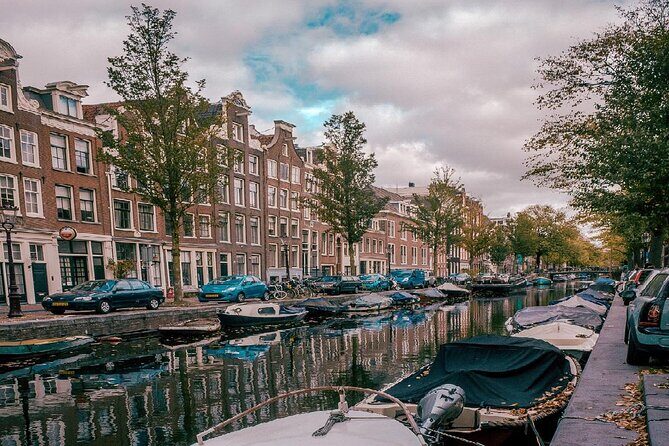
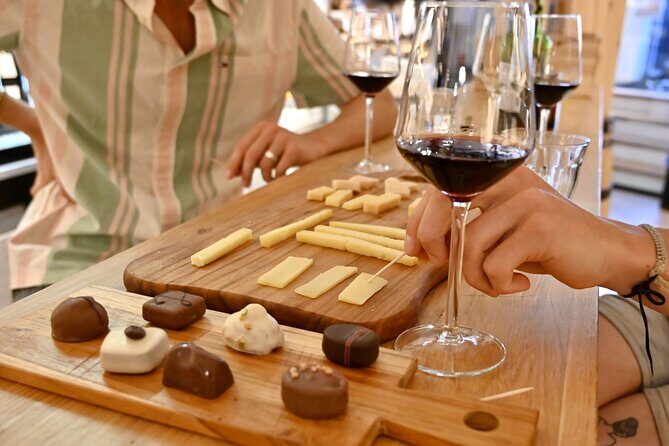
Most food tours start above ground. This one drops you in first—inside Gastrovino Amsterdam at Spuistraat, where you begin in the wine basement of a top cheese shop. Expect tastings of aged and young Gouda, paired with a seasonal Dutch liquorette or port, so you can taste how sharpness and sweetness change from one cheese style to another.
I like this start because it gives you a baseline. Once you get the Gouda idea in your head, the rest of the tour makes more sense—Dutch food here isn’t fussy. It’s clear, strong flavors done with confidence.
This stop also sets the tone for the rest of the walk: small, focused, and paced so you can actually taste instead of rushing from photo to photo.
You can also read our reviews of more food & drink experiences in Amsterdam


Brown Bars, Sailor Legends, and the Spui Market Fishmonger
After the cheese, you’ll move through older Amsterdam territory with stops that feel like local habits, not tourist traps. One moment includes a look into a brown bar that’s been serving sailors for over 400 years. Another is Spui market, where you get that Amsterdam “everyday life” vibe—especially on weekends—plus a strong fishmonger stop for serious seafood fans.
If you want a tour that shows you what locals casually do on a Saturday morning (or a weekday after work), this part delivers. You’re not just tasting—you’re getting the setting that explains why the Dutch love seafood, cheese, and beer.
A small note: some of these stops are quick. You’ll want to be ready with a tasting attitude, not a sit-and-stare attitude.
Hans Egstorf and the Stroopwafel Moment
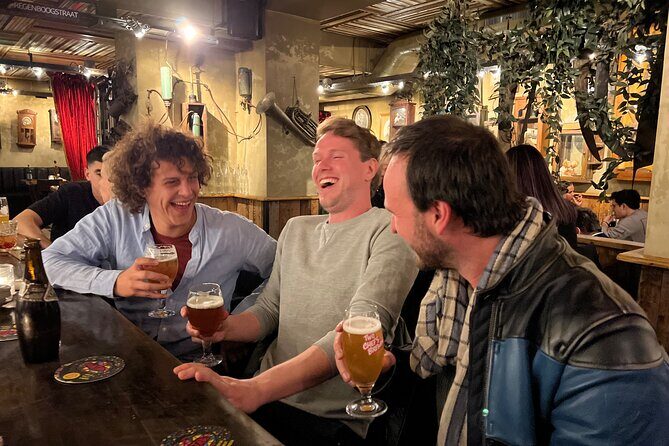
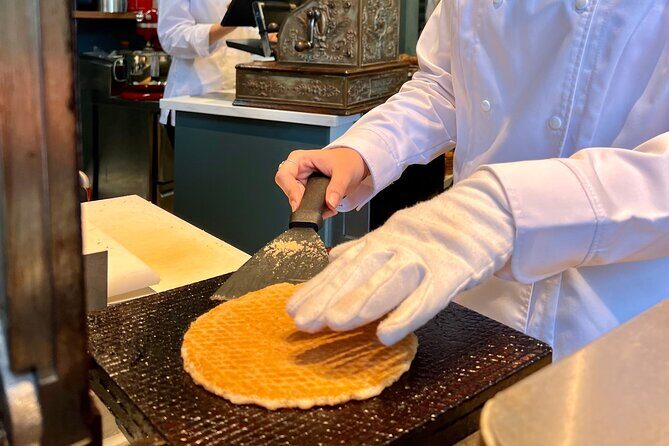
Then comes the sugar highlight: stroopwafels at Hans Egstorf. This is a 200-year-old bakery where stroopwafels are made right before you. The best part is the contrast: gooey inside, crisp outside, with that sticky caramel syrup that makes your fingers feel like you’re doing science.
I like that the tour doesn’t treat dessert like an afterthought. It’s positioned as a “learn the flavor” stop, and stroopwafel is one of those foods that tastes different when it’s fresh. On a travel day, it’s also a smart energy boost between savory bites.
If you’re the type who tends to skip sweets, this is still worth it. You’ll get a better sense of Dutch comfort food than you would from a packaged souvenir.
Herring Stall Jonk: Dutch Sashimi for Early Birds
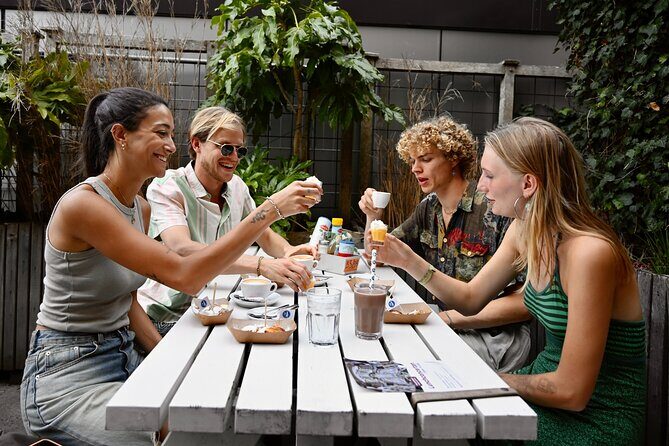
One of Amsterdam’s most polarizing foods is also one of its most historic: herring, served with onions. At Herring Stall Jonk, you’ll try Dutch-style herring as part of the tasting lineup, and the tour frames it as something Amsterdam has eaten for more than 1,000 years.
Here’s the practical part. Herring is only available for tours starting no later than 4:00 pm, because of opening times. If you’re booking a later slot, check your start time carefully—this is the kind of “signature” stop that can disappear if the schedule is off.
Also, if you’re sensitive to raw fish smells, be honest with your guide. A good guide will help you with how to handle the taste and how much to take.
Bloemenmarkt on the Singel Canal and the Chocolate Stop Duo
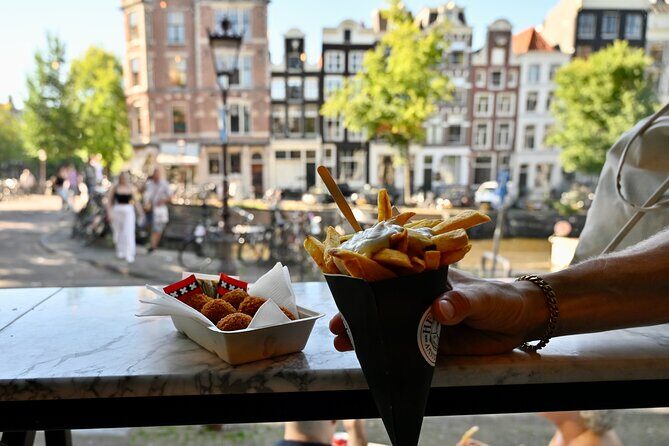
From old Amsterdam food habits you pivot into Amsterdam’s bright side: the floating flower market, Bloemenmarkt, along the Singel Canal. It’s an easy, photogenic pause, with tulip bulbs and blooms that help you picture how the city stays colorful even in off-season months.
The route also includes a sweets stop at Puccini Bomboni, where you taste Dutch pralines and get a quick lesson in how seriously the Dutch take cacao and chocolate. It’s a reminder that Dutch cuisine is not only savory classics. The country loves candy texture and deep chocolate flavor too.
Most tours include the Bloemenmarkt moment, but every guide’s route is unique, so don’t treat it like a guaranteed exact stop if your route shifts slightly. Still, it’s very likely you’ll see those floating stalls.
You can also read our reviews of more tours and experiences in Amsterdam





A Stop for Spirits and Bitterballen Energy Near a 400-Year University

Along the walk, you’ll also see a 400-year-old university where young intellectuals have historically chased the good stuff—Dutch spirits and bitterballen. Even when you’re just passing by for context, it’s useful because it ties the food to Amsterdam’s brainy, student-driven culture, not just the canal postcard view.
This is one of those stops where the value is in the story plus the vibe. You get why bitterballen shows up everywhere, and why jenever and spirits fit right into a Dutch social night out.
I like this kind of stop because it helps you understand what you’re eating without turning the tour into a textbook.
The Jordaan Finish-Line: Poffertjes and Brown Café Beers
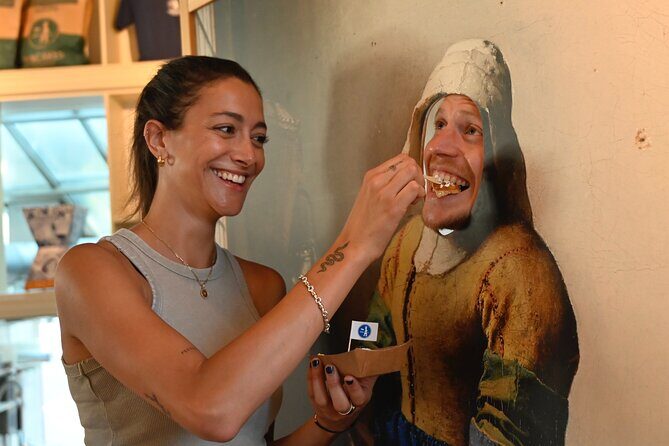
If you want the “cozy Amsterdam” portion of the tour, the Jordaan is where it happens. This district is famous for brown cafés, and the tasting here leans into comfort food: poffertjes, the fluffy miniature pancakes, usually drenched with butter.
Then you get local brews as part of the Jordaan experience. In other words, this isn’t just sugar on sugar—it’s a full little Dutch evening starter, served as you move through streets that feel like they’ve been used for generations.
This section is a big reason the tour earns its reputation for leaving you satisfied. By this point, you’ve built flavor momentum: cheese and bread energy, then seafood and sweets, then warm café comfort.
Canal Ring Views and Café Hegeraad’s Apple Pie
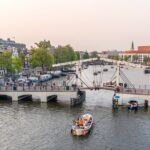
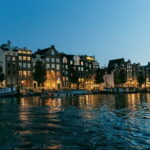
The tour takes you to the Amsterdam Canal Ring, where 17th-century canal scenery becomes the backdrop for your next set of tastings. It’s one of those “stop and look for a minute” moments that helps your photos feel less random.
After that, you’ll taste at Café Hegeraad, a centuries-old brown pub. The highlights are the style foods: local beer and apple pie. This is a classic Dutch pairing, and it’s a fun way to finish the savory-to-sweet arc.
I like that this part feels like the tour is letting you rest your feet without turning it into a long sit-down meal. You leave the café with your appetite satisfied and your senses still awake for the final walking stretches.
Nine Streets Stories and the Easy Walk to Anne Frank House
The last stretch moves through the 9 Streets area—canals, food talk, and neighborhood history. You’ll connect what you’re eating to how Amsterdam changed over time, from a fishing village to a Golden Age trading powerhouse, with the city’s food culture reflecting that shift.
As you near the end, your tour may also include a look at the Anne Frank House area. The tour usually ends near Westermarkt 20, a short walk from the landmark, so you can turn your food tour into a deeper cultural stop with minimal extra transit.
A practical tip: if you want to visit Anne Frank House the same day, don’t wait too long after the tour ends. This tour hands you a perfect “I’m already nearby” moment.
Price, Group Size, and Why $102.06 Can Actually Be Good Value
At $102.06 per person for about 3 hours, the price looks high until you map it to what’s included. You’re paying for 10 premium tastings at 5+ local spots plus drinks like local liquor or traditional jenever or wine, coffee, tea, soda, and bottled water.
That matters because Amsterdam meals can add up fast. If you tried to replicate this on your own—cheese tasting, a fresh stroopwafel stop, herring, sweets, beer, and a few café-style snacks—you’d likely spend time and money assembling it. Here, the schedule reduces the guesswork.
The small-group size also changes the feel. It’s set up as max 12 people (and designed as a tight small-group experience), which makes it easier for your guide to keep pace and answer questions without the tour turning into a herd.
Also, you get an insider guide plus a “Where to Eat in Amsterdam” handoff, which is useful if you’re staying more than one day.
Dietary Fit: Vegetarian, Pescatarian, and the Gluten-Free Reality
If you eat vegetarian or pescatarian, you’re in good shape. Vegetarian and pescatarian options are available, and you can tell the guide ahead of time.
Gluten-free is where you need to plan carefully. Gluten-free is possible at about 70% of stops for tours starting 16:00 or earlier, but it’s not guaranteed at every venue. For fully gluten-free planning, the private tour option is the better path because it allows full dietary customization.
If you have allergies, the tour notes that cross-contamination can happen in shared kitchens. Peanut, shellfish, and nut allergies are usually manageable, but you should still communicate clearly and remind your guide at the start.
My advice: if your diet needs strict control, choose private from the start rather than hoping every stop can adjust on the fly.
Public Tour vs Private Upgrade: When You Should Pay More
This tour is built for a public group walk, but there’s a private upgrade for people who want control. Private includes hotel/ship pickup, a custom food route (Jordaan, Nine Streets, and even optional add-ons), flexible start times, mobility options, and full dietary customization.
You might consider private if:
- you need full gluten-free planning
- you have mobility concerns and want a shorter route
- you want fewer walking blocks or more time at a stop
- you want your own pace instead of group pacing
Public is best if you’re comfortable walking through neighborhoods and you want maximum value with minimal planning.
Who This Tour Suits Best
This works great if you’re the type who likes to learn through food—cheese and beer culture, canal-area neighborhoods, and the Jordaan’s café vibe. It’s also a smart first Amsterdam day activity because it covers multiple areas fast and ends near a major landmark.
It’s not ideal if:
- you hate walking and standing (you’ll cover about 1.5 miles / 2.5 km)
- you’re very late in the day for herring, since herring depends on start time
- you need fully gluten-free meals in every stop without exceptions
If you’re traveling solo, it’s still a friendly way to see the city with structure. If you’re traveling with a partner, the small-group feel makes it easy to talk with your guide rather than just follow a line.
Should You Book This Amsterdam Food Tour?
Book it if you want a high-hit list of Dutch favorites in a short time: Gouda in a cellar, fresh stroopwafel made on the spot, early-bird herring, Jordaan poffertjes, and a brown pub beer-and-pie finish. The included drinks and 10 tastings make the $102.06 feel more fair than many “snack tours.”
Skip or upgrade to private if walking is a struggle or if gluten-free needs full certainty. And if you’re planning a later start time, double-check that herring can fit—because that one stop has a real cutoff.
If you like neighborhoods as much as food, this route gives you both, ending in the perfect spot to keep exploring.
FAQ
How long is the tour, and where does it end?
The tour runs about 3 hours. It usually ends near Anne Frank House at Westermarkt 20, 1016 GV Amsterdam.
What food and drinks are included in the price?
The price includes 10 premium tastings at 5+ local spots, plus drinks such as local liquor or jenever or wine, coffee, tea, soda, and bottled water.
Is pickup included?
Public tours start at Gastrovino Amsterdam – De Mannen Van Kaas, Spuistraat 330. Hotel/ship pickup is included with the private tour option.
Are vegetarian and pescatarian options available?
Yes. You can tell the guide you want vegetarian or pescatarian options when booking.
Can you do gluten-free on this tour?
Gluten-free is possible at about 70% of stops for tours starting 16:00 or earlier, but it is not guaranteed at every stop. For fully gluten-free planning, the private tour is the best option.
Is herring included, and is there a time limit?
Yes, herring is included at Herring Stall Jonk, and it’s available until 16:00 start time. The tour notes it’s for early birds that start lastest 4 pm.