REVIEW · AMSTERDAM
Amsterdam City Center & History – Exclusive Guided Walking Tour
Book on Viator →Operated by Babylon Tours Amsterdam · Bookable on Viator
Amsterdam makes more sense fast—on foot.
This Amsterdam City Center & History walk strings together famous (and lesser-seen) spots into one clear story, from religion and trade to WWII reminders and Golden Age canal power. I like that the pacing is built for a morning or afternoon stroll—about 2.5 hours—and you’ll get lots of guidance so the city feels less like a postcard and more like a place with logic. You’ll also walk out with practical tips for where to go next, not just a list of sights.
One thing to consider: this is a walking tour in real city weather, rain or shine. If you hate walking for 2–3 hours or you’re carrying a big bag, plan around that—comfortable shoes matter, and large bags aren’t allowed.
In This Review
- Key highlights at a glance
- Value and pace: what you get for $62.48
- Meeting point and ending point: start on Prins Hendrikkade, finish at Papeneiland
- Stop-by-stop: how the tour tells Amsterdam’s story
- St. Nicholas Basilica and Schreierstoren: faith, prohibition, and maritime farewells
- Zeedijk, Nieuwmarkt, and De Waag: sea dikes, old city gates, and the business of everyday life
- Trippenhuis, Oost-Indisch Huis, and the “smallest” contrast: power, taxes, and the trade empire
- Zuiderkerk and Rembrandt’s house area: Protestant design and the artist who stayed put
- Stopera, three-canal canal houses, and the “look-up” façades
- Begijnhof: a quiet medieval pocket that resets your pace
- Dam Square and Herengracht: the centerline of power and the Golden Bend
- Outside Anne Frank House and the Westerkerk tower: WWII memory in the open air
- Karthuizerhof and Noorderkerk: hofjes and Protestant worship design
- Papeneiland and Het Papeneiland: end with apple pie and an easy next step
- Guides and learning style: why this tour feels worth it
- Who should book this Amsterdam City Center & History tour
- Should you book this tour?
- FAQ
- How long is the Amsterdam City Center & History walking tour?
- Is this tour private?
- What language is the tour offered in?
- Where does the tour start and end?
- Are entrance tickets included?
- Will the tour run if it’s raining?
- What should I bring for the walk?
- Do I need a mobile phone number to join?
- Is gratuity included in the price?
Key highlights at a glance
- Private-guide focus (your guide is exclusively for your group on this option)
- 2.5 hours, city-center compact, with a route built for orientation
- Trade meets faith, from the St. Nicholas Basilica to the Dutch East India Company courtyard
- Look-up architecture moments, like gable stones at Bloemgracht
- A satisfying finish at Het Papeneiland, with a local apple pie stop
Value and pace: what you get for $62.48
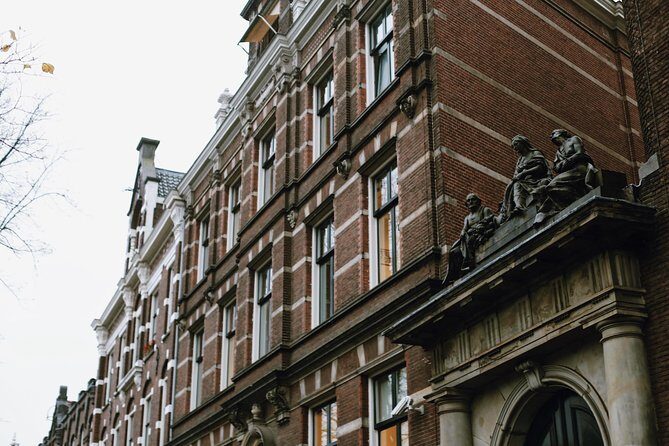
For $62.48 per person, you’re paying for two things: time and interpretation. Amsterdam’s center is packed, but without context it can blur together. This tour gives you a shaped route where each stop explains what came next—so you’re not just walking from building to building, you’re learning the why.
At around 2.5 hours, the schedule is long enough to cover major districts of the inner city, but short enough that you’ll still have energy for your own exploring later. You also get a steady flow of stops—most are quick photo pauses—so you don’t spend half the day stuck waiting around.
And because it’s rain or shine, you’re not gambling on weather. The guide keeps the momentum, which is a big deal when wind and drizzle can turn a “quick stop” into a cold waiting game.
You can also read our reviews of more walking tours in Amsterdam



Meeting point and ending point: start on Prins Hendrikkade, finish at Papeneiland
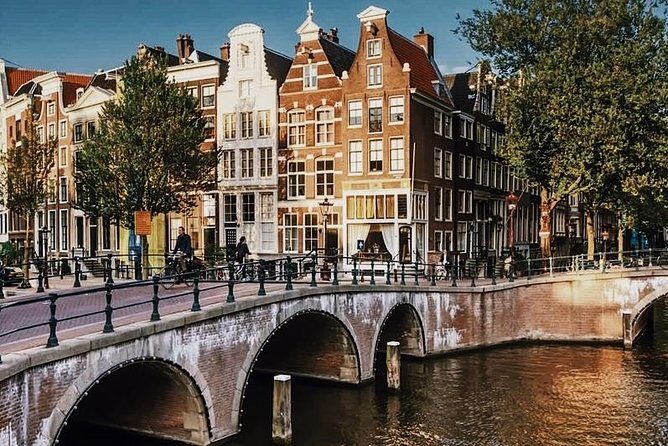
You meet at Prins Hendrikkade 73, 1012 AD Amsterdam and end at Het Papeneiland on Prinsengracht 2, 1015 DV Amsterdam. That finish location is smart: Papeneiland sits at a pretty canal corner, so it’s a natural launchpad for dinner and a last wander.
If you’re staying outside the center, I’d plan on taxi or Uber rather than fighting multiple transit changes with luggage. Also, this tour is very much about walking light: no large bags or suitcases.
Stop-by-stop: how the tour tells Amsterdam’s story
St. Nicholas Basilica and Schreierstoren: faith, prohibition, and maritime farewells
You start with St. Nicholas Basilica, Amsterdam’s primary Roman Catholic church. It was built in the late 1800s after centuries of prohibition, which turns the building into more than a pretty stop—you’re seeing a shift in what was allowed to exist in the city.
From there, you head to the Schreierstoren, also called the Weeping Tower. The medieval tower is tied to a human moment: women bidding farewell to loved ones departing by ship. It’s one of those places where history hits a little harder, because the story is personal even if the tower is stone.
Practical note: this stop is quick, and the tower’s entry isn’t included. So expect viewing and explanation more than a long indoor experience.
Zeedijk, Nieuwmarkt, and De Waag: sea dikes, old city gates, and the business of everyday life
Next comes Zeedijk, one of Amsterdam’s oldest streets. This is where you learn that the ground under your feet has been engineered for survival: Zeedijk once acted as a sea dike holding back the waters of the IJ. On a flat map it’s easy to forget the city’s water reality, but the walking route brings it back.
A short stroll later you reach Nieuwmarkt, a lively old-city square that served as a trading and social hub since the 1600s. The reason it mattered is practical: the square sat near the old city gate, making it convenient for shoppers and traders coming in for fresh produce and goods.
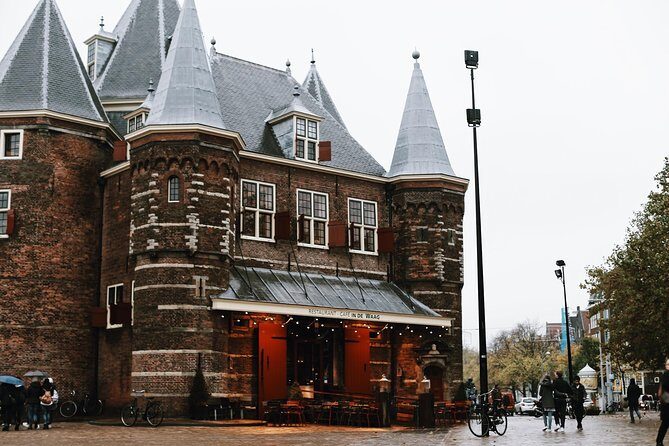
Near Nieuwmarkt you also see De Waag (the Waag building), a 15th-century non-religious structure. It was originally part of Amsterdam’s city defenses and walls, then served multiple civic roles over time—guild hall, museum, fire station. It’s a good example of how Amsterdam reuses big stone structures instead of discarding them.
You can also read our reviews of more guided tours in Amsterdam




Trippenhuis, Oost-Indisch Huis, and the “smallest” contrast: power, taxes, and the trade empire
Now you get a strong visual lesson in inequality and ambition.
At Trippenhuis, you’ll see one of Amsterdam’s grand 17th-century mansions, once owned by the wealthy Trip family. It’s a “look up and register the scale” moment. Then the tour flips the contrast by showing the Kleine Trippenhuis opposite—Amsterdam’s smallest house. The idea behind the architecture here isn’t romantic; it’s practical economics. High land taxes pushed builders toward tall, narrow designs.
From there, step into the courtyard of the Oost-Indisch Huis, the Dutch East India Company headquarters. This courtyard connection matters: you’re in the birthplace story of what’s often described as the world’s first multinational corporation. You don’t need a business degree to understand the point. This is where Amsterdam’s money story gets real—trade routes turned into institutions, and institutions turned into buildings.
Two reminders as you walk:
- Some of these stops focus on what you can see outside or inside courtyards, and not every interior is included.
- The guide’s job is to link the architecture to the economy, so ask questions if anything feels confusing.
Zuiderkerk and Rembrandt’s house area: Protestant design and the artist who stayed put
The tour then moves to Zuiderkerk, Amsterdam’s first purpose-built Protestant church. The tower is a key landmark, designed by Hendrick de Keyser. This stop helps you understand how the Reformation changed more than beliefs—it changed city shapes, too.
Next you’re guided toward Museum Het Rembrandthuis, Rembrandt’s former home and studio. You’re there for a deeper connection than “famous artist sight.” Rembrandt lived and worked there for nearly 20 years. That long stay matters, because it suggests how Amsterdam supported artists over time, not just how it celebrated them later.
Entry isn’t included here, so you’ll likely focus on what’s possible with the time you have. Still, the point lands: Amsterdam wasn’t only merchants and churches; it was also creative labor with a workplace.
Stopera, three-canal canal houses, and the “look-up” façades
The walking route continues to the Stopera area—National Opera & Ballet combined with Amsterdam’s city hall complex. The construction took decades (at least 60 years), which tells you something about Amsterdam’s planning style: major civic projects can take a long time, and they’re meant to last.
Then you’ll see Huis Aan De Drie Grachten, a rare canal house built at the junction of three canals, with façades facing three directions. This is one of those spots where you can actually understand why Amsterdam feels “designed” even when it grew organically. Waterways weren’t obstacles; they were the street system.
As you move along, the route also includes the gables at Bloemgracht 87–91, sometimes referred to as De Drie Hendricken. This is where you slow down and look at carved details—allegories and trade emblems. Most people rush past façades. This tour makes you stop and read them, because those carvings are basically branding, politics, and trade signals in stone.
Begijnhof: a quiet medieval pocket that resets your pace
At Begijnhof, you step into a peaceful courtyard connected to the Beguines—devout women who lived as a community. It’s a small pause from the wider city noise, and the guide typically frames it as more than scenic calm: it’s a survival model. When life was restricted by social rules, communities like this offered structure.
There’s also mention of one of Amsterdam’s oldest wooden houses in the area. Even if you only see it briefly, the point is clear: not everything old in Amsterdam is made of brick and canals. Some of it survived in wood too.
Dam Square and Herengracht: the centerline of power and the Golden Bend
Then the tour hits Dam Square, Amsterdam’s historic heart. Here you’ll see the Royal Palace, the New Church, and the National Monument to WWII victims. This is the moment where Amsterdam’s layered identity shows: power (palace), religion (church), and collective memory (monument) all share one stage.
After that comes Herengracht, specifically the “Golden Bend,” lined with ornate canal mansions from the Dutch Golden Age. This stretch is where you can feel the money story without a lecture. The façades do the talking: wealth, craftsmanship, and civic pride, all built into the skyline.
A quick, practical tip: if you’re tired, this is where you’ll want to take a slower look. Stand still. Let the scale register. The tour moves quickly overall, but this is a stop worth savoring for 60 seconds longer than the guide’s timeline.
Outside Anne Frank House and the Westerkerk tower: WWII memory in the open air
Next you pause near the Anne Frank House. The tour keeps it outside, focusing on context rather than an interior visit. Next door rises the Westerkerk, with one of Amsterdam’s tallest church towers.
Even with a short stop, the guide’s framing can make the area feel less like a checklist item and more like a living neighborhood with history layers. If you want to go deeper later, this is a smart “orientation” moment—your next step can be planned with intention.
Karthuizerhof and Noorderkerk: hofjes and Protestant worship design
The walk continues to Coöperatieve Vereniging Karthuizerhof, described as the largest hofje in Amsterdam. Hofjes are courtyard homes—here originally built as almshouses around a tranquil interior for the poor and elderly. It’s a reminder that Amsterdam’s history includes care systems, not only grandeur.
Then you visit Noorderkerk, a 17th-century Protestant church built for the Jordaan district. The floor plan is cross-shaped, tied to new ideas in Reformation worship. It’s another example of how belief shows up in architecture, not just sermons.
Entry isn’t guaranteed in the time you have, so you’ll mainly get the exterior and the design explanation. Still, it’s a useful stop if you like seeing the “how” behind the shape.
Papeneiland and Het Papeneiland: end with apple pie and an easy next step
Finally, the route ends at Het Papeneiland, a brown café from 1642, on a pretty canal corner. It’s known for apple pie, and it’s a fitting finish because it’s social, simple, and old-school.
I like ending tours like this. You’re tired enough to want a treat, and you’re close enough to walk to dinner without a complicated transit plan. Also, if rain hit earlier, this is a chance to dry off and reset.
Guides and learning style: why this tour feels worth it

Across the guides associated with this route—names like Anita, Diana, and Pedro come up—I see a pattern: they keep the group moving and answer questions in a way that connects landmarks to city life. In rain and wind, that “keep going” skill matters. It stops the day from turning into a weather complaint contest.
You also get the biggest win that you won’t find on a free map: context that helps you choose your next moves. When I’m in Amsterdam, I don’t want more facts. I want facts that guide decisions—where to wander, what to look for, and what’s worth waiting for.
Who should book this Amsterdam City Center & History tour
This is a strong pick if:
- It’s your first time in Amsterdam and you want a clear orientation route.
- You like architecture and city planning, not just photos.
- You want a guide who can connect religion, trade, and everyday life without making it a lecture.
- You’re okay with walking in weather and you have a moderate fitness level.
It may not be the best fit if:
- You want lots of long interior museum time at multiple sites (some entrances aren’t included).
- You’re looking for a relaxed pace with minimal walking.
- You’re carrying large bags or suitcases.
Should you book this tour?
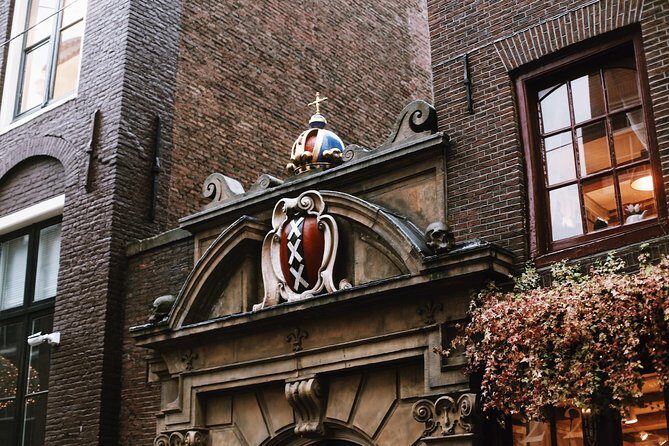
If you want Amsterdam to click—fast—book it. The price buys you a tight walking route, a guide who can explain what you’re seeing, and a finish at Papeneiland that makes your day feel complete. It’s also a good “foundation” tour: once you understand the city’s water, trade, and religious shifts, the rest of your trip makes more sense.
If you’re flexible on weather and you wear comfortable shoes, you’ll get a lot out of the 2.5 hours. If you’re hoping for a slow, sit-down museum day, you might prefer a more interior-heavy itinerary.
FAQ
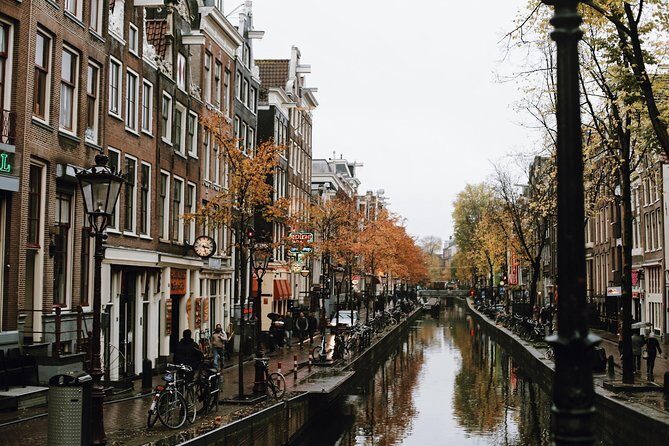
How long is the Amsterdam City Center & History walking tour?
The tour lasts about 2 hours 30 minutes.
Is this tour private?
It’s described as private, with your guide exclusively for you on the exclusive option (the guide exclusive detail does not apply if you choose a semi-private save option).
What language is the tour offered in?
The tour is offered in English.
Where does the tour start and end?
It starts at Prins Hendrikkade 73, 1012 AD Amsterdam, and ends at Het Papeneiland on Prinsengracht 2, 1015 DV Amsterdam.
Are entrance tickets included?
Some sites are noted as free, while others are not included. Admission is not included for stops marked not included in the details.
Will the tour run if it’s raining?
Yes. The tour runs in all weather conditions.
What should I bring for the walk?
Bring comfortable shoes and a bottle of water. An umbrella is recommended for rain, and a hat is recommended during summer.
Do I need a mobile phone number to join?
Yes. You’re asked to provide a mobile phone number (including country code).
Is gratuity included in the price?
No. Gratuities are optional and not included in the tour price.