REVIEW · AMSTERDAM
Amsterdam City Center Guided Walking Tour Semi-Private 12ppl Max
Book on Viator →Operated by Babylon Tours Amsterdam · Bookable on Viator
Amsterdam clicks fast when you walk it.
I like this semi-private setup because it stays small (max 12) and you’re not shuffled through stops like luggage. I also really enjoy how often the guide pauses—so you can take photos on foot and ask questions without feeling rushed. One thing to consider: it’s a moderate walking route on cobblestones and bridges, and some places are view-only from the outside due to security.
You’ll start with the big story—how Amsterdam grew from watery beginnings into a European powerhouse—and then you’ll see the landmarks that explain that shift. I especially liked the way the tour ties neighborhoods together, so when you later explore on your own, you already know what you’re looking at. The guides have serious credibility too: I’ve seen tour experiences led by locals like Josje B. and Hanneke, with an emphasis on history plus practical pointers.
If you’re expecting lots of indoor museum time, adjust your mindset. Most stops are short looks at architecture and street-level scenes, and a few “ticketed” items aren’t included.
In This Review
- Key Things That Make This Tour Worth Your Time
- What Semi-Private Really Means in Amsterdam (and Why You’ll Feel It)
- Price Check: Is $59.28 Good Value for 2.5 Hours?
- Your First Two Hours: Start at St. Nicholas Basilica, Then Read the City Like a Map
- From Schreierstoren to Zeedijk: The City’s Water Story Gets Human
- Nieuwmarkt and De Waag: Old City Gate Energy Without the Museum Detour
- Trippenhuis, Dutch East India Roots, and the Big Contrast of Narrow Homes
- Zuiderkerk and Beyond: Protestant Landmarks and Rembrandt-Adjacent Stops
- Canal-Corner Details: Huis aan de Drie Grachten and the Begijnhof Courtyard Still Feel Private
- Dam Square, Herengracht, and the Big Famous Names You’ll Recognize Instantly
- Rembrandtplein to Noorderkerk: When Art, Trade, and Belief Collide
- The Walk Ends at Papeneiland: A Pretty Canal Corner and a Good Food Idea
- Should You Book This Amsterdam City Center Walking Tour?
- FAQ
- How long is the Amsterdam city center guided walking tour?
- How big is the group for this semi-private tour?
- What language is the tour offered in?
- Where do I meet the guide?
- Where does the tour end?
- Is the tour rain or shine?
- Is the tour accessible for wheelchair users?
- What’s included in the price?
- What is not included?
- Are there admission tickets for specific stops?
- Can I cancel and get a full refund?
Key Things That Make This Tour Worth Your Time
- Small group attention (up to 12) means more Q&A and less waiting around.
- Photo stops on foot keep the walk from turning into a long lecture.
- City-center coverage in 2.5 hours helps you get your bearings quickly.
- Water-history angle explains why Amsterdam looks the way it does.
- Landmarks across several neighborhoods (from Nieuwmarkt to Begijnhof to the canal corner at Papeneiland).
What Semi-Private Really Means in Amsterdam (and Why You’ll Feel It)
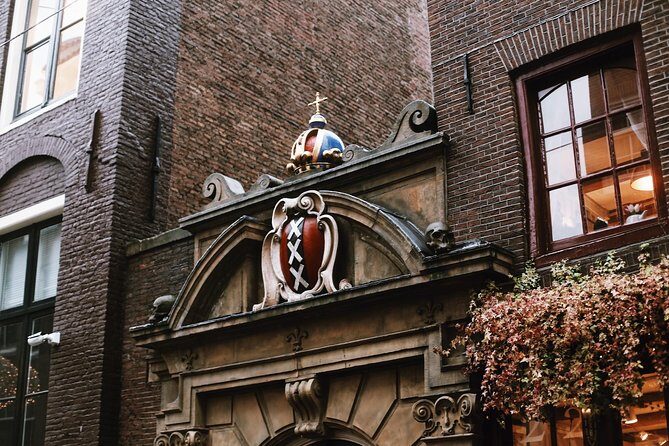
A lot of Amsterdam “walking tours” are basically group checklists. This one is different because the size stays limited. Even when the tour is full, it’s capped at 12 travelers, and the format is built around walking with time to talk.
That matters because Amsterdam is a city where details change every few blocks. A door style. A canal curve. A church tower angle. When your guide can actually hear your questions, the tour turns into problem-solving instead of just sightseeing. And on this route, you’ll be able to ask stuff like how the city’s defenses and water management shaped daily life, not just when a building was built.
The guide pacing also feels designed for real streets, not showroom sidewalks. You’ll be stopping frequently—often around 5 to 10 minutes—so you can both look closely and move on before you get bored. It’s a smart way to handle Amsterdam’s nonstop visual noise.
One practical note: the tour runs rain or shine, and you’ll walk across bridges and down cobblestone lanes. Bring shoes you trust on uneven ground. If it’s wet, go slower on turns—those bike lanes don’t stop because you’re admiring a gable stone.
You can also read our reviews of more walking tours in Amsterdam



Price Check: Is $59.28 Good Value for 2.5 Hours?
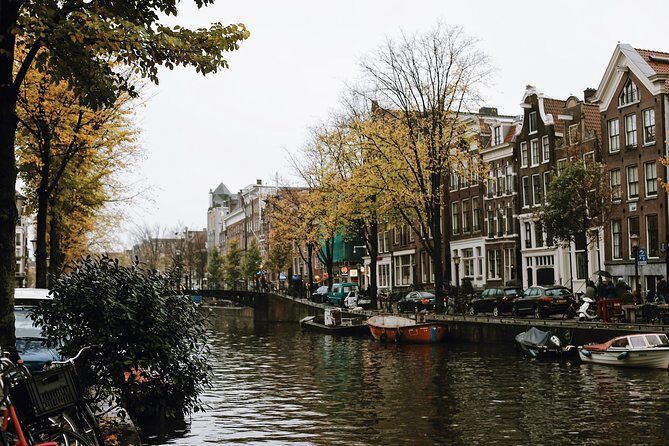
At $59.28 per person for about 2.5 hours, this sits in the “worth it if it saves you effort” category. You’re paying for three things:
- A local, professional guide (not just a route map).
- Time efficiency—multiple neighborhoods and famous sights without you planning every hop.
- A semi-private group size that keeps the experience more personal.
Could you walk this route on your own for free? Sure. But you’d spend time figuring out what you’re seeing and why it matters. Here, the guide gives you context as you go, so your later self-guided strolls are better and faster.
Also, the tour is booked fairly far ahead on average (about 51 days in advance). That’s a clue it’s popular—often a sign the pacing and route make sense. If you’re in town for only a couple days, this kind of orientation can pay off quickly.
Your First Two Hours: Start at St. Nicholas Basilica, Then Read the City Like a Map
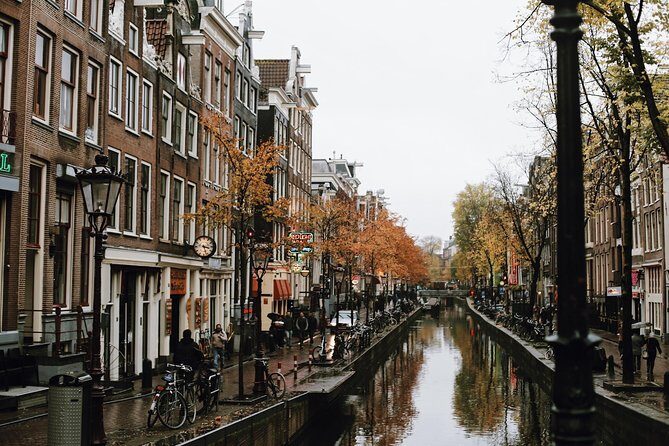
You meet at Basilica of Saint Nicholas on Prins Hendrikkade 73. This is a great starting point because it anchors the day’s theme right away: Amsterdam’s religious and civic shifts over time. The basilica is Amsterdam’s primary Roman Catholic church, built in the late 19th century after centuries of prohibition. So you’re not only looking at a pretty building—you’re getting a quick lesson on how the city’s rules changed, and what that did to the skyline.
From there, the route leans into the emotional side of Amsterdam too—especially the next medieval landmark.
From Schreierstoren to Zeedijk: The City’s Water Story Gets Human
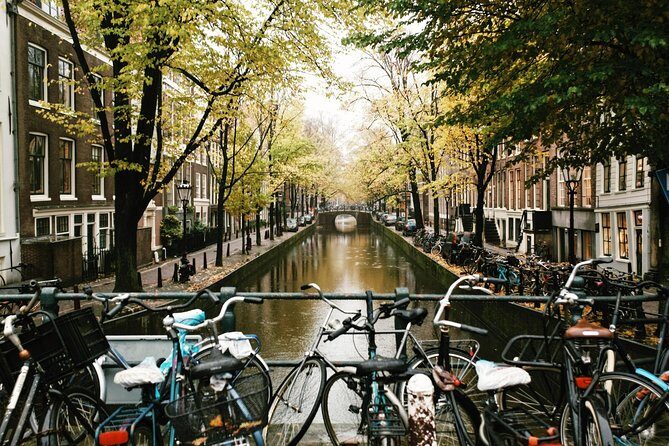
The Schreierstoren (Weeping Tower) is sometimes called the Tower of Tears. It’s a medieval structure where women bid farewell to loved ones departing by ship. That’s the kind of detail that makes a tower feel like a person’s memory instead of a photo background.
Then you move onto Zeedijk, one of Amsterdam’s oldest streets. The guide frames it as once serving as a sea dike holding back the waters of the IJ. You’re looking at a street, yes—but also at the idea behind Amsterdam: managing water is managing survival.
A highlight along this section is the Kolksluis lock bridge, described as one of the city’s most picturesque lock bridges. If you’ve never studied Dutch waterworks before, this is the moment where you’ll start noticing how canals, locks, and bridges connect everywhere. It’s not just scenery; it’s infrastructure that shaped the city’s shape.
Drawback to keep in mind: this stretch includes walking along older streets where space is tight. If you need lots of room to move, go easy through bottlenecks.
Nieuwmarkt and De Waag: Old City Gate Energy Without the Museum Detour
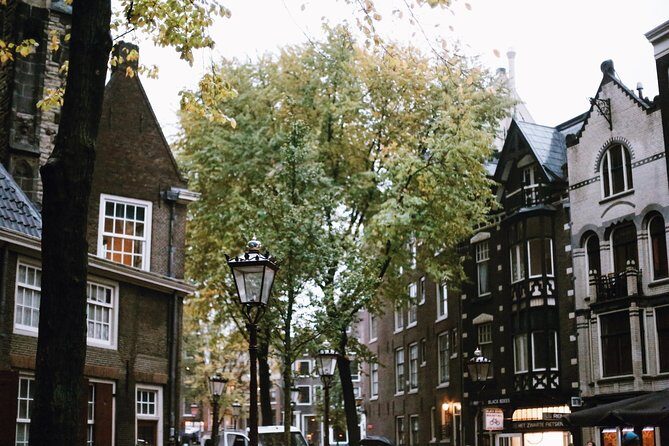
Next is Nieuwmarkt, the old city-centre square that became a key commerce and socializing hub since the 17th century. The tour explains why: it sat just inside the old city gate, so traders and shoppers had a convenient meeting point for fresh produce and everyday life.
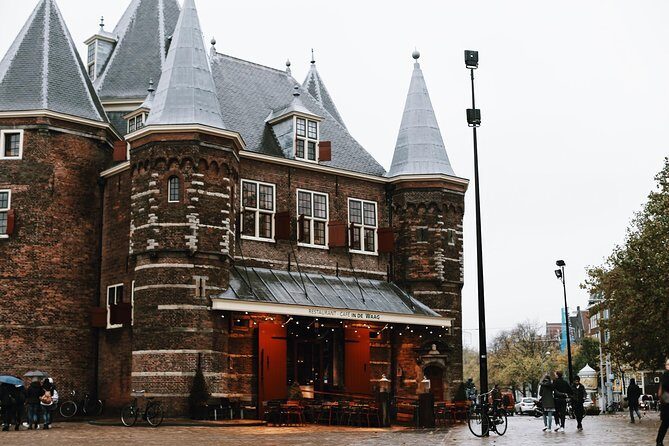
Right around here you’ll also see the Waag (De Waag), a 15th-century building that’s among the oldest remaining non-religious structures in Amsterdam. It originally served as a city gate and part of the walls. Later roles included guildhall, museum, and fire station. That mix is useful: the guide is essentially teaching you to look at buildings as flexible tools, not frozen monuments.
One more reality check: several stops are designed for quick viewing rather than long stays. If you want deep museum time, you’ll do that later. The value here is you’ll know which places deserve your next ticket.
You can also read our reviews of more guided tours in Amsterdam




Trippenhuis, Dutch East India Roots, and the Big Contrast of Narrow Homes
This part of the walk is all about architecture—and how economics shows up in bricks.
You’ll see both the Trippenhuis and Klein Trippenhuis. The Trippenhuis is famous for being Amsterdam’s widest home, spanning about 22 meters. Across from it, the Klein Trippenhuis is one of the narrowest houses. Seeing them near each other makes a point the guide will likely highlight: land cost and taxes influenced shape, so tall, narrow buildings became a practical solution.
Then the route shifts toward global trade with Oost-Indisch Huis, stepping into the courtyard of the Dutch East India Company’s headquarters. It’s described as the birthplace of the world’s first multinational corporation. That’s a strong pivot from local canals to overseas influence—Amsterdam’s growth didn’t stay on local waters.
You’ll also spot Kleine Trippenhuis again as a reminder of the narrow-house story, and then head toward one of Amsterdam’s defining church towers.
Zuiderkerk and Beyond: Protestant Landmarks and Rembrandt-Adjacent Stops
The walk includes Zuiderkerk, Amsterdam’s first purpose-built Protestant church designed by Hendrick de Keyser. The tower is a key landmark, and the tour uses it to explain changes in religious architecture after the Reformation—why churches started looking different and serving different communities.
Then you’ll pass by Museum Het Rembrandthuis, Rembrandt’s former home where he lived and worked between 1639 and 1656. Even if you don’t go inside on this tour, the guide’s framing helps you understand why Rembrandt became such a symbol of the era—right where he actually worked.
After that, you’ll move toward the Stopera, a building complex housing the city hall and the Dutch National Opera and Ballet. The construction took at least 60 years, which gives the Stopera a “long project, big payoff” feeling. It’s a good contrast against the older medieval and canal-era stops you’ve already seen.
Canal-Corner Details: Huis aan de Drie Grachten and the Begijnhof Courtyard Still Feel Private
Next comes Huis aan de Drie Grachten, a rare 17th-century canal house located at the junction of three canals, with façades facing in three directions. This is one of those places where you really benefit from standing still for a minute and letting the guide point out angles. In Amsterdam, that matters as much as facts.
Then you reach Begijnhof, one of the oldest hofjes (almshouses) in Amsterdam. It’s centered on a secluded courtyard and garden. Historically, it provided homes for the Beguines, unmarried women who lived together under vows of chastity. Today, it’s also the site of two churches.
This is a good stop for you if you like Amsterdam’s quieter side. The courtyard vibe can feel calmer than the surrounding streets, even though you’re still in the city center.
Dam Square, Herengracht, and the Big Famous Names You’ll Recognize Instantly
The tour rolls onward to Dam Square, which is one of the most well-known spots in Amsterdam. The guide connects the square to major landmarks: the Royal Place, New Church, and the National Monument. Even for first-time visitors, Dam Square works as the city’s “front page.”
Then it’s onto Herengracht, where you’ll see the “Golden Bend” lined with some of the city’s richest, most ornate canal mansions from the Dutch Golden Age. If you’ve ever wondered why people romanticize the Dutch Golden Age, this is where the idea becomes visible in the streetscape.
After that, you pause near the Anne Frank House. The guide frames it through the WWII context, and you’ll also spot the Westerkerk next door, known for the tallest church tower in Amsterdam. Important practical point: you’re mostly seeing these landmarks from the outside on a walking route. Also, some entrances can be limited by security rules.
Rembrandtplein to Noorderkerk: When Art, Trade, and Belief Collide
One of my favorite parts of this walking sequence is the “look up” portion. You’ll see De Drie Hendricken aan de Bloemgracht 87–91, decorated gables with allegories and trade emblems. These small details are why Amsterdam feels handcrafted in places—symbols on façades, not just paintings inside museums.
Then you reach Rembrandt Square (Rembrandtplein), where you’ll see a bronze-cast representation of Rembrandt’s The Night Watch. It was displayed as part of a celebration of Rembrandt’s 400th birthday in 2006. This is a nice bridge between street art and real art history: you’re seeing a key work referenced directly in the public square.
Finally, the route includes Noorderkerk, a 17th-century Protestant church in the Jordaan district with a cross-shaped floor plan. The explanation connects the design to Reformation worship ideals—again, architecture as a clue to social change.
The Walk Ends at Papeneiland: A Pretty Canal Corner and a Good Food Idea
Your tour concludes at Papeneiland near Prinsengracht 2, described as one of Amsterdam’s prettiest canal corners. The guide points out Het Papeneiland, a brown café from 1642, said to serve one of the best apple pies in town.
This ending works because it’s a “soft landing.” After 2.5 hours of landmarks, you get a spot where you can pause, take a final photo, and decide what to do next. If you’re hungry, this is a convenient place to stop without trekking across the city.
Should You Book This Amsterdam City Center Walking Tour?
Book it if you want a high-impact orientation to Amsterdam in one morning/afternoon window. It’s especially good for first-timers who want to see major sights across multiple neighborhoods without planning a route.
I’d think twice if:
- You need wheelchair-friendly access (the tour isn’t recommended for wheelchair users or walking disabilities).
- You want long indoor museum time. This is built for exterior viewing, short stops, and context—not a ticket-by-ticket museum crawl.
- You’re traveling with very large bags or suitcases (the tour doesn’t allow large luggage).
If you’re the kind of traveler who likes to understand why a city is shaped the way it is—water management, trade, religion, and architecture—this tour is a solid buy for $59.28.
FAQ
How long is the Amsterdam city center guided walking tour?
The tour lasts about 2 hours 30 minutes.
How big is the group for this semi-private tour?
It’s semi-private with a maximum of 12 travelers.
What language is the tour offered in?
The tour is offered in English.
Where do I meet the guide?
You start at Basilica of Saint Nicholas, Prins Hendrikkade 73, 1012 AE Amsterdam.
Where does the tour end?
It ends at The Papeneiland, Prinsengracht 2, 1015 DV Amsterdam.
Is the tour rain or shine?
Yes, it runs in all weather.
Is the tour accessible for wheelchair users?
No, it is not recommended for those with walking disabilities or using a wheelchair.
What’s included in the price?
Included: a semi-private walking tour, professional tour guide, and the tour runs for 2.5 hours. You also get a mobile ticket.
What is not included?
Not included: hotel pickup/drop-off, and gratuities (optional).
Are there admission tickets for specific stops?
Some stops list admission as free, and others are not included. The tour also notes that due to security measures, some sites can’t be visited from the inside.
Can I cancel and get a full refund?
Yes. You can cancel up to 24 hours in advance for a full refund.