REVIEW · AMSTERDAM
Amsterdam Central Walking Tour
Book on GetYourGuide →Operated by Yellow Bike Tours & Rental · Bookable on GetYourGuide
Amsterdam looks best on foot. This 2-hour walk turns Amsterdam’s canals and cobblestones into a story you can actually feel, from tilted houses to the big names like Anne Frank. Guides bring the city together with equal parts place, politics, and practical context, and I’m glad I went on a day when local guides like Sid and Willem (and others named Willen) were leading.
What I like most is the pace and format: small groups (up to 12, and often fewer) make it easier to ask questions and keep up. I also like the mix of stops—serious sites plus lighter street life—especially the break at a traditional Dutch café (bring your own money for drinks).
One thing to consider: this is a winter walking tour that runs rain or shine, and the cobblestones can be rough if you’re not steady on your feet.
In This Review
- Key Points Worth Noting
- Two Hours of Amsterdam From Nieuwezijds Kolk to Dam Square
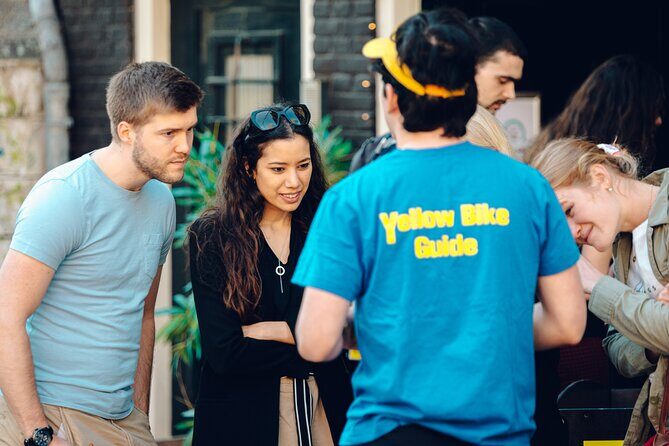
- A Small-Group Guide You Can Actually Talk To
- Red Light District Etiquette: Respect, No Photos, No Lingering
- Crooked Houses and the Engineering Genius Under Your Feet
- Canal-Power Stories: Grain, Herring, Sea Walls, and Beer
- Westertoren and the Shape of Faith in a Changing City
- Spui and the Provos: Protest, Squatting, and Gay Rights Landmarks
- Anne Frank House and Coexisting with Big History
- Negen Straatjes, Kalverstraat, and the Brown Café Pitstop
- Price, Weather, and What to Pack for a Winter Walk
- Should You Book This Amsterdam Central Walking Tour?
- FAQ
- FAQ
- Where is the meeting point for the Amsterdam Central Walking Tour?
- How long is the tour?
- How much does it cost?
- What’s included in the ticket price?
- Is there a café stop during the tour?
- What group size should I expect?
- What languages are the guides?
- Does the tour run in bad weather?
- Is the tour suitable for someone with mobility issues?
- What should I bring for a winter walk?
Key Points Worth Noting
- Max 12 people: smaller-than-usual group size for better guide attention
- Hands-on sense of Amsterdam: tilted houses, canal engineering, and neighborhood history in one loop
- Clear Red Light District etiquette: respect-focused rules like no photos and no lingering
- Meaningful political stops: Provos, squatting history on Spuistraat, and the gay monument
- Winter-ready planning: layered clothing matters because it runs outdoors in bad weather
Two Hours of Amsterdam From Nieuwezijds Kolk to Dam Square
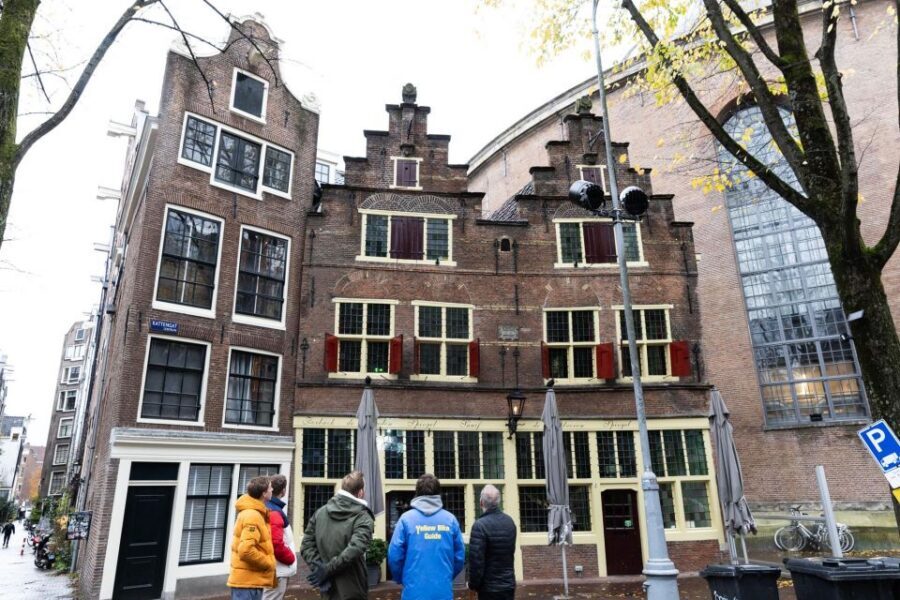
This is a tight, focused 2-hour walk that works well if you’re short on time but want more than a quick photo loop. You start at Nieuwezijds Kolk 29, meet the Yellow Bike team at the counter, and you end up at Dam Square before walking back to the Yellow Bike location at Nieuwezijds Kolk.
The route is designed for walking efficiency: you see a lot of central Amsterdam without spending your entire day in transit. Still, it’s not a sit-and-watch tour. You’re moving through old neighborhoods, narrow streets, and waterfront corners where history isn’t just on plaques—it’s built into the street layout.
A practical bonus is free luggage storage. If you’re arriving by train and want to explore without dragging your bag around, this can make the whole day feel calmer.
You can also read our reviews of more walking tours in Amsterdam



A Small-Group Guide You Can Actually Talk To
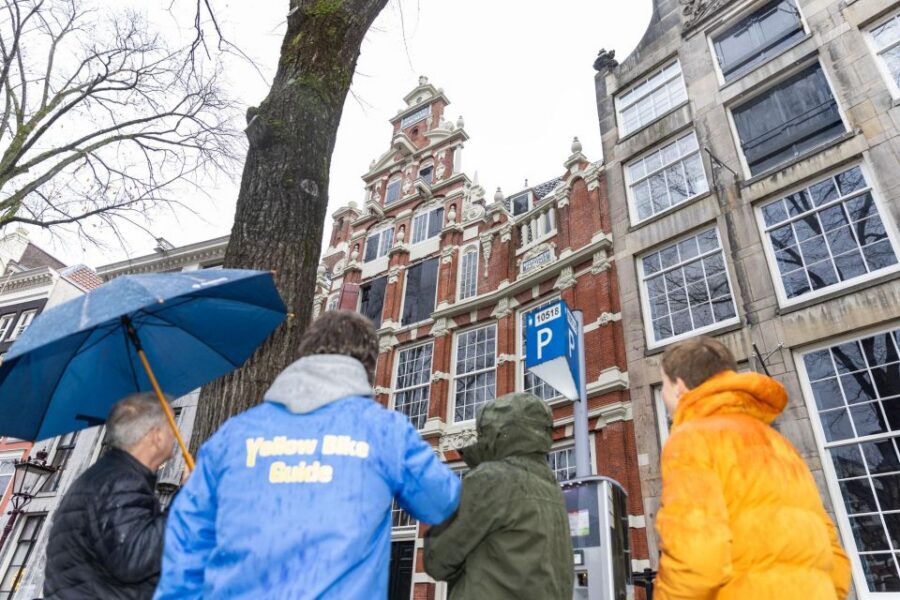
Yellow Bike keeps the group size small—12 max, and in practice it often ends up even smaller. That matters, because Amsterdam is packed with interesting details, and a larger group usually turns those details into a blur. Here, your guide has room to explain, respond, and adjust the flow to the questions you’re actually asking.
The guide experience is one of the standout strengths. In strong departures, guides like Willem and Willen bring the city together with clear English, and they don’t treat the tour like a script. You get stories that connect older Amsterdam (trade, canals, churches) to present-day identity and local culture.
And yes, weather can be brutal in winter. When the group stays small, cold and wet don’t feel like the point of the outing—the guide’s energy helps you stay engaged, even if it’s pouring.
Red Light District Etiquette: Respect, No Photos, No Lingering
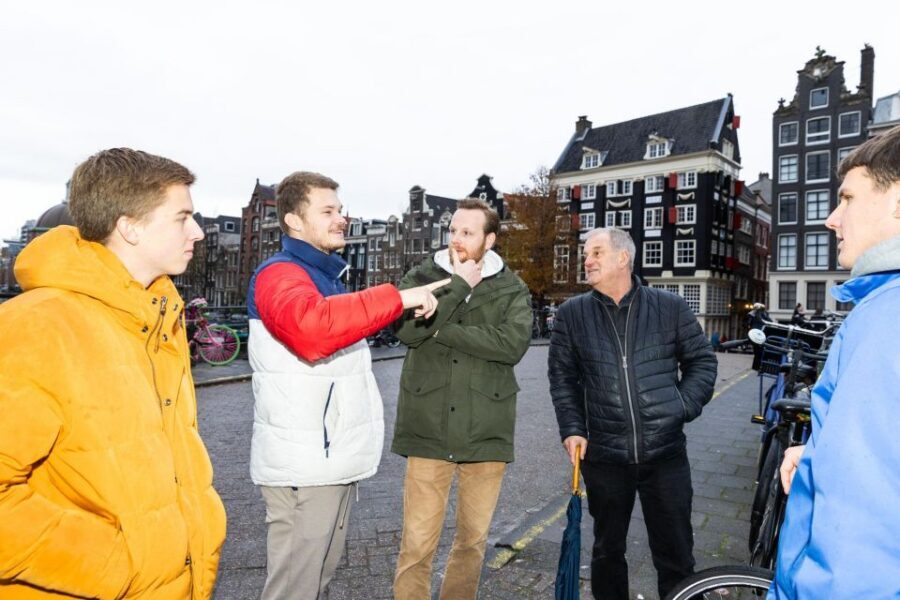
One of the most specific parts of the experience is how it approaches the Westerlijke Wallen area, often associated with Amsterdam’s Red Light District. You’ll hear the cultural framing directly: this is a place of respect and understanding, with explicit rules.
Expect guidance that includes:
- No photos (even if others nearby are taking them)
- No lingering in the most sensitive areas
That’s not just “tour policy.” It changes the way you move through the streets. Instead of gawking, you walk with intent, and the whole area feels more human and less like a theme park. If you want Amsterdam without the awkward energy, this rule set helps.
Crooked Houses and the Engineering Genius Under Your Feet
You’ll see the classic tilted, crooked houses, and the tour explains why they’re not random oddities. Amsterdam sits on wooden poles, and that deep foundation is part of why buildings can look “off” compared to modern cities.
This is one of those stops where a quick explanation makes the visual click. You can stare at the angles for photos—or you can understand the city’s long-term struggle with water, soil, and stability. Once you know the logic, the crooked façades start to feel like evidence of engineering history rather than just a quirky street show.
You also get context that fits the city’s overall survival strategy: Amsterdam isn’t only built on canals and aesthetics. It’s built on systems that manage water and adapt over time.
Canal-Power Stories: Grain, Herring, Sea Walls, and Beer
Amsterdam’s canals are often described as pretty. Here, they’re described as working infrastructure.
A few stops lean into the city’s trade engine:
- Brouwersgracht, where you learn how grain supply supported breweries, tying into Amsterdam’s nickname as a Booze Capital
- Herring trade, which shows how this fish shaped work and commerce in earlier Amsterdam
Other stops focus on controlling water and defending the city:
- Nieuwe Haarlemmersluis, centered on how Amsterdam combats seawater intrusion from historic canals
- Torensluis, highlighted as the oldest bridge in Amsterdam and once part of the defensive wall system
- Jan Roodenpoortstoren, where you hear about what’s beneath the bridge area, including historic prison cells
If you like history that explains the “how,” this is your section. You start seeing Amsterdam as a city that engineered survival, then used trade to build prosperity.



Westertoren and the Shape of Faith in a Changing City
The tour doesn’t only cover world-famous names. It also gives you a strong sense of Amsterdam’s landmark skyline, especially through the Westertoren stop.
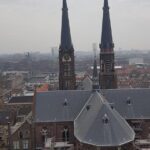
This is Amsterdam’s tallest church tower, and the tour frames it in historical terms. You’ll also get a feel for how religion, civic identity, and city power overlap—especially in a city where major events forced constant rebuilding.
Along the way, there’s also Koepelkerk, described through the story of the copper-clad Lutheran church and Amsterdam’s resilience after a massive fire. Even if you’re not a church-architecture fanatic, those explanations help you read the city as something that endured, rebuilt, and kept going.
Spui and the Provos: Protest, Squatting, and Gay Rights Landmarks
This is where the tour becomes very “Amsterdam,” in the sense that it doesn’t treat the city as only old buildings and museums. You’ll spend time around Spui, including the symbolism connected to the Provo statue and events tied to civil resistance and student protests.
The route also touches on the squatting history linked to Spuistraat, which helps explain why Amsterdam has a reputation for social experimentation and political debate. You get the sense that movements here weren’t just abstract ideas—they showed up in streets and neighborhoods.
You’ll also encounter a gay monument, tied to struggles and victories in the Dutch LGBTQ+ community, including a site connected to the world’s first gay marriage. This stop adds emotional weight without making the tour feel like a lecture. It’s a reminder that civil rights history is part of the city’s geography.
Anne Frank House and Coexisting with Big History
The tour naturally includes the area around the Anne Frank House. Even without going inside, you’ll take a moment to reflect on the World War II story connected to Anne and her diary.
What makes this effective is that it isn’t treated like a checklist item. It’s framed as a place of memory—so the city’s layers don’t compete with each other. You move from trade, churches, and canal engineering into the reality that Amsterdam also has chapters it can’t romanticize.
Then you transition again into lighter street textures, so the emotional weight doesn’t crush the entire tour. That balance is helpful if you’re trying to see the “classic Amsterdam” without losing sight of what matters.
Negen Straatjes, Kalverstraat, and the Brown Café Pitstop
After you’ve walked through older neighborhoods and major landmarks, the tour shifts toward street character.
You’ll explore the Negen Straatjes, known for the charm of its small lanes and how the area moved from artisan spaces toward more modern boutiques and café culture. It’s the kind of place where, once you’re there, you immediately understand why people linger even in cold weather.
Then there’s Kalverstraat, described as the Netherlands’ well-known shopping street. It’s a good reminder that Amsterdam isn’t stuck in the past. Old streets and modern life share the same center.
Before you finish, there’s a break at Brown Café Pitstop, a traditional Dutch café. The good news: the stop is part of the experience. The catch: drinks are not included, so budget for at least a hot coffee or tea if it’s winter-cold out.
Price, Weather, and What to Pack for a Winter Walk
At $26 per person for 2 hours, this is priced like a good-value central tour—especially because it includes a live local guide and free luggage storage. The main extra cost you should plan for is the café stop, since beverages aren’t included.
The other big factor is weather. This tour runs rain or shine, which makes packing matter. I strongly suggest you wear:
- Comfortable shoes for cobblestones
- Warm clothing plus a hat, gloves, and a scarf
- Layers you can adjust if the walk heats you up
Also, the format assumes you can walk. While the info says it’s wheelchair accessible, it also notes it’s not suitable for people with mobility impairments. If that applies to you, I’d treat it as a “confirm first” situation rather than a given.
Should You Book This Amsterdam Central Walking Tour?
Book it if you want maximum Amsterdam per hour: canals, landmark towers, trade history, and political street stories in one morning/afternoon window. The small-group size and the chance to ask questions make it feel less like a lecture and more like a guided walk with answers.
Skip it (or at least reconsider) if you hate cold weather and walking on uneven ground, or if you prefer super-dense, highly structured facts every minute. One departure can feel smoother than another, and the overall experience depends on the day and the guide’s style.
If you’re traveling in winter, the planning is simple: bring serious layers, expect to move, and use the guide time to get context you won’t find from a map.
FAQ
FAQ
Where is the meeting point for the Amsterdam Central Walking Tour?
You meet at Nieuwezijds Kolk 29 and look for Yellow Bike, then check in at the counter.
How long is the tour?
The tour lasts 2 hours.
How much does it cost?
It costs $26 per person.
What’s included in the ticket price?
You get a friendly local guide and free luggage storage.
Is there a café stop during the tour?
Yes. There is a break at a traditional Dutch café, but drinks are not included.
What group size should I expect?
The tour is capped at a maximum of 12 participants, and it’s often smaller.
What languages are the guides?
Tours are offered in Dutch and English.
Does the tour run in bad weather?
Yes. The tour happens rain or shine.
Is the tour suitable for someone with mobility issues?
The information lists wheelchair accessibility, but it also says it’s not suitable for people with mobility impairments. If you have concerns, it’s best to double-check before going.
What should I bring for a winter walk?
Bring comfortable shoes, warm clothing, and a hat, gloves, and scarf.