REVIEW · AMSTERDAM
Self-Guided Audio Tour of The Red Light District
Book on Viator →Operated by SOUNDWALKRS · Bookable on Viator
A Red Light District walk can feel chaotic, but this self-guided audio tour gives you control. You choose the pace, you stop for photos, and the route is built around the area’s mixed signals: churches, canals, museums, and the stories people often avoid.
What I like most is the offline setup. You get audio chapters that work without roaming, plus maps and tips so you’re not fumbling with your phone every five minutes. I also like the tone. The scripts bring history down to street level, and the delivery feels playful, even when the subject matter gets uncomfortable.
One thing to consider: the experience is audio-first. You’ll still need your own smartphone and headphones, and any museum or monument entry fees are not included.
In This Review
- Key highlights at a glance
- Why a Red Light District audio tour makes sense in Amsterdam
- Price and offline value: what $6.72 buys you
- Start at Basilica of Saint Nicholas, then follow the canal clues
- Stop-by-stop: what each featured site adds to your walk
- 1) The first-and-only museum with this theme
- 2) Madame Tussauds Amsterdam on Dam Square
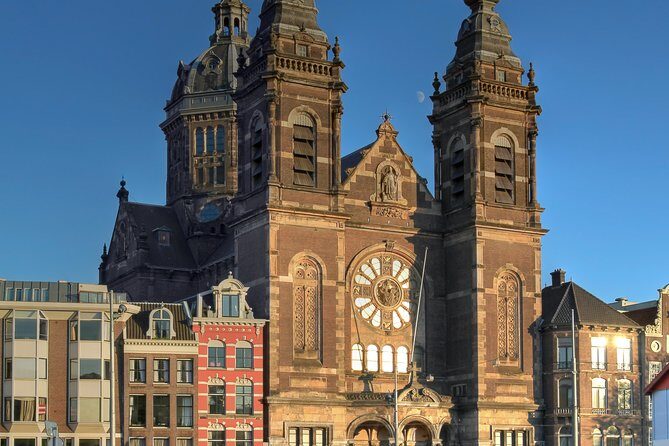
- 3) Back to the church: St. Nicholas and the Roman Catholic anchor
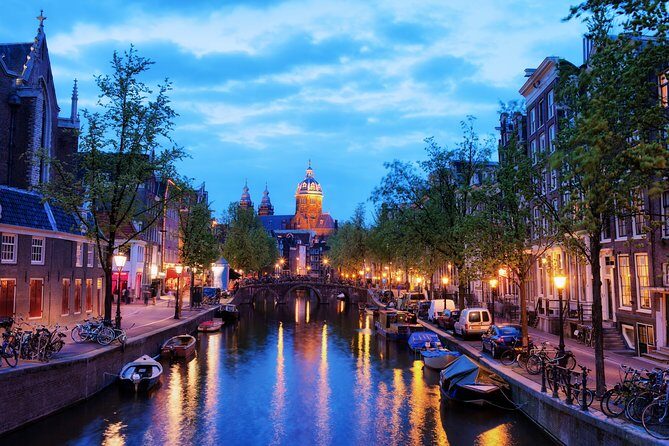
- 4) Canal beauty as the contrast you can actually see
- 5) The MX3D bridge: functional stainless steel, street-level wow
- 6) A 17th-century house with an ornate Catholic church on the top floor
- 7) A souvenir stop for your group
- 8) A kitschy oddities museum: shrunken heads and rare skeletons
- Logistics that matter: offline app, phone needs, and pacing
- How long should you plan, and who this fits best
- Should you book this Red Light District audio walk?
- FAQ
- How much does the self-guided audio tour cost?
- How long does the audio tour take?
- What languages is the tour offered in?
- Does it work offline?
- Are entry tickets to museums included?
- Where does the tour start and end?
- What do I need to bring?
- Is the tour private?
- Is there free cancellation?
Key highlights at a glance
- Offline audio chapters so you can wander without expensive roaming
- Creative scripts and fun sound effects that keep the walk moving
- Churches, canals, and museums that explain the contrasts behind the neighborhood
- A route that works as a 1 to 2 hour self-paced loop
- Stops built around quirky, memorable museums and even a souvenir moment
Why a Red Light District audio tour makes sense in Amsterdam
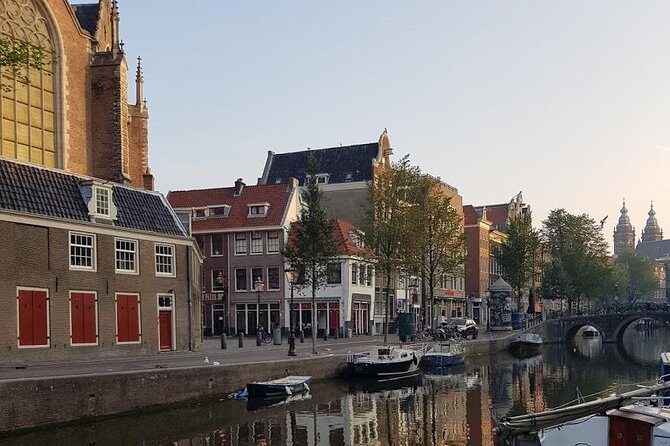
The Red Light District is the kind of place where you hear one story and see five at the same time. One minute you’re looking at canal reflections and brick facades. The next, you’re passing a doorway or storefront tied to the neighborhood’s adult industry. Then you spot a church that’s been standing for centuries, acting like a visual counterpoint.
A guided tour can be great, but this format has a practical advantage: you can move according to your comfort level. If you want to linger at a canal view, you can. If you’d rather skim past the most eye-catching street corners quickly, you can. The audio keeps you oriented with context, and you’re not stuck listening to someone else’s walking speed.
I also like that the tour leans into the neighborhood’s contradictions instead of pretending they don’t exist. You get a sense for how religion, nightlife, commerce, and changing social rules all ended up in the same tight grid of streets. And because the audio includes maps and tips, you can focus more on what you see and less on planning.
You can also read our reviews of more guided tours in Amsterdam



Price and offline value: what $6.72 buys you
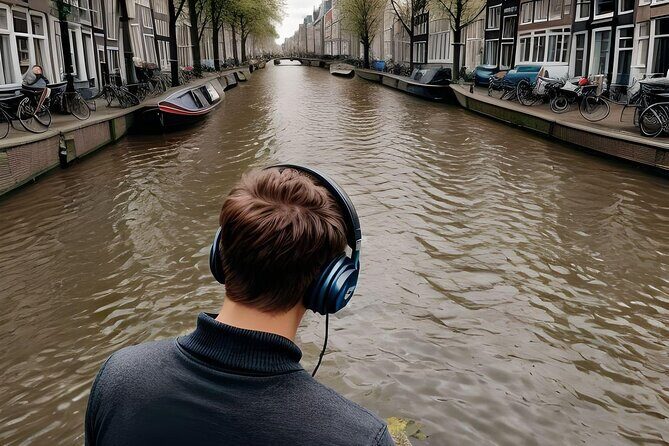
At $6.72 per person, you’re paying for the audio experience more than for attractions. That can be a smart deal in Amsterdam, where museum tickets and separate monument entries can add up fast.
Here’s the value equation that matters: the audio chapters include offline use, plus maps and tips to explore Amsterdam. That means you can spend your time and money on what you actually want to enter, not on constant data charges or guessing where to go next.
The trade-off is also clear. The tour price does not include entry tickets to monuments. So if you plan to go inside museums or attractions that require paid admission, budget those separately. Still, for people who want context and orientation without stacking ticket costs, this is priced like a thoughtful walking companion.
Start at Basilica of Saint Nicholas, then follow the canal clues
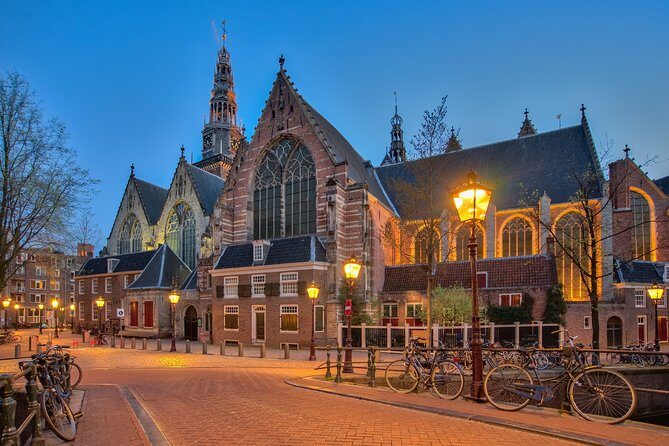
You begin at the Basilica of Saint Nicholas (Basilica of Saint Nicholas / Prins Hendrikkade 73, 1012 AE Amsterdam). The directions are simple: locate yourself at the canal shore. That detail matters, because this area is all about tight sightlines over water. If you start a few steps inland, you can miss the canal-based views that the audio seems to reference as you go.
The start point also frames the neighborhood in a useful way. St. Nicholas is a major Roman Catholic church in the city, and it sets up one of the tour’s main themes: the Red Light District isn’t only about nightlife. It’s also part of Amsterdam’s older religious landscape.
The audio run is listed for about 1 to 2 hours. If you treat it like a casual walk with stops for photos, you’ll likely land near the middle. If you play it at normal walking pace, you can finish in the shorter end without rushing.
Stop-by-stop: what each featured site adds to your walk
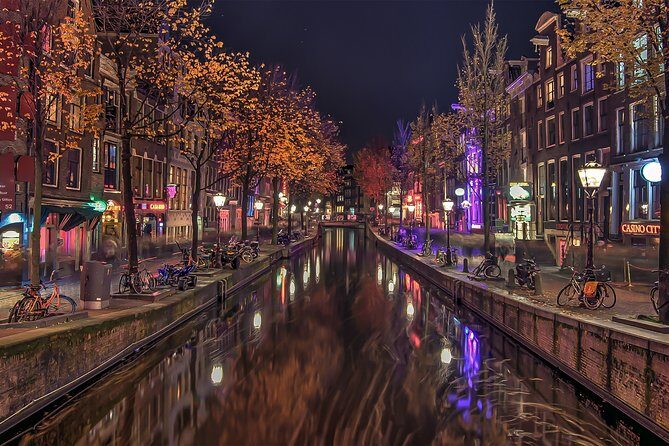
1) The first-and-only museum with this theme
Early on, the route takes you to a museum described as the world’s first and only with this theme. Even if you don’t love adult-focused attractions, the point of this stop is context. This is where the audio helps explain why the neighborhood has become a magnet for attention, and how myths and rumor can take over when a place becomes famous for only one thing.
The practical value here: audio helps you decide what to ignore and what to pay attention to. You can use the stop as a quick history checkpoint, then keep walking. Or, if you’re curious, you can use it as a chance to visit an attraction on your own schedule.
Possible drawback: because entry isn’t included, this may be a look-but-don’t-enter moment unless you’re willing to pay a separate ticket.
You can also read our reviews of more tours and experiences in Amsterdam





2) Madame Tussauds Amsterdam on Dam Square
Next is Madame Tussauds Amsterdam, located in the city center on Dam Square, near the Royal Palace. This stop is more “easy to orient” than “deeply Red Light District.” That’s good. It gives you a mental reset away from the most intense street imagery.
Wax museums are not everyone’s favorite, but as a stop on this audio walk they work for a reason: they bring in the idea of spectacle. Amsterdam is a city where storytelling is everywhere—art, museums, branding, and tourism. Tussauds fits the theme of how people come to see a version of the neighborhood that’s shaped by public imagination.
If you skip the interior and just use it as a landmark, you still get value from the audio’s pacing and transitions.
3) Back to the church: St. Nicholas and the Roman Catholic anchor
The tour’s path keeps returning you to the reality that this district sits near major church architecture. The basilica you start at is described as one of the main Roman Catholic churches in Amsterdam and still is today.
This matters because it complicates the stereotype. When you see a church in the same frame as adult businesses and nightlife, you’re forced to think about how a city balances old institutions with modern freedoms—and why those tensions are part of the neighborhood’s story.
Also, churches give you a quieter visual break. You can take a breath, look at stone and detail, and let the audio’s context land without being drowned out by street noise.
4) Canal beauty as the contrast you can actually see
One of the stops is built around a simple idea: Amsterdam hides beautiful places, and the canals are part of that. The audio points out how the neighborhood’s religious and erotic contrasts exist alongside the city’s natural visual charm.
This is one of the most underrated parts of a walking tour like this. People focus on what’s “not appropriate” or what’s “controversial,” and they miss the fact that Amsterdam is also about water, reflections, and street-level geometry. When you let the audio guide your attention to canals, the Red Light District becomes easier to understand as a real neighborhood—not just a headline.
Practical tip: if you want good photos, slow down here. Canal light can change quickly, and your best angles usually come from staying on the water-facing side of the street.
5) The MX3D bridge: functional stainless steel, street-level wow
The route includes the MX3D bridge, described as a fully functional stainless steel bridge. Even if you don’t plan to do anything beyond look and listen, this kind of modern structure helps anchor the walk in time. It reminds you that the district isn’t frozen in history—it’s continuously shaped by new design.
Also, bridges naturally break up the sensory overload of dense streets. You get a wider perspective, and you can use the moment to check your map and decide whether you want to press forward or pause.
6) A 17th-century house with an ornate Catholic church on the top floor
One stop points to a 17th-century house with an ornate Catholic church hidden on the top floor. That detail is exactly the kind of Amsterdam surprise that makes an audio walk worthwhile.
You get a sense of how hidden spaces and layered buildings are part of the city’s character. Amsterdam often teaches you that there’s more going on behind the street facade than you can guess from first glance.
Drawback to consider: the way you experience this stop depends on what you can see and access as you’re walking by. The tour data doesn’t promise how much you’ll be able to enter, so keep expectations flexible. Treat it as a story-and-sight checkpoint.
7) A souvenir stop for your group
There’s also a “take-home” moment: a great souvenir for you and your friends to take home. This is practical in a different way than museums. It recognizes that part of a memorable trip is sharing a physical reminder.
Since exact shop details aren’t given, think of this stop as a prompt, not a guarantee of a specific branded item. If you like browsing, you’ll probably enjoy it. If you don’t, you can just pass through and get back to the audio.
8) A kitschy oddities museum: shrunken heads and rare skeletons
The final featured stop on the route includes a museum of kitschy oddities, with items such as shrunken human heads and rare animal skeletons.
This is where the walk leans into Amsterdam’s playful side: curiosity, weird collections, and the idea that not everything needs to be “serious” to be meaningful. It’s also a tonal shift. After churches, canals, and adult-themed contrasts, this type of museum can feel like a release valve—strange, yes, but not grim in the same way.
Practical note: because monument entry is not included, you may view this as a stop you either visit by paying separately or simply use as a landmark to complete the storytelling arc.
Logistics that matter: offline app, phone needs, and pacing
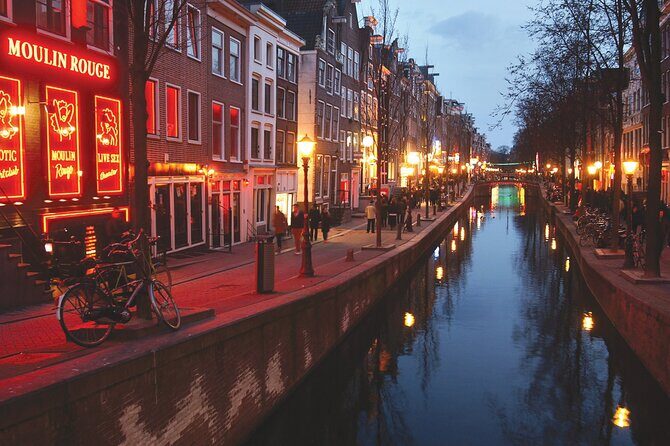
A few practical details will shape how smooth your walk feels.
You’re dealing with an audio format on your own device. Smartphone and headsets are not included, so bring your phone and your preferred headphones. If you plan to use wireless earbuds, make sure they’re charged and ready before you start.
The offline use is a big win. Amsterdam is full of Wi-Fi networks, but it’s still nice to know the audio chapters can run without roaming. That lets you explore without checking data settings every five minutes.
The tour is also described as private, meaning only your group participates. That matters even for self-guided tours because it reduces uncertainty about meeting other people or waiting around for a larger group. You just start, press play, and go at your pace.
The walking route is near public transportation, so if you want to jump in or out of the area early, you can likely do it without too much trouble.
How long should you plan, and who this fits best
The duration is listed as about 1 to 2 hours. If you’re the type who stops often for pictures and reads small details, plan closer to 90 minutes. If you’re more of a move-fast-and-listen kind of person, 60 minutes can work.
This experience suits you if you:
- want history and context without a live guide controlling your time
- like a playful, story-driven approach rather than pure sightseeing
- want offline audio so you can roam confidently
It might be less ideal if you’re only interested in adult attractions and want constant on-the-spot access to paid interiors. Since entry tickets aren’t included, the audio’s value is more about explanation and navigation than about guaranteeing museum time.
Also, because the subject matter is adult-themed, keep your own comfort level in mind. The route includes erotic museums and adult contrasts, so this is not a walk that’s designed to be family-friendly in theme.
Should you book this Red Light District audio walk?
Book it if you want a smart, low-cost way to understand what you’re seeing in the Red Light District without turning it into a checklist. For $6.72, the offline chapters, maps, and built-in contrast (churches, canals, museums, modern bridges) make it feel like more than just an audio label slapped on a route.
Skip or reconsider if you hate audio-based experiences, if you don’t want to handle your own phone and headphones, or if you expect admission tickets to be included. Since you’ll likely pay separately for any museum entry, it’s best for people who are okay mixing a self-guided walk with optional paid stops.
If you’re curious but cautious, this format is a good compromise: you get the story, you set the pace, and you stay in control of what you linger on.
FAQ
How much does the self-guided audio tour cost?
It costs $6.72 per person.
How long does the audio tour take?
Plan for about 1 to 2 hours.
What languages is the tour offered in?
The tour is offered in English.
Does it work offline?
Yes. The tour includes all chapters with offline use, along with maps and tips.
Are entry tickets to museums included?
No. Entry tickets to monuments are not included.
Where does the tour start and end?
It starts at Basilica of Saint Nicholas, Prins Hendrikkade 73, 1012 AE Amsterdam and ends at Sofitel Legend The Grand Amsterdam, Oudezijds Voorburgwal 197, 1012 EX Amsterdam.
What do I need to bring?
You need your own smartphone and headsets. Snacks, transportation, and tickets are also not included.
Is the tour private?
Yes. It’s listed as a private tour/activity, so only your group will participate.
Is there free cancellation?
Yes. Free cancellation is available up to 24 hours in advance for a full refund.