REVIEW · AMSTERDAM
Self-Guided Audio Tour Holocaust Series: The Jewish Quarter
Book on Viator →Operated by SOUNDWALKRS · Bookable on Viator
That corner of Amsterdam carries weight.
This self-guided Holocaust audio tour in the Jewish Quarter turns the streets into a guided story, with flexible timing and offline chapters you can use without hunting for Wi‑Fi. I especially like the practical setup: an app-based route with maps and tips, and narration available in English and Spanish. The main drawback to plan around is that admission tickets are not included, so any museum stops you want inside will cost extra.
The structure is built for walking at your pace, from the resistance museum area through the Jewish landmarks that shape this part of the city. Expect short stops where the app talks while you look around, not long lectures where you sit still. It’s also private in the sense that it’s just your group using the app, so you’re not stuck with anyone else’s pace.
In This Review
- Key highlights to know before you go
- Holocaust stories in the Jewish Quarter: why this audio format fits Amsterdam
- Starting near Verzetsmuseum: how to get your bearings without stress
- Auschwitz Monument chapter: reading the neighborhood as a memorial
- Dam Square interlude: why the city’s center matters in the story
- Portuguese Synagogue: refuge routes and forced conversion history
- Jewish Museum ending: finishing the walk with context
- Price and value: what $10.72 buys you (and what it doesn’t)
- Using the app offline in practice: the phone plan that keeps it smooth
- What I’d do to enjoy it more: pacing, stops, and emotional timing
- Who should book this Soundwalkrs audio tour
- Cancellation and practical planning (quick and simple)
- Should you book this Holocaust audio tour of Amsterdam’s Jewish Quarter?
- FAQ
- How long is the Holocaust Series self-guided audio tour?
- Is the audio tour available in English?
- Does it work without an internet connection?
- Where does the tour start and end?
- Are museum admission tickets included?
- What should I bring since snacks, transport, and headsets aren’t included?
Key highlights to know before you go
- Offline audio means you can keep moving even if your phone signal fades
- English and Spanish narration helps you match your comfort level
- A route anchored near Verzetsmuseum Amsterdam and ending at Jewish Museum
- Chapters are timed (for example Auschwitz Monument is about 39 minutes) so you can budget your walk
- Admission tickets aren’t included, so don’t assume every stop is free-entry
- Easy phone setup: you get a mobile ticket and use your own smartphone/headset
Holocaust stories in the Jewish Quarter: why this audio format fits Amsterdam
Amsterdam is a city where walking is the point. Instead of rushing between exhibits, you can slow down right on the streets where history sits in plain sight. This is what I like about a soundwalk-style audio tour: your attention stays on what’s around you, while the narration connects the dots in a calm, paced way.
This particular series focuses on the Holocaust in Amsterdam and the Jewish Quarter, and it does it through several landmarks. You don’t have to follow a rigid group schedule either—you choose when to start, and you can stop and resume based on your energy. For many people, that flexibility matters as much as the content.
The emotional subject is heavy, so the format is important. Audio lets you control the volume and the pace, and it reduces the pressure of “performing attention” in front of a group. Still, be honest with yourself: if you prefer museums over spoken context, you’ll want to pair this walk with at least one inside visit where you can take your time.
You can also read our reviews of more guided tours in Amsterdam



Starting near Verzetsmuseum: how to get your bearings without stress

Your starting point is at Verzetsmuseum Amsterdam – Museum of WWII Resistance, on Plantage Kerklaan 61. That’s a smart choice because it sets the theme early: resistance, flight, and survival are part of the broader story around the Holocaust—not just the end result.
You begin with a mobile ticket tied to the tour, and from there you follow the route through the Jewish Quarter on foot. The tour end point is at the Jewish Museum (Nieuwe Amstelstraat 1). That means you can plan the rest of your day after you finish the walk, without feeling like you must immediately return to your first stop.
One practical tip: right at the start, take a minute to orient yourself in your app before you start walking. Amsterdam streets can twist and narrow, and you’ll enjoy the experience more if you’re not re-checking directions every ten minutes.
Auschwitz Monument chapter: reading the neighborhood as a memorial
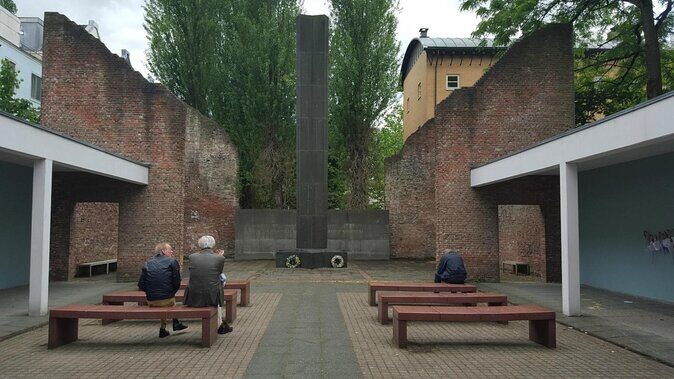
The first major chapter is at the Auschwitz Monument, and it’s the longest listed segment—about 39 minutes. This is where the audio turns your walk into an active remembrance route, pointing you toward museums, monuments, and streets tied to the victims in Amsterdam.
What makes this chapter work is that it’s not confined to one building. The narration is designed to help you look at the area as a whole: the way Amsterdam preserves memory through physical markers, and how multiple generations connect different parts of the WWII story—people who emigrated, those who resisted, and those forced into catastrophe.
A practical consideration: since this is the longest portion, decide early whether you want to treat it like a focused “main event” of your day or one stop within a wider itinerary. If you’re doing other museums the same day, pace yourself. This chapter can emotionally weigh on you, and you may want breaks before you push on.
Also, remember: the app can talk while you move, but you still need to manage your phone comfort. Bring a case you like, and consider using a simple lanyard or holder if you tend to juggle your device while walking.
Dam Square interlude: why the city’s center matters in the story
Between the Auschwitz Monument area and the next Jewish landmark, the route connects through Dam Square—not just as a famous spot, but as a historical anchor. The tour notes that Dam Square marks the point where the first dam of the Amstel River was built in the thirteenth century.
Even if you’ve been to Dam Square before, think of this stop as a “time layer.” The audio uses a major Amsterdam focal point to remind you that the city’s geography and growth predate the events of WWII. That context helps your brain stop treating WWII as something isolated and start seeing it as something that happened inside a living city.
Drawback to keep in mind: Dam Square is one of the busiest public spaces in Amsterdam. If you need quiet to process heavy material, time your visit for a calmer hour if you can, or be ready to turn your volume up a notch.
Portuguese Synagogue: refuge routes and forced conversion history
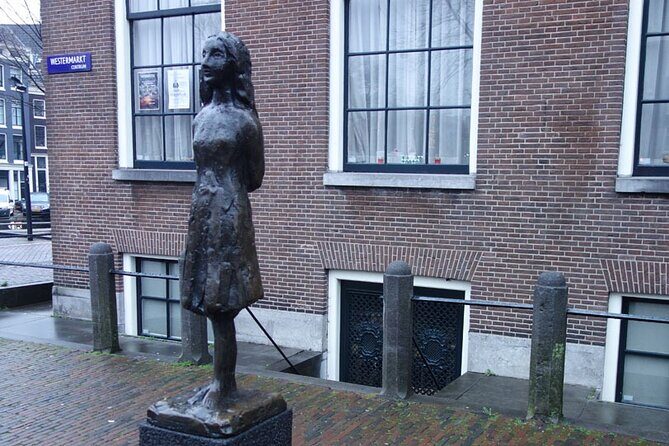
The next listed landmark is the Portuguese Synagogue, where the audio focuses on how some people found refuge in Amsterdam after being forced to convert to Catholicism and fleeing from Portugal. This stop is shorter—about 15 minutes—but it’s a meaningful pivot in tone.
This is where you learn that Jewish history here isn’t only wartime trauma. It includes complex paths of identity, survival, and community life. Hearing that through narration while you’re at the synagogue makes the topic feel less abstract. You’re connecting policy and persecution to real human decisions: flight, refuge, and rebuilding.
A practical note: admission isn’t included in your tour price, so if you want to go inside related spaces, budget extra time and money. Even if you don’t enter, treat this chapter as a chance to slow down and look carefully around the building area as the narration explains the context.
You can also read our reviews of more tours and experiences in Amsterdam






Jewish Museum ending: finishing the walk with context
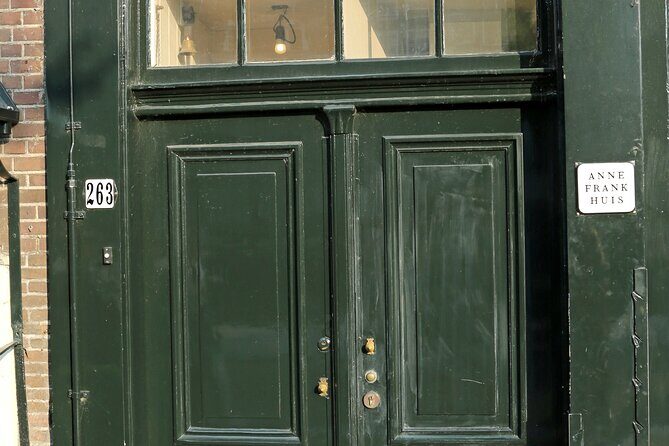
Your route ends at the Jewish Museum on Nieuwe Amstelstraat 1. The tour description emphasizes that this is the only museum in Holland specializing in Jewish history and culture. Ending here makes sense because after walking through memorial spaces and synagogues, you’ll likely want a place where information is organized and deeper.
You don’t need to rush once the audio ends. Use the finish point to decide what kind of learning you want next: a focused museum visit, a quiet break, or just time to reflect before dinner. The best choice depends on your emotional bandwidth, and audio tours like this can leave you feeling ready for facts—or ready for a pause.
Because admission tickets aren’t included, plan ahead if you want inside access. If you’re budget-minded, you might treat the walk as your “guided component” and keep the museum visit optional.
Price and value: what $10.72 buys you (and what it doesn’t)

At $10.72 per person, this is priced like an affordable, self-paced learning tool—not like a guided day tour with staff. In value terms, you’re paying for the app content: offline chapters, maps, and tips that help you turn city streets into a guided experience.
What you should not assume is included:
- Snacks
- Transportation
- Your smartphone and headsets
- Admission tickets
So your total cost depends on your style. If you travel with your own phone and headphones and you’re okay with viewing most stops from outside, you can keep the day budget-friendly. If you want to go inside more than one venue, add admission costs and possible additional time.
The duration is listed as about 39 minutes, which is convenient for a half-day plan. But note how the chapters are broken up: the Auschwitz Monument chapter is listed around 39 minutes and the Portuguese Synagogue chapter around 15 minutes. In practice, that means your overall time will swing based on how long you take at each spot and whether you pause for photos or to step into a nearby area.
Using the app offline in practice: the phone plan that keeps it smooth

A big selling point here is that you don’t need internet. Offline use is great in Amsterdam because your phone can get distracted with directions, maps, and battery drain. Keeping the narration offline helps you focus on the story instead of troubleshooting data.
Language options matter too. The tour provides English and Spanish narration, so you can pick the version that matches your comprehension and comfort level.
Here’s the practical way to prepare:
- Bring headphones (headsets aren’t included)
- Make sure your phone has enough battery for roughly the length of the walk
- Use your phone’s brightness settings so you can still see the street safely while you listen
A small emotional tip: with audio tours and WWII themes, it’s okay to pause. If a sentence hits harder than expected, stop walking for a minute. Let your body catch up to your mind.
What I’d do to enjoy it more: pacing, stops, and emotional timing
I love that the tour is flexible. You can treat it like a “slow chapter” day instead of a checklist. For this subject, I’d recommend you build in breathing space.
Do this:
- Start when you’re not rushing to another major reservation
- Give yourself at least one short pause between chapters
- Keep your museum ambitions realistic. If you want to enter buildings, choose one as the priority and let the rest stay as viewing-from-outside stops
The subject is heavy, and the narration is designed to carry that weight. Some people especially liked how the voice and pacing make the stories feel close to the people involved. That’s exactly why you should not multitask while listening. Give the audio your full attention even if the streets around you are busy.
Who should book this Soundwalkrs audio tour
This is a good fit if you want:
- A walk-focused learning experience across the Jewish Quarter
- Offline narration so you can keep moving
- English or Spanish audio without needing a live guide schedule
It may not be ideal if you need:
- A live guide Q&A (the tour is audio-based)
- A mostly inside-museum day (admissions aren’t included)
- A fully guided transportation plan (transport isn’t included)
One more point: it’s set up so service animals are allowed, and it says most people can participate. So it’s generally approachable in terms of format, even with the emotional content.
Cancellation and practical planning (quick and simple)
Cancellation is free if you cancel at least 24 hours before the experience start time. If you’re booking close to your travel dates, keep an eye on local timing so you don’t accidentally miss the cutoff.
Should you book this Holocaust audio tour of Amsterdam’s Jewish Quarter?
If you want an honest, walkable way to understand Holocaust-era Amsterdam in the places where memory is marked, I think this is an easy yes. The offline audio, the specific landmark stops like the Auschwitz Monument and Portuguese Synagogue, and the clear ending at the Jewish Museum make it practical and coherent for a short visit.
I’d skip it only if you strongly prefer museum-only learning, or if you’re expecting your ticket price to cover admissions and transportation. If you’re willing to bring headphones and plan a little for museum entries, this is solid value for turning a simple stroll into something far more meaningful.
FAQ
How long is the Holocaust Series self-guided audio tour?
It’s listed at approximately 39 minutes.
Is the audio tour available in English?
Yes. The tour is offered in English (and Spanish is also available).
Does it work without an internet connection?
Yes. The app can be used offline.
Where does the tour start and end?
It starts at Verzetsmuseum Amsterdam – Museum of WWII Resistance (Plantage Kerklaan 61) and ends at the Jewish Museum (Nieuwe Amstelstraat 1).
Are museum admission tickets included?
No. Admission tickets are not included.
What should I bring since snacks, transport, and headsets aren’t included?
You should have your own smartphone and headsets. Snacks and transportation are also not included.