REVIEW · THE HAGUE
Scheveningen Beach: 1,5-Hour Surf Experience for kids
Book on GetYourGuide →Operated by Aloha Surf · Bookable on GetYourGuide
Dutch waves teach kids fast.
This 1.5-hour kids surf experience in Scheveningen (The Hague Beach) mixes a short, clear safety talk with actual time in the water—so your child isn’t just watching. You start at Aloha, learn the basics of surfing and staying safe, then try to stand up and glide on the Dutch waves with guidance from a certified instructor.
I like two things a lot. First, the coaching is practical: you get the “how” before you get pushed into the water. Second, the setup is efficient because surf gear is included and the lesson runs in small formats (up to 8 in the group, or fewer in private options).
One thing to consider: instructor language can vary. Even though lessons list Dutch, English, and German, you can’t always count on a specific language (like German/French/Spanish) at every time slot, so it helps to plan for English or German coaching if you’re flexible.
In This Review
- Key takeaways before you go
- Scheveningen Kids Surf: what makes it work for beginners
- Meeting Aloha on Scheveningen: finding the blue building
- What you do in the 1.5 hours: from theory to first stand
- Safety and surfing basics (before you hit the waves)
- Practice time: steering, balance, and confidence
- The Scheveningen waves angle: why this coast is great for kids
- Included gear and wetsuit comfort: what you should plan for
- Group vs private: how size affects attention and energy
- Languages and expectations: avoid surprises
- Price and value: is $62 per person fair for 1.5 hours?
- Who should book this kids surf lesson in Scheveningen?
- Aloha Surf details that can make your day easier
- When weather gets in the way: how to stay chill
- Final verdict: should you book this Scheveningen kids surf lesson?
- FAQ
- How long is the kids surf experience in Scheveningen?
- Where do we meet for the lesson?
- What is included in the price?
- What should we bring?
- How big are the group lessons?
- What languages do instructors speak?
- Is the group lesson guaranteed to run even if only a few kids sign up?
- Is this suitable for non-swimmers or pregnant women?
Key takeaways before you go
- Aloha meeting point: meet at the blue building with the Aloha flag on top
- Real wave time: you’ll spend most of the lesson practicing steering and balance
- Small groups: max 8 surfers in a group lesson, with private options for fewer kids
- Certified instruction + safety basics: you’ll get both surfing history and on-water safety tips
- Weather can cancel the session: the lesson may not run if there are no waves or storms
- Towel + swimwear are the essentials: swimsuit and towel aren’t provided, and sunscreen guidance matters
Scheveningen Kids Surf: what makes it work for beginners
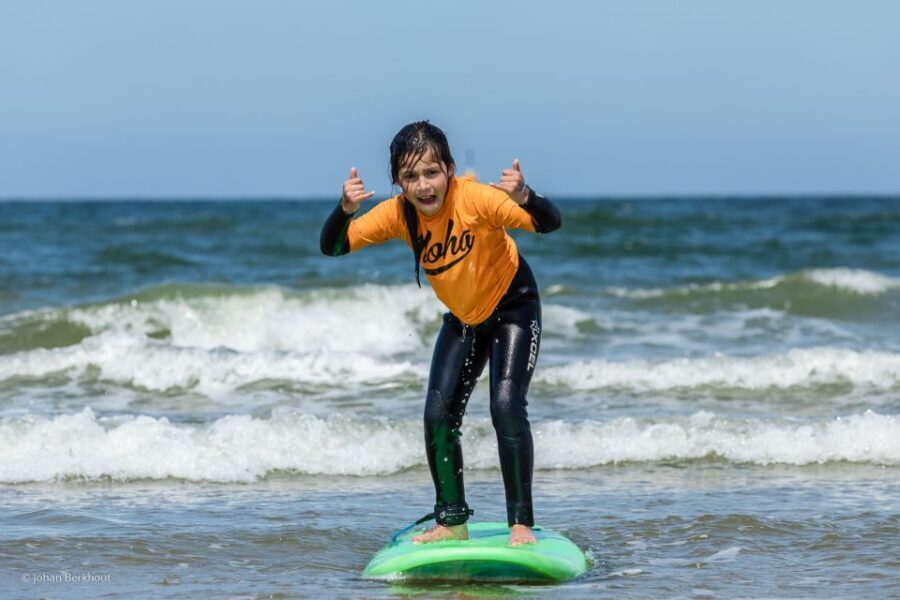
Scheveningen is a smart place to learn because it’s made for learning in a real, coastal setting. You’re not in a backyard pool with perfect conditions—you’re on The Hague Beach, where the wind, the salt air, and the chop teach kids how to react. And that matters, because surfing is as much about balance and timing as it is about bravery.
This experience is built for kids who want the fun part fast: standing up and getting moved by the wave. The lesson starts with enough structure to keep things safe, then shifts into short bursts of practice so kids can try, fall (yes), reset, and try again without the day feeling like one long lecture.
You can also read our reviews of more tours and experiences in The Hague.



Meeting Aloha on Scheveningen: finding the blue building
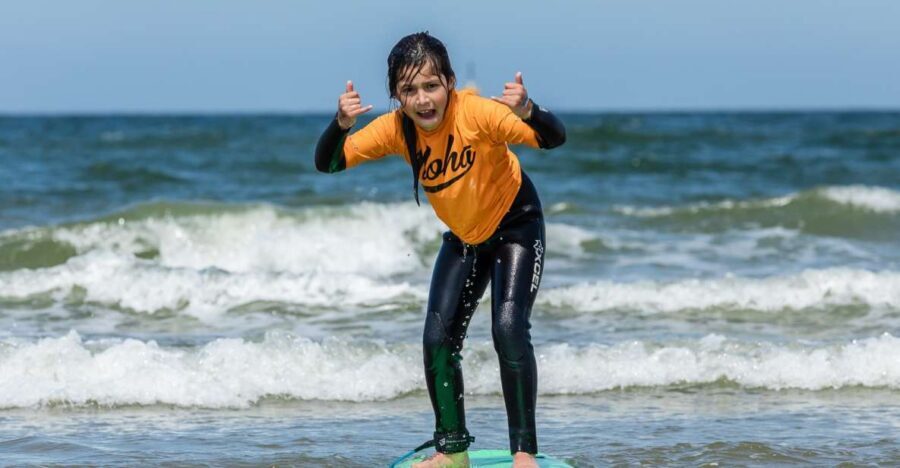
The whole thing is easy to start if you know where to go. Your meeting point is the blue building with the Aloha flag on top. Plan to arrive a few minutes early so your child can settle in, get their towel ready, and focus on the lesson rather than searching for the entrance.
Once you meet the instructor and group, you’ll get that “okay, here’s what’s happening” vibe. The lesson structure keeps moving: quick intro, then the key points, then the water time.
If your child is sensitive to wetsuits (skin irritation or eczema concerns), this is also where you’ll want to be direct. One family shared that their child had skin sensitivity with wetsuit material, and the instructor guided her carefully through the experience. That kind of attention is exactly what you want early—before nerves build.
What you do in the 1.5 hours: from theory to first stand
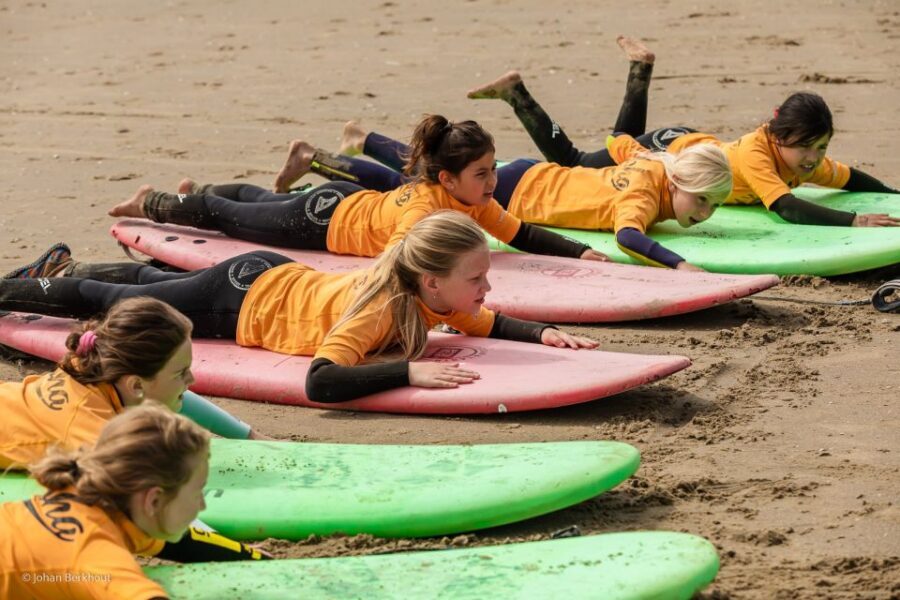
The lesson is designed as a smooth ramp-up. It’s not “walk down the pier and hope for the best.” You’ll get a mix of basics and safety guidance, then go straight to practice.
Safety and surfing basics (before you hit the waves)
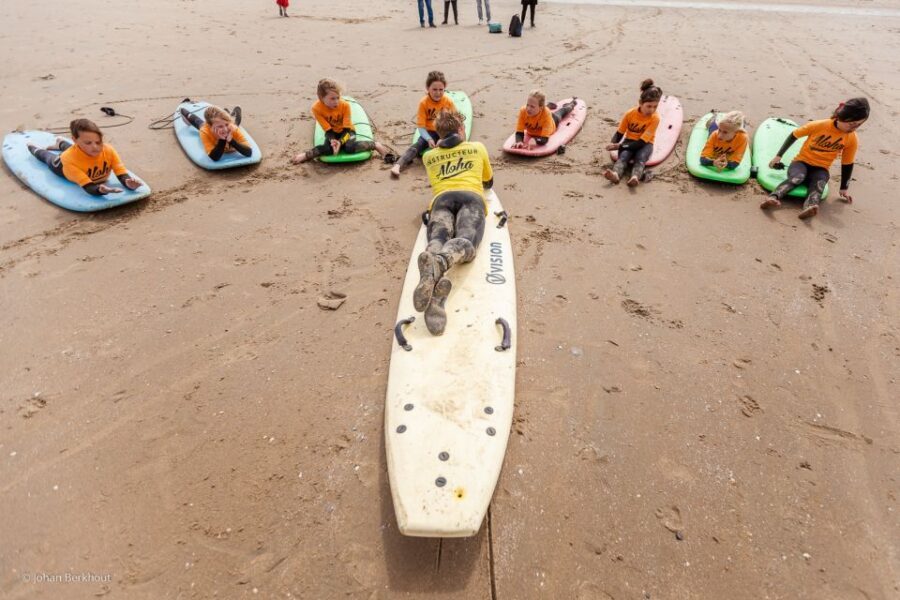
Before any board time, you’ll meet your instructor at Aloha and get an intro that includes a bit of surfing history and, more importantly, how to stay safe while learning in the water. This isn’t just rules on paper. It’s the stuff your child needs in the moment: how to handle the water safely, how to listen for instruction, and how to keep the group flow working.
Language note: instructors can be Dutch, English, or German, but the exact language for your slot can vary. If your child understands only one language, check ahead and be ready with a plan B (short phrases your child knows, or English support).
Practice time: steering, balance, and confidence
After the theory, the real highlight kicks in: you get the chance to stand on the surfboard and feel that glide over the Dutch waves. Kids learn the basics of riding by trying to steer—left or right—or to go straight as the wave carries them.
The best part is also the simplest: when they fall in, it doesn’t end the fun. The lesson keeps the mood upbeat and frames falling as part of learning. That mindset shift is huge for kids. They start thinking: I can do this again, not I failed.
You’ll also notice that the instructor uses the group setup to keep kids engaged. With practice repeats, kids build confidence quickly, even if their first attempt is wobbly.


The Scheveningen waves angle: why this coast is great for kids
Scheveningen has a “real world” feel that helps kids learn the habits they’ll need anywhere: reading moving water and adjusting their body position. You won’t get perfect, identical rides every time—which is good. Surfing isn’t about one magic wave. It’s about responding.
Here’s what your child is effectively learning, even if they don’t name it:
- how balance changes with wave motion
- how to keep calm when water interrupts your plan
- how to listen and react quickly
- how to try again right away
That’s why the lesson works so well for beginners. The ocean provides the training environment, and the instructor gives just enough structure to turn chaos into progress.
Included gear and wetsuit comfort: what you should plan for
This lesson includes surf gear and a certified instructor, so you’re not stuck hunting down boards, leashes, or anything technical. What you do need to bring is simple and clear.
Bring:
- Swimwear (the wetsuit is part of the experience, so start with swimwear you’re comfortable in)
- Towel (you’ll want it for after)
- Biodegradable sunscreen
Not included:
- Swimsuit
- Towel
A small practical tip: kids will often feel colder faster once they’re out of the water, especially if the wind picks up. A towel that’s ready to go right away helps the day feel like an activity, not a shiver-fest.
Also, alcohol and drugs aren’t allowed. That’s a good rule for a kids lesson and helps keep the focus on safe participation.
Group vs private: how size affects attention and energy
You have two formats:
- Group lesson: up to 8 surfers
- Private lesson: maximum of 2 participants
The group setup is lively. It’s also the reason your child gets to learn in a motivating, social environment—watching other kids try the same moves and clap for progress. But there’s a tradeoff: as a group grows, attention can feel less one-on-one.
One family feedback flagged that their child’s group was made of 5 kids and 1 surf instructor, and they felt the ratio wasn’t ideal for complete first-timers (each child needs a bit of personal guidance). That doesn’t mean it won’t be great—it just tells you what to watch for when you’re choosing group vs private.
If your child is:
- very cautious and needs extra reassurance, or
- language-dependent, or
- easily overwhelmed in groups,
…then private might be worth it for the calmer pace and extra coaching time.
There’s also an important operational note: the group lesson will only continue if there’s a big enough group (minimum 4 surfers). That keeps things safe and workable for instruction.
Languages and expectations: avoid surprises
Lessons list instructors who speak Dutch, English, or German. The tricky part is that you can’t guarantee a specific language like German/French/Spanish for every time slot.
In practice, that means you should:
- be comfortable with the idea of English or German coaching if needed
- keep explanations simple for your child beforehand (“Listen for the instructor,” “Follow the safety rules,” “Try again even if you fall”)
One booking story shared that an instructor didn’t speak German even though the family requested German. The group still had a good time overall, but it’s a reminder: flexibility helps.
Price and value: is $62 per person fair for 1.5 hours?
At $62 per person for 1.5 hours, the value comes from what’s included and what you’re buying: not just a spot on a beach, but instruction, safety coaching, and surf gear. For kids, that matters because the cost isn’t only “time in the water”—it’s the structure that turns a chaotic attempt into real progress.
Here’s what you’re getting for the money:
- certified instruction
- all surf materials
- a focused 1.5-hour session
- training for basics like standing and basic steering
If you tried to do this on your own, you’d spend time figuring out equipment, safety basics, and where to start. This lesson does the hard part for you, and it keeps the day short enough that kids stay excited rather than exhausted.
And if your group ends up smaller, you might feel even more coaching attention than expected. On the flip side, if your child is a nervous beginner and needs extra handholding, private can feel like better value than forcing a group situation.
Who should book this kids surf lesson in Scheveningen?
This is a strong pick if your child:
- wants a hands-on activity at the beach
- is comfortable being in open water with instruction
- can follow directions in Dutch, English, or German (even partially)
It’s not suitable if your child is:
- a non-swimmer (this is explicitly not suitable)
- if you’re traveling with a pregnant person in the group (not suitable)
If you’re unsure, consider the core requirement: kids need to be safe in the water. A surf lesson isn’t a “standing on sand” activity—it’s active, splashy learning.
Aloha Surf details that can make your day easier
The lesson starts at Aloha, and there’s an added perk here: one family gave a big compliment to the attached restaurant, saying the food was cooked with passion and that it was super tasty. I can’t promise it’ll match every single day, but having a place nearby where you can refuel after the lesson is genuinely practical—especially with kids.
After your session, you’ll likely appreciate being able to dry off, eat, and keep the beach day from turning into a frantic scramble for dinner.
When weather gets in the way: how to stay chill
Surf lessons at the coast depend on conditions. The surf lesson can be canceled if there are no waves or if there’s a storm in Scheveningen. The surf school will contact you if the lesson is canceled or changed due to weather.
That’s not a dealbreaker—it’s just the reality of sea-based activities. The best move is to plan your day with flexibility and treat this as a “conditions permitting” ocean adventure.
Final verdict: should you book this Scheveningen kids surf lesson?
If your child is ready to try something new and you want a structured, beginner-friendly way to do it, I’d book this. The biggest strengths are the short ramp to real practice, the included gear, and the certified instruction that focuses on safety and standing up—not just paddling around.
Choose group if you want a fun social vibe and your child handles sharing attention. Choose private if you want extra coaching, a calmer pace, or if language matching is critical for comfort.
Skip it (or look for a different activity) if your child isn’t a swimmer. The lesson is built for kids who can participate safely in open water, and you’ll all enjoy it more when that baseline is true.
FAQ
How long is the kids surf experience in Scheveningen?
The duration is 1.5 hours.
Where do we meet for the lesson?
Meet at the blue building with the Aloha flag on top.
What is included in the price?
The price includes surf gear and certified instructors.
What should we bring?
Bring swimwear, a towel, and biodegradable sunscreen.
How big are the group lessons?
Group lessons are for up to 8 surfers. Private lessons have a maximum of 2 participants.
What languages do instructors speak?
Instructors speak Dutch, English, or German.
Is the group lesson guaranteed to run even if only a few kids sign up?
No. The group-surf lesson will only continue if there is a minimum group size of 4 surfers.
Is this suitable for non-swimmers or pregnant women?
No. It is not suitable for non-swimmers, and it is also not suitable for pregnant women.