REVIEW · AMSTERDAM
Red Light District Tour – It’s History & It’s Future
Book on Viator →Bookable on Viator
Amsterdam at night tells stories fast.
This tour is built for the way you want to see the city: one guided route that connects the Red Light District to major nearby landmarks. I like how it keeps the focus on context, not shock—so you understand what you’re seeing and why Amsterdam chose its own way of dealing with sex work, commerce, and laws. You also get a guide with real history storytelling, plus local recommendations to keep your evening moving after the walk.
My favorite part is the pacing and range. You hit several stops in about two hours, including the Oude Kerk and the Beurs van Berlage area at the end, so the walk feels like more than one neighborhood. There’s also a stop at the Condomerie, which adds a surprisingly thoughtful layer on public health right in the middle of the action. One possible drawback: the tour starts with a bit of chatting before you get moving, so if you prefer a quick kickoff, you may find that first stretch a little slow.
In This Review
- Key highlights worth your attention
- Entering the Red Light District with context, not confusion
- Your route: Weeping Tower to Beurs van Berlage in about two hours
- Stop 1: Weeping Tower (Schreiertoren) for a sense of Amsterdam’s darker side
- Stop 2: St. Nicholas Basilica for maritime history and architecture
- Stop 3: Zeedijk for the street-level story of change
- Stop 4: Fo Guang Shan He Hua Temple for a brief calm reset
- Stop 5: Nieuwmarkt for the square-and-market feel
- Stop 6: The Red Light District for history, rules, and respectful behavior
- Stop 7: Oude Kerk for an 800-year-old reset
- Stop 8: Condomerie for safe sex education with humor
- Stop 9: Beurs van Berlage for architecture and the city’s cultural shift
- Price, value, and what you may spend extra
- Who this tour fits best (and who should choose something else)
- How to make the most of the night walk
- Should you book: The short decision guide
- FAQ
- FAQ
- What is the duration of the Red Light District tour?
- How much does the tour cost?
- What time does the tour start?
- Where do I meet the tour?
- Where does the tour end?
- What language is the guide offered in?
- How big is the group?
- Are entrance tickets included for all stops?
- Is alcohol included in the tour price?
- Can I cancel for a full refund?
- Are service animals allowed?
Key highlights worth your attention
- Night timing at 8:00 pm gives you the Red Light District’s neon-and-streets vibe without rushing daylight sightseeing
- Small group max 10 means you can hear the guide clearly and get respectful, practical answers
- Respect-focused approach helps you navigate the Red Light District without awkward behavior
- Stops beyond the Red Light District link sex-work history with churches, a Buddhist temple, and civic architecture
- Free and ticketed stops mixed together helps you control your budget on the spot
Entering the Red Light District with context, not confusion
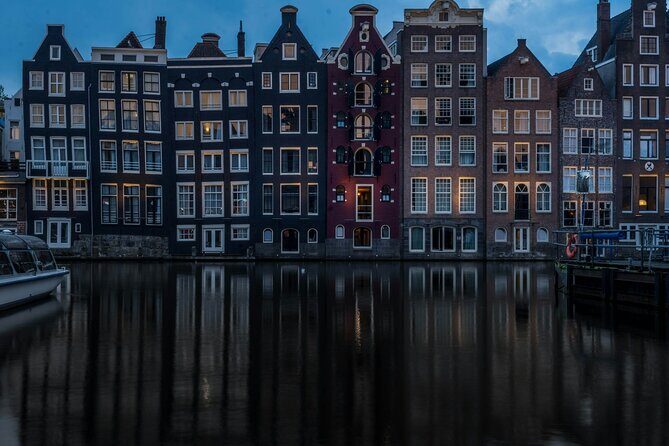
If you’re even a little curious about the Red Light District’s place in Amsterdam, this tour is the cleanest way to make sense of it. You’re not just walking past storefronts and signs. You’re hearing how the area developed over time—and how it fits into the city’s larger story. That matters, because without context the neighborhood can feel like noise. With context, it turns into a living lesson about laws, economics, boundaries, and public debate.
This one runs at 8:00 pm and takes about 2 hours. Night makes sense here. The streets, lighting, and atmosphere are part of what you came to see, and you’re also less likely to trip over daytime crowds that tend to scatter everyone into quick photo runs. Plus, doing it at night leaves you daytime hours for museums, canals, and cafés. It’s a smart add-on when your schedule is tight.
The group stays small—up to 10 people—and that changes how the tour feels. In a big group, you spend energy pushing through or trying to hear above traffic. In a small group, the guide can manage the pacing and keep the conversation clear.
The guide language is offered in English (and also Spanish, Italian, or Dutch, depending on the guide assigned). You get a mobile ticket, and you’ll be able to keep things simple without a pile of paper confirmations.
You can also read our reviews of more historical tours in Amsterdam


Your route: Weeping Tower to Beurs van Berlage in about two hours
The tour is designed like a chain of quick stops. Each one adds a different angle on Amsterdam—spiritual, civic, health-focused, and historical—so the Red Light District doesn’t sit alone as a separate oddity. Here’s what each stop brings, and what to keep in mind.
Stop 1: Weeping Tower (Schreiertoren) for a sense of Amsterdam’s darker side
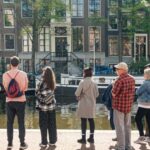
You begin at Café the Schreiertower, Prins Hendrikkade 95, and the walk starts right by the Weeping Tower area. The tour frames it as a haunting symbol tied to the city’s history. Even if you only skim the exterior and nearby details, it works as a tonal warm-up: Amsterdam isn’t only canals and bikes. It also has layers of fear, loss, migration, and rule-breaking—things cities remember.
What to watch for: If the tower area is busy, you may spend a little more time waiting for the guide to pull the group together before you move on. Also, admission isn’t included for this stop, so if you want inside time, budget extra.
Stop 2: St. Nicholas Basilica for maritime history and architecture
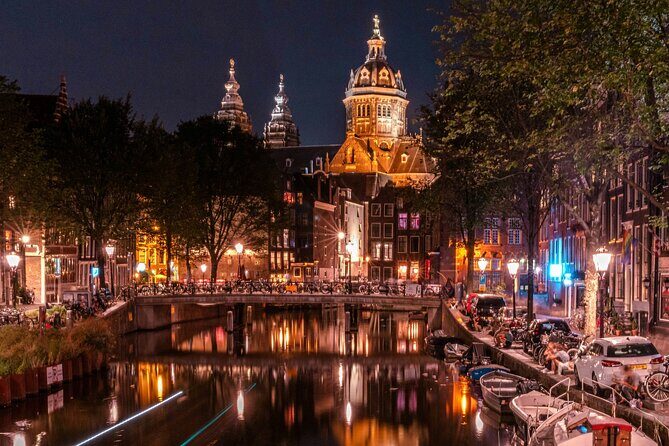
Next is the St. Nicholas Basilica, dedicated to the patron saint of seafarers. This is a good contrast stop. After the heavier symbolism of the Weeping Tower, you get a church with strong architectural character and a clear historical theme.
What to watch for: This one is free, so it’s low-stress. Even a short look helps you reset your eyes before you enter the denser, more controversial streets later.
Stop 3: Zeedijk for the street-level story of change
Then you move to Zeedijk, one of Amsterdam’s historic streets. The tour talks about how it shifted after a turbulent past, including a reference to a 70s epidemic, and how the area later rebuilt its public face with shops and cafés.
Why it matters: The Red Light District doesn’t happen in a vacuum. Neighborhoods change because people, policy, and economics change. Zeedijk is the “street-scale” example of that idea—small turns in a city that add up over decades.
What to watch for: This stop is free and time-limited, so it’s more about orientation and story than a long wander.


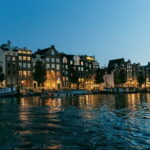
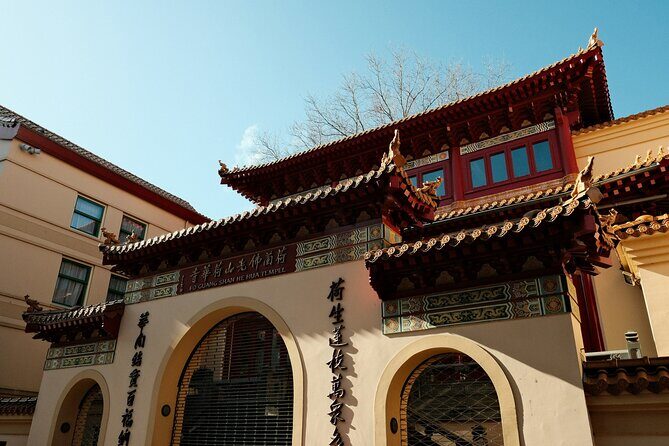
Stop 4: Fo Guang Shan He Hua Temple for a brief calm reset
You’ll take a short hop to the He Hua Temple by the Fo Guang Shan tradition. It’s described as a sanctuary of tranquility with intricate architecture—an intentional pause before you hit the most sensational-looking blocks.
Why you’ll like it: Even if religion isn’t your top travel interest, the temple stop gives your brain a reset. It’s hard to keep your head clear when walking through a high-stimulation area. A quick calm space helps you observe the neighborhood better when you return to the streets.
What to watch for: Admission isn’t included for this stop, and the time window is short. If you want deeper interior viewing, you’ll have to be quick and organized.
Stop 5: Nieuwmarkt for the square-and-market feel
Next up is Nieuwmarkt, with its energy centered around the square and nearby streets. The tour frames it as a lively hub with markets, historic landmarks, and places to eat and drink.
How it helps the Red Light District story: Nieuwmarkt shows the everyday Amsterdam side—where locals and visitors mingle around food and daily life. It’s a reminder that the city doesn’t only consist of one controversial district. Amsterdam is messy, and the districts bleed into normal life.
What to watch for: This stop is free and limited to about 15 minutes. It’s enough time for a quick orientation glance and a snack decision for later, if your stomach is already talking.
Stop 6: The Red Light District for history, rules, and respectful behavior
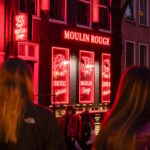
Now for the reason you booked: the Red Light District. The tour takes you through the historic street network with neon lighting and nightlife energy—while focusing on history and the area’s evolution.
Here’s the key detail: the tour emphasizes the respect that’s needed when you’re in the Red Light District. That isn’t just a polite suggestion. It affects how you behave—where you stand, how you look, how you talk to your group, and how you move through the streets. A good guide keeps the tone grounded so the visit doesn’t become a spectacle.
The Red Light District segment is about 30 minutes. That’s long enough to actually understand what you’re seeing, but not so long that you feel stuck in one place while the neighborhood keeps moving around you.
What to watch for: This area is active. If you’re the kind of visitor who needs lots of silence to absorb details, you might find the noise level challenging. If you’re going to take photos, be mindful of what’s appropriate—this tour’s whole theme is respect and boundaries.
Stop 7: Oude Kerk for an 800-year-old reset
After the Red Light District, you shift into something that feels completely different: the Oude Kerk (Old Church), described as an 800-year-old landmark. The tour highlights its architecture, history, and a calmer atmosphere compared to the street scene.
Why this stop clicks: It’s the literal reminder that Amsterdam is older than any modern district debate. The city’s identity stretches back far past the current street layout, and walking from sex-work history into medieval church walls can feel like a time jump.
Admission isn’t included here. If you want to go inside, plan for it.
Stop 8: Condomerie for safe sex education with humor
Then comes a stop that’s easy to misunderstand until you see it: the Condomerie, described as the world’s first condom specialty shop. The tour frames it as playful and educational, with a focus on safe sex, delivered with creativity and humor rather than lectures.
Why it’s a smart inclusion: This is the part of the itinerary that prevents the tour from feeling one-note. The Red Light District is about commerce and bodies, yes—but it also sits beside public health choices and education. This stop gives you a different angle: responsibility, not just controversy.
This stop is free and short.
Stop 9: Beurs van Berlage for architecture and the city’s cultural shift
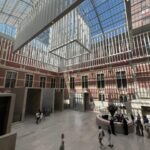
Finally, the tour ends near Beurs van Berlage, a former stock exchange and now an event and exhibition venue. It’s highlighted as an architectural masterpiece and a cultural hub, which is a perfect finish if you like seeing how old buildings get new purposes.
End point: The tour ends at Beurs van Berlage, Damrak 243, 1012 ZJ Amsterdam. From there, you’re well positioned for evening drinks or a train ride toward your next stop, depending on what you planned.
This stop is free and time-limited. You’ll still get enough to appreciate why the place is worth your attention.
Price, value, and what you may spend extra
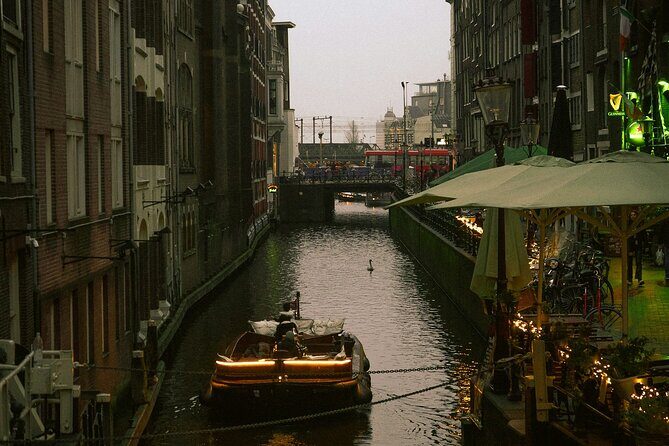
The price is $60.15 per person for roughly 2 hours. For Amsterdam, that’s not a bargain price—but it can be good value if you use the guide well and treat it as a “routing plus context” deal.
What’s included:
- English guide (and other languages depending on the guide)
- Local recommendations
- Mobile ticket
- A route that layers multiple landmarks into one evening plan
What’s not included:
- Admission tickets for some stops (including the Weeping Tower, He Hua Temple, and Oude Kerk)
- Food and drinks (snacks, coffee/tea, soda/pop, lunch, dinner)
- Alcoholic beverages are not included and are 18+ only (and listed at 5–10 Euros if you choose to buy)
Here’s the practical takeaway: even if you don’t go inside the ticketed sites, the free stops still get you a meaningful route. If you do want entrances at the ticketed places, you should plan a little extra so the tour doesn’t surprise you at the door.
Who this tour fits best (and who should choose something else)
This is a good fit if you want:
- Context and history before you walk the Red Light District
- A small-group experience that keeps things calm enough to listen
- A route that adds multiple landmarks instead of only focusing on one controversial zone
It’s also a good fit for people who like structure. The itinerary is timed in short windows, so you’re not wandering for long stretches without guidance.
This may be less ideal if you:
- Hate any waiting around at the start (the tour begins with more talking before movement)
- Prefer a purely sightseeing approach with minimal discussion
- Need long, slow photo stops in each neighborhood
How to make the most of the night walk
A few practical tips will help you get more out of it.
First, dress for movement. Two hours in Amsterdam at night means walking on streets that can feel busy and tight. Wear shoes you’re comfortable in for repeated steps.
Second, match your expectations to the format. This isn’t a museum lecture. It’s an evening route with guided stories at each stop. If you’re okay switching from one kind of place to another—church to temple to street scene to architecture—you’ll enjoy the contrast.
Third, treat the guide’s respect message like part of the itinerary. The Red Light District is sensitive. The guide’s job is to keep the tone respectful, and your job is to follow the group pace and boundaries.
Finally, once you finish near Beurs van Berlage, don’t rush. Take five minutes to orient yourself in the Damrak area. Ending there gives you options rather than locking you into one neighborhood.
Should you book: The short decision guide
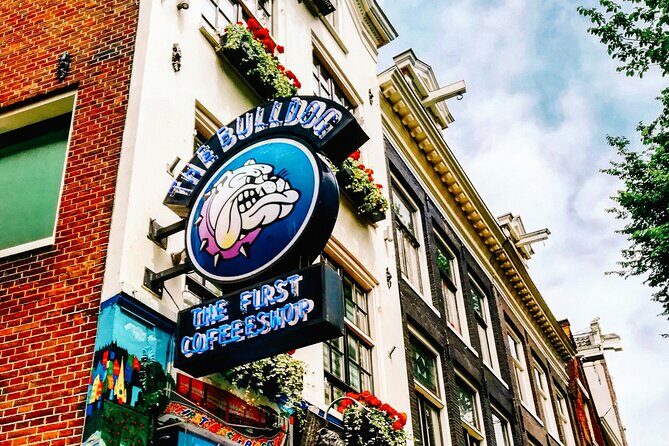
Book this tour if you want the Red Light District handled with a steady hand and a real plan—history plus nearby landmarks in one evening. The small group size and the guide’s focus on respectful navigation are the big strengths, and the route avoids the common trap of making the Red Light District feel like a single-issue detour.
Skip it if you’re only interested in quick photos, or if a slower start would annoy you right away. You’ll also want to confirm whether you personally care about entering places like the Weeping Tower or Oude Kerk, since admission isn’t included for those stops.
FAQ
FAQ
What is the duration of the Red Light District tour?
It runs for about 2 hours.
How much does the tour cost?
The price is $60.15 per person.
What time does the tour start?
The start time is 8:00 pm.
Where do I meet the tour?
Meet at Café the Schreiertower, Prins Hendrikkade 95, 1012 AE Amsterdam.
Where does the tour end?
It ends at Beurs van Berlage, Damrak 243, 1012 ZJ Amsterdam (about a 10-minute walk from the start).
What language is the guide offered in?
English is offered, and the guide can also be in Spanish, Italian, or Dutch depending on the booking.
How big is the group?
The tour has a maximum of 10 travelers.
Are entrance tickets included for all stops?
No. Admission is not included for the Weeping Tower, Fo Guang Shan He Hua Temple, and Oude Kerk. The other listed stops are marked as free.
Is alcohol included in the tour price?
No. Alcoholic beverages cost 5–10 Euros and are 18+ only.
Can I cancel for a full refund?
Yes, you can cancel for a full refund up to 24 hours before the experience starts.
Are service animals allowed?
Yes, service animals are allowed.