REVIEW · AMSTERDAM
Red Light District private tour with a local
Book on Viator →Operated by Guidance Travel · Bookable on Viator
Few neighborhoods need this much context.
This private Red Light District tour takes you around the sights while explaining the day-to-day realities, the centuries-long history of the trade, and why Amsterdam became famous for its relaxed approach to sex and drugs. The guide is a local resident, and the best part is how the stories stay grounded in what people see and discuss today, not just headlines. I especially like the way guide Manouk shares personal, lived-in anecdotes while you’re walking the streets.
Two things I really like: the tour focuses on practical understanding (laws, rules, and the modern challenges) and it doesn’t stop at facts, it helps you interpret what you’re seeing. You also get a map for the final stretch so you can keep going at your own pace, plus a small gift at the end. One consideration: tours inside the Red Light District are not allowed (since 2020), so if your main goal is to get right up close to the windows and doorways, this is a clear “outskirts tour,” not an inside access tour.
In This Review
- Key Highlights You’ll Feel From the First Minutes
- Why This Tour Works: Context Without the Shock Value
- Price and Scheduling: What $231.72 Gets You (Per Group)
- Meeting at Beursplein: The 1.5-Hour Walking Layout
- Stop 1: De Wallen Origins and Why It Became a “Sacred Place”
- Stop 2: Dam Square and the Tolerance Story Behind Coffee Shops
- Stop 3: Warmoesstraat, Old Church Glimpses, and the Street Changing Roles
- Stop 4: Zeedijk’s 1970s Crime Reputation and Chinatown’s Comeback
- Stop 5: Nieuwmarkt and the Legalization of Prostitution Today
- Stop 6: Kloveniersburgwal and Coffeeshops, Legality, and Culture
- Stop 7: Paulusbroederssluis Map Moment and Your Independent Finish
- The Local Guide Factor: Why Manouk’s Style Matters
- Who This Tour Suits Best (And Who Might Want Something Else)
- Book It or Skip It: My Straight Answer
- FAQ
- FAQ
- How long is the private tour?
- Where does the tour start and end?
- Is it a private tour, or do I join a group?
- What’s the group size limit?
- Does the tour enter the Red Light District?
- Are there ticket costs at each stop?
- What do I receive during the tour?
- Do I need a printed ticket?
- Is it close to public transportation?
- Is free cancellation available?
Key Highlights You’ll Feel From the First Minutes
- A local resident guide telling the story with personal, street-level anecdotes (including Manouk’s approach)
- Outskirts route only, since guided tours inside the Red Light District are prohibited since 2020
- Free stops with guided storytelling, so you’re learning without paying extra at each point
- Dam Square to coffeeshop street explanations, tying sex-work tolerance to wider Dutch policy culture
- A ready-to-use map you can follow after the walk ends back where you started
Why This Tour Works: Context Without the Shock Value
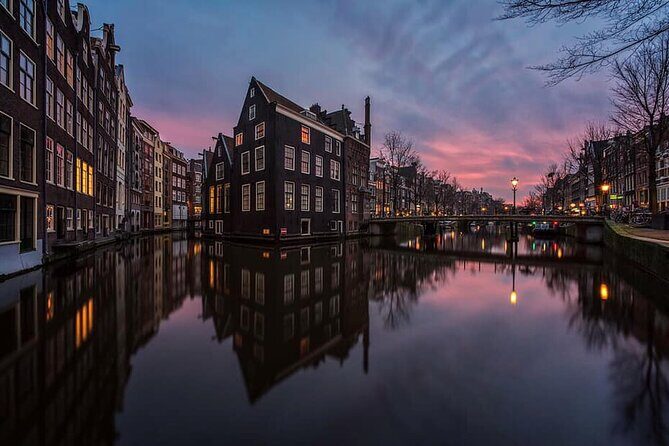
Amsterdam’s Red Light District is famous, but it’s also misunderstood. Many people arrive with a mix of curiosity and stereotypes, and then they leave with a messy blur of impressions. This tour is built for something different: understanding how the neighborhood became what it is, and how it functions now.
What makes it feel genuine is the tone. The guide doesn’t just point at buildings and say this happened here. You get framing: why sex workers chose to settle in this area, how Amsterdam developed a reputation for tolerance, and how modern policy and enforcement shape what you’ll notice on the street. Manouk’s style in the reviews is a good sign of what you can expect: lots of history, but also the practical aspects people actually deal with.
And because it’s a private tour, the pace is easier. If you have questions about what you’re seeing—or about coffee shops, legalization, or how policies work—you can ask instead of waiting for a group to catch up. That matters in a place like this where one person’s question can change how everyone understands the next block.
You can also read our reviews of more private tours in Amsterdam


Price and Scheduling: What $231.72 Gets You (Per Group)
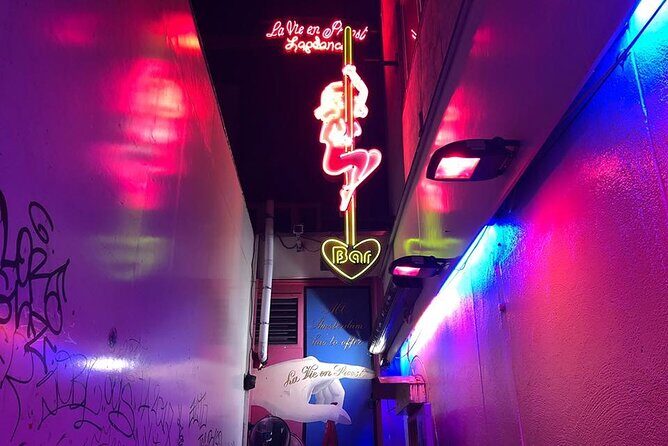
The price is $231.72 per group, up to 15 people, for about 1 hour 30 minutes. On a per-person basis, private tours like this can work out well when you’re traveling with a friend group or family that wants a guided filter for a sensitive subject.
Two practical things to keep in mind:
- It’s booked early. The average booking window is about 98 days, so if you’re traveling in peak season, reserve sooner rather than later.
- You’re paying for interpretation. You could wander the area on your own, but the value here is the guide’s explanation of how Amsterdam’s tolerance culture ties together prostitution and drug policy, plus the street-by-street history.
You’ll use a mobile ticket, and the tour runs as a walking route with stops. Admission is listed as free for each stop, so your cost is mainly the guide and the time together.
Meeting at Beursplein: The 1.5-Hour Walking Layout
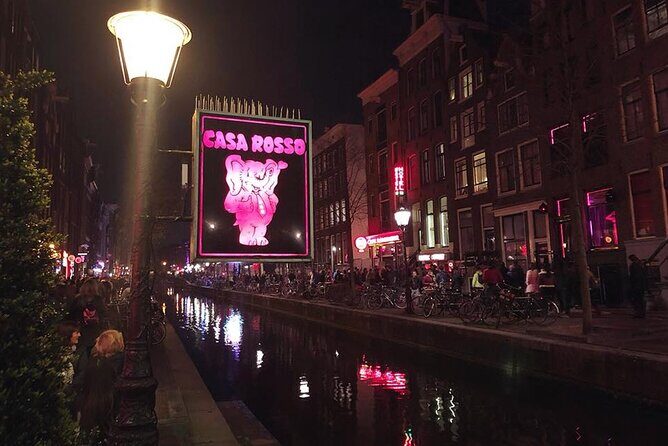
You’ll start at Beursplein, 1012 Amsterdam and the tour ends back at the meeting point. It’s near public transportation, and the route is designed as a walk between highlights. In the middle, you’re not just standing at street corners—you’re moving through the city while the guide covers topics as they connect from one area to the next.
It’s roughly 10 to 15 minutes at each main stop, then time for the guided explanations as you transition. That structure is useful because the Red Light District area is visually intense. Short bursts of guided context help you process what you see instead of getting overwhelmed or missing key details.
Also, if you’re hoping to plan the rest of your day: since it returns to the start point, it’s easier to pick up dinner or another activity nearby.
Stop 1: De Wallen Origins and Why It Became a “Sacred Place”
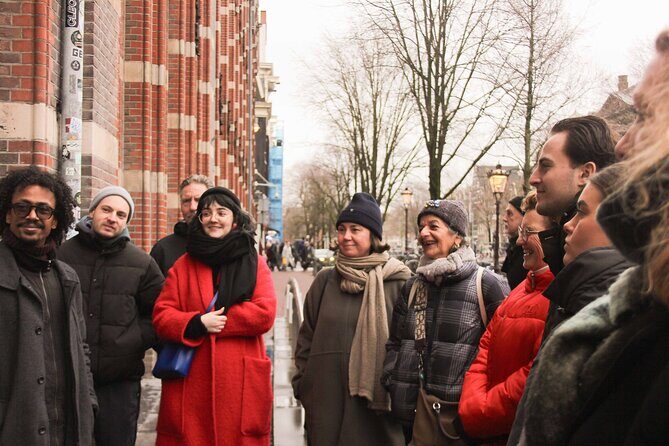
Your first stop is the core area people associate with the Red Light District: De Wallen. Since tours inside aren’t allowed, you’re learning from the edges while still getting the neighborhood’s big story.
This is where the tour answers the most important question: why did this profession become concentrated here? You’ll hear how and why sex workers were drawn to this area, and how the neighborhood became part of Amsterdam’s identity. The guide also explains Amsterdam’s liberal reputation around sex, so later stops about legalization and modern street life make more sense.
What to watch for here is not just the visuals. Focus on the logic the guide gives you. When you understand why De Wallen became the place for this work, the rest of your walking route feels less random and more like a timeline you’re moving through.
Stop 2: Dam Square and the Tolerance Story Behind Coffee Shops
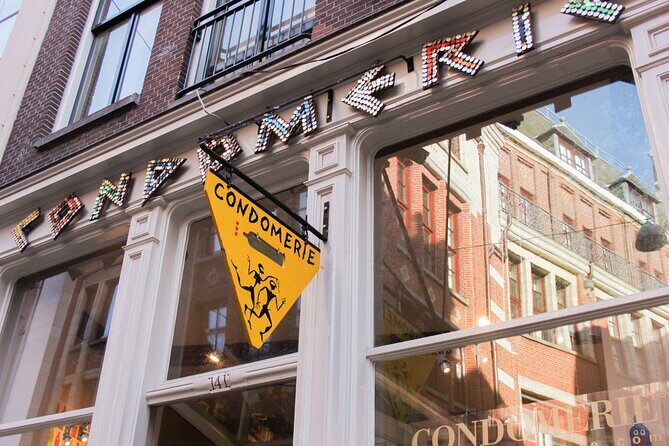
Next you’ll head to Dam Square, one of Amsterdam’s most central public spaces. Here the tour connects two things that often get discussed separately: the idea of tolerance and the origin of the coffee shop concept.
You’ll learn what was once the center of Amsterdam’s tolerance and freedom, and how that links to coffee shops. This matters because the Dutch approach to policy doesn’t always map neatly onto what people expect from other countries. The tour’s job is to show you the connections—without turning it into a political lecture.
A small practical tip: Dam Square is a busy place. Use the guided time to orient yourself. You’ll get a clearer sense of where you are in the city and how the neighborhood you’re studying fits into Amsterdam as a whole.


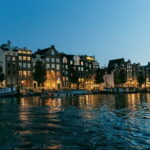



Stop 3: Warmoesstraat, Old Church Glimpses, and the Street Changing Roles
At Warmoesstraat, you’ll be looking at a street that’s been around for a long time and has shifted roles over time. The tour frames it as one of Amsterdam’s oldest streets, which now functions as an entertainment-focused area.
You’ll also catch a glimpse of the Old Church. Even if you’re not doing a full church visit, the sight helps you remember this neighborhood isn’t only about modern nightlife. It’s layered—old streets, older buildings, and new uses that grew over time.
The “why this is worth it” part: you start seeing that the Red Light District story isn’t confined to one kind of street. It’s woven into Amsterdam’s broader development, with old infrastructure absorbing new social realities.
Stop 4: Zeedijk’s 1970s Crime Reputation and Chinatown’s Comeback
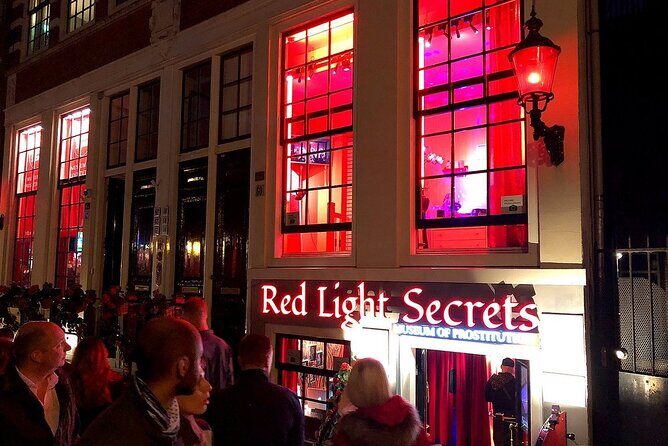
Then comes Zeedijk, a street that shows how quickly neighborhoods can change. The tour tells you about Zeedijk’s reputation in the 1970s—once described as one of the most dangerous places in Amsterdam—and then how it declined and transformed over time.
You’ll also discover that this area is closely linked to Chinatown now, and that many Amsterdammers favor it. This stop gives you an important mental reset: the district you’re walking through today is not the only version that existed.
If you’re the type who worries you’ll feel uncomfortable during the tour, this stop helps. It pushes the narrative away from shock and toward city-change—how communities evolve, safety improves, and street identity shifts.
Stop 5: Nieuwmarkt and the Legalization of Prostitution Today
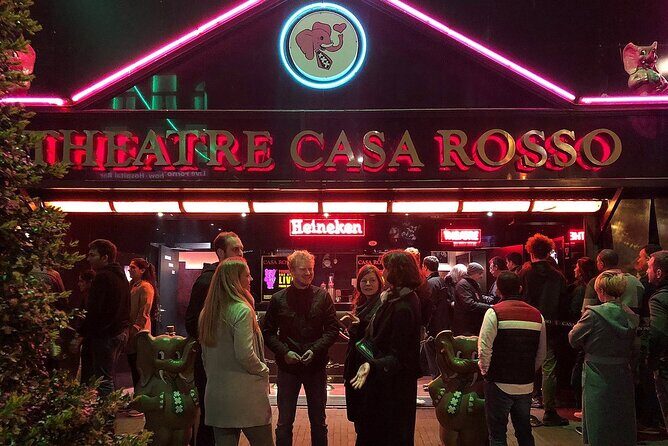
At Nieuwmarkt, the focus turns to policy and lived consequences. You’ll learn about the legalization of prostitution and the challenges sex workers face in the present day.
This is one of the most meaningful stops because it moves beyond history and into “what does it mean now?” The guide’s approach helps you understand that legalization isn’t just a slogan. It affects safety, regulation, and daily experiences—things you can’t see from a distance.
You’ll walk away with a more careful viewpoint. Instead of treating the Red Light District as a spectacle, you’ll understand it as part of a system with real people trying to survive and work under specific rules.
Stop 6: Kloveniersburgwal and Coffeeshops, Legality, and Culture
At Kloveniersburgwal, you’ll focus on the coffeeshops people talk about constantly—and the parts that aren’t as widely understood.
The tour explains the cultural significance of coffeeshops and, importantly, their legal status. This stop works best if you’ve heard rumors before but never had them explained in plain language. The guide connects the dots between Amsterdam’s tolerance reputation and the practical reality of what’s allowed.
In the reviews, you can see this kind of careful teaching in action: a guide who can connect history and “practical aspects” without making it awkward. If you like understanding how a country’s laws shape street life, this is a strong section for you.
Stop 7: Paulusbroederssluis Map Moment and Your Independent Finish
Finally, at Paulusbroederssluis, you receive the map and the information you need to discover the area yourself. This is the tour’s smart design choice.
Because you can’t go inside the Red Light District on a guided walk, the map becomes your way to keep learning without crossing into restricted territory. You’ll get a guide’s-eye view of where to go next, and you can choose your own pace once the structured part of the tour ends.
The timing here is also useful: you finish with a tool, not just memories. If you plan to wander afterward, use the map to steer yourself toward streets and viewpoints that match what the guide explained.
The Local Guide Factor: Why Manouk’s Style Matters
The reviews make one theme clear: the guide’s personal connection to the area makes the stories feel credible. Manouk is described as a long-time resident, and that shows in how the tour blends street knowledge with historical explanation.
You’ll also notice she answers questions, including the ones that come from discomfort or curiosity. One review even notes that she spoke about both history and the more practical aspects, and did it with enough detail that the tour felt genuinely educational—not just a facts dump.
The tone is also good in real-life conditions. One review mentions rain, and the fact that the tour still worked points to good pacing and clear communication, even when the weather turns Dutch.
Who This Tour Suits Best (And Who Might Want Something Else)
This private tour is a great fit if you want:
- A local-guided way to understand Amsterdam’s sex-work neighborhood without treating it like a theme park
- Context about prostitution legalization and how tolerance policy is discussed in the city
- A practical walking experience that ends with a map, so you can explore wisely afterward
- A question-friendly format thanks to the private setting
It may be less ideal if:
- Your main goal is going inside the Red Light District itself. Guided tours inside are prohibited since 2020, so this route stays focused on the outskirts.
If you’re traveling with people who get nervous about sensitive topics, a tour like this can also act like a buffer: you’ll have shared context before you decide how (or whether) to go further on your own.
Book It or Skip It: My Straight Answer
I’d book this tour if you want the Red Light District story explained with care, not just stared at. The best value is the combination of a local resident guide, a structured 1.5-hour walking route, and the practical map for your next steps.
I’d skip it only if your expectations are based on inside access or you simply don’t want to engage with the subject at all. Otherwise, this tour is a smart way to get your bearings and understand Amsterdam’s tolerance culture from the street level.
FAQ
FAQ
How long is the private tour?
It runs for about 1 hour 30 minutes on foot.
Where does the tour start and end?
It starts at Beursplein, 1012 Amsterdam, and ends back at the meeting point.
Is it a private tour, or do I join a group?
It’s private, so only your group participates.
What’s the group size limit?
The price is per group up to 15 people.
Does the tour enter the Red Light District?
Guided tours inside the Red Light District are prohibited since 2020, so this tour goes around the outskirts.
Are there ticket costs at each stop?
Admission is listed as free at the stops included in the route.
What do I receive during the tour?
You’ll get a map with information for the last stretch and a small gift guaranteed to bring a smile.
Do I need a printed ticket?
No. The tour uses a mobile ticket.
Is it close to public transportation?
Yes, it’s near public transportation.
Is free cancellation available?
Yes. You can cancel up to 24 hours in advance for a full refund.