REVIEW · THE HAGUE
Private Tour of Delft & Rotterdam with Cube House and Transfer
Book on Viator →Operated by Discover Delft · Bookable on Viator
Delft to Rotterdam feels like two stories in one afternoon. This private 4 to 5 hour tour strings together the best sights of Delft’s historic core and Rotterdam’s modern architecture, with a guided train hop in between. You get a clear route, and you’re not stuck with a long coach ride.
Two things I really like: the mix of landmark exteriors and built-in context, so you understand what you’re seeing instead of just ticking boxes; and the Cube House stop, where you actually look into an apartment rather than only photographing the facades. It’s the kind of add-on that turns a quick city stroll into something more memorable.
One possible drawback: this is largely a walking tour, not a driving tour. If you’re dealing with a bad foot or heavy rain, plan for steps and uneven streets, and consider requesting the pickup option (if available) to reduce hassle before you start.
In This Review
- Key highlights worth knowing
- Why this Delft + Rotterdam combo tour is good value
- Delft start: Museum Prinsenhof and the city’s turning points
- Old Church area: skewed towers, brewing history, and what to look for
- From Stadhuis to the New Church: what Delft’s royal burial means here
- Vermeer trail along Delft’s canal: Armamentarium and Maria van Jessekerk
- Beestenmarkt to Delft station: keeping the pace without rushing
- Rotterdam arrival at Blaak: Cubes first, then the harbor
- Market Hall and Sint-Laurens: the modern food hall with an old church next door
- Ending near Blaak: the Rotte dam and when the outdoor market is on
- Price and logistics: what you’re actually paying for
- Who should book, and who should reconsider
- A guide makes the difference: expect strong storytelling
- Tips to make the walking day easier (especially if it rains)
- Should you book this Delft & Rotterdam private tour?
Key highlights worth knowing
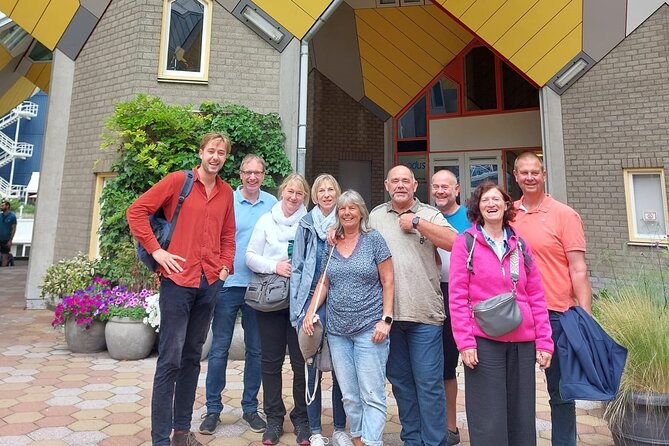
- Cubic Houses with an interior visit in Rotterdam, with the entry included
- A guided Delft loop featuring places tied to Vermeer, the VOC armory, and famous churches
- A fast train link (18 minutes) to Rotterdam Blaak, with the fare included
- Free stops built into the route, so most of your time goes to sightseeing, not ticket lines
- A private format, so the guide can pace the day to your group
Why this Delft + Rotterdam combo tour is good value
The headline is simple: you get two cities’ worth of architecture and atmosphere in one sitting. The practical win is that the tour is organized so you don’t waste time figuring out how to get from Delft to Rotterdam on your own. Instead, you follow a ready-made route with a guide doing the explaining.
At $228.78 per person for a private tour, it may feel high at first glance. But the price is easier to justify when you add up what you’re getting: two city walking tours, a Cubic House entry ticket, and the train transfer between Delft and Rotterdam Blaak (18 minutes, €4.10 included). That means you’re paying mainly for guided time, transport coordination, and a specific paid architectural stop—not for lots of separate admission fees.
Also, this length matters. 4 to 5 hours is long enough to feel like a real day out, but short enough to keep decisions simple. If you’re only in the area briefly (or you want a guided hit without committing to an all-day program), this fits.
You can also read our reviews of more tours and experiences in The Hague.


Delft start: Museum Prinsenhof and the city’s turning points
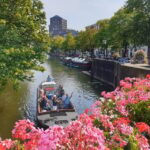
The tour begins at Museum Prinsenhof Delft, with time to walk through the Prinsenhof area and understand why it mattered in Dutch history. Even if you only spend about ten minutes here, it sets the tone. Delft isn’t just pretty canals and church towers. It has an “events that changed things” story, and the guide ties the setting to that big picture.
I like how the stop is timed as an opener rather than a dead-end museum detour. You’re getting the sense of Delft as a place where decisions were made, then you move on while the story is still fresh.
Small consideration: if you’re hoping for a deep indoor museum experience right at the start, this is more of a context stop than a long gallery time slot.
Old Church area: skewed towers, brewing history, and what to look for
Next you head to the Old Church, described as a recognizable building and tied to Delft’s beer brewing quarter. You’ll also learn why the church appears skewed, and you’ll get the age and significance behind it.
This is one of those moments where a guide saves you from standing there with a phone and guessing. The building is visually distinctive, and the explanation helps you notice details you might otherwise miss. It also helps you understand why this part of Delft feels central to older city life.
Right nearby, you also pass the Gemeenlandshuis van Delfland, known for a heavily decorated facade. This stop is quick but useful: you get a sense that “historic Delft” wasn’t only about churches and merchants. There were key civic structures tied to the region’s management, too.
What to watch for: keep an eye on facade details and the way the streets funnel you toward the main squares. The route here is built to help you read the city layout.
From Stadhuis to the New Church: what Delft’s royal burial means here
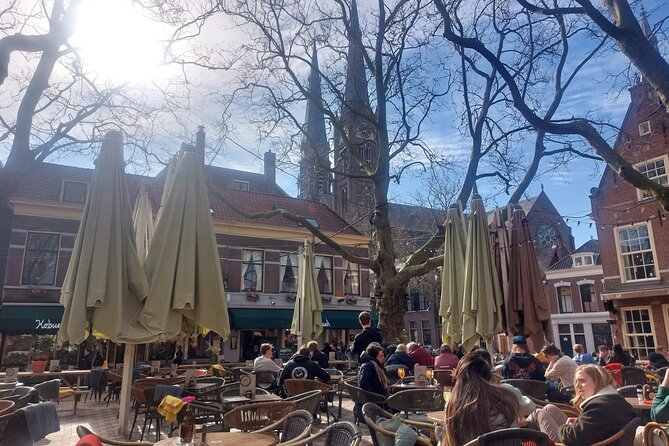
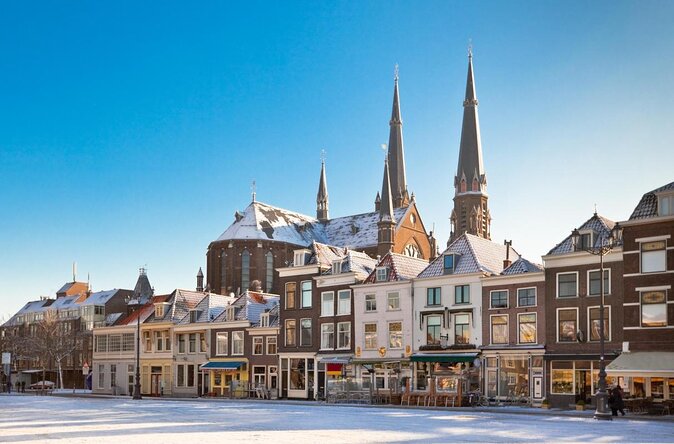
As you walk toward Grote Markt, you pass Stadhuis Delft, an old town hall partly dating to the 13th century. The key point of this section is that you’re seeing governance architecture close up—yet you’re still moving on, so you don’t get stuck in a single spot.
Then you reach New Church, the second-highest church in the Netherlands. It’s also where the royal family is buried, and the guide explains why Delft has that connection.
You also have an option here: the guide can help arrange tickets to go up the church tower, but it’s described as a fairly steep climb. If you’re up for it, tower time can be a great way to tie your afternoon together, because Delft’s street pattern and canal edges make more sense once you’re above them.
Practical note: if you don’t love climbs, skip the tower and use the minutes to ask questions on the ground. You’ll still get the meaning.
Vermeer trail along Delft’s canal: Armamentarium and Maria van Jessekerk
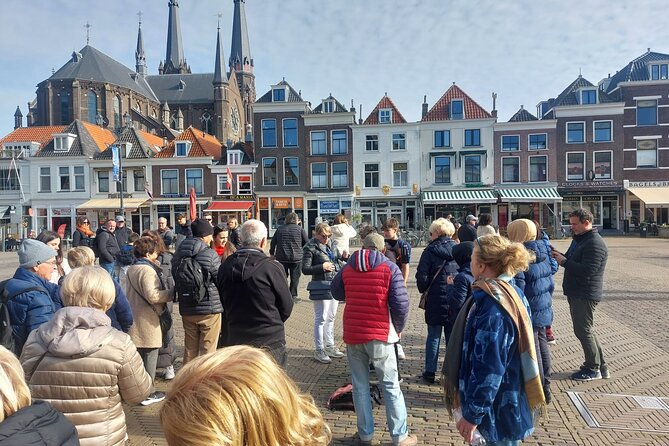
This part of the route focuses on two things Delft does well: art associations and the stories behind major buildings.
You walk along the oldest canal of Delft, heading to Armamentarium, a former weapons armory of the V.O.C. You’ll learn Delft’s role in the Dutch Republic’s golden days, and you’ll also hear about the exact spot where Vermeer was standing when he made View of Delft. That mix—trade power plus art—helps the city click.
After that, you head back north to Maria van Jessekerk. This is described as the first Catholic church built in the centre of Delft, and there’s a detail to notice about the two towers. Again, there’s a Vermeer connection here: the guide points out that it stands on the spot where he used to live.
I like stops like these because they don’t feel like random facts. The guide links building function, city change, and art. You come away with a stronger mental map than you’d get from a quick list of sights.
If you’re short on time: this is the section where your guide’s explanation matters most. Take a minute to slow down and listen.


Beestenmarkt to Delft station: keeping the pace without rushing
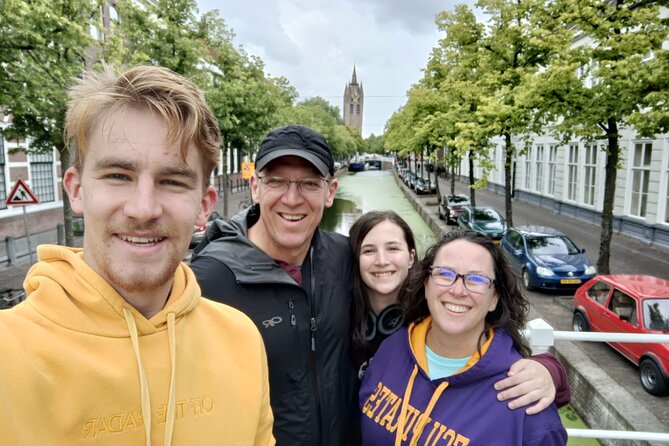
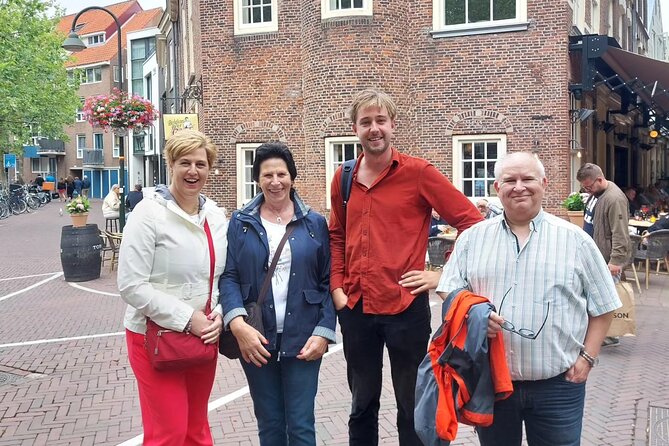
You pass Beestenmarkt, which the tour describes as Delft’s coziest square—ideal for a lunch or a beer. Even if you don’t stop for food, it’s a helpful place to remember there’s more to Delft than museums and churches. It gives you breathing room before the travel segment.
Then the tour moves toward Delft Railway Station. From here you take the train to Rotterdam Blaak in about 18 minutes, and the fare is included in the tour price. The guide also frames the train system as especially good for getting around, with a comparison that includes Singapore and Hong Kong.
On a practical level, this is the most efficient way to connect cities. You avoid car logistics and you keep the guided structure intact.
What you should plan: wear shoes you’re comfortable walking in. Even when the schedule is tight, stations and transfers still involve steps.
Rotterdam arrival at Blaak: Cubes first, then the harbor
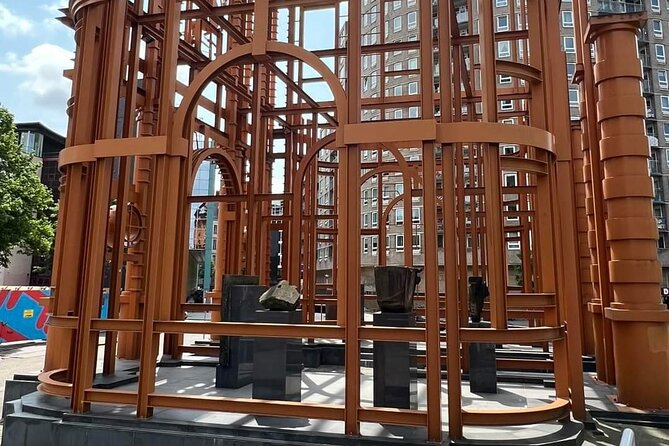
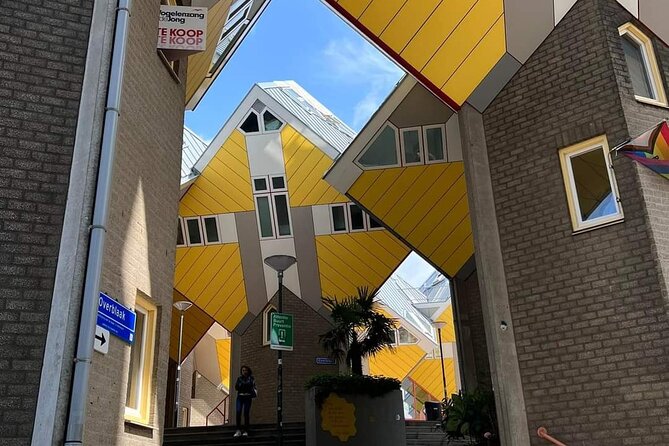
Once you arrive in Rotterdam, you’ll see the Kijk-Kubus Museum-house right away: the famous Cubic Houses by Piet Blom. The tour highlights them as a 1970s concept representing a village inside a city. Then you do the best part—view one apartment from the inside, with the ticket included.
This is where the tour earns its keep. Rotterdam architecture can look abstract from street level, but seeing an interior helps you understand the design idea. You also get photos, yes, but more importantly you get the sense of how the spaces would feel.
After the Cubic Houses, you continue to Oude Haven (Old Harbour). You’ll walk into an area with terraces and anchored ships for restoration. The point of this stop is not just scenery—it’s another way to see how Rotterdam blends historic maritime elements with modern design.
From there you head to Witte Huis, called the oldest skyscraper in Europe (dating to 1898) and one of the few buildings to survive Rotterdam’s bombing. The guide’s explanation gives the building emotional weight without turning it into a heavy lecture.
Market Hall and Sint-Laurens: the modern food hall with an old church next door
Next is Markthal (the Market Hall), the tour’s big indoor attraction. You’ll look at how the building includes apartments along both sides, and you can enjoy different foods from around the world inside. You’ll also be guided to look up and see one of the biggest pieces of art on the planet—something you’d easily miss if you only look at shopfronts.
Right next to it is Grote of Sint-Laurenskerk, a church from the 14th century. Its tower survived the bombing, and today it’s mostly used as an event location.
I like the pairing here because it shows Rotterdam’s contrast clearly: a modern market hall with a huge visual artwork, and right beside it, a church tower tied to survival and memory. Even if you’re not a “church person,” the tower detail and the way the building still plays a public role makes it worth the walk.
Ending near Blaak: the Rotte dam and when the outdoor market is on
The tour finishes around Blaak again, near where the original dam over the Rotte River was built—yes, Rotterdam’s story is literally shaped by water control. If you’re curious about more of Rotterdam after the tour, this is a good place to extend your day without feeling stranded.
The schedule also mentions that on Tuesdays and Saturdays, there’s a big outdoor market at Blaak. If your dates line up, that’s a nice bonus for wandering on your own.
Price and logistics: what you’re actually paying for
Let’s talk value in plain terms.
You’re paying $228.78 per person for:
- A private guided experience in two cities
- A Cubic House entry ticket where you see an apartment inside
- An 18-minute train transfer from Delft to Rotterdam Blaak, with the €4.10 fare included
- A short transfer between Delft and Rotterdam that may be by train or by car (depending on the option)
- Optional hotel pickup and drop-off if you book that version
- All fees and taxes
Most other sights in the route are marked as free to view, so the day is mostly paid for in guide time and the specific paid stop that you can’t easily replicate on your own without planning.
The one thing to watch: if you’re expecting a mostly driving tour, manage expectations. The experience is designed as a walk-forward route with transportation links. One review you might have seen flagged this mismatch, so I’d treat it as a big “check this before you book” item—especially if your mobility is limited.
Who should book, and who should reconsider
This tour is best for you if you want:
- A guided route through Delft’s highlights without building an itinerary
- A real architectural stop in Rotterdam via the Cube House interior
- A day that stays structured while still leaving time to ask questions
- A private format where pace can match your group
It may be less ideal if:
- You want minimal walking time. Even though it’s organized, the route includes multiple stops and you’ll move between them.
- Rain and wet streets are a concern for your comfort level.
- You were hoping for lots of “sit back and ride” travel inside the cities.
If mobility matters, you can still make it work. Consider booking the pickup/drop-off option, and if you have a foot issue, message the operator ahead so the guide can pace you.
A guide makes the difference: expect strong storytelling
What consistently stands out is the guide’s ability to connect places to stories. Past guides named in feedback include Remy, Robin, Alberto, and Tristan—and they’re praised for being prompt, warm, and clear, with a strong grasp of the Dutch story across both cities.
That matters because this tour isn’t only about seeing famous buildings. It’s about understanding why Delft’s churches and canals matter, and how Rotterdam’s modern design and surviving architecture fit into a bigger narrative.
If your goal is to come away feeling like you learned something concrete—about the V.O.C., the Vermeer connections, and why certain structures endured—this is the right format.
Tips to make the walking day easier (especially if it rains)
- Wear shoes that handle cobblestones and canal-side slickness.
- Bring a small umbrella or rain jacket. You won’t be indoors for the whole tour, even though Rotterdam has some sheltered stops like the market hall.
- If you want tower views in Delft, be ready for a climb. If not, it’s totally fine to skip and keep walking at a comfortable pace.
- Ask in advance about pacing if your group needs it. A private tour can be a better match than a larger group if you plan ahead.
Should you book this Delft & Rotterdam private tour?
I’d book it if you want a focused, guided “greatest hits with meaning” day. The Cube House interior alone pushes it beyond a basic sightseeing walk, and the Delft-to-Rotterdam train hop keeps the schedule efficient.
I’d reconsider if you’re expecting a driving-heavy itinerary or if you need to avoid much walking. This is meant to be walked, stop by stop, and the day flows best when you’re comfortable moving between sights.
If you’re in the region and you want one reliable plan that covers two very different sides of the Netherlands—old Delft and modern Rotterdam—this is a strong choice.