REVIEW · AMSTERDAM
Historical Walking Tour, private with local Dutch guide
Book on Viator →Operated by Artsy Tours · Bookable on Viator
Amsterdam clicks faster with this walk.
This private historical walking tour gives you a clean, smart sense of how Amsterdam formed, from a medieval watchtower to the canal-ring wealth that still shapes the city today. I especially like the local Dutch guide angle, including the kind of practical street-level context you only get from someone who has lived here about 25 years, and the way the route mixes big landmarks with human-scale stories (including Jewish history beyond the usual headline stop). One possible drawback: you’re on your feet for roughly 2 hours and the tour isn’t set up for mobility aids or walkers.
You’ll get a tight, first-time-friendly route that still feels personal. The pacing works well if you like to ask questions, and the guide’s style can be dry-wit and warm at the same time, with room to adjust your interests. Just keep in mind it’s not recommended if you have trouble walking and standing for the full length, since there’s no mobility equipment provided.
In This Review
- Key Highlights You’ll Notice Right Away
- Why This 2-Hour Private Walk Works for First-Time Amsterdam
- Café the Schreiertower Meets the City’s Oldest Mood
- Weeping Tower: Medieval Amsterdam’s Watchtower Origins
- Zeedijk and Het Waag: Dikes, Locks, and a Gate That Meant Business
- Oostindisch Huis: The Dutch East India Company and the Birth of Modern Business
- Het Kleinste Huis and Dam Square: Small House, Big Center
- Canal Ring (Grachtengordel) and Jordaan: Golden Age Wealth to Local Street Life
- Westerkerk Finish: A Locals-Loved Landmark Close to More Exploring
- Price and Value: What $96.02 Buys You in Amsterdam
- Style of Guiding: Humor, Pace, and Personal Questions
- Who Should Book This Private Historical Tour
- Should You Book This Tour?
- FAQ
- How long is the Amsterdam historical walking tour?
- Is this a private tour or a group tour?
- What language is the tour offered in?
- How much does it cost?
- Where does the tour start and end?
- Are admission tickets included?
- Is a mobile ticket provided?
- Are service animals allowed?
- Is it okay if I have mobility limitations?
- Is there free cancellation?
Key Highlights You’ll Notice Right Away
- A private group means you’re not stuck with a one-size-fits-all script
- A guide with 25 years in Amsterdam gives street-level context, not just facts
- Medieval to Golden Age stops show how the city physically and economically grew
- Canals plus Jordaan gives you both the iconic view and the everyday neighborhood feel
- English language experience, with a tour rhythm that adapts to questions
Why This 2-Hour Private Walk Works for First-Time Amsterdam
Amsterdam is beautiful, but it can also feel like a maze—canals, bikes, narrow lanes, and sudden squares. This tour solves that fast. You start with early Amsterdam and then move forward through defensive walls, trade power, and the merchant-era canal district that still defines the city’s layout.
What makes it a strong first booking is that it doesn’t just point at sights. It explains why they’re placed where they are. You’ll start noticing the city’s logic: where water control mattered, how gates and defenses shaped movement, and how wealth turned into canals, streets, and the “brand” of Amsterdam architecture you see everywhere.
Because it’s private, you can steer a bit. If you care more about architecture, trade, or how neighborhoods evolved, your guide can lean that direction. If you want to stop longer to look at facades and houseboats, you can usually make that happen without derailing the whole route.
You can also read our reviews of more walking tours in Amsterdam



Café the Schreiertower Meets the City’s Oldest Mood
Your walk begins at Café the Schreiertower, Prins Hendrikkade 95, 1012 AE, near the water. Starting at a place tied to a watchtower sets the tone immediately: this tour doesn’t start with a museum label. It starts with the city’s early shape—practical, defensive, and water-smart.
You’ll also find this start point convenient for arriving from public transport. And ending at Westerkerk (Prinsengracht 279, 1016 DL) is a smart close, because it lands you near a lot of classic Amsterdam exploring routes and in the area many people naturally head toward after a first visit.
One more practical point: the mobile ticket format makes it simple to show up and go. You won’t be scrambling for paper tickets mid-walk.
Weeping Tower: Medieval Amsterdam’s Watchtower Origins
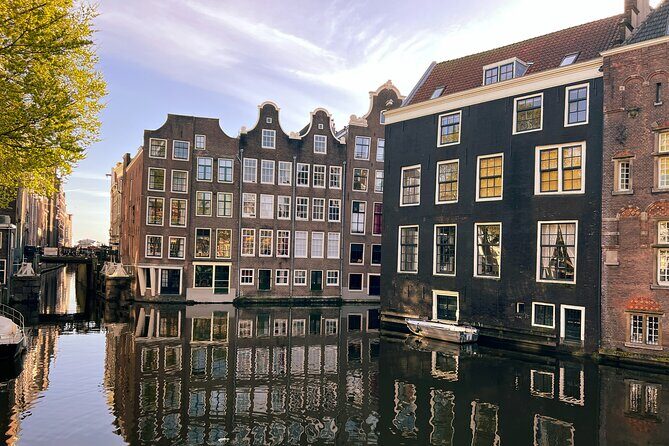
Stop 1 is the Weeping Tower, one of Amsterdam’s rare remnants from the Middle Ages. Even if you’ve seen Amsterdam’s postcard canals, this stop helps you remember a simple truth: this city didn’t begin as a Golden Age postcard. It began as a place that had to protect people and manage water.
Here, your guide introduces the origins of Amsterdam and sets up how you should “read” what you see next. You’ll learn what a watchtower meant in a city where flooding and defense both shaped daily life. It’s the first puzzle piece, and it matters because it changes how you interpret later stops.
The time at this stop is short, around 5 minutes, but the goal is orientation—not lingering. If you prefer slow viewing, this is one place where it helps to speak up early so your guide knows you want extra time.
Zeedijk and Het Waag: Dikes, Locks, and a Gate That Meant Business
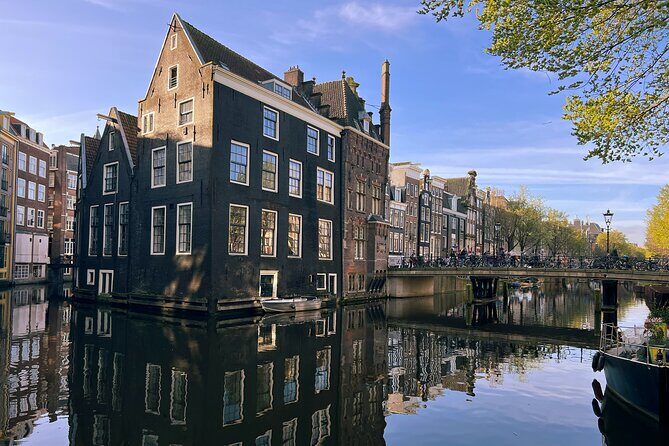
Next you head to Zeedijk, one of Amsterdam’s oldest streets. The cool twist here is that it wasn’t just a street. It functioned as a dike with locks, helping protect the city from flooding. That’s a big deal in Amsterdam, and it’s easy to forget if you only think about canals as scenery.
You’ll start connecting the dots between water control and where people built, traded, and moved around. This stop is quick, but the explanation gives you a new lens for the rest of the walk.
Then comes The Waag, a medieval city gate tied to the defensive wall and mote system. City gates aren’t just history props; they explain how cities controlled entry, movement, and commerce. Amsterdam’s trading identity didn’t appear out of nowhere. It grew in a world where control mattered.
If you like architecture and urban design, these two stops together are worth the walk time. You go from water defense to movement control, then you’re ready for the economic story that follows.
Oostindisch Huis: The Dutch East India Company and the Birth of Modern Business
Stop 4 is Oostindisch Huis, linked to the Dutch East India Company, founded in 1602. This is where the tour turns from city-shaping infrastructure to city-making economics.
You’ll learn about the spice trade and how powerful organizations shaped not just products, but systems—how ideas about corporate structure and finance took hold. The tour frames this as a turning point: Amsterdam wasn’t only building canals and walls. It was building networks and incentives that changed the world beyond the Netherlands.
This is also one of those stops where a good guide really earns their pay. The subject can sound distant on paper, but on the street it becomes tangible. You start to see why warehouses and offices mattered—because the city’s money depended on them.
There’s no long museum-style time here. It’s another short stop (~5 minutes), but the explanation is designed to stick. If you want extra context afterward, you’ll likely know what to look up on your own.
You can also read our reviews of more guided tours in Amsterdam




Het Kleinste Huis and Dam Square: Small House, Big Center
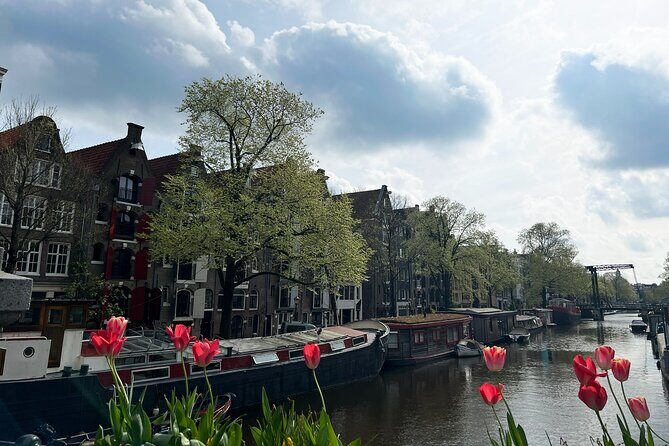
Then you see Het Kleinste Huis van Amsterdam, the smallest house in Amsterdam. On the surface, it’s a quirky photo stop. But the tour places it next to a gate decorated with the city’s crest and symbolic decorations, which turns it from silly to meaningful.
The takeaway is that Amsterdam’s identity shows up in details. Your guide helps you notice how symbolism was used to communicate civic pride and status, even in tight spaces.
From there, you head to Dam Square, the old market square and a central heart of the city. Today it’s tied to the Royal Palace area and the national Second World War monument. That means the square holds layers: commerce, governance, and modern remembrance.
This stop gets about 10 minutes, which is long enough to register what the space does. It’s also a useful moment to re-orient yourself. After the walk moves through smaller historic lanes and merchant-era canals, Dam Square reminds you you’re in a living civic center, not just a canal backdrop.
Canal Ring (Grachtengordel) and Jordaan: Golden Age Wealth to Local Street Life
Stop 7 is the Canal Ring (Grachtengordel), built for wealthy merchants during the Golden Age. This is the part most people come to Amsterdam for, but you’ll get more from it if you understand what the layout was trying to achieve.
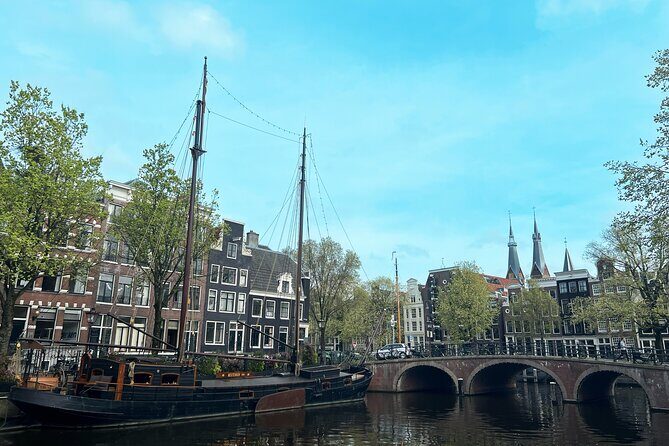
You’ll see some of the finest canal houses in northern baroque style and also a variety of houseboats. The point isn’t only visual. It’s interpretive. You’ll connect how wealth, shipping, and city planning created a district that is still recognizable centuries later.
After that, the tour shifts into the Jordaan neighborhood. This is where you start tasting Amsterdam as a place people actually live in. You’ll hear how Jordaan became known for picturesque streets, traditional brown cafés, and unique boutiques.
This pairing—canal-ring grandeur followed by Jordaan’s human scale—is smart. It keeps the walk from turning into a checklist of famous buildings. Instead, it helps you compare lifestyles across eras and neighborhoods.
Stop time here is about 30 minutes, so it’s enough to let the neighborhood feel like a real place. If you’re hungry for atmosphere, this is where you’ll probably slow down naturally.
Westerkerk Finish: A Locals-Loved Landmark Close to More Exploring
The tour ends at Westerkerk, a Dutch Protestant church known for its stylish design and iconic spire. The spire is the kind of landmark locals use as a mental reference point, and that’s exactly the kind of detail you want when you finish a first walk.
Finishing near Anne Frank House and Westerkerk church also makes practical sense. It’s a transition zone: you can keep exploring right away without backtracking through the city center.
Because this stop is the ending, it often works as a mental reset. You’ve moved from medieval origins to trade power to the canal ring, and you end with a landmark that signals how Amsterdam’s skyline evolved over time.
If you’re planning what to do next, ask your guide (if time allows) for one or two smart follow-ups in the direction you’re heading. A good close turns the tour into a route map for the rest of your days.
Price and Value: What $96.02 Buys You in Amsterdam
At $96.02 per person for about 2 hours, this isn’t the cheapest thing in Amsterdam—but it’s also not the kind of price where you feel like you overpaid for a quick photo loop. You’re paying for a private experience, and private guiding is where Amsterdam tours either get good or get generic.
Here’s what you’re really buying with this price tag:
- A local guide who can answer questions on the spot, not just read a script
- Time on your feet with explanations that connect stops (water control → defense → trade → civic identity)
- English delivery with a pace that can pause when you want, while still finishing the full route
The tour also includes all fees and taxes, which matters in Europe where add-ons can sneak in. And you get a mobile ticket, which keeps the day simple.
One consideration on value: it’s still a walking tour. If you’re slower on your feet, you may feel the time pressure because mobility aids aren’t available. In that case, you might decide the best value comes from a shorter route or a more seated-focused option.
Style of Guiding: Humor, Pace, and Personal Questions
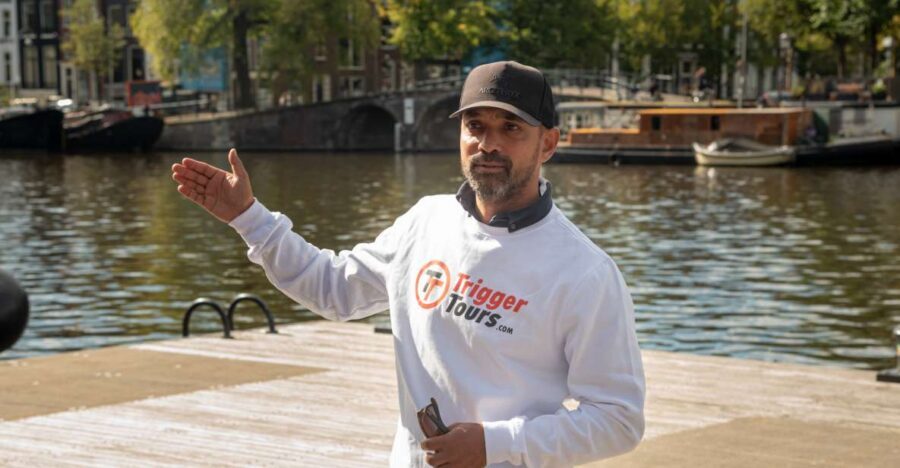
The most praised aspect of this experience is the guiding style—confident, story-driven, and tuned to real people. If your group likes humor, you’ll likely enjoy the guide’s easy delivery. If you have questions about what you’re seeing, the format supports that, with a pacing that can adapt without turning into chaos.
Another standout is personalization. This tour doesn’t just recite dates. It can bring in themes like Jewish history beyond the usual flagship site, which is a helpful way to broaden your Amsterdam understanding without staying stuck on one headline.
You might also get small touches like extra snack stops or a sweet treat along the way. That isn’t listed as a fixed inclusion, so think of it as a possible benefit of a guide who knows how to keep the walk comfortable.
Who Should Book This Private Historical Tour
This works best if you:
- Want an easy first orientation and a better mental map of Amsterdam
- Like history tied to streets, buildings, and the way cities are physically built
- Appreciate a private guide who can adjust to your interests
- Prefer walking but can handle about 2 hours on foot
It’s also a good fit if you’re traveling with service animals. Service animals are allowed, which is always a relief when planning.
If you use a walker or have trouble standing and walking for the full time, this probably won’t be the right match. The tour notes that mobility aids are not available, and it’s not recommended for walkers.
Should You Book This Tour?
Yes, if you want your first day in Amsterdam to feel organized and meaningful. This tour is built around the city’s big story—water and defense, trade and business, then the canal-ring layout and neighborhood life. You’ll come away with a stronger sense of why Amsterdam looks the way it does.
Skip it if you can’t commit to a steady walking pace for roughly two hours, or if you prefer a mostly seated tour format. In that case, you’ll get more comfort from a different style of tour.
FAQ
How long is the Amsterdam historical walking tour?
It runs for about 2 hours (approx.).
Is this a private tour or a group tour?
It’s a private tour/activity. Only your group participates.
What language is the tour offered in?
The tour is offered in English.
How much does it cost?
The price is $96.02 per person.
Where does the tour start and end?
It starts at Café the Schreiertower, Prins Hendrikkade 95, 1012 AE Amsterdam, and ends in the vicinity of Westerkerk at Prinsengracht 279, 1016 DL Amsterdam.
Are admission tickets included?
Admission tickets for the listed stops are marked free, and the tour includes all fees and taxes.
Is a mobile ticket provided?
Yes, you’ll get a mobile ticket.
Are service animals allowed?
Yes, service animals are allowed.
Is it okay if I have mobility limitations?
It is not recommended for participants who have trouble walking and standing for about 2 hours, and mobility aids are not available. It’s also not recommended for participants who use a walker.
Is there free cancellation?
Yes. You can cancel up to 24 hours in advance for a full refund. If you cancel less than 24 hours before the experience starts, the amount you paid is not refunded.