REVIEW · AMSTERDAM
Historical tour of Amsterdam with Italian guide
Book on Viator →Operated by AmsterdamViaggi · Bookable on Viator
Amsterdam makes more sense on foot. This 3.5-hour historical walk is led by an Italian mother-tongue guide and built around plenty of street-level stories and curiosities, the kind that help you connect the dots fast. I especially like the mother-tongue Italian guidance and the way the route mixes big historical themes with everyday places you can still see today.
Two things also really work for first-timers: you get a long list of recognizable neighborhoods and sights (from Dam/Singel to the Jordaan, plus Vondelpark and Museumplein), and the pacing is relaxed enough to take it all in without feeling like a sprint. The main drawback: the tour shows you Anne Frank House and the Van Gogh Museum area from the outside, so if you want to go inside, you will need separate tickets and time.
In This Review
- Key highlights I’d plan around
- A 3.5-hour route that strings the whole city together
- Starting at Park Plaza Victoria and walking the Damrak–Singel backbone
- From the Spice Customs House to the King’s Warehouses: trade and power on display
- Anne Frank House views and the Jordaan approach: what you’ll get (and what you won’t)
- Dam Square, Flower Market, and Leidseplein: breaks that also teach you how Amsterdam lives
- The red light district first look: context without getting lost
- Vondelpark and Museumplein: why ending here is such a smart move
- Is the $28.81 price a good deal for this kind of day?
- Who this historical Amsterdam walk fits best
- Should you book AmsterdamViaggi’s Italian-led history tour?
- FAQ
- How long is the Amsterdam historical tour?
- Where does the tour start?
- Where does the tour end?
- Are museum entrances included?
- Is there a stop at Anne Frank House?
- Is the tour ticket mobile?
- How many people are on the tour at most?
- What happens if the weather is bad?
Key highlights I’d plan around
- Italian mother-tongue guide with lots of facts and on-the-walk curiosities
- A “day as an Amsterdammer” style route through canals, squares, and neighborhoods
- Anne Frank and Jordaan viewpoints without museum entrances on the tour
- Vondelpark and Museumplein finish so you can continue easily afterward
- Small-group feel capped at 50 people with a mobile ticket for entry
A 3.5-hour route that strings the whole city together
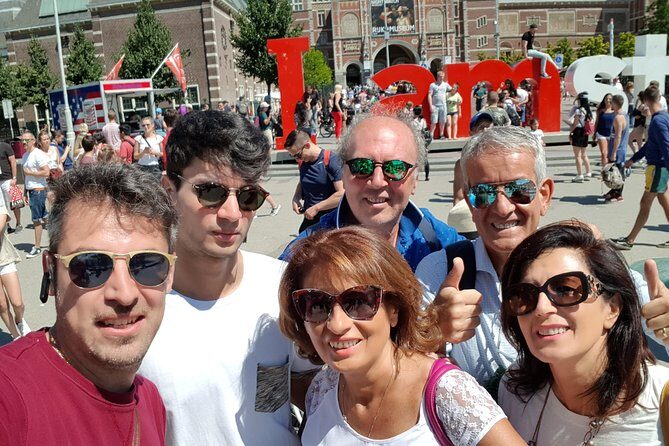
This isn’t a museum-only outing. It’s more like a smart city orientation with historical context, done on foot across central Amsterdam. The big promise is that you’ll learn the city’s customs and traditions while moving through the places that shaped its story—everything from the trade world tied to the Indies to the religious conflict of the Reformation era, and then right up to the personal memories associated with Anne Frank.
That combination matters because Amsterdam can feel like a collection of pretty canals if you only wander randomly. Here, the guide ties streets to themes. You start seeing why certain areas look the way they do, and why particular sites became famous in the first place. If you’re the type who likes to understand what you’re looking at, the payoff is real.
One more reason I like this format: it’s built around “getting bearings” landmarks. You pass through major zones like Dam Square, the Flower Market area, the Leidseplein/University Square area, and Museumplein, so your map in your head gets clearer quickly.
You can also read our reviews of more guided tours in Amsterdam



Starting at Park Plaza Victoria and walking the Damrak–Singel backbone
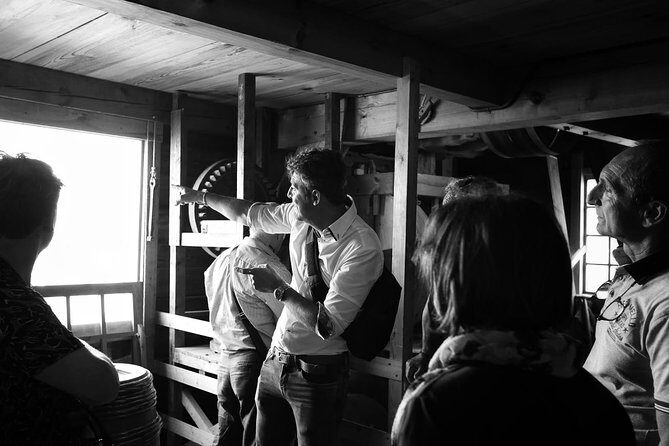
The tour meets at Park Plaza Victoria Amsterdam, Damrak 1-5, and then you head into the center. Damrak is a practical start point: it’s central, easy to reach, and you’re already in the zone where Amsterdam’s main sights cluster.
From there, the route threads through classic layers of the city. You’ll move through Central Amsterdam, then along Singel, with the guide pointing out key details as you go. Singel is one of those names you keep seeing on city walks, and you’ll get a clearer sense of how it fits into the bigger layout.
In practical terms, this route is also efficient. You don’t have to constantly change plans or jump between far-apart neighborhoods by transit. Most of the experience is a steady walking loop that keeps you oriented as you learn.
From the Spice Customs House to the King’s Warehouses: trade and power on display
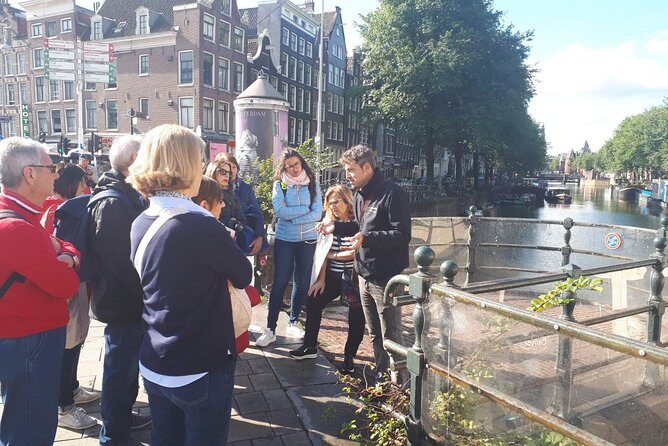
The tour description includes some specific stops or sight points along the route, including the spice customs house and the king’s warehouses. Even if you only get a short look, that’s a big deal on a historical walk. These kinds of locations explain Amsterdam’s old strength: trade, shipping, and the systems that turned goods into wealth.
Your guide is expected to connect that commerce story to bigger historical shifts. The tour frames the city’s evolution through wars of religion and major thinkers like Erasmus and Martin Luther, plus references to Dutch involvement in the Indies trade. The idea isn’t to cram dates into your brain. It’s to give you a reason why certain places matter.
If you care about “why this city is like this,” you’ll enjoy the way the walk keeps returning to themes. You might find that after a few segments, you can predict what the guide will point out next—canals, buildings, squares, and then the human stories behind them.
Anne Frank House views and the Jordaan approach: what you’ll get (and what you won’t)
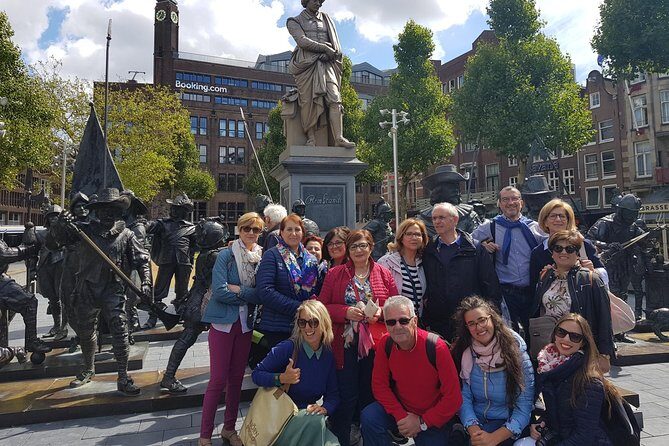
The itinerary includes a passage in front of Anne Frank House, with a short time window to understand its history and importance. This is listed as outside the entrance, and the entrance fee is not included. Translation: you get context and location without going into the house itself.
That is both a blessing and a limitation. It’s a blessing because you can keep moving and still learn the story, even if you do not want (or cannot) tackle timed entry on your first day. It’s a limitation because Anne Frank House is one of those must-visit places where the real experience happens inside.
My practical advice: treat the tour view as the emotional and historical opener, then decide if you want a separate visit. If the house is a top priority for you, plan extra time for it. This walk gives you the framework, but it doesn’t replace the ticketed visit.
From there, you move into the Jordaan area as part of the broader route. The guide’s approach here leans on everyday-city feel rather than isolated facts. You’re walking through the kinds of areas where people actually live, shop, and move around—so the history feels less like a lecture and more like a map you can walk.
Dam Square, Flower Market, and Leidseplein: breaks that also teach you how Amsterdam lives
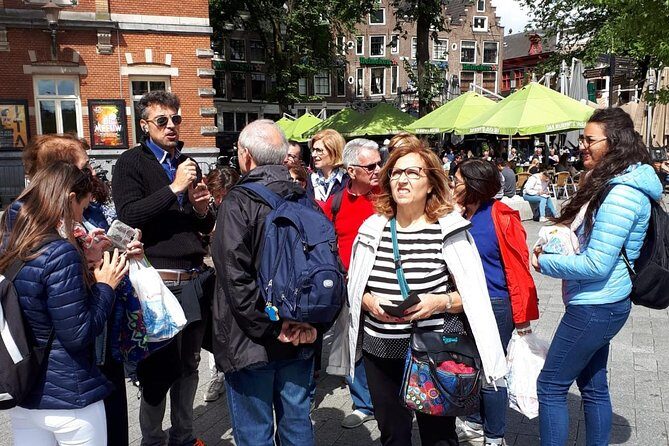
A smart city guide does two things at once: explanation and pacing. Here, you get both.
One listed stop is the Flower Market area with about a 20-minute stop on the way (admission listed as free). Even if you’re not buying anything, you’ll see the city’s signature color and energy. It’s also a useful reset. In a 3.5-hour walking experience, small pauses make the rest of the route more enjoyable.
Next, the route includes Dam Square and then Leidseplein / University Square. These are the kinds of places where the guide’s historical framing can become easier to absorb because you’re standing in the modern “stage” of the city. You can compare what you’re seeing now to the bigger story the guide is telling.
You’ll also pass well-known landmarks like Hard Rock Cafe along the way. That’s not just a photo target. It helps you mentally place where you are as the walk transitions from older center areas toward the greener spaces and then back to the museum quarter.
You can also read our reviews of more historical tours in Amsterdam






The red light district first look: context without getting lost
The route references the first red light area. This section can go two ways on guided walks: either it’s handled with respect and context, or it’s treated like shock value.
On this experience, the overall framing is historical and curiosity-driven. The guide’s role is to connect the visible area to the city’s evolution, not just to point and laugh. Since the tour also covers major religious conflict themes and key historical figures, the red light district segment fits as part of how Amsterdam developed its social and cultural landscape.
Still, I’d be honest with you: it’s a sensitive area, and it’s not for everyone. If you prefer distraction from social topics, you might enjoy that the walk is time-limited and surrounded by other stops (Dam/Singel, Jordaan, Flower Market, and then parks and squares). You’re not stuck there.
Also, because this tour caps at 50 travelers, you’re not navigating a huge crowd. That makes it easier to keep your pace and stay comfortable.
Vondelpark and Museumplein: why ending here is such a smart move
Vondelpark and Museumplein are two reasons I like finishing at this side of Amsterdam instead of going back to the exact same streets.
The route includes Vondelpark, and it’s listed as a short stop (around 5 minutes) while the guide covers points of interest along the way. Think of it as a palate cleanser: parks are how Amsterdam breathes, and a quick look helps you feel the city’s balance between dense history and calmer space.
Then you reach Museumplein, described as the museum square, and the route includes the Van Gogh Museum area with entrance excluded. The practical win is that you’re done walking right where many museum plans are made. The tour ends around 1:30 pm, giving you a straightforward window to continue on your own—especially if you want to focus on Van Gogh Museum or the Rijksmuseum next.
My advice: if museums are a priority, keep your itinerary flexible enough to go straight from the walk into museum time. Finishing here reduces transit friction and helps you keep your day feeling efficient instead of exhausting.
Is the $28.81 price a good deal for this kind of day?
At $28.81 per person for about 3 hours 30 minutes, this tour is priced like a true guided orientation rather than a museum-ticket package. And that matters because museum entrances aren’t included.
So the value question is simple:
- If you want a guided walk that helps you understand Amsterdam quickly, the price looks like a solid deal.
- If your top goal is entering high-demand sites (especially inside Anne Frank House or inside a major museum), you’ll need to budget extra for ticketed entry and plan your own timing.
One more value detail: the tour is offered with a mobile ticket, which cuts down on the need to print or fuss at the meeting point. Also, it runs across the whole week and stays active during the scheduled daily window, with the tour described as happening 10:00 am to 1:30 pm.
Finally, note that it’s typically booked about 21 days in advance on average. If your travel dates are fixed, booking earlier is smart.
Who this historical Amsterdam walk fits best
This experience is ideal if you:
- Want a first-day or early-day overview so you can plan the rest of your trip with confidence
- Like your history told through places and street-level context, not only in classrooms
- Appreciate a guide who shares stories and curiosities, with an Italian-first approach
- Want a balanced route that includes old center landmarks, neighborhood feel (Jordaan), and a park reset (Vondelpark)
It’s also a good choice if you prefer a moderate group size and a focused route rather than a long list of far-flung stops.
It may be less ideal if:
- You strongly want to enter the ticketed attractions included only from the outside
- You dislike walking for several hours in the center, even with short stops
Should you book AmsterdamViaggi’s Italian-led history tour?
I’d book it if you want a guided Amsterdam foundation with Italian mother-tongue storytelling, lots of route-based context, and a finish at Museumplein so your afternoon stays easy. For the price, it’s a practical way to turn wandering into understanding.
I’d think twice only if your priority list is locked on inside visits like Anne Frank House and major museum entrances. In that case, treat this tour as your opener, then add separate ticketed time afterward.
If you’re still deciding, here’s the easiest way to choose: ask yourself whether you want your day to feel like learning the city as you walk. If yes, this is a strong match.
FAQ
How long is the Amsterdam historical tour?
It lasts about 3 hours 30 minutes.
Where does the tour start?
It starts at Park Plaza Victoria Amsterdam, Damrak 1-5, 1012 TM Amsterdam.
Where does the tour end?
It ends at Museumplein, 1071 Amsterdam, around 1:30 pm.
Are museum entrances included?
No. Museum entrance fees are excluded, including visits like Van Gogh Museum and Anne Frank House.
Is there a stop at Anne Frank House?
You pass in front of Anne Frank House and learn about its history, but the entrance is not included.
Is the tour ticket mobile?
Yes, it uses a mobile ticket.
How many people are on the tour at most?
The tour has a maximum of 50 travelers.
What happens if the weather is bad?
The experience requires good weather. If it’s canceled due to poor weather, you’ll be offered a different date or a full refund.