REVIEW · DELFT
Delft – Step/scootertour in and around the city
Book on GetYourGuide →Operated by Do DELFT · Bookable on GetYourGuide
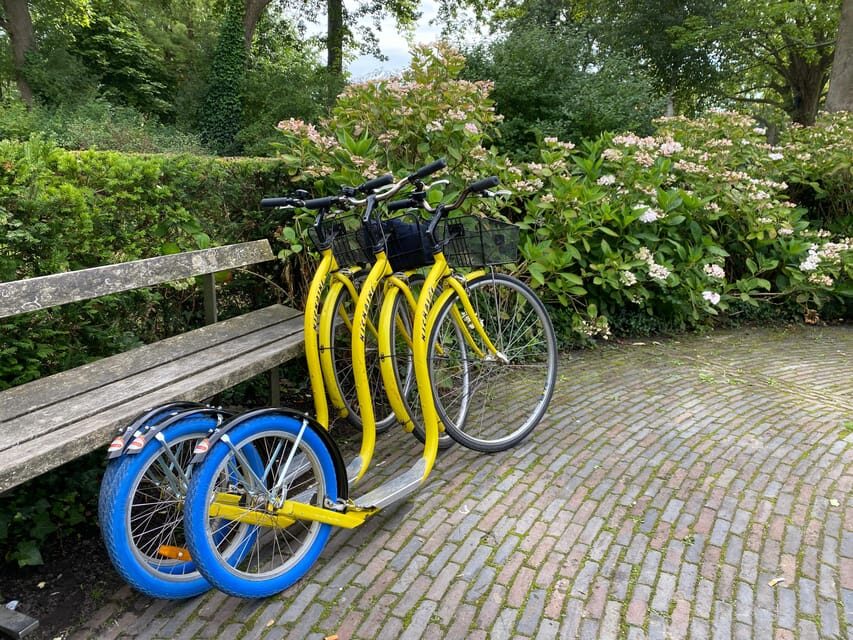
Delft feels quicker on a step. This 1.5-hour tour uses non-electric steps to move you through classic streets and place you close to landmarks most walking routes miss. I love the small-group feel with guides like Frans and Kevin sharing story-packed details, and I love that you roll into real neighborhoods beyond the postcard core. The main catch: you need balance and step-bike confidence, because these aren’t electric and the tour isn’t for people who can’t ride a bike.
For $32, you’re paying for motion plus expert guidance: scooter rental, an English or Dutch live guide, and multiple photo stops that keep the pace fun. It’s also built around short guided segments, so you get context without the usual “stand still and read a plaque” routine.
In This Review
- Key takeaways before you book Delft on steps
- Why a step tour works so well in Delft
- Meeting at restaurant De Delf (Oude Delft 113)
- Modern Delft first: construction, the train under the city, and bold architecture
- Mill de Roos: still in use, and right in your ride line
- Agnetapark: the quiet garden village and the Marken couple stories
- Hofje van Pauw: a calm courtyard pearl from 1707
- Eastern Gate, Delft: a quick stop with big-city framing
- Markt: New Church and the town hall you shouldn’t miss
- Old Church and the leaning tower: the Delft photo moment, done efficiently
- Eastern streets back toward the garage: seeing neighborhoods outside the tourist lane
- Price and value: is $32 worth 1.5 hours on non-electric steps?
- What guides do that makes the tour feel special
- Who this Delft step tour is best for
- Should you book the Delft step/scooter tour?
- FAQ
- How long is the Delft step/scooter tour?
- Where does the tour start?
- How much does it cost?
- What language are the guides?
- Are the steps electric?
- How many people are in the group?
- What stops are included?
- Who should not book this tour?
- Is there free cancellation?
Key takeaways before you book Delft on steps
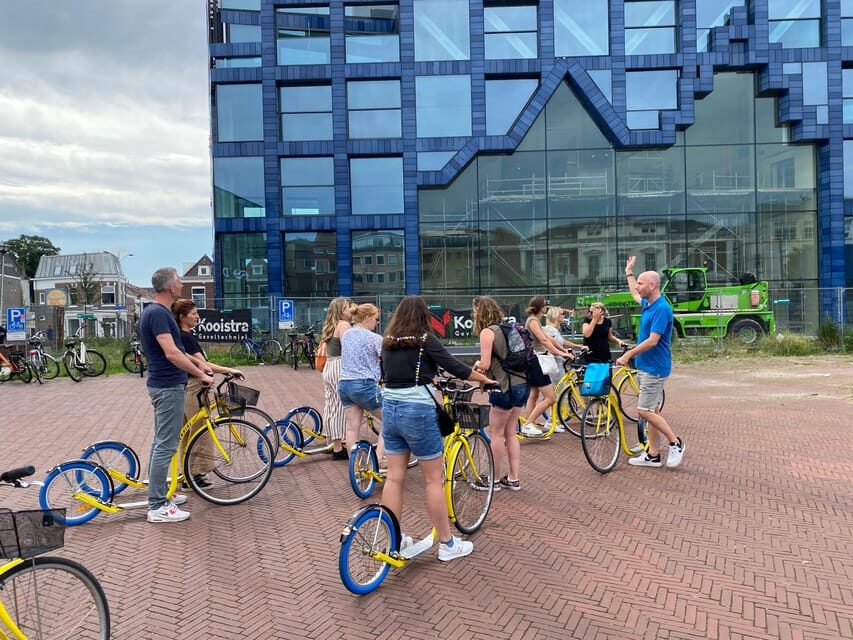
- Non-electric steps mean you’ll actually feel like you’re touring, not just being transported
- Max 10 people keeps the ride personal and question-friendly
- Agnetapark + the Marken story adds human history, not just buildings
- Hofje van Pauw (1707) gives you a calm courtyard break inside the city
- Old Church leaning tower photo stop is the classic Delft moment, reached smoothly
- Market square (New Church + town hall) ties Delft’s center together fast
Why a step tour works so well in Delft
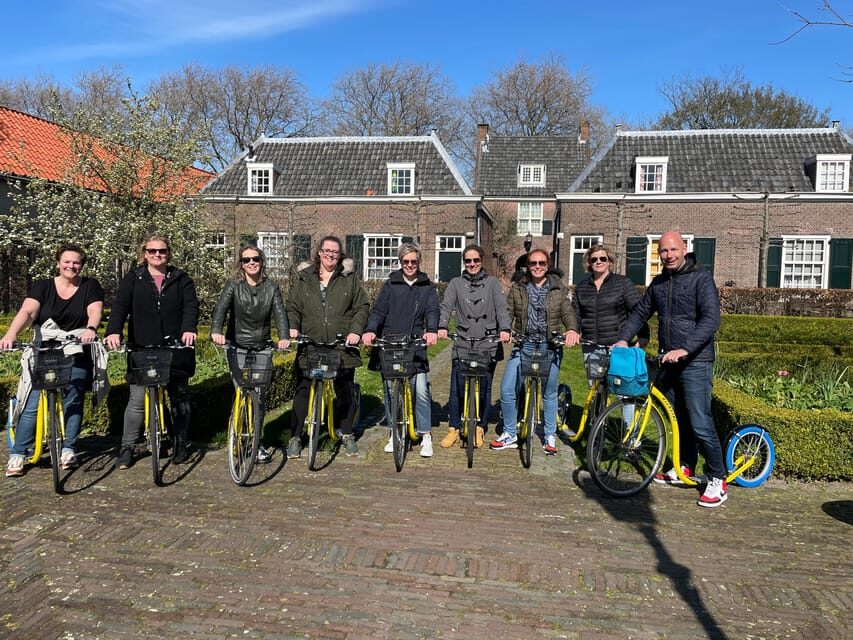
Delft is small enough to explore without rushing, but the streets aren’t always set up for easy, fast sightseeing on foot. A step tour solves that. You cover ground quickly, yet you’re still moving at a human pace, so you notice facades, gates, and corners that you’d otherwise walk past.
What I like is that the route doesn’t treat Delft like a checklist. It uses movement as the storytelling tool. You start in one “world” of the city and gradually shift into others, so the architecture and local life start to make sense as one connected place.
You can also read our reviews of more city tours in Delft
Meeting at restaurant De Delf (Oude Delft 113)
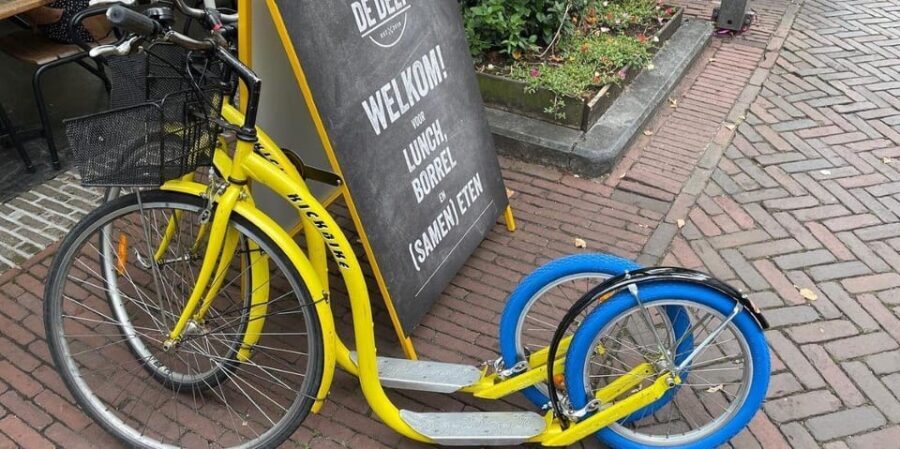
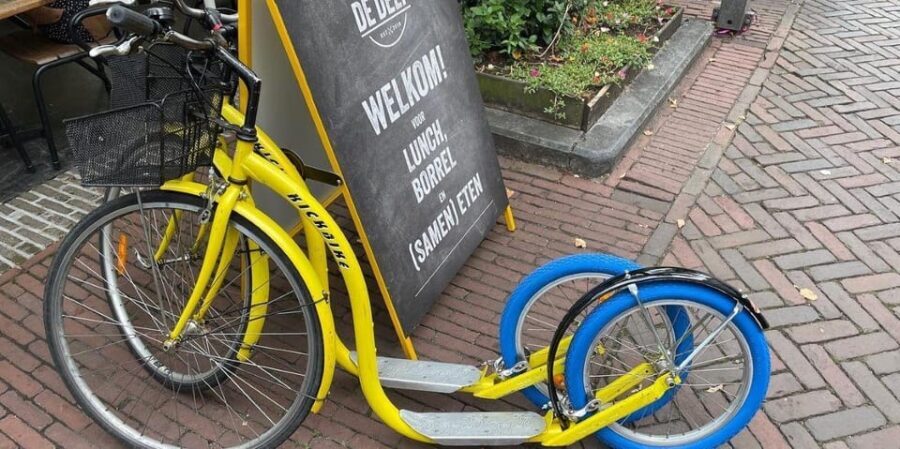
You start at restaurant De Delf, on Oude Delft 113. Plan to arrive a bit early so you can get your step set up and get comfortable before the group rolls out.
Because it’s a non-electric scooter-style step, the first minutes matter. If you’ve never ridden one before, give yourself a short warm-up in the meeting area so you’re not thinking about balance when the guide starts the story.
Modern Delft first: construction, the train under the city, and bold architecture
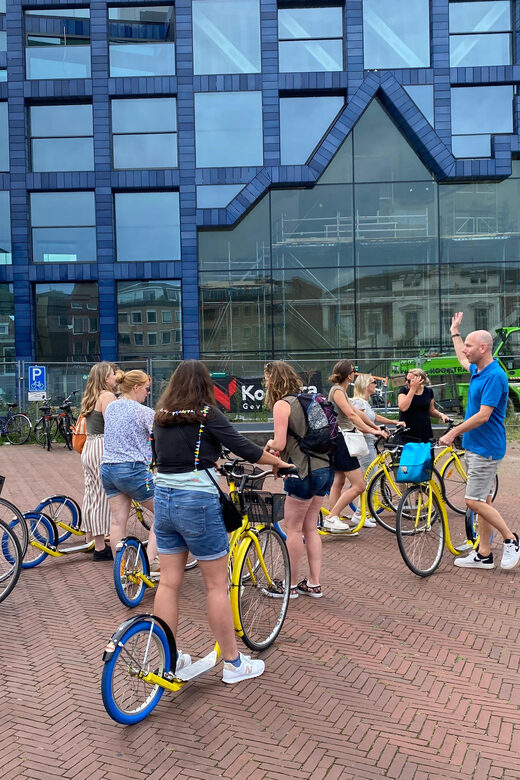
The tour kicks off by leaving the garage area and heading toward the modern part of Delft. The big context here is that the train now runs under the city, which has opened space for construction above. You’ll see how that affects street layout and building design.
Even if you’re mainly in Delft for the old stuff, this opening section is useful. It helps you understand why Delft looks like it does today: the historic core isn’t alone; it sits beside new planning, new architecture, and ongoing change. The ride becomes a lesson in how cities evolve without losing their identity.
One practical note: modern streets can feel a little more open and exposed than the tight canal lanes. If it’s warm or windy, this is where you’ll notice it—so bring sun protection or a light layer.
Mill de Roos: still in use, and right in your ride line
Next comes Mill de Roos. The key detail is that it’s still in use, not just a preserved prop. When something like that stays functional, it changes how you view it. You’re not just photographing a landmark; you’re seeing a piece of Delft’s working infrastructure history.
This stop also fits the step format well. You don’t have to “find time” to get there on a separate walk. The tour naturally connects the mill to the rest of the city, so you keep momentum and still get meaningful context.
If you love sights where the past is active, this is the kind of stop that makes the whole tour feel more real.
Agnetapark: the quiet garden village and the Marken couple stories
Agnetapark is where the tour slows down in mood. You’re heading into a peaceful neighborhood feel, with garden-village surroundings that contrast nicely with Delft’s busier center.
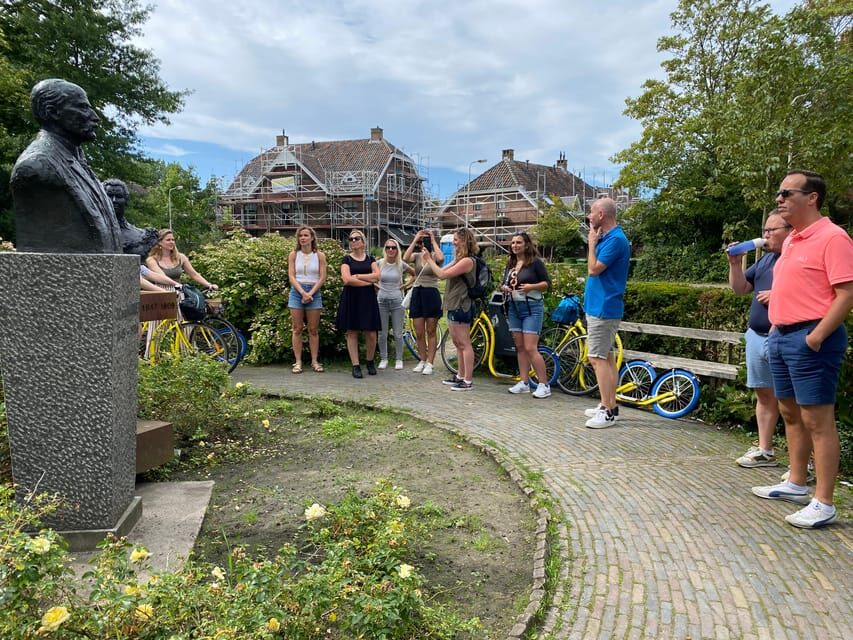
This is also the storytelling highlight. You’ll hear the stories tied to the Marken couple—named as Jacques van Marken—plus the idea that they were way ahead of their time. The guide’s job here is to translate people and decisions into place, so you can look at the buildings and courtyards and understand why they exist.
I like this stop because it’s not “another photo spot.” It’s a chance to see how Delft cared for social life and community spaces, then connect that to what you’ll see later at the courtyards and historic center.



Hofje van Pauw: a calm courtyard pearl from 1707
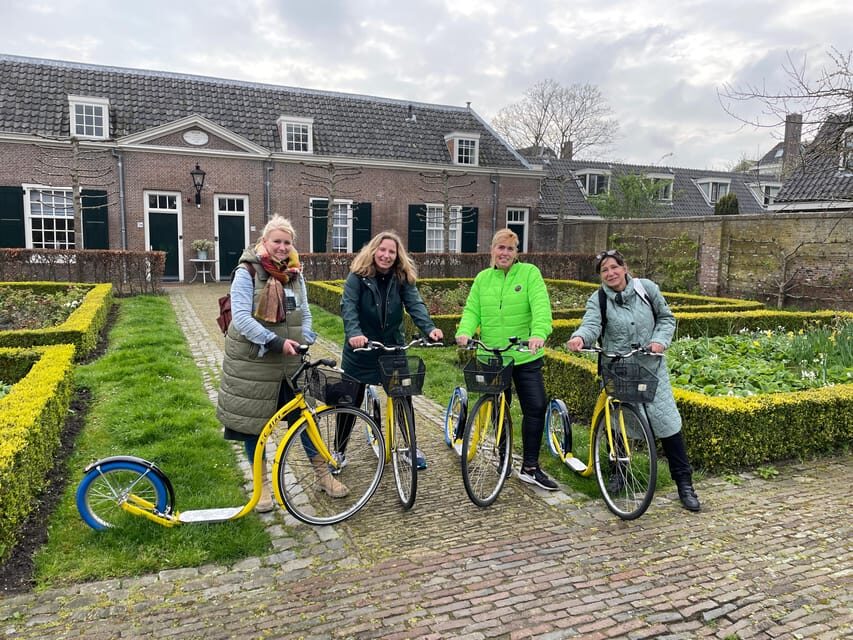
Then you reach Hofje van Pauw. If you want the Delft feeling at its most intimate, this is the place. Hofjes are courtyard homes, and Hofje van Pauw stands out for being founded back in 1707. You’ll get a guided look at why the place was created and what it represents in Delft’s social past.
The guide will also explain the founder, including the story of the lady who started this courtyard. That biography angle matters. Courtyards can look similar on a map, but a real story gives Hofje van Pauw its own personality.
The drawback to know: this kind of courtyard stop can involve waiting for your turn at viewpoints. If your step-riding skills are still a little shaky, you might want to slow your pace and follow the group closely so you don’t feel rushed here.
Eastern Gate, Delft: a quick stop with big-city framing
You’ll also stop at the Eastern Gate, Delft for photos and a short guided segment. Gates are like the city’s punctuation marks—they tell you where entry used to happen and how the city felt to move through.
This is a smaller moment compared with the big squares and churches, but it helps you read the city layout. You start to notice how Delft’s historic roads channel you toward the center, then spill back out into other neighborhoods.
Markt: New Church and the town hall you shouldn’t miss
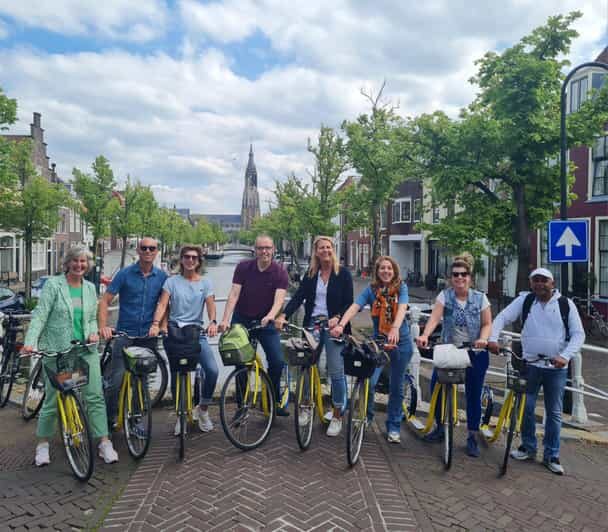
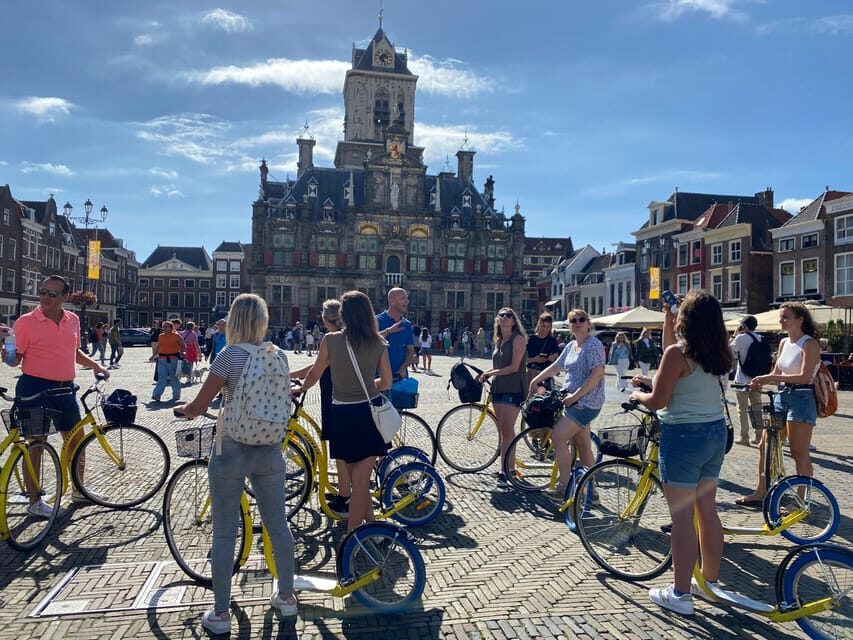
No Delft visit feels complete without the Markt—the main square—and this tour treats it as a must. The guide brings you through the Markt area with the New Church and the town hall in view, and the timing is good because you’re not stuck there too long.
What’s valuable here is the connection. The guide frames the square so it feels like a living center, not just architecture. You also get a smooth “anchor point” for the rest of the route: once you know where you are in the Markt, the older streets you ride next feel more navigable.
In warm weather, the Markt can be sunny. It’s a good area to pause and take photos, but keep an eye on how long you’re outside if the day is hot.
Old Church and the leaning tower: the Delft photo moment, done efficiently
The Old Church stop is built around one famous feature: the leaning tower. You’ll get a photo stop plus guided explanation, and because you arrive on a step, you don’t feel like you’re spending half your time commuting.
This is one of those Delft moments where even if you’ve seen pictures before, you sense the real scale when you’re standing close. The leaning effect looks different from different angles, so it helps that the guide times the photo moment and points you toward the most effective viewpoint.
The practical upside: the ride gets you there without draining energy, so the photo moment feels like a payoff instead of another slog.
Eastern streets back toward the garage: seeing neighborhoods outside the tourist lane
One of the smartest parts of the route is how it returns through the old streets. After the major stops, you go back toward the garage via the Markt and quieter lanes, which is where Delft starts to feel less staged.
This is the segment where you’ll notice everyday city details: how the streets narrow, how local life sits behind facades, and how the city changes block to block. If you’re the type who likes cities best when they feel lived-in, you’ll probably enjoy this more than you expect.
Also, it’s a good time to ask questions. Short pauses and steady movement make it easier to get a helpful answer instead of a rushed lecture.
Price and value: is $32 worth 1.5 hours on non-electric steps?
At $32 per person for 1.5 hours, you’re buying three things: the step rental, a live guide (English or Dutch), and an efficient route linking several key areas. You’re not paying just for sights—you’re paying for access to stories in the right order, plus the energy-saving benefit of rolling between stops.
The small-group limit (up to 10) also matters for value. Smaller groups mean the guide can keep the pace interactive instead of turning it into a one-way talk. That’s where the tour feels fun rather than mechanical.
You should know the pacing can feel warm at times—one review note mentions it was warm—because you’re moving continuously. If you’re sensitive to heat, plan the tour in cooler part of the day when possible.
What guides do that makes the tour feel special
This kind of tour lives or dies by the guide. Names like Frans and Kevin show up in the experiences shared, and the consistent theme is enthusiasm and story focus.
In particular, I like that the guides leave space for questions. The ride format makes that easier than with a long walking tour. Some guides also adapt on the way back—one experience includes the idea of suggestions for where to eat and a drink at the end, so the tour can wrap with a ready-to-go plan for your evening.
Even without that extra touch, the guided context is the main reason to choose this over renting a step and going solo.
Who this Delft step tour is best for
This is a fun fit if you:
- can comfortably ride a step or bicycle-like transport
- want an active city tour that doesn’t require lots of walking
- prefer neighborhoods and stories, not just the postcard landmarks
- like short guided segments with photo stops
It’s not a fit if you:
- can’t ride a bike
- need wheelchair access
- are visually impaired
- are traveling with children under 16
If you’re traveling as a pair, group of friends, or even a solo traveler who likes meeting people, the small-group size can feel friendly without becoming crowded.
Should you book the Delft step/scooter tour?
Book it if you want a smart, efficient way to see Delft’s highlights while also getting into the quieter corners. The combination of Agnetapark, Hofje van Pauw, Markt, and the Old Church leaning tower works well as a single flow, and the step format keeps it lively for 1.5 hours.
Skip it if balance and bike-like movement aren’t your strength. This is a hands-on riding tour, not a sit-and-watch bus ride. If you can handle the step confidently, you’ll likely feel like you learned Delft faster than you expected—without losing the charm that makes the city worth slowing down for.
FAQ
How long is the Delft step/scooter tour?
The tour lasts 1.5 hours.
Where does the tour start?
The meeting point is restaurant De Delf, on Oude Delft 113.
How much does it cost?
It costs $32 per person.
What language are the guides?
The tour is guided in English and Dutch.
Are the steps electric?
No. The steps are non electric.
How many people are in the group?
The group is small, limited to 10 participants.
What stops are included?
You’ll have stops for photo stops and guided segments including Agnetapark, Hofje van Pauw, Mill de Roos, Eastern Gate, Markt, and the Old Church.
Who should not book this tour?
It’s not suitable for children under 16, people who can’t ride a bike, wheelchair users, or visually impaired people.
Is there free cancellation?
Yes. You can cancel up to 24 hours in advance for a full refund.