REVIEW · DELFT
Delft: Canal House Museum ‘Paul Tetar van Elven’ Ticket
Book on GetYourGuide →Operated by Stichting Museum Paul Tetar van Elven · Bookable on GetYourGuide
Delft’s quiet canal-house museum feels surprisingly alive. In the center of Delft, on the Koornmarkt, Paul Tetar van Elven’s former home turns collecting into a walk-through story. I love the lavish rooms that make the house feel inhabited, and you’ll love the painted Salon ceiling that lists the old masters he admired.
This is also a practical kind of museum visit: you can follow the thread from studio work to books to the pottery and porcelain cabinets without needing a big background in art. One thing to consider: if you’re hoping for an all-day blockbuster program, this is a focused artist-house experience, and the ticket covers entry only.
Plan on a calm, detail-friendly visit (the house dates back to the 1500s, with major updates later), and pair it with other things in central Delft. The on-site host/greeter works in English or Dutch, so you can get help finding the interesting bits fast.
In This Review
- Key highlights you won’t want to miss
- Finding Paul Tetar van Elven’s house on Delft’s Koornmarkt
- From the Great Fire to a preserved 19th-century artist home
- Touring the rooms: how the house makes art feel personal
- The Salon ceiling with Abraham Gips: old masters, painted into the room
- Studio and library: what Tetar likely did with his days
- Antiques drawer-maker energy: how the collections are arranged
- Delft blue and Far East porcelain cabinets: the collector’s eye at work
- Price and value: is $14 worth it?
- Time planning: how to fit this into your Delft day
- Who should book this museum?
- Should you book? My honest take
- FAQ
- Where is the Museum Paul Tetar van Elven located?
- Who was Paul Tetar van Elven?
- What will I see inside the museum?
- Is the ticket only for entry?
- How long is the visit valid?
- Are food and drinks included?
- FAQ
- What languages are available for the host or greeter?
- Can I cancel for a refund?
Key highlights you won’t want to miss
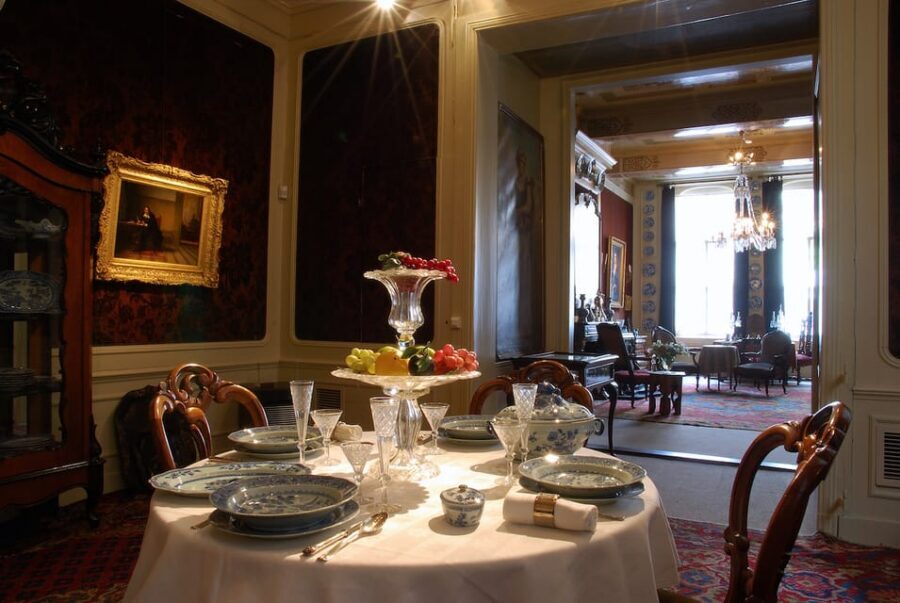
- A rare, authentic 19th-century artist house in the Netherlands, left exactly as its owner intended
- The Koornmarkt canal-house setting right in the center of Delft, made for slow strolling
- The Salon ceiling painted by Abraham Gips with names of old masters like Raphaël, Rubens, and Rembrandt
- A studio that reflects personal working life, not just a staged exhibit
- A library with antique books that explains what kind of mind did the collecting
- Delft blue and Far East porcelain cabinets that show Tetar’s wide collecting taste
Finding Paul Tetar van Elven’s house on Delft’s Koornmarkt
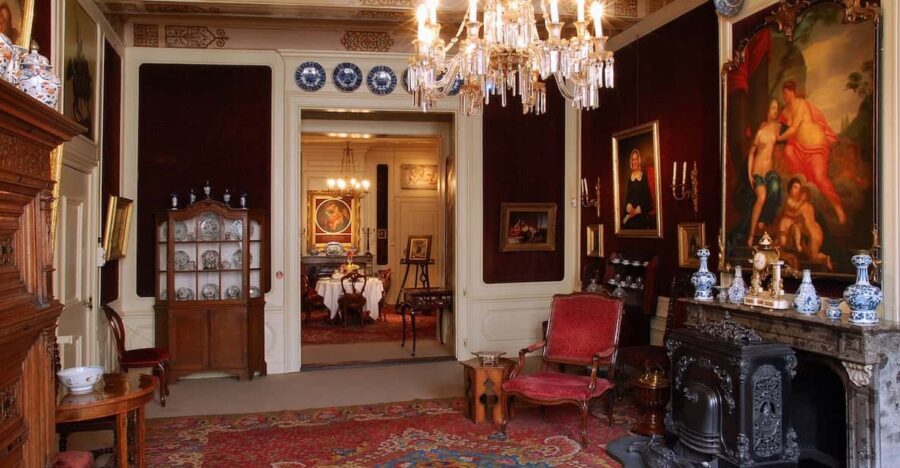
If Delft is on your list, you probably already plan to wander canals and admire gabled buildings. This museum fits right into that mood, because Paul Tetar van Elven’s house is not outside the city life—it’s in the center, on the Koornmarkt.
What makes the location part of the experience is how the house sits in the canal-house fabric of Delft. You’re not looking at a museum that feels separate from daily streets. Instead, you step off the sidewalk and into a canal house built for wealth and comfort in its day—something you can feel as soon as you’re inside. The museum is housed in a home Paul Tetar van Elven bought in 1864, so the rooms you see are tied directly to his time and his taste.
You’ll also appreciate the practical angle: the museum is small enough that you can realistically pair it with other Delft sights in one day. And since the host/greeter is available in English and Dutch, you’re less likely to feel lost in rooms where the details matter.
You can also read our reviews of more tours and experiences in Delft
From the Great Fire to a preserved 19th-century artist home
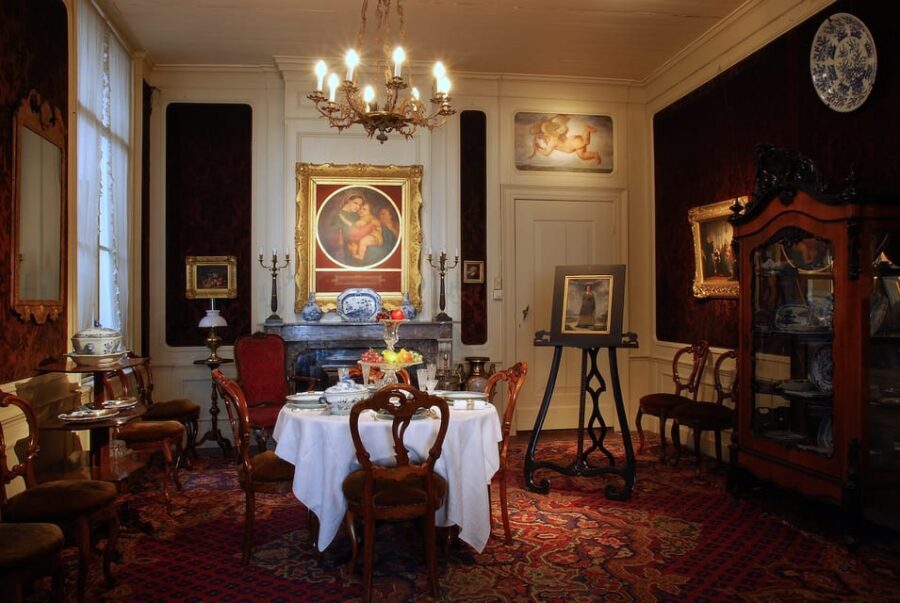
The building itself does some of the storytelling for you, and that’s a big reason this visit feels special. The house originally dates to the 16th century, shortly after the Great Fire of Delft in 1536. After that disaster, certain parts of the city rebuilt quickly, and the Koornmarkt became one of Delft’s wealthiest areas.
Later, the house went through renovations across centuries. There was a new front façade and modernization around 1800, then the Tetar van Elven chapter begins when he purchases the property in 1864. Importantly, he didn’t do further major renovation work himself. Instead, he adapted the interiors to match the fashion of his time.
That detail matters for your visit: the museum isn’t pretending to be something it’s not. The house is described as the only well-preserved, authentic example of a 19th-century artist’s house in the Netherlands, which means you’re walking through a real domestic space where the collections and rooms were meant to stay together.
Touring the rooms: how the house makes art feel personal
Museums can sometimes feel like you’re just passing through labels. Here, the layout works differently. The museum is set up so you move from room to room as if you’re touring an artist’s life, not just scanning artworks.
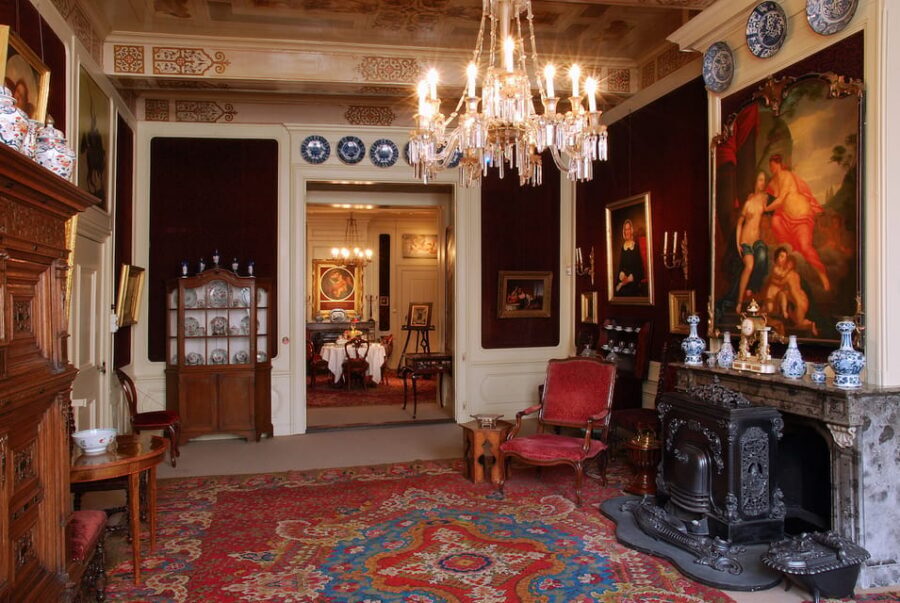
You can expect richly furnished living spaces that give you a strong sense of Tetar and his wife welcoming visitors into a lavish drawing room. The overall vibe is “this is how we lived,” not “this is how we display.” That’s a subtle difference, but it changes your attention. You’ll find yourself looking at the rooms first, then at the objects, then at how the collections connect.
Inside, the highlights are designed to cover more than one side of who Tetar was:
- His visual world through portraits and paintings by himself and his contemporaries
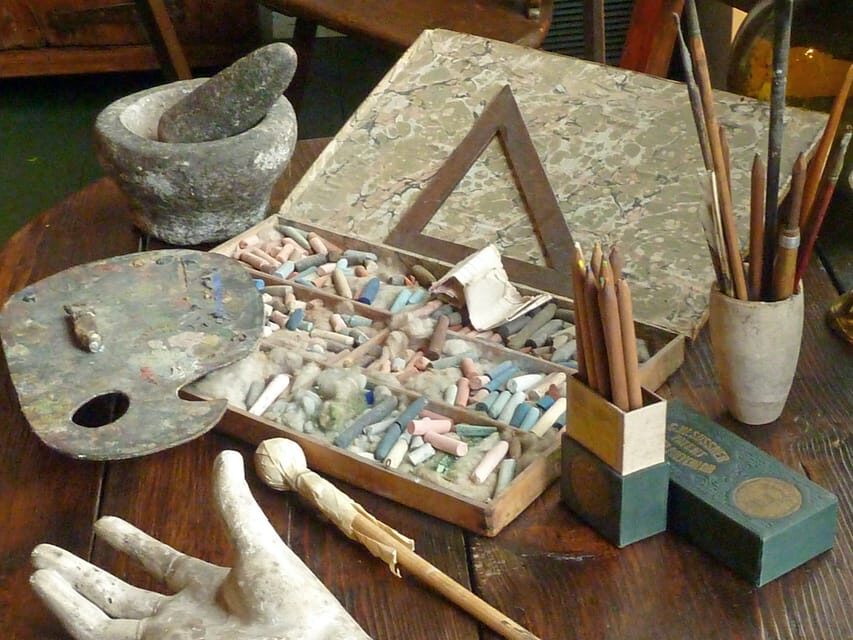
- His working world through a studio with personal possessions
- His intellectual world through a library with antique books
- His collector world through cabinets of Delft blue pottery and porcelain, including pieces tied to the Far East
So even if you’re not a deep art specialist, you’ll still get a clear sense of what drew him in and what he wanted to keep close. It’s one of those house-museums where you don’t need to force the connections—they’re built into the route.
The Salon ceiling with Abraham Gips: old masters, painted into the room
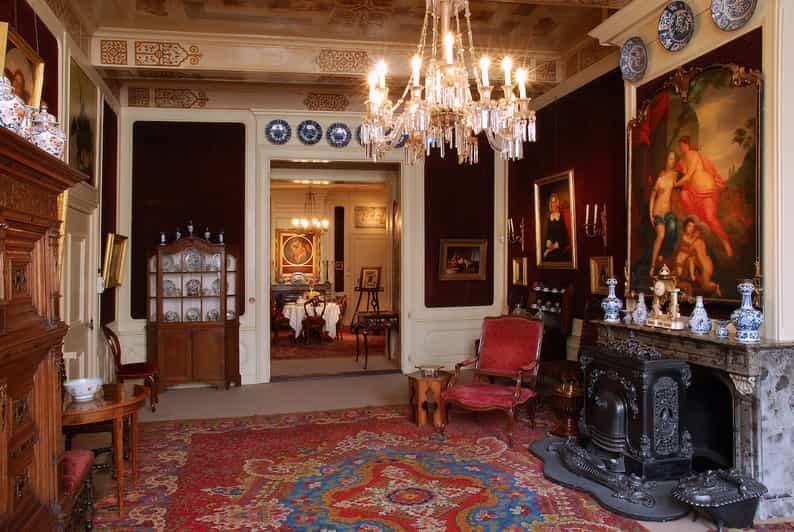
One stop deserves extra attention because it’s both eye-catching and meaning-heavy: the Salon ceiling. Tetar’s most striking addition here was commissioning painter Abraham Gips (1861–1943) to decorate the ceiling with the names of old masters Tetar admired and copied.
Names you can look for include Raphaël, Rubens, Rembrandt, and others. This isn’t just decoration. It’s Tetar’s personal reading list turned into architecture. You’re basically looking up at a summary of his artistic references while you’re in the room.
For you, that changes the whole experience. It’s easy to treat old art influences like museum trivia. Here, it’s physically above you, tied directly to the room where you’d expect discussion, receiving visitors, or showing off what he’d amassed. When you notice the ceiling, you start seeing the museum’s pieces as parts of one system: training, admiration, collecting, and display.
Studio and library: what Tetar likely did with his days
After the living-room wow factor, the museum shifts gears into more focused “how he worked” spaces. The studio is where you can connect the dots between being a drawing-master and being a collector. You see Tetar’s personal possessions in this working area, and that gives the house a quieter, more serious tone.
Then the museum moves into the library, where antique books become part of the show. It’s not just a room full of paper; it’s a statement of how Tetar approached collecting. If he gathered porcelain and Delft blue, he also gathered books. That means his collecting wasn’t random shopping. It was tied to curiosity, reference, and study.
A practical tip: in a house museum, you’ll enjoy it most if you slow down in the quieter rooms. The studio and library are where you can actually absorb the idea that Tetar lived with his interests, surrounded by them. That’s also where the visit feels most “authentic,” not because the objects are famous, but because they’re placed in the right context: a home created for living with art.
You can also read our reviews of more museum experiences in Delft

Antiques drawer-maker energy: how the collections are arranged
Paul Tetar van Elven wasn’t only an artist. He was also a drawing-master at the Polytechnic School, which is now part of the Technical University of Delft, and he was a collector of art, antiques, and ceramics.
That mix shows up in the museum’s approach to display. Instead of separating ceramics as a side interest, the museum treats pottery and porcelain as a major part of his world. You’ll see cabinets with an extensive collection of pottery and porcelain, including Delft blue and pieces connected to the Far East.
This is where the museum becomes more than just a pretty house. You can start noticing how a 19th-century collector might think: Delft craftsmanship on one side, the global reach of porcelain on the other, all inside a home where art and study overlap.
If you enjoy objects with a story—materials, trade connections, decorative styles—this part of the visit will land. If ceramics aren’t your thing, you may still find value, because the display helps you understand why Tetar collected what he did. It’s part of the full portrait of the man, not a side room.
Delft blue and Far East porcelain cabinets: the collector’s eye at work
The cabinets with Delft blue pottery and porcelain are one of the strongest reasons to buy this ticket. Delft blue is familiar enough that even non-specialists recognize what makes it Delft. But what makes this museum more interesting is the inclusion of porcelain tied to the Far East—showing Tetar’s collecting range beyond one local style.
For you, the key is how to look. Don’t just glance for color. Look for patterns, repeating motifs, and how the pieces sit in their cabinets. The museum is arranged so the ceramic collection feels like a deliberate choice, not a pile of assorted finds.
Also, remember that Tetar was both an artist and a teacher. His training likely made him notice craftsmanship. His collecting likely made him chase variety and quality. In this setting, you get both angles at once: the artist’s attention to detail and the collector’s eye for cultural reach.
Price and value: is $14 worth it?
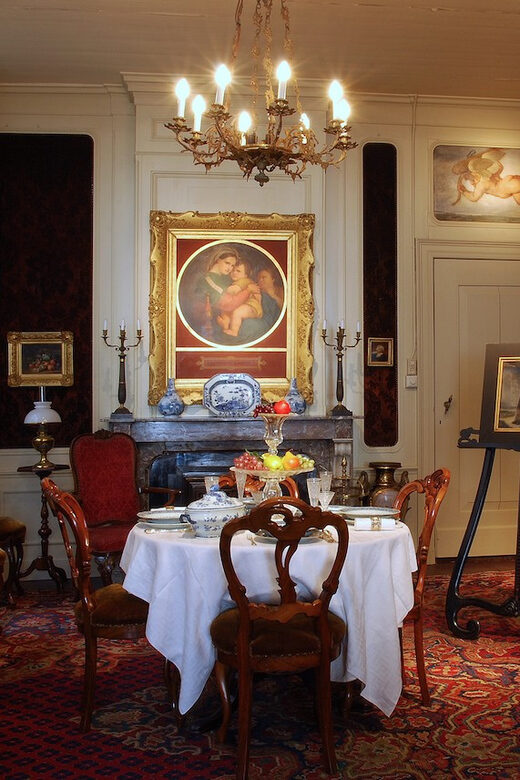
The ticket price is $14 per person, and for a house museum, that’s a fair deal—especially because you’re not paying for one category of things. You’re paying for a whole 19th-century artist’s home concept: rooms, paintings, a studio with personal possessions, an antique-book library, and cabinets of Delft blue and porcelain.
It’s also good value because the museum is tied to a specific person, in a specific building, in a specific time period. Many museums collect objects from everywhere; this one concentrates on one collector’s world. If that appeals to you, the price-to-experience ratio feels right.
One practical note: food and drinks are not included. That’s not a problem, but it does mean you should plan to eat elsewhere—Delft center makes that easy.
Time planning: how to fit this into your Delft day
This experience is listed for a 1-day visit, so you can treat it as a morning stop, an afternoon calm-down, or a change of pace from outdoor sightseeing. The museum’s main strength is that it’s all about going room by room without rushing. That’s why you should give yourself slack time.
If your day is packed with walking and photo stops, this museum is a good counterweight. Indoors, you’ll have fewer distractions and more chances to focus on how Tetar van Elven assembled his life—his art references, his working routine, his book collecting, and his ceramics.
If you’re the type who reads captions only briefly, you’ll still enjoy the big visual moments, especially the Salon ceiling. But if you like details, you’ll likely spend longer because the house invites a slower, more observant pace.
And if you’re booking with flexibility in mind, this ticket comes with free cancellation up to 24 hours in advance, plus a reserve now & pay later option. Those two details make it easier to plan your Delft day without stress.
Who should book this museum?
I’d book this if you like any of the following:
- Artist homes, not just standalone galleries
- Delft blue pottery and porcelain (especially when they connect to broader collecting habits)
- A museum where the building matters as much as the objects
- A quieter, detail-first visit in the middle of a walkable city center
You might skip it if you’re only interested in huge, modern, high-volume museum experiences. This is smaller and more focused. It rewards patience.
Should you book? My honest take
If you want a Delft stop that feels authentic and personal—more like stepping into an artist’s life than checking off a major museum—this ticket is a solid choice. For $14, you get a preserved house, a standout painted ceiling by Abraham Gips, and several collections tied together by one collector’s world: drawings, books, studio items, and porcelain cabinets.
Book it if you’ll enjoy indoor detail and you like learning through rooms and objects. Skip it only if you’re chasing big-city spectacle. Otherwise, this is the kind of Delft experience you’ll remember because it feels specific, not generic.
FAQ
Where is the Museum Paul Tetar van Elven located?
It’s in the center of Delft, on the Koornmarkt, in South Holland, Netherlands.
Who was Paul Tetar van Elven?
Paul Tetar van Elven (1823–1896) was an artist, a drawing-master at the Polytechnic School (now the Technical University of Delft), and a collector of art, antiques, Delft blue pottery, and porcelain from the Far East.
What will I see inside the museum?
You’ll see Tetar’s preserved canal house, lavishly furnished rooms, portraits and paintings by him and his contemporaries, the studio with his personal possessions, a library with antique books, and cabinets with Delft blue pottery and porcelain.
Is the ticket only for entry?
Yes. The included part of the experience is an entry ticket to the Museum Paul Tetar van Elven.
How long is the visit valid?
The ticket is valid for 1 day. Starting times depend on availability.
Are food and drinks included?
No. Food and drinks are not included.
FAQ
What languages are available for the host or greeter?
The host or greeter is available in English and Dutch.
Can I cancel for a refund?
Yes. You can cancel up to 24 hours in advance for a full refund.