REVIEW · AMSTERDAM
Amsterdam: Private Anne Frank and Jewish Quarter Tour
Book on GetYourGuide →Operated by Trigger Tours · Bookable on GetYourGuide
Two hours, one powerful story. This private walk through the Jewish Quarter connects street scenes to the life and writing of Anne Frank, from her German beginnings to the years of hiding and the diary’s road to worldwide attention. I also like how the guide role-plays the past in a grounded way, so you’re not just looking at plaques.
I love the stop-by-stop pacing and how guides like Aaron and James manage a heavy topic with care, even adding little bursts of humor to keep the tone human. The one catch: Anne Frank House entrance tickets are not included, so you may need a separate plan if you want to go inside after the tour ends.
In This Review
- Key highlights you’ll feel in 2 hours
- Meeting at Hermitage Pier: where the walk starts with meaning
- Nieuwmarkt and Lastage: the neighborhood behind the story
- The Auschwitz Monument and Holocaust Names: why these stops matter
- Portuguese Synagogue and Zuiderkerk: faith, architecture, and everyday coexistence
- Museums and dockside reminders: Joods Historisch Museum and The Dokwerker
- Ending at the Anne Frank House: plan for tickets and what you do next
- Price and value: is $25 a good deal for this experience?
- Who should book (and who should think twice)
- Should you book this tour?
- FAQ
- How long is the Amsterdam Private Anne Frank and Jewish Quarter Tour?
- Where do we meet the guide?
- Is the Anne Frank House entrance ticket included?
- What sights are included during the walk?
- What’s included in the price?
- What languages are available?
- Does the tour offer free cancellation?
- Can I reserve without paying right away?
Key highlights you’ll feel in 2 hours
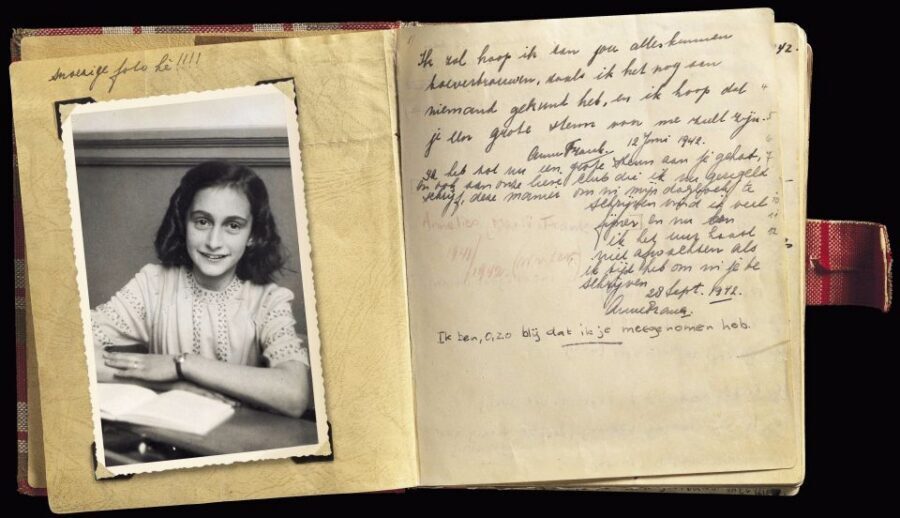
- Anne Frank from hiding to worldwide fame, tied to the streets where her story unfolded
- Jewish Quarter landmarks you’d miss without a local guide mapping the connections
- Memorial stops like the Auschwitz Monument and the National Holocaust Names Monument
- Portuguese Synagogue and Zuiderkerk area context, showing how different faith communities lived side-by-side
- Joods Historisch Museum and dockside reminders that ground the story in daily life and loss
- A private or small-group feel, which makes questions feel normal, not rushed
Meeting at Hermitage Pier: where the walk starts with meaning
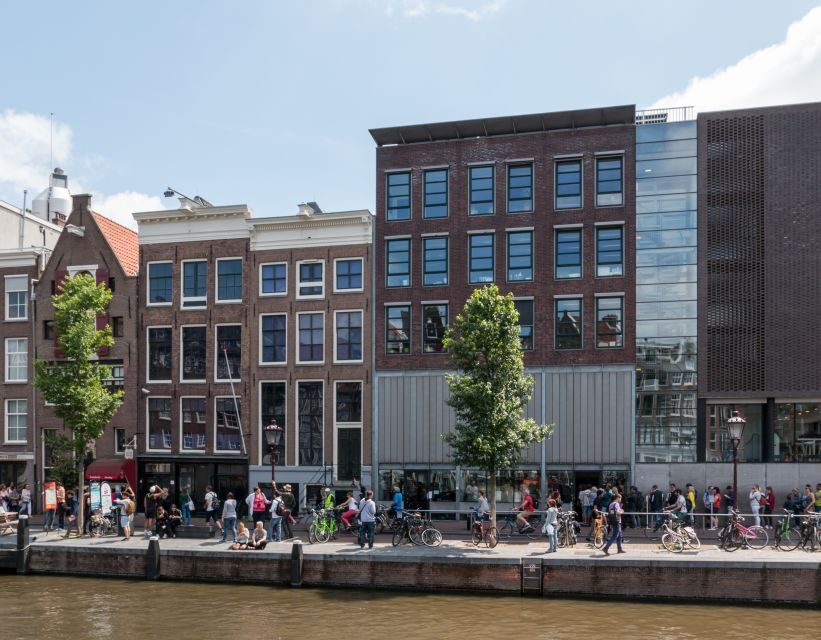
Start at the Hermitage Pier, right in front of the main entrance of the H’ART Museum beside the Amstel River. It’s an easy spot to find, and the riverfront location helps you get oriented fast before you head into the older streets.
This is a 2-hour private walking tour, designed for small groups or private time with your guide. That matters because the subject is personal. You want a guide who can answer your questions without rushing you, and you want time to absorb what you’re seeing.
Your guide will lead in English, Dutch, or Spanish, and the best part is the teaching style. People in the group aren’t just listening; you’re encouraged to connect details as you walk. Guides such as Aaron (often praised for interactive, thought-provoking delivery) and James (praised for sensitivity and care) set the tone early: respectful, clear, and not sensational.
One practical note for planning: this tour ends at the house of Anne Frank, but you’re not automatically getting the entry ticket as part of the tour. If Anne Frank House is the main goal, check your timing and decide whether you’ll book that separately.
You can also read our reviews of more private tours in Amsterdam


Nieuwmarkt and Lastage: the neighborhood behind the story
The first stretch takes you through Nieuwmarkt and Lastage, with a guided introduction that frames what you’re about to see. This is where you start learning the “why” behind the streets: how Amsterdam’s Jewish community took shape, what daily life looked like, and how the area changed over time.
I like that this part isn’t a random warm-up. It helps you understand the logic of the route. Once the guide explains how the neighborhood evolved, the later memorials and landmark buildings stop feeling like isolated stops. They start behaving like one connected timeline.
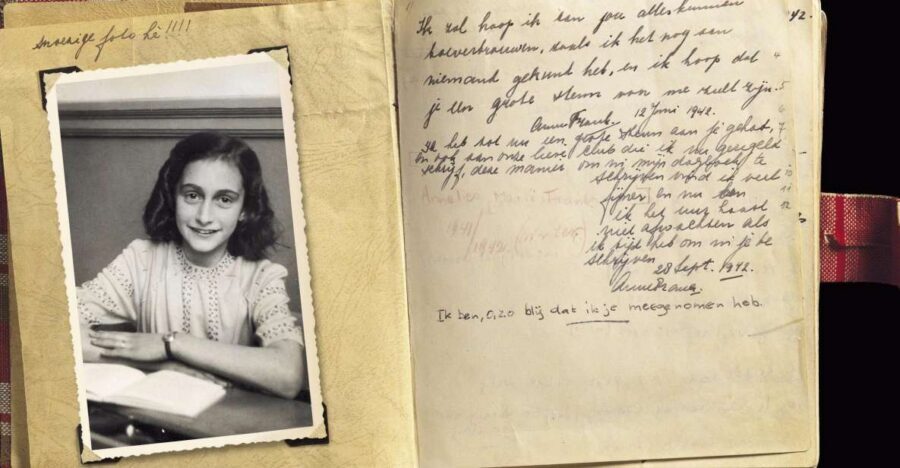
Expect your guide to set up the story of Anne Frank in a way that’s easy to follow, even if you come in with only basic knowledge. You’ll hear about her move from Germany, her family relationships, and how her love of writing mattered—not just as a school assignment, but as a way to make sense of what was happening around her.
This is also where a good guide earns their pay. Aaron and James are repeatedly praised for being able to communicate clearly across nationalities and keep people engaged in a sombre setting. That’s not a small detail; it’s the difference between a tour you survive and a tour you remember.
The Auschwitz Monument and Holocaust Names: why these stops matter
Two of the strongest moments come at memorial sites, including the Auschwitz Monument and the National Holocaust Names Monument. These aren’t quick photo-ops. Your guide will explain what you’re seeing and why it’s placed here, tied directly to the Jewish experience in Amsterdam during WWII.
This part of the walk can feel emotionally intense. That’s normal. What you’re paying for is someone who handles the topic with respect and pace. In the comments, guides are consistently described as compassionate and careful with how they present what happened to Jewish people in Amsterdam and how memorial sites should be understood, not treated like background scenery.
Also, these stops help you avoid a common mistake: learning the Holocaust as a faraway event. When the story lands in specific Amsterdam locations, you start to feel the local reality of persecution, deportation, and loss.
If you’re someone who appreciates historical context, bring a calm mindset for this stretch. If you’re with kids or someone who gets overwhelmed, a private format is a real advantage because your guide can adjust the rhythm. (Some guides on this experience are specifically praised for being receptive to special needs, which is exactly what you want around memorials.)
Portuguese Synagogue and Zuiderkerk: faith, architecture, and everyday coexistence
From the memorial focus, the route shifts into landmark territory. One stop is the Portuguese Synagogue, a key place for understanding the broader Jewish presence in Amsterdam beyond the Anne Frank story. Another is Zuiderkerk, which adds architectural and community context to the surrounding area.
I like how these stops broaden your understanding without losing the thread. The tour isn’t only about the diary. It uses buildings to show the complexity of Jewish life: religious practice, community structures, and how Amsterdam’s neighborhoods connected different groups.
Your guide will likely connect these sites to the time period you’re learning about in the 1930s and 1940s, including how the Jewish quarter evolved. That makes the walking feel more like studying than sightseeing.
And yes, you’ll get the Anne Frank line carried through here too—her family situation, the pressures of the time, and the way writing became both refuge and witness. That combination is powerful: you’re not only standing in front of history; you’re learning how it influenced a real person.
Museums and dockside reminders: Joods Historisch Museum and The Dokwerker
Midway through the walk, you’ll visit the Joods Historisch Museum and also see The Dokwerker. This pairing is a smart move because museums can explain what streets alone can’t. Meanwhile, dockside and public installations like The Dokwerker help you picture the city’s working world, not just the wartime narrative.
Your guide will use these stops to connect Jewish history in Amsterdam to the larger WWII story. The museum stop is where you get more structure: how the community formed, how it lived, and what changed as the war tightened its grip.
One detail I particularly appreciate from the way this experience is described: your guide will point out the idea of hiding as more than a dramatic plot point. You’ll hear about the circumstances Anne faced while in hiding and how her father published the diary after the war, turning a private story into something that gained worldwide attention.
You’ll also hear about hidden places connected to the Dutch resistance, including references to secret hiding places where Anne sought refuge. The point isn’t shock value. The point is understanding how ordinary life in a city could be transformed into a maze of concealment.





Ending at the Anne Frank House: plan for tickets and what you do next
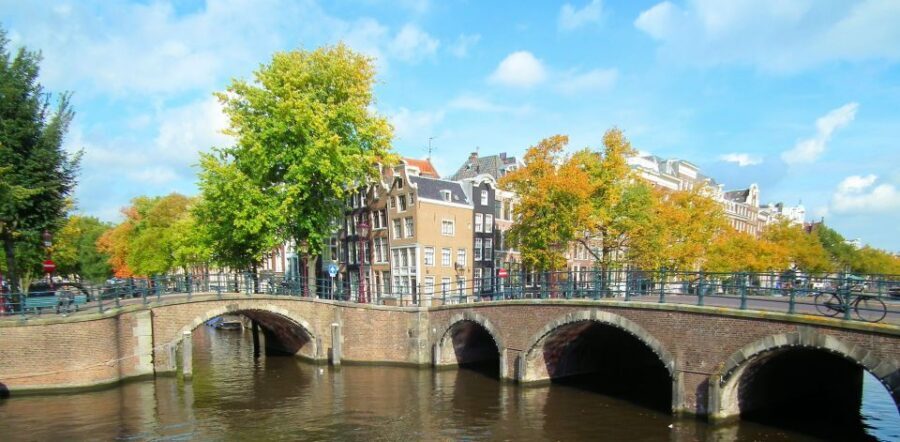
The tour finishes at the house of Anne Frank. That ending makes sense: you walk the neighborhood, learn the context, and then arrive at the specific setting tied to her diary.
But remember the important catch: entrance tickets are not included. So treat this as a “get there ready” moment, not a guaranteed in-door visit. If you want to go inside, consider reserving your Anne Frank House ticket for after the tour (or on another day) so you’re not stuck making last-minute decisions.
This approach can actually be a win. By the time you reach the house, you’re not seeing it as a headline. You understand the family story, the hiding period, and how the diary was later published by her father—details that turn the visit into something more than a checklist.
Also, because the tour is private or small-group, the guide can help you decide how to spend the remaining time. Some guides are known for answering questions and offering suggestions for other museums and activities, which is handy because Amsterdam can feel like it has a thousand directions.
Price and value: is $25 a good deal for this experience?
At $25 per person for a 2-hour private walking tour, the value mostly comes from the human part: a local guide who can connect architecture, memorials, and the Anne Frank story into one coherent route.
You’re also not paying for entrance tickets here. That keeps the cost lower, but it shifts the decision to you for the Anne Frank House entry. In other words: you’re buying context, not admission.
For me, this is worth it if you:
- want a guided route through the Jewish Quarter’s key points, not just a self-guided wander
- appreciate a guide who can handle heavy material with care and still keep the group engaged
- like asking questions on the spot, especially when the subject is complex and personal
It may not be the best fit if you already know the story deeply and only want to do the Anne Frank House interior. In that case, you might prefer a ticket-first plan and do less walking.
Who should book (and who should think twice)
This tour suits you best if you want both place-based learning and a respectful, guided narrative. It’s ideal for couples, friends, and small groups who want a tight timeframe and a route designed for meaning.
It’s also a strong choice if you want clear communication in English, Dutch, or Spanish, and you care about a guide who answers questions patiently. The repeated praise for guides like Aaron and James for being interactive and thoughtful matters here.
Think twice if you:
- get emotionally overwhelmed easily and are unsure you can handle memorial stops
- strongly need the Anne Frank House entry as part of a single ticketed package
Should you book this tour?
Yes, I’d book it if you want the Jewish Quarter to feel understandable, not random. The $25 price buys you a guided route that connects Anne Frank’s story to specific Amsterdam landmarks, plus the memorial context that gives the whole experience weight.
Just plan one thing in advance: decide what you’ll do about Anne Frank House tickets, since they’re not included. If you handle that, you’ll walk away with a clearer timeline, sharper context, and a deeper sense of how a diary began as a private voice inside a city that held both community and danger.
FAQ
How long is the Amsterdam Private Anne Frank and Jewish Quarter Tour?
It lasts 2 hours.
Where do we meet the guide?
Meet at the Hermitage Pier, in front of the main entrance of the H’ART Museum next to the Amstel River.
Is the Anne Frank House entrance ticket included?
No. Entrance tickets to the Anne Frank House are not included.
What sights are included during the walk?
You’ll see stops such as Nieuwmarkt and Lastage, the Auschwitz Monument, the Portuguese Synagogue, Zuiderkerk, the Joods Historisch Museum, The Dokwerker, the National Holocaust Names Monument, and you end at the house of Anne Frank.
What’s included in the price?
The tour includes a local guide and the tour is private (or available as small groups).
What languages are available?
The tour guide can lead in English, Dutch, or Spanish.
Does the tour offer free cancellation?
Yes. You can cancel up to 24 hours in advance for a full refund.
Can I reserve without paying right away?
Yes. There’s a reserve now & pay later option.