REVIEW · AMSTERDAM
Amsterdam: History, Culture & Highlights tour
Book on Viator →Operated by Trigger Tours · Bookable on Viator
Amsterdam is a lot at first. This tour helps it make sense fast.
I like that it’s private and built for a customizable feel, so your guide can steer you toward the parts of the center that fit your questions. You start in the political pulse of town, then move into the canal-ring views most people photograph, and after that you get a calmer, older side of Amsterdam that you often walk past without knowing what you’re seeing.
Two things I really love: first, the way you get your bearings in a short time, not by listing facts, but by connecting places to how the city works. Second, the guides behind it seem to land that balance of story and practical help; names like James and Andrea show up in reviews for making the walk feel easy and useful. One thing to consider: it’s a focused 2-hour orientation on foot, so it won’t replace a full museum day or a long, slow stop inside the palace.
In This Review
- Why this private Amsterdam walking tour is such a good first move
- Damrak meeting point to Dam Square: where Amsterdam’s story turns political
- What to watch for at Dam Square
- Canal ring UNESCO sights: learning to read Amsterdam from the water
- The best way to use this canal stop
- A 14th-century Beguine courtyard: the calm side of Amsterdam’s religious past
- Why this courtyard stop feels different
- Royal Palace: from town hall roots to Dutch classicism you can still visit
- How to turn this into a flexible plan
- Guides make the difference: what the reviews emphasize most
- A realistic expectation for a 2-hour private tour
- Customizable itinerary beyond typical tourist loops
- Price and value: $30.64 for a short, high-impact orientation
- What to do before and after the walk
- Who this tour suits best (and who should pick something else)
- Should you book this Amsterdam history, culture and highlights tour?
- FAQ
- How long is the Amsterdam history, culture and highlights tour?
- Is this tour private?
- Where does the tour start?
- What language is the tour offered in?
- What stops are included in the tour?
- Can I cancel for a full refund?
Why this private Amsterdam walking tour is such a good first move
If Amsterdam is your first stop in the Netherlands, this is a smart way to get oriented. The route is packed with the city’s most recognizable landmarks, but it’s also paced like a conversation. That matters because the center can feel like a puzzle: canals, squares, narrow streets, and lots of history written into the street layout.
The private format is a big part of the value. You’re not waiting for strangers to catch up, and you’re not stuck with a one-size-fits-all script. Your guide can adjust the emphasis—maybe you want more on art and famous figures, or maybe you want the political story behind the squares and civic buildings. Reviews specifically point to guides explaining street after street, and even threading in topics like Rembrandt in a way that feels personal, not textbook.
Damrak meeting point to Dam Square: where Amsterdam’s story turns political
You begin at Damrak 1-5, right in the center of things. That’s helpful because it’s easy to pair the tour with whatever you plan next, and it’s also near public transportation. From there, the walk takes you straight into Dam Square, a place that has mattered for centuries.
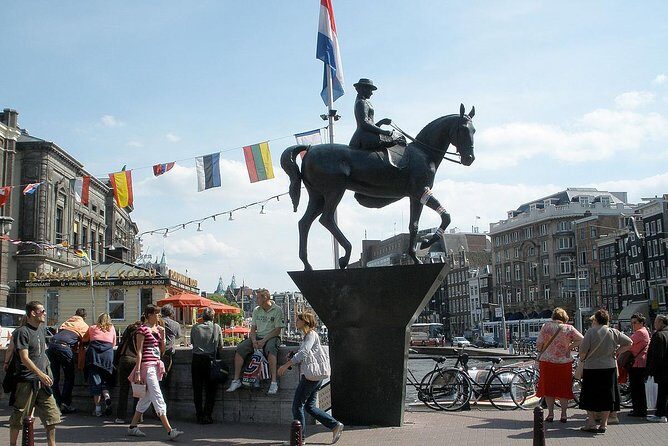
Dam Square is the kind of landmark that’s easy to spot and easy to misunderstand. This stop focuses on why it’s important: it’s been tied to political and cultural life for generations. I like that your guide doesn’t just point at buildings; you get the bigger idea of how public space works in Amsterdam—what the square is for, and how power and culture show up in everyday city life.
You can also read our reviews of more historical tours in Amsterdam



What to watch for at Dam Square
- Look at how the square acts like a hub that pulls different parts of the city together.
- Listen for the cultural-political angle, not only the postcard view.
A possible drawback here is simple: if you want nonstop quiet, a central square won’t give it to you. Dam Square is a working public space, so it has energy.
Canal ring UNESCO sights: learning to read Amsterdam from the water
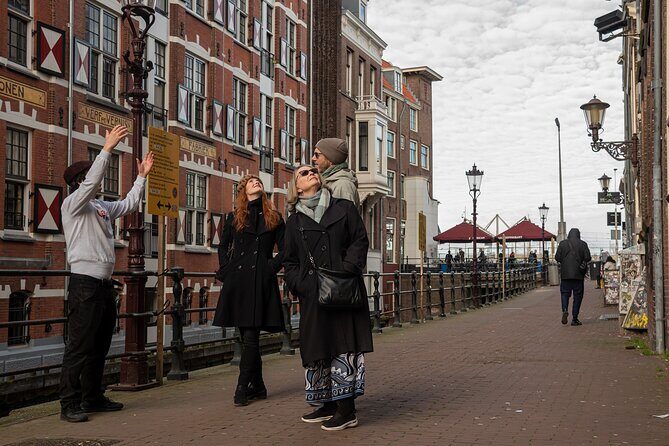
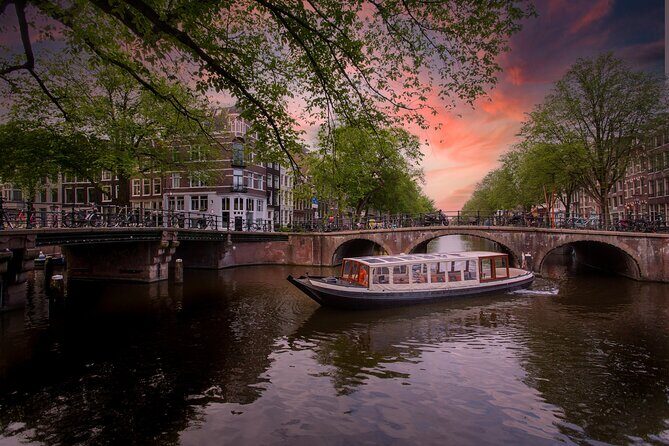
Next comes the canal ring, a UNESCO World Heritage Site and one of the most picturesque parts of Amsterdam. This stop is more than photo ops. Your guide frames the canals as engineering and city planning, not just scenery.
That perspective changes how you see the canal system. Instead of treating it like a decoration, you start to understand it as a practical system that shaped how the city grew. It’s also a shortcut to appreciating why the canal ring is recognized at a global level: it represents innovation in urban planning, plus a deep cultural footprint.
In reviews, people highlight that guides tell stories tied to the streets you walk through, which is exactly what makes canal-ring time work. It helps you connect the view with the city’s logic. You’ll come away with a mental map that’s easier to use later when you’re hunting for neighborhoods on your own.
The best way to use this canal stop
When you hear the canal-ring explanation, treat it like a reading lesson. Notice the way water lines up with streets, and pay attention to how the city’s layout makes navigation feel intuitive later.
A 14th-century Beguine courtyard: the calm side of Amsterdam’s religious past
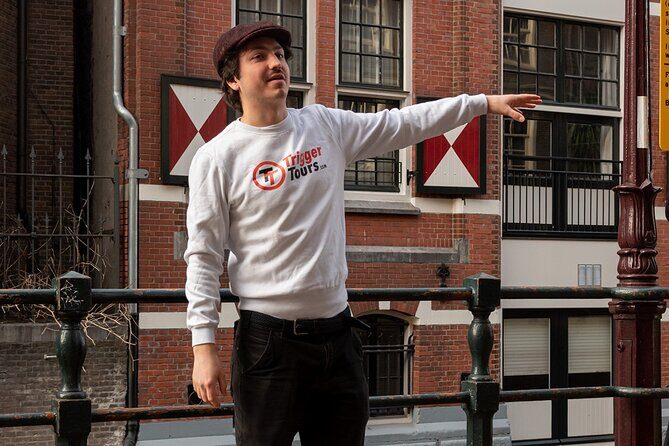
Then the tour shifts from big public landmarks to something older and quieter: a historic courtyard dating back to the 14th century. This part of Amsterdam is among the oldest and best-preserved sections you’ll see on a short walk, and it comes with a specific historical thread—its Beguine community.
The Beguines were religious women who lived in a semi-monastic community. That detail matters. It turns the courtyard from an aesthetic stop into a human story: people lived here, organized daily life with structure, and shaped a local culture that lasted even when broader patterns of religion and society changed.
I like this stop because it adds contrast. You get the grand civic story at Dam Square, the planned city story in the canals, and then you land in a space that feels like Amsterdam’s past had a slower rhythm. It also helps you understand how the city preserves layers: a place can be central to a community centuries ago and still be legible today if you know what you’re looking at.





Why this courtyard stop feels different
- It’s a rare chance to shift your attention from buildings as symbols to spaces as lived-in history.
- It gives context you can take with you when you wander afterward.
One consideration: if you’re expecting a long inside visit, the specifics here are framed as a tour stop experience. You may get more from listening carefully than from spending lots of time in one spot.
Royal Palace: from town hall roots to Dutch classicism you can still visit
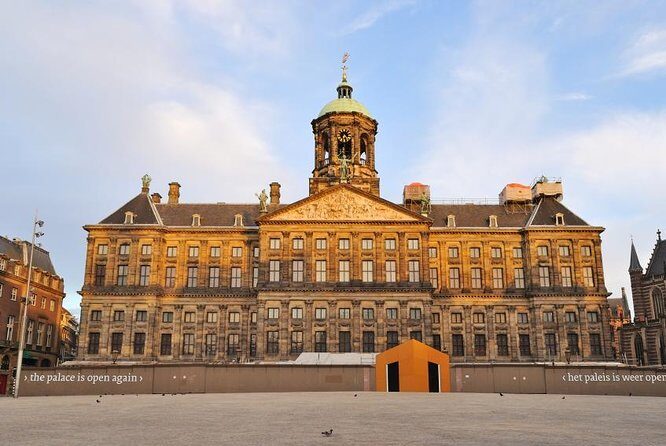
The final major stop is the Royal Palace, originally built as a town hall in the 17th century. Today it’s one of three palaces used by the Dutch royal family, and it’s an impressive example of Dutch classicism. The best part for your planning: it’s open to the public for tours.
That means this walking segment can act like a starter course. You can enjoy the exterior and the historical framing during the tour, then decide later if you want to step inside on your own schedule. If you do, you’ll likely get more out of the palace visit because you’ll already understand what it used to be.
This is also where the “get your bearings” angle pays off. After the earlier stops, you’ll have a clearer sense of where power and heritage sit in the city fabric—how royal representation evolved from civic architecture, and why the area keeps its importance.
How to turn this into a flexible plan
If you’re the kind of traveler who likes to choose based on time, treat the palace as a fork in the road. The walk sets the stage, and you choose how much extra time you want afterward.
Guides make the difference: what the reviews emphasize most
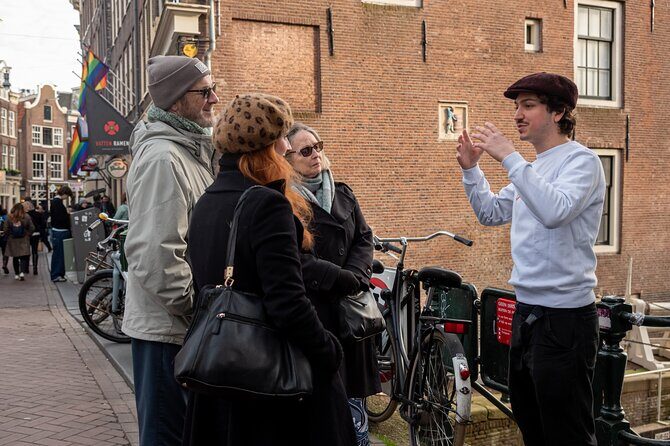
The strongest praise across reviews centers on the guide experience—friendly, story-driven, and practical. People singled out guides including James, Andrea, Arri, and Stan, and the common thread is that the walk didn’t feel like a rushed highlights reel.
What I’d take from that as a practical traveler: the best part of this tour is not just where you go, but how it’s explained. One review talks about Rembrandt specifically, and another highlights getting acquainted with downtown with a strong focus on history. That tells me your time is likely spent on the connections: why one street matters, why a square became a civic stage, and why the canal ring is more than a view.
Also, your itinerary is described as customizable. In plain terms, that means you can steer the conversation if you have priorities. Want more about the city’s timeline? Ask. Curious how to navigate afterward? Guides are used to helping you map your next move.
A realistic expectation for a 2-hour private tour
A private tour should feel efficient. You shouldn’t leave with a giant list of unrelated facts. You should leave with a sense of direction and a few stories that make later wandering more meaningful.
Customizable itinerary beyond typical tourist loops
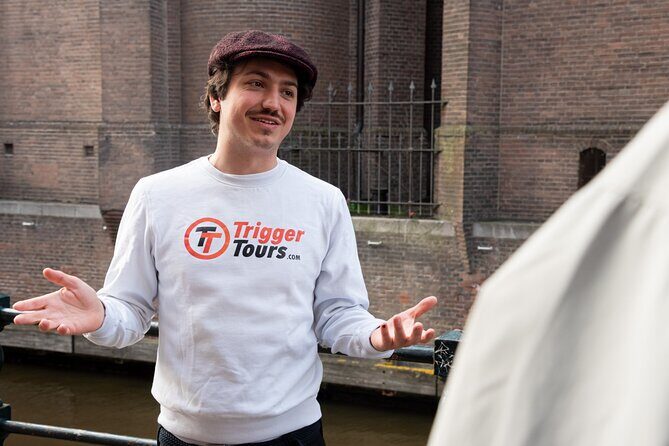
This tour’s positioning is clear: you’ll go beyond the usual tourist areas with your guide’s help. That doesn’t mean you’ll be taken to obscure corners no one knows. It means the emphasis can shift away from the most crowded photo stops into streets and spaces where the city’s character shows through.
That matters in Amsterdam because the “typical tourist area” can still be beautiful, but it doesn’t automatically teach you how neighborhoods differ. When you get a guide who can adjust the route, you spend your limited time smarter. On a first trip, that’s half the battle.
I also like that the tour is presented as a great way to get your bearings. You’re not trying to memorize everything. You’re trying to build an internal map: where the big civic points are, how the canal ring relates to the rest of the center, and where older community history shows up.
Price and value: $30.64 for a short, high-impact orientation
At $30.64 per person for a walking tour lasting about 2 hours, the value depends on what you want from Amsterdam on day one. If your goal is to hit famous stops without understanding them, you can do that on your own. If your goal is to get context plus direction quickly, this price can feel reasonable.
Here’s why: you’re paying for a local guide, and you’re getting a route that concentrates on four strong anchor points—Dam Square, the UNESCO canal ring, a 14th-century Beguine courtyard, and the Royal Palace. That’s a lot of “where to focus” packed into a short time. If the tour helps you decide what to revisit later, it can save you both time and money.
You’ll also see signals of popularity: it’s typically booked about 29 days in advance. That often means the experience is in demand, which can be a good sign if you like well-run guides and smooth logistics.
And because it’s private, your money goes toward a better fit for your group rather than squeezing everyone into the same pacing.
What to do before and after the walk
Because it’s a compact walk, I’d plan it early or mid-morning on a day when you want momentum. If you do it early, you’ll know where to return for longer stops later. If you do it mid-day, you can still adjust the rest of your schedule with a clearer sense of what you care about.
After the tour, use the palace as your decision point. It’s open to the public for tours, so you can choose based on your energy and interests. The canals are another obvious follow-up: now that you’ve got the UNESCO and planning framing, your own wandering around the canal ring will likely feel more intentional.
If you’re planning museums, exhibitions, or neighborhood exploring, this walk works like a map-making session. It won’t replace a deep museum day, but it gives your later choices meaning.
Who this tour suits best (and who should pick something else)
This fits best if you’re:
- Visiting Amsterdam for the first time and want a quick, guided foundation
- Interested in history and culture, especially civic life, city planning, and how different eras left marks
- Traveling with a group that wants a private pace and room for questions
- Someone who likes learning through stories tied to the actual streets you walk
You might choose something else if:
- You want long museum time included in the itinerary
- You prefer fully unstructured wandering with no planned stops
- You need an activity with lots of seated time (this is a walking tour)
Should you book this Amsterdam history, culture and highlights tour?
If you want a first-day orientation that turns Amsterdam’s main landmarks into something you can actually navigate and remember, I think this is a strong booking. The private format, the customizable feel, and the way guides are praised for explaining street-level details are the big wins.
I’d book it when you want direction more than trivia. You’ll start at Damrak, get a clear grounding at Dam Square, understand why the canal ring is UNESCO-worthy beyond photos, learn the Beguine courtyard story, and finish with Royal Palace context you can use if you choose to visit inside later.
FAQ
How long is the Amsterdam history, culture and highlights tour?
It lasts about 2 hours.
Is this tour private?
Yes. It’s a private tour/activity, and only your group participates.
Where does the tour start?
It starts at Damrak 1-5, 1012 TM Amsterdam, Netherlands.
What language is the tour offered in?
The tour is offered in English.
What stops are included in the tour?
The walk includes Dam Square, the UNESCO canal ring area, a 14th-century courtyard tied to the Beguines, and the Royal Palace.
Can I cancel for a full refund?
Yes. You can cancel up to 24 hours in advance for a full refund. If you cancel less than 24 hours before the start time, the amount paid is not refunded.