REVIEW · AMSTERDAM
Amsterdam: Guided Red Light District and City Walking Tour
Book on Viator →Operated by Trigger Tours · Bookable on Viator
A 2-hour walk can change how you see Amsterdam. This tour focuses on how the city works, not just what to look at, with on-foot history that lands right in the Old Town fabric. I like that it pairs the Red Light District story with major landmarks so the streets feel less like a headline and more like a place with roots.
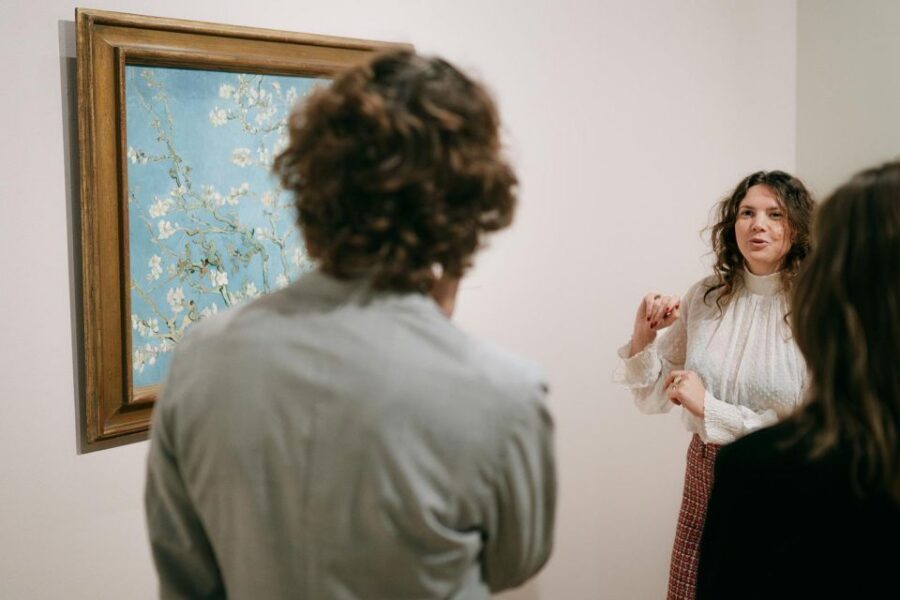
What I really like is the small group size (up to 15 people) and the chance to ask questions to a licensed guide. One drawback: it is not recommended for limited mobility, since it’s a walking route on older streets.
In This Review
- Key Things I’d Plan Around
- Why This Red Light District Tour Feels More Like Amsterdam
- Price and Value: What $35.44 Buys You for 2 Hours
- Meeting at Geldersekade 2: Easy Start, Central Feel
- The Dam and Amsterdam’s Wooden-Pole Foundations
- Old Town Context: Why This Area Feels So Layered
- Pub The Ape (Int Aepjen): A Wooden Survivor from 1540
- Waag: From Defensive Gate to Guild Hub
- The Smallest House: VOC Storage to Long-Time Living
- Condomerie: Sex, Shopping, and a Very Specific Amsterdam Detail
- Guides Matter: Small Group, Real Personal Style
- What the Walk Is Like on the Street: Pace, Questions, and Comfort
- Who Should Book This Tour (and Who Might Skip It)
- Should You Book This Amsterdam Red Light District Walking Tour?
- FAQ
- How long is the Amsterdam guided Red Light District and city walking tour?
- What language is the tour offered in?
- Where do I meet the guide?
- What’s the group size limit?
- What’s included in the price?
- Are food and drinks included?
- Is the tour recommended for people with limited mobility?
- Is there a cancellation deadline for a full refund?
Key Things I’d Plan Around
- Up to 15 people keeps the talk-to-your-guide rhythm comfortable
- Multiple start times lets you match the walk to your day
- English tour with a licensed, local guide
- Free highlights, no admissions charge (admission ticket is free)
- Red Light District context tied to older Amsterdam stops and architecture
Why This Red Light District Tour Feels More Like Amsterdam
The Red Light District has a reputation, but Amsterdam has a memory. This walk tries to connect both.
You get guided time in the area while also seeing how the city’s physical design and institutions shaped it. The tour doesn’t just point at windows. It explains how you ended up here, what the area became, and how Amsterdam thinks about laws, culture, and daily life in the center.
This matters because the streets can feel confusing if you only chase images. With a guide, you get a simple mental map: Amsterdam’s growth, its old-world buildings, and how modern rules coexist with older parts of the city.
You can also read our reviews of more walking tours in Amsterdam



Price and Value: What $35.44 Buys You for 2 Hours
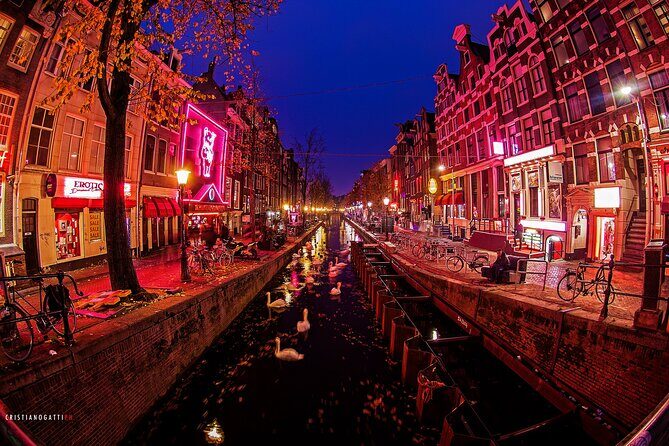
At about $35.44 per person for roughly 2 hours, you’re buying two things: a local guide’s context and the convenience of a planned route you can follow without guessing.
The “ticket free” note is also a quiet value point. It suggests you’re not paying extra admission fees at each stop. Add that to the small group size and you get more guided time per person than you’d get with giant coach-style tours.
Also, it’s commonly booked about 27 days in advance, so if you want a specific start time, snag it sooner rather than later. Late planning is where your options shrink in Amsterdam.
Meeting at Geldersekade 2: Easy Start, Central Feel
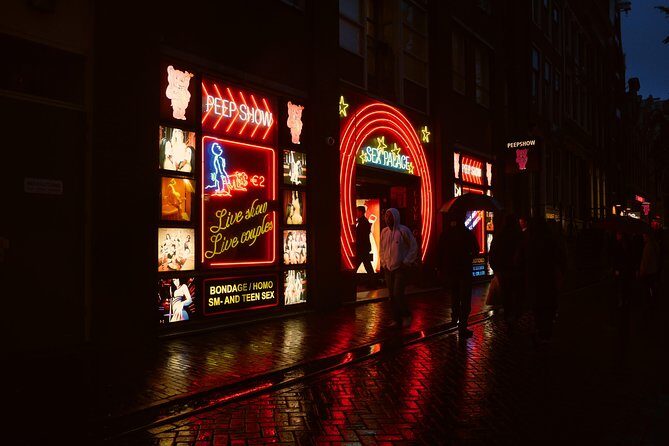
You meet at Geldersekade 2, 1012 BH Amsterdam, and the tour ends back there. That round-trip setup is underrated. You’re not trying to figure out transit from the middle of a busy area while your day is running late.
It’s also listed as near public transportation, so you can combine this with other Old Town sights. If you’re planning dinner or museum time afterward, build in a buffer because you’ll likely slow down for questions and photos.
And yes, it’s a mobile ticket. That means less time hunting for printed confirmations and more time walking.
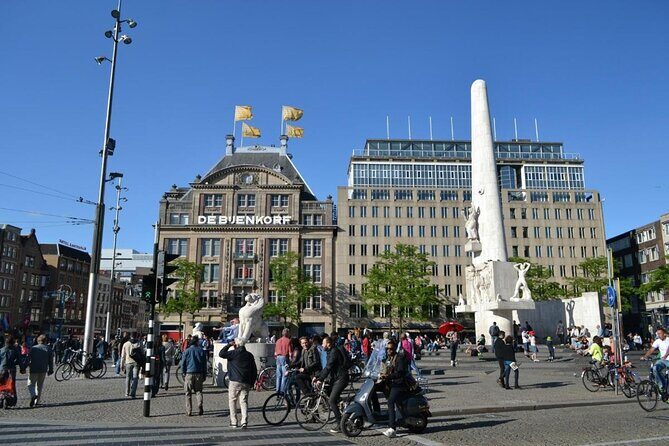
The Dam and Amsterdam’s Wooden-Pole Foundations
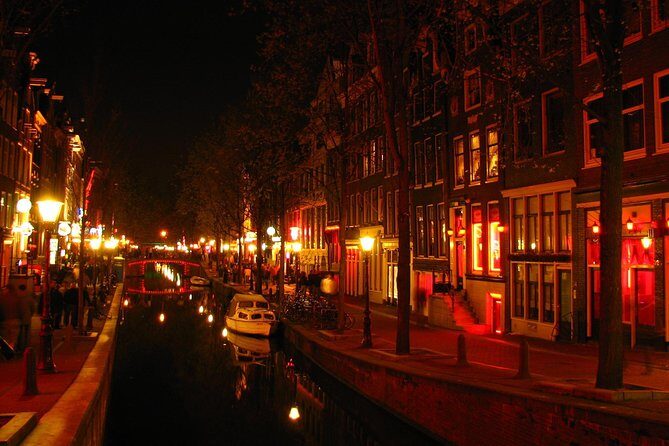
One stop ties the tour’s biggest theme to Amsterdam’s oldest engineering trick: the city built on trees.
Amsterdam’s soil includes deep layers of fen and clay, so many buildings sit on piles driven down until they reach a stable layer of sand. Houses were built on wooden foundation piles that extend deep into the ground. That detail matters because it explains why the city feels the way it does—dense, old, and built for a challenging foundation.
Why this belongs on a Red Light District walk: because the area is not a random corner. It’s part of the oldest part of the city (Old Town), where even today’s street life is layered over earlier structure, earlier building rules, and earlier port-era commerce.
If you like architecture and city logic, this is the kind of stop that makes the rest of the walk click.
Old Town Context: Why This Area Feels So Layered
This tour treats the Red Light District as part of the Old Town story, not a separate island. You’ll move through streets tied to how Amsterdam evolved.
In practical terms, you’re learning to read the area in layers:
- older street layout and historic building types
- how institutions formed around trade and maritime arrival
- how the center became a place where rules and daily commerce meet
This approach helps you avoid the most common problem: walking in and out of photo spots without understanding why they’re there. When you grasp the city’s long timeline, the Red Light District becomes less about shock and more about an ongoing human system shaped by Dutch law, history, and urban planning.
You can also read our reviews of more guided tours in Amsterdam




Pub The Ape (Int Aepjen): A Wooden Survivor from 1540
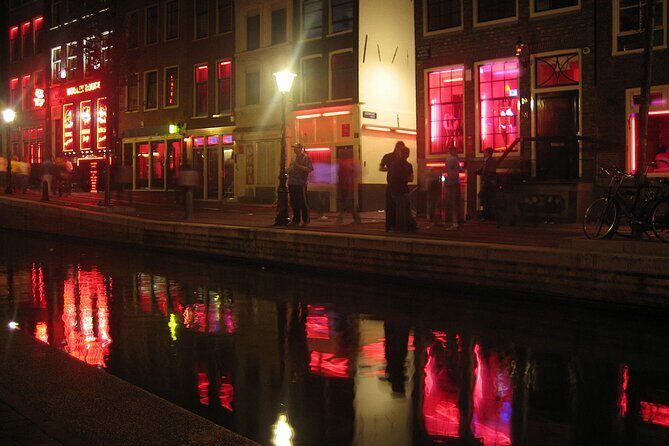
One of the most striking stops is Pub The Ape, also known as Int Aepjen. It’s described as built around 1540 and noted as one of the two remaining wooden buildings in Amsterdam.
That alone is reason to slow down. But the bigger story is how Amsterdam changed after disaster. A major fire in 1452 pushed the government toward brick facades. So when you stand in or near a rare older wooden structure, you’re basically standing next to a surviving reminder of a turning point in building policy.
This stop is also a useful contrast point. People often expect the Red Light District to be all about one kind of street scene. But Amsterdam’s center holds survival stories—buildings that made it through rule changes and survive into modern times.
If you enjoy history you can point at, this one lands fast.
Waag: From Defensive Gate to Guild Hub
You’ll also see the Waag, described as a former city gate built around the 1400s and noted as the second oldest building of Amsterdam.
Originally part of the defensive wall, the building later became a platform for crafts. The tour describes it as being used as a space where guilds and craftsman organizations set up within and around the square.
This stop gives you a key lens: Amsterdam’s older buildings often started with one purpose and adapted to the next phase of the city. Trade grew, civic life shifted, and spaces were reused. That same adaptation theme fits the Red Light District context, where functions and regulations have evolved over time.
Also, Waag is a good “pause point” on a walking tour. You can reset your brain, look at the architecture, then keep going with better context.
The Smallest House: VOC Storage to Long-Time Living
Next comes a fun and memorable detail: Amsterdam’s smallest house, built around the 1700s.
The tour describes its early use as storage for the VOC trading company. Later, people began living in the house for a long time. That switch—from trade storage to a long-term home—shows how Amsterdam’s inner city life could repurpose space based on need.
On a walking tour, this kind of stop is more than trivia. It helps you understand that the center wasn’t built only for comfort. It was built for survival, trade, and work—then adapted as people needed places to live.
It also gives the walk a lighter edge. You’ll see windows and street scenes later, but this is the kind of human-sized detail that makes the whole area feel more real.
Condomerie: Sex, Shopping, and a Very Specific Amsterdam Detail
One stop is the Condomerie, described as the world’s first condom shop specializing in condoms, located there since 1987. The tour also notes you can get customized sizes and special condom types.
Whether you view this stop as humor, privacy culture, public-health practicality, or something else, it clearly signals how Amsterdam mixes frankness with systems. It’s not the Red Light District explained like a museum label. It’s the reality of what commerce and city life look like in a place with long-standing rules and a strong culture around public health.
It also ties into what the tour promises: learning the history and the current situation, not just the past. This stop is one of those “you had to be here” details that keeps the walk from becoming only lectures and photos.
Guides Matter: Small Group, Real Personal Style
This is where the tour quality shows. The experience caps at 15 travelers, which means you’re not lost inside a loud crowd.
The guide experience also shows variety in the best and worst ways. Many guides on this kind of walk lean into stories and humor. Examples from past guides include Ari, Ben, Capt Dan, Pedro, David, Max, Angel, and Aaron. Across these, the common thread is clear: people praised the mix of history, humor, and the ability to answer questions.
That’s what you should look for on booking: a guide who can explain the why behind the sights, while keeping the tone respectful and human.
There is also one negative signal in the overall rating breakdown: one experience rated 1/5 reported an extremely rude guide and made them feel uncomfortable. If you tend to dislike edgy humor or you’re sensitive to disrespect, I’d treat that as a reminder to choose your time slot wisely and to be ready to step away if the tone goes wrong. A good guide keeps control without being cruel.
What the Walk Is Like on the Street: Pace, Questions, and Comfort
It’s a walking tour, around 2 hours, with no stated food stops. Plan on water and light snacks if you need them. The tour doesn’t include food and drinks, so don’t count on a break built into the itinerary.
Also, it’s listed as not recommended for limited mobility. If your movement is slow or stairs and uneven pavement are an issue, you’ll likely feel it quickly. This is the type of area where older streets can be tricky.
On the upside, the group is small. That means you’re more likely to hear details clearly and keep up without feeling like you’re sprinting between landmarks.
Who Should Book This Tour (and Who Might Skip It)
This tour fits best if you want:
- Red Light District context tied to Old Town Amsterdam
- real landmark stops like Waag and Pub The Ape
- a guided format that helps you ask questions instead of guessing
It’s also a great pick if you like city mechanics. The tour’s foundation-story stops (like the wooden poles and the Dam area engineering context) give you more than just social commentary.
You might skip it if:
- you’re easily uncomfortable with sexualized street culture and adult-frequent areas
- you need step-free routes and extra accommodations (the tour isn’t recommended for limited mobility)
- you want a purely historical museum-style experience without street-level reality
Should You Book This Amsterdam Red Light District Walking Tour?
I’d book it if you want a guided walk that makes the Red Light District understandable through Amsterdam’s older city structure—its buildings, its institutions, and its shifting rules over time. The combination of landmarks (Waag, Pub The Ape, the smallest house) plus a very modern stop (the Condomerie) keeps the story from feeling one-note.
I’d think twice if you know you want no discussion of sex work-adjacent culture, or if accessibility is a concern for you. In those cases, you may enjoy Amsterdam more with a different themed walk.
If you do book, go in with a simple mindset: treat it like a city history lesson set in a very specific neighborhood. The payoff is a clearer mental map of how Amsterdam’s past and present overlap on the street.
FAQ
How long is the Amsterdam guided Red Light District and city walking tour?
It runs about 2 hours.
What language is the tour offered in?
The tour is offered in English.
Where do I meet the guide?
The meeting point is Geldersekade 2, 1012 BH Amsterdam, Netherlands.
What’s the group size limit?
The tour has a maximum of 15 travelers.
What’s included in the price?
You get a licensed guide and a local guide.
Are food and drinks included?
No, food and drinks are not included.
Is the tour recommended for people with limited mobility?
It is not recommended for travelers with limited mobility.
Is there a cancellation deadline for a full refund?
Yes. You can cancel up to 24 hours in advance for a full refund.