REVIEW · AMSTERDAM
Amsterdam: Coffee Shops Walking Tour
Book on GetYourGuide →Operated by Trigger Tours · Bookable on GetYourGuide
Amsterdam has a way of talking openly.
This walking tour connects coffee-shop culture with the city that shaped it, starting in the Red Light District and moving through canals, alleys, and side streets while your local guide explains how the Netherlands ended up with the rules it has today. I like that you’re not just collecting photos—you’re getting the story behind why things work the way they do. I also like the mix of sights: you’ll see the biggest coffee shop in the world at Prix d’Ami and you’ll hunt down one of Amsterdam’s tiniest alleyways.
One thing to consider: the tour focuses on sex and drugs, including prostitution legalization and how sex workers face challenges today. If those topics make you uneasy, pick your comfort level before you go.
In This Review
- Key Points You’ll Actually Remember
- Starting at Barbizon Palace, Then Red Light District Reality
- How the Tour Reads Amsterdam’s Politics Like a Story
- The Coffee Shops: From the World’s First to Prix d’Ami
- The Smallest Alley in Amsterdam: Yes, It’s a Thing
- Street Art, Landmarks, and Local Markets on the Way
- Dutch Drug Law Explained in Human Terms
- How Local Guides Keep the Tour Feeling Personal
- Price and Value for a 2-Hour Themed Walk
- Timing, Comfort, and Who Should Skip It
- Languages and Practical Notes You’ll Appreciate
- Should You Book This Amsterdam Coffee Shops Walking Tour?
- FAQ
- How long is the Amsterdam Coffee Shops Walking Tour?
- Where is the meeting point?
- Is this tour private?
- What languages are available?
- What is included in the price?
- Is the tour suitable for people with mobility impairments?
Key Points You’ll Actually Remember
- Prix d’Ami: stop at the world’s biggest coffee shop
- The world’s first coffee shop: see where the tradition began
- Small alley adventure: walk down Amsterdam’s smallest alleyway
- Red Light District context: history and politics beyond the stereotypes
- Local guide Q&A style: get answers as you walk, not in a lecture
- 2 hours on foot: enough time to connect the dots without dragging your day
Starting at Barbizon Palace, Then Red Light District Reality
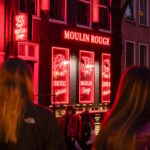
The tour meets at the front of the Barbizon Palace Hotel NH collection. From there, you’re immediately in the neighborhood that puts Amsterdam on the map for nightlife and controversy. Your guide sets the tone fast: you’re there to understand how the city became so famously liberal, not to score a party pass.
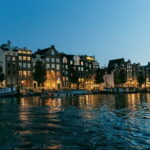
A big plus here is that you walk through the area as an “Amsterdam person” would—by moving between streets, alleys, and canals, rather than staring at one landmark and calling it a day. The Red Light District can be intense if you approach it the wrong way. With a guide explaining the politics and history, it turns from shock value into context.
You can also read our reviews of more walking tours in Amsterdam


How the Tour Reads Amsterdam’s Politics Like a Story
Right away, the tour takes on the hard-to-say-without-a-guide stuff. You’ll hear commentary about the history of the area, including the legalization of prostitution and the challenges that sex workers face today. This is where the tour earns its keep, because it’s easy to reduce the district to headlines. Your guide helps you see the system behind the headlines.
And then comes the practical part: how Amsterdam’s attitudes toward sex and drugs show up in daily life and city planning. You’re not getting a moral lecture. You’re learning the “why” behind the rules, and why Amsterdam has been willing to treat controversial topics with policy instead of denial.
This kind of framing is also what makes the walking pace useful. As you move, you can match what you’re hearing to what you’re seeing—streetscape details, canal-side angles, narrow lanes that change the vibe instantly. That connection is the difference between reading about Amsterdam and actually understanding it.
The Coffee Shops: From the World’s First to Prix d’Ami

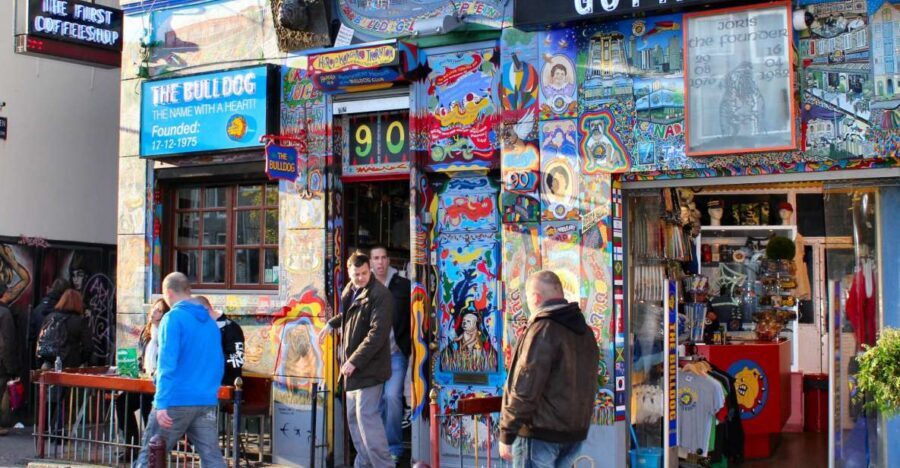
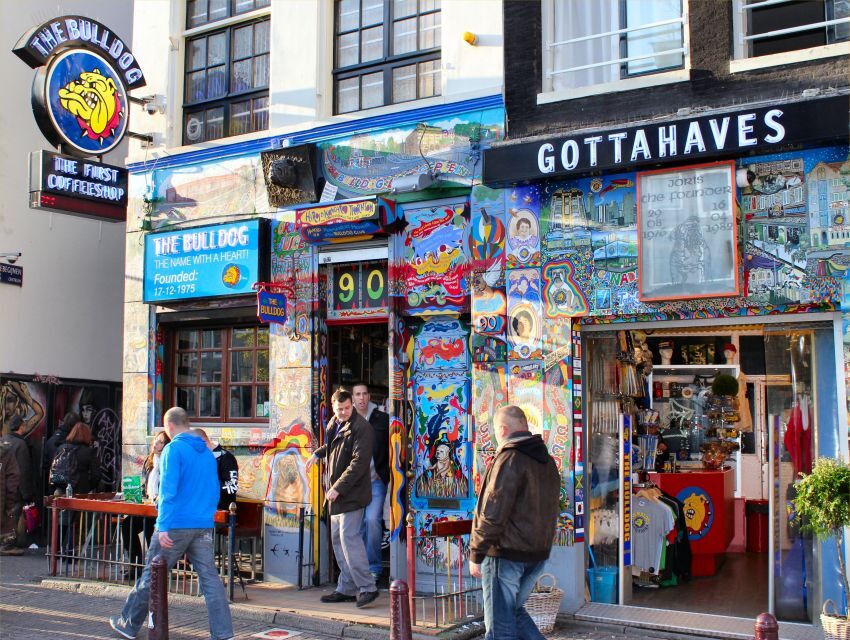
Coffee shops are the core theme, and the tour treats them like a window into a wider approach to regulation. You’ll visit one of Amsterdam’s legendary coffee shops, and the tour specifically highlights two anchor points: the world’s first coffee shop and the world’s biggest coffee shop at Prix d’Ami.
At Prix d’Ami, the message isn’t just size. It’s about how the city turned a cultural concept into something that exists in plain view—an institution with a place in local life, not a secret rumor. Even if you’re not a coffee-shop regular, it’s hard not to notice how normalization changes the atmosphere. The building, the flow of people, and the everyday way the shop fits into its surroundings all help you understand why Amsterdam’s system looks the way it does.
The stop at the world’s first coffee shop matters for a different reason. You get the origin story angle—how coffee-shop culture started, and how that early model grew into the Amsterdam you see today. If you’ve ever wondered how a practice becomes a tradition, this is where you get the connective tissue.
The Smallest Alley in Amsterdam: Yes, It’s a Thing
One of the most fun parts is also one of the simplest. You’ll walk down Amsterdam’s smallest alleyway. It’s the kind of detail that sounds like trivia until you’re standing there. The space feels almost compressed, like the city is playfully shrinking itself around you.
Why do I think this stop is worth it? Because Amsterdam is all about scale and surprise. You can’t fully “get” the city just by looking at big squares. The character lives in tiny transitions: a turn that changes your line of sight, a narrow lane that forces you to slow down, a canal corner that makes the whole neighborhood look different in seconds.
The alley stop also does something else. It gives you a natural break from heavier subject matter. Sex-work legalization and drug-policy history are serious topics. A quick walk through a ridiculously small passage gives your brain a lighter moment while still keeping you oriented in the city.
Street Art, Landmarks, and Local Markets on the Way
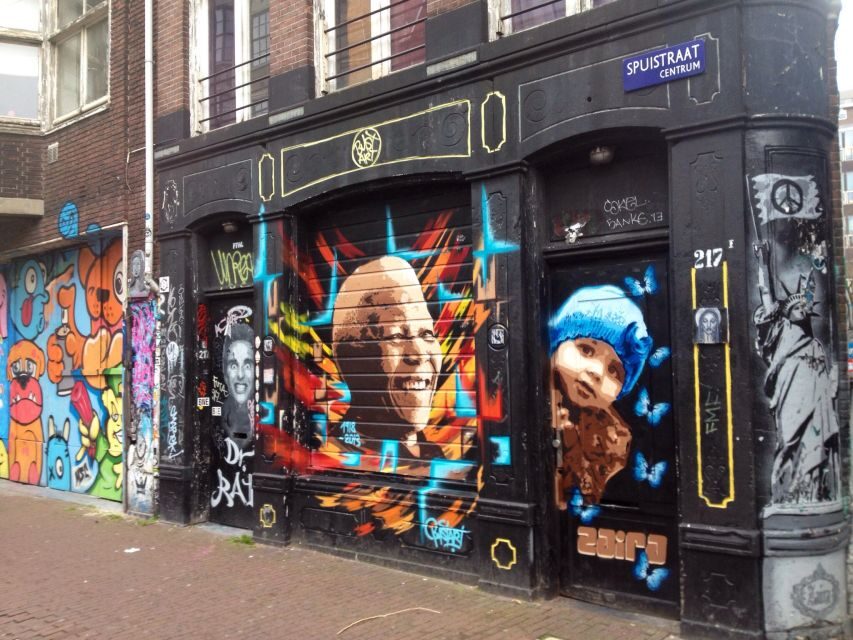
The tour isn’t only coffee shops and policy talk. Along the route, you’ll make stops at historic landmarks, street art, and local markets. That matters because it prevents the tour from feeling like a single-issue lecture.
Street art and markets work like proof that Amsterdam’s liberal culture isn’t locked inside one district. It’s visible across the city’s everyday scenes—on walls, in stalls, and in the way locals move through neighborhoods that tourists sometimes treat like sets.
You should expect these stops to feel varied in energy. Sometimes you’ll get a quick photo moment. Other times your guide will use the surroundings to explain how the city thinks. The result is a walking tour that gives you texture, not just a checklist.
You can also read our reviews of more shopping tours in Amsterdam





Dutch Drug Law Explained in Human Terms
This is one of the most important parts, because the tour doesn’t treat drug policy like a tabloid topic. You’ll learn about the history of legalization of soft drugs in the Netherlands and get insight into the current strange Dutch laws on drugs.
Now, I’ll keep this practical: drug policy language can be confusing even for locals. The value of a guided tour is that it turns legal complexity into a story you can understand. You’ll hear what changed, why coffee shops ended up with their role, and how the law’s “strange” parts show up in real life.
This kind of context helps you avoid the most common tourist mistake: assuming Amsterdam is “anything goes” in a simple way. Your guide’s job is to make sure you understand the nuance behind tolerance, regulation, and enforcement. And you’ll understand it faster because you’re learning while you see the city doing its thing.
How Local Guides Keep the Tour Feeling Personal
One reason this tour earns strong marks is the guides themselves. You may hear names like Maurice and Gav tied to great experiences, especially around how clearly they connect the history to what you’re seeing. The best part is the Q&A vibe—your guide isn’t just talking at you.
A private group also changes the feel. Even if you’re in a small group, you’re not one person lost in a crowd. You can ask direct questions, get answers on the spot, and adjust to your own pace.
If you want to understand Amsterdam beyond slogans, this is the setup that helps. You’ll get a guided lens, not just a route.
Price and Value for a 2-Hour Themed Walk
The tour costs $106 per person and runs for about 2 hours. That might sound steep until you break down what you’re paying for.
You’re paying for:
- A local guide who can connect Red Light District history to coffee-shop culture and drug-policy context
- Time with the guide while you’re moving through high-interest, high-sensitivity areas
- Visits linked to coffee-shop milestones, including Prix d’Ami and the world’s first coffee shop
You’re also paying for the fact that this tour is tightly focused. It’s not trying to cover every museum or every canal cruise stop. Instead, it uses a short time window to give you a coherent theme: Amsterdam’s approach to sex, drugs, and regulation.
If you’re the kind of traveler who likes “one good story” over “ten quick stops,” the price starts to make sense fast.
Timing, Comfort, and Who Should Skip It
This is a walking tour. Even without getting too technical, Amsterdam’s neighborhoods often involve uneven pavement and lots of standing. The tour is not suitable for people with mobility impairments, so if that’s you, skip this one.
For everyone else, plan to move at a steady walking pace for the full 2 hours. Comfortable shoes matter. And because the tour doesn’t include food and drinks, I’d treat it like a compact city lesson, not a meal plan. If you’re going at a time when you’ll be hungry, eat before you go or plan a nearby stop afterward.
Also remember the emotional weight of the topic. You’re hearing about prostitution legalization and drug laws. That can be fascinating if you’re in the right mindset, and not so fun if you prefer a lighter theme.
Languages and Practical Notes You’ll Appreciate
The tour runs with a live guide in Dutch, English, and German. There’s an important catch: on Mondays and Tuesdays, German-language tours are not available. If you’re counting on German, choose your day carefully.
Should You Book This Amsterdam Coffee Shops Walking Tour?
Book it if you want Amsterdam explained the way locals understand it: policy plus street-level reality. It’s especially good for first-timers who feel like the Red Light District and coffee shops are “everywhere in the conversation,” but unclear in real life. The stops at Prix d’Ami, the world’s first coffee shop, and the smallest alleyway give you memorable anchors, and the guided commentary keeps the story coherent.
Skip it if you want a purely scenic, family-friendly tour or if sex and drug policy topics make you uncomfortable. Also skip it if mobility is an issue for you.
If you’re curious and you like learning while walking, this is a strong use of two hours in Amsterdam—and it gives you context you won’t get from photos alone.
FAQ
How long is the Amsterdam Coffee Shops Walking Tour?
The tour lasts 2 hours.
Where is the meeting point?
Meet the guide in front of the Barbizon Palace Hotel NH collection entrance.
Is this tour private?
It’s listed as a private group.
What languages are available?
The guide offers Dutch, English, and German. On Mondays and Tuesdays, tours in German are not available.
What is included in the price?
A local guide for a private or group walking tour is included. Food and drinks are not included.
Is the tour suitable for people with mobility impairments?
No, it is not suitable for people with mobility impairments.