REVIEW · AMSTERDAM
Amsterdam: Anne Frank Walking Tour
Book on GetYourGuide →Operated by Trigger Tours · Bookable on GetYourGuide
Street corners hold WWII memory. This guided walk through Amsterdam’s Jewish neighborhoods starts at Waterlooplein and brings Anne Frank to life in the exact streets where her story unfolded, with pauses at landmarks tied to Jewish history and wartime suffering. I love how the guide connects the diary and her family’s fate to what’s around you. I also like the pacing: it’s packed with meaning, but it doesn’t feel like a history lecture.
One thing to plan around: it does not include entrance to the Anne Frank House, and it lists notes that conflict on mobility needs, saying it’s wheelchair accessible while also stating it is not suitable for wheelchair users.
WWII Amsterdam, street-by-street: you move through the Jewish Quarter and Plantage with a narrative you can follow.
Portuguese Synagogue and key Jewish landmarks: you stop near major sites tied to Jewish life and institutions.
A Holocaust memorial moment: the route includes the Auschwitz Monument and leaves room for reflection.
Anne Frank diary context without the House ticket: you get the publishing story after the war, then continue the walk.
Small-group energy possible: private or small group options are available, which helps with questions.
Practical history facts, not just dates: you hear about events like the February strike and the hunger winter.
In This Review
- Getting Oriented at Waterlooplein (and why the first 10 minutes matter)
- Portuguese Synagogue stop: a quick exterior lesson with lasting impact
- Jewish Quarter alleys: narrow streets, heavy stories, and visible traces
- Jewish Historic Museum area: context you can carry to the next stops
- Waterlooplein to Nieuwmarkt and Lastage: a WWII timeline on real streets
- Auschwitz Monument: where the story turns, and your senses catch up
- Anne Frank House area: diary publishing after the war, without the entry ticket
- Plantage district wrap-up: centuries-old life and what survives in the city
- Price and logistics: is $21 worth it for a 2-hour story walk?
- What it feels like in real life: guides, pacing, and questions
- Who should book this Amsterdam Anne Frank Walking Tour
- Should you book?
- FAQ
- How long is the Amsterdam: Anne Frank walking tour?
- What does the tour cost?
- Where do I meet the guide?
- Does the tour include tickets to the Anne Frank House?
- What languages is the guide available in?
- Is it a private tour or a group tour?
- What sights are included on the walk?
- Are food and drinks included?
- What should I bring?
- Can I get a refund if my plans change?
- Is the tour wheelchair accessible?
Getting Oriented at Waterlooplein (and why the first 10 minutes matter)
This tour is built around an easy start: you meet at Waterlooplein and then the guide sets the scene fast. That matters, because Amsterdam’s WWII story isn’t one big event. It’s a chain of steps that changed daily life, then changed who could live where, then changed who could survive.
You’ll walk with a live guide in English or Spanish (English and Spanish are both offered), and the whole experience is designed to feel like a guided route through a real neighborhood, not a string of random photo stops. The duration is 2 hours, so the guide keeps things moving and still finds time to answer questions.
If you’re trying to do a lot in a short time in Amsterdam, this is a smart fit. You get history that’s tied directly to what you’re seeing: synagogues, Jewish institutions, and later memorials.
Wear comfortable shoes. The streets here can be uneven, and the route includes several different areas without long rest breaks.
Portuguese Synagogue stop: a quick exterior lesson with lasting impact

After the start, you hit the Portuguese Synagogue area early. The stop is brief (about 10 minutes), but it’s not filler. The guide uses it to anchor the story in centuries of Jewish life in Amsterdam, before the war tightens everything.
Even if you’ve read about Anne Frank, it helps to remember what came before. Jewish communities were long-established, and the institutions and neighborhoods weren’t created overnight. Seeing the synagogue area early gives you a “before the break” feeling, which makes the wartime parts hit harder.
This is also one of those stops where your attention changes as you walk. You start looking at building footprints, street patterns, and how neighborhoods are shaped. The tour turns that into a point: Amsterdam’s city layout influenced how people lived, moved, and hid.
You can also read our reviews of more walking tours in Amsterdam



Jewish Quarter alleys: narrow streets, heavy stories, and visible traces
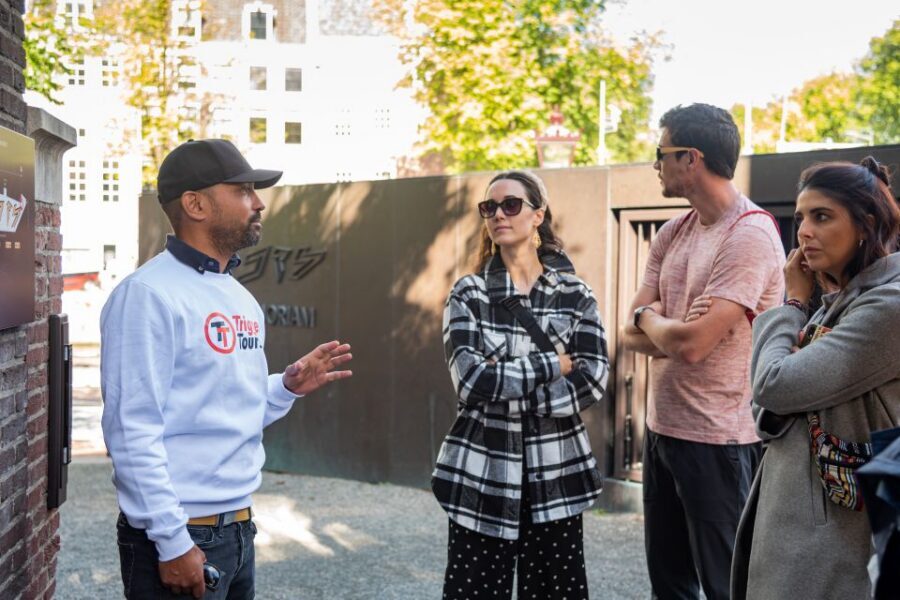
The core of the tour is in the Jewish Quarter, where the walk runs longer (about 40 minutes). This is where you slow down emotionally. The guide walks you through the narrow streets and alleys and points out historic buildings linked to Jewish life in Amsterdam during WWII.
You also get a direct sense of the fact that the past isn’t gone. The tour includes sights where there are still traces of war, so the story doesn’t stay theoretical.
Here are a few things I think you’ll appreciate if you care about understanding “how it was,” not just “what happened”:
- You learn about the Jewish Quarter as a real neighborhood, not a concept.
- You hear about wartime pressures that shaped daily life, including the February strike and the hunger winter.
- You see how Jewish institutions were part of the city’s fabric, including references connected to Jewish leadership and community structures.
One small but memorable detail that comes up in people’s experiences is the explanation of the metal squares in the pavement. Even if you’ve never noticed them before, the guide helps you understand what they represent and why they’re placed where they are. It’s the kind of thing you’d miss if you were walking on your own, because it’s easy to look through.
Jewish Historic Museum area: context you can carry to the next stops

Next you spend a short guided segment around the Jewish Historical Museum (about 10 minutes). This is one of those moments where the tour gives you context without turning the experience into a long museum day.
Why that works: when you later reach memorials and the Anne Frank story, you’re not starting from zero. The guide already taught you how to think about the Jewish experience in Amsterdam—community life, disruptions, persecution, and then the lasting record.
If you’re the type who wants to keep learning after the walk, this is a good setup. You’ll know what kind of themes to look for if you choose to visit on your own later.
Waterlooplein to Nieuwmarkt and Lastage: a WWII timeline on real streets
The route then loops back through Waterlooplein and continues toward Nieuwmarkt and Lastage (each segment is about 10 minutes). These stops help connect the earlier Jewish Quarter story to the broader city setting.
This part of the tour is valuable because it shows you that WWII wasn’t only happening “over there.” It was changing the whole urban system—how people survived, where they could go, and what daily movement looked like.
You’ll also hear more about the struggles endured by Amsterdam’s Jewish community, and how those pressures shaped families’ lives. The guide brings in what’s mentioned in the tour description, like how people experienced hunger and fear during the hunger winter, and how large public events could turn into risk.
A nice thing here is that the tour keeps your attention on people and cause-and-effect. You’re not just hearing dates. You’re seeing how one event made another possible, and how that built toward the hiding years associated with Anne Frank.
Auschwitz Monument: where the story turns, and your senses catch up
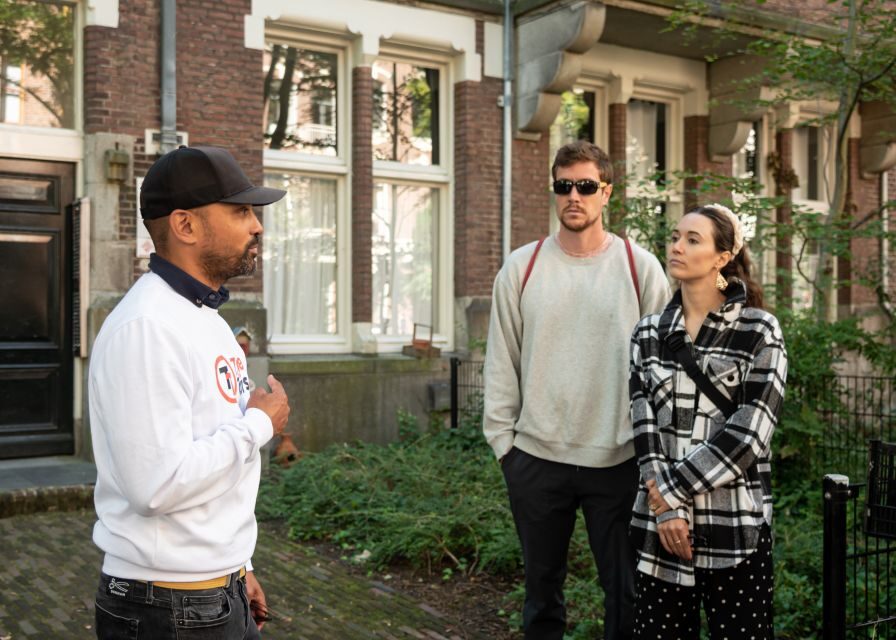
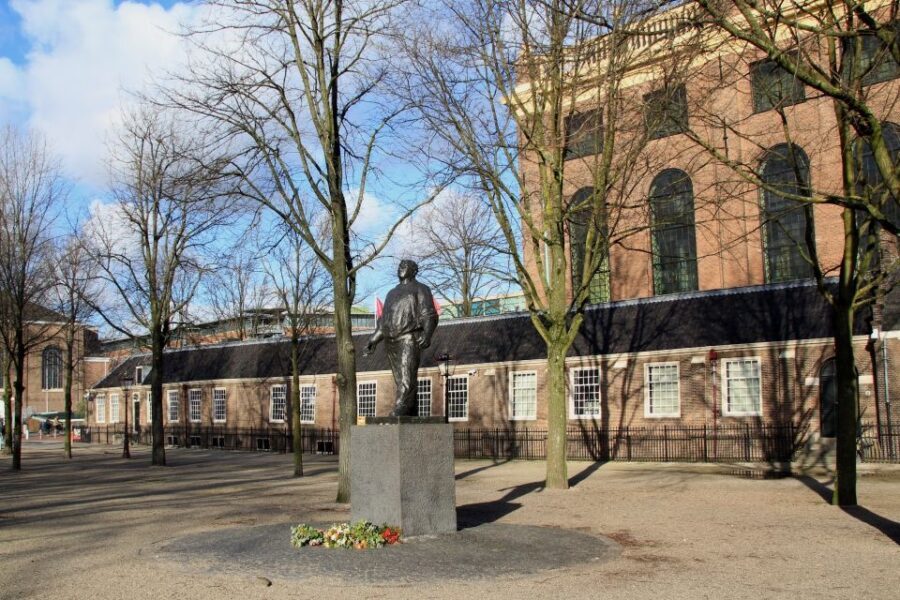
Then comes a heavier stop: the Auschwitz Monument (about 10 minutes). This is where the emotional load changes.
This memorial is often described as the most moving point in the walk, and I get why. You don’t reach it as an “extra stop.” The guide builds toward it by connecting earlier parts of the neighborhood story to the wider Holocaust reality. When you arrive at the monument, it feels like a conclusion you’ve earned, not a sudden shock.
If you prefer quiet reflection over nonstop talking, you’ll likely appreciate that the guide creates room for it. And since the tour ends up near Anne Frank’s area afterward, the structure makes sense: memorial first, then diary and legacy.






Anne Frank House area: diary publishing after the war, without the entry ticket
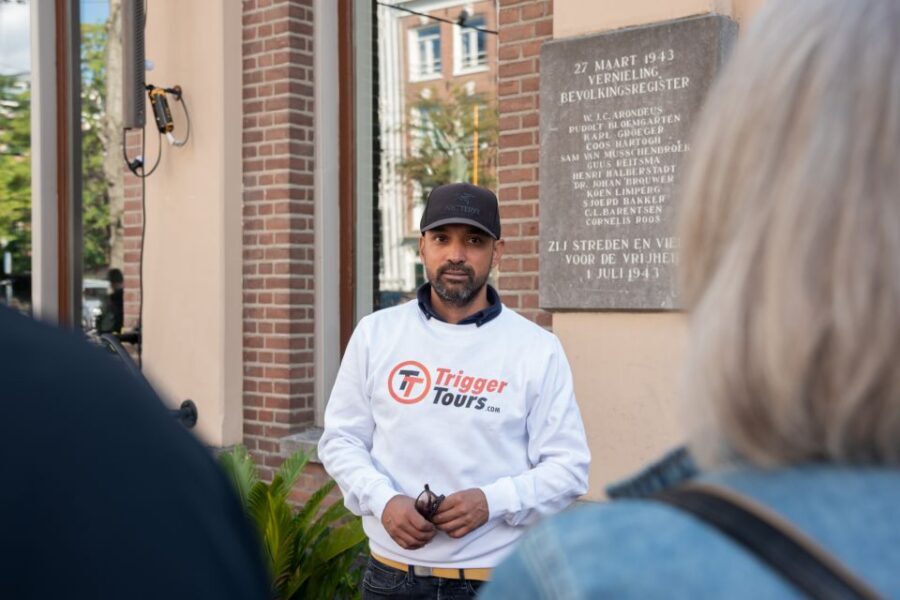
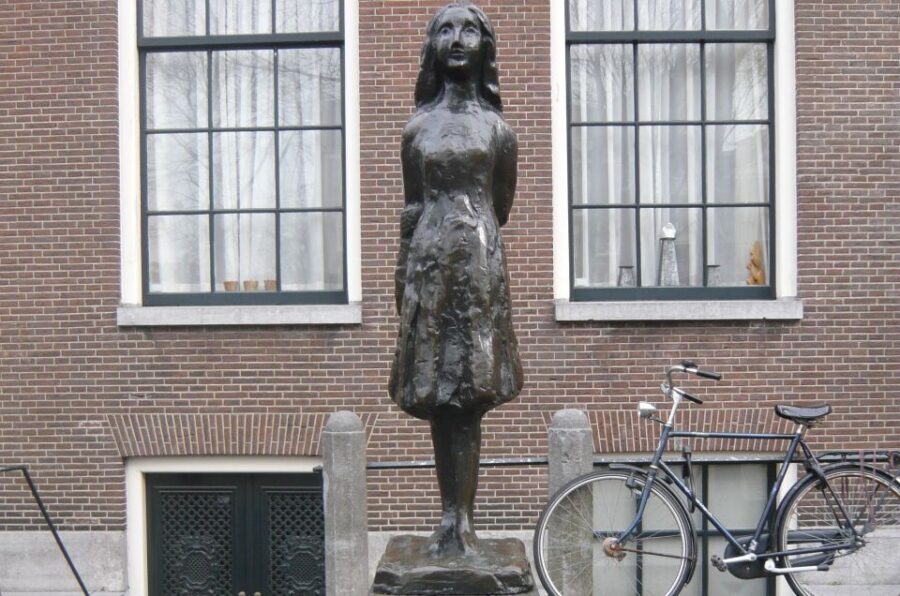
After the monument, you’re taken to the Anne Frank House area (about 10 minutes). Important: the tour does not include entrance to the Anne Frank House. You’ll get a guided stop and context, but you won’t go inside through this ticket.
Even with that limitation, it’s still a powerful segment because the guide doesn’t treat the story as a single tragic moment. You hear about Anne Frank’s family, her move from Germany, the time she was hiding, and then what happened after the war—especially how her father published her diary and how it became one of the best-selling books of all time.
That part matters. Many visitors know the diary title but not the chain of events that followed the war. When you hear that publishing story as part of a walk through Amsterdam, it turns the diary from a book you read into a real legacy that had to be shaped and shared.
If you want to go inside the house later, you’ll need to plan that separately. The tour is designed as an “on-the-ground story compass,” not a guaranteed entry pass.
Plantage district wrap-up: centuries-old life and what survives in the city

The final stretch is the Plantage district (about 10 minutes). This isn’t only a geography stop. It’s a reminder that Jewish life in Amsterdam did not start and stop with WWII.
The guide brings in the longer arc: centuries-old history of Jewish life in Amsterdam and the community’s role in shaping the city’s culture and heritage. You get a sense of continuity even though the wartime story is at the center.
For me, that ending is the reason this walk doesn’t feel like pure mourning. It ends with a legible question: what remains, what was lost, and how the city carries both truth and memory.
Price and logistics: is $21 worth it for a 2-hour story walk?
At $21 per person for a 2-hour guided walk, the value mostly comes from what’s included: a local guide, plus the guided coverage of multiple WWII-relevant sites tied to Anne Frank and the wider Jewish experience in Amsterdam.
Here’s the trade-off you should be clear about:
- You are not paying for entry tickets into the Anne Frank House.
- You are paying for interpretation: the guide’s ability to connect places, events, and human stories while you walk.
In practice, if you’re visiting Amsterdam with limited time, interpretation is the expensive part. A good guide can help you understand what you’re seeing in under two hours—especially in a city where key places are spread out and easy to miss.
So I think the price makes sense if you want context, not just movement. If you mainly want to tick off sites quickly with minimal explanation, you might prefer a self-guided route. But if you’re after meaning—this is one of the best ways to get it without spending a full day.
What it feels like in real life: guides, pacing, and questions
One theme in the tour experiences is how much the guide matters. People repeatedly describe their guides as empathetic, engaging, and able to answer questions without rushing. Names that come up include James, Aaron, Andrea, Guido, Josha, Stan, and Andrea again for a small private tour feel.
Obviously you can’t guarantee which guide you’ll get. But the pattern is consistent: the best moments are when the guide connects the narrative across stops. If you like history told like a story with a beginning, middle, and why, you’ll probably feel satisfied here.
Also, because the tour is short, you get a well-paced flow: synagogues and Jewish Quarter first, then the WWII pressures and memorial moment, then Anne Frank and what the diary meant afterward.
Who should book this Amsterdam Anne Frank Walking Tour
This walk is a strong match if you:
- want a 2-hour introduction to Anne Frank and the Jewish history around her story
- like learning in a neighborhood on foot, not only inside museums
- enjoy asking questions and getting answers in real time
- are traveling with teens or curious adults who can handle serious history with care
It may not be the best fit if:
- you want to include Anne Frank House entry as part of one ticket
- mobility needs are a top concern, because the notes list both wheelchair accessibility and that it is not suitable for wheelchair users. Check directly before booking so you know what the walk actually looks like for your situation.
Should you book?
I’d book this tour if you want the Anne Frank story grounded in Amsterdam—Jewish neighborhoods, WWII pressures, and a meaningful memorial stop—without needing a full-day museum plan. At $21, you’re paying for a guide to do the connecting work so the city makes sense while you’re still in it.
But if your top goal is going inside the Anne Frank House, treat this as the warm-up walk. You’ll likely still want a separate ticket for the House so you can experience it fully.
FAQ
How long is the Amsterdam: Anne Frank walking tour?
The tour duration is 2 hours.
What does the tour cost?
The price is $21 per person.
Where do I meet the guide?
You meet at Waterlooplein, but the meeting point may vary depending on the option you booked.
Does the tour include tickets to the Anne Frank House?
No. Entrance to the Anne Frank House is not included.
What languages is the guide available in?
The live guide is available in English and Spanish.
Is it a private tour or a group tour?
It depends on the option you select. The tour can be private or run in small groups.
What sights are included on the walk?
The stops include the Portuguese Synagogue area, the Jewish Quarter, the Jewish Historical Museum, Waterlooplein, Nieuwmarkt and Lastage, the Auschwitz Monument, the Anne Frank House area, and Plantage.
Are food and drinks included?
No. Food and drinks are not included.
What should I bring?
Bring comfortable shoes.
Can I get a refund if my plans change?
There is free cancellation up to 24 hours in advance for a full refund, and there is also a reserve now & pay later option where you can book without paying today.
Is the tour wheelchair accessible?
The information includes both that it is wheelchair accessible and that it is not suitable for wheelchair users. If you have mobility needs, check with the provider before you go.