REVIEW · AMSTERDAM
Amsterdam: Anne Frank and Jewish Quarter Walking Tour (TOP RATED)
Book on Viator →Operated by Trigger Tours · Bookable on Viator
Anne Frank’s story starts on the street.
This tour threads together Anne Frank-era Amsterdam with the broader story of the Jewish community, using real places instead of museum-only explanations. I love that the group stays small (15 max), so the guide can slow down and answer questions, and I love the mix of sites: from a functioning synagogue to deportation memorials and resistance-era landmarks. One consideration: expect heavy subject matter, and you’ll be mostly outside, so cold or rainy weather can make the walk less comfortable.
If you’re trying to get more than a quick photo stop, this is a smart way to do it. It’s also a solid alternative to a straight visit to the Anne Frank House because you’ll connect the dots across neighborhoods, monuments, and the places tied to the Jewish experience in WWII Amsterdam.
In This Review
- Key Things That Make This Tour Worth Your Time
- Why This Route Feels More Than a Set of Stops
- Small Group Size: What 15 People Changes on the Street
- Getting There at Amstel 51C (and Staying Oriented)
- Portuguese Synagogue: Context Before the Crisis
- Auschwitz Monument: When Deportation Becomes the Story
- Verzetsmuseum Amsterdam: Resistance Adds Shape
- Hollandsche Schouwburg: Deportation Camps in Plain Terms
- De Plantage: A Beautiful Area That Still Holds History
- Spinoza Monument: A Name Linked to Identity
- Dam Square and the Royal Palace Area: Back to Big Amsterdam
- Nieuwmarkt Finish: Anne Frank’s Story Comes Back Into Focus
- Price and Value: What $33.26 Buys You
- What to Wear and How to Plan Your Day
- Who This Tour Fits Best (and Who Might Hesitate)
- Final Take: Should You Book This Anne Frank Jewish Quarter Walk?
- FAQ
- How long is the tour?
- How big is the group?
- Is it only for English speakers?
- Where does the tour start and end?
- Does the tour include the Anne Frank House?
- What happens if the weather is bad?
Key Things That Make This Tour Worth Your Time

- 15-person cap keeps the pace human and the stories clear
- Portuguese Synagogue gives context about the Sephardic community and the Dutch Golden Age
- Multiple memorial stops (including the Auschwitz Monument and Hollandsche Schouwburg) ground the history in place
- Verzetsmuseum Amsterdam adds resistance, not just tragedy
- De Plantage + Spinoza Monument slow you down with places tied to identity and life
- Dam Square, Royal Palace area, and Nieuwmarkt help you end with Amsterdam still feeling like Amsterdam
Why This Route Feels More Than a Set of Stops
This walk works because it doesn’t treat WWII like a single event. Instead, it shows how the Jewish story in Amsterdam had roots, institutions, daily life, and then a cruel break—right there in the streets you’ll be standing on.
You’ll also get more than a list of locations. The guide’s job is to connect why each place matters. For example, the early stop at the Portuguese Synagogue sets up the idea that Amsterdam’s Jewish community had deep presence and visibility before the occupation. Then the later stops shift to deportation and the mechanisms of persecution. It’s a clean through-line, and you’ll feel the story tightening as you walk.
And yes, the emotional weight is real. People often mention how moving it is when facts meet place names, ages, and remembered lives. That’s the point here. This is history you can feel in your feet.
You can also read our reviews of more walking tours in Amsterdam



Small Group Size: What 15 People Changes on the Street
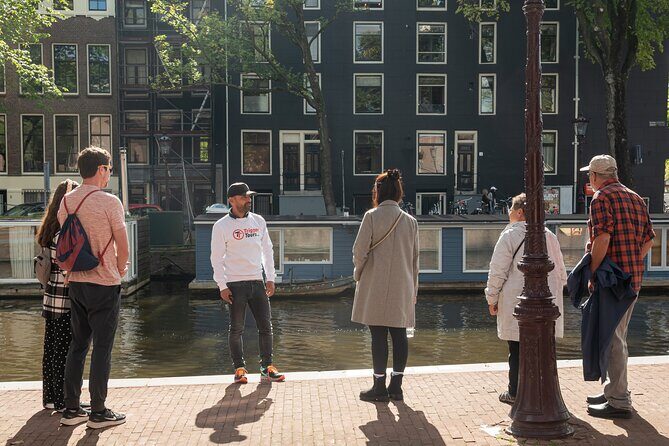
With a maximum of 15 people, the tour avoids the herd effect. You’re not squeezed into the back of a crowd. You can hear the guide, ask a question, and actually follow the turn-by-turn narrative.
This also matters at the memorials. Those are places where you want a respectful pace. A smaller group helps the guide control sound levels and timing so the stops feel more like moments than checkboxes.
Practical tip: even if you don’t love walking tours, this one usually stays manageable because it’s designed for a short, dense route. Many stops are quick (around 10 minutes each), but you’ll still get enough context to make the names stick.
Getting There at Amstel 51C (and Staying Oriented)
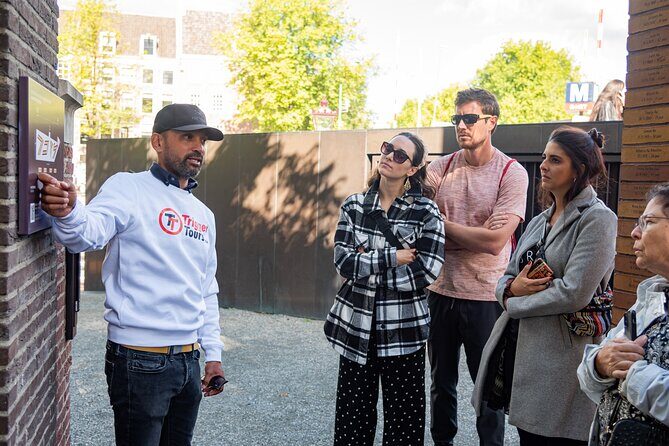
The meeting point is Amstel 51C, 1018 EJ Amsterdam, and the tour ends back there. That loop is useful. You don’t have to figure out your own exit plan in a crowded area.
If you prefer an easier start, the guide offers pickup from select city center hotels. You’ll want to check whether your hotel is in that pickup area when you book.
You’ll also be close to public transportation, which is a lifesaver if you’re bouncing between museums that day. And since you get a mobile ticket, you won’t be scrambling for paper confirmations in your bag.
Portuguese Synagogue: Context Before the Crisis
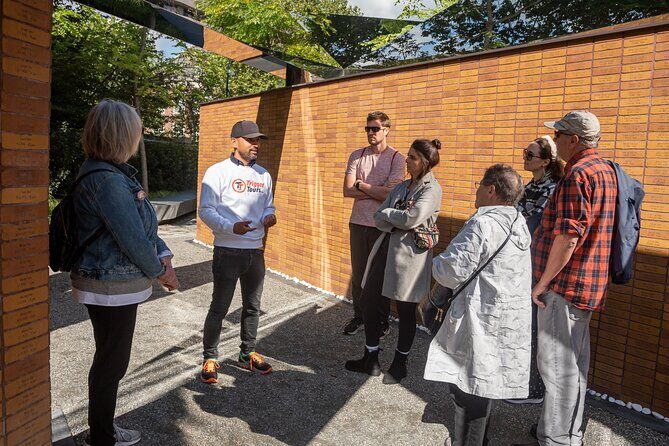
The first stop is the Portuguese Synagogue, tied to the Amsterdam Sephardic community. You’ll hear how this community was among the largest and richest Jewish communities in Europe during the Dutch Golden Age—and how the synagogue’s scale reflected that stature.
This is the smart opening. It keeps the tour from feeling like it starts only at tragedy. Instead, you build a baseline: community, culture, and institutions first. That foundation makes the later WWII-era stops hit harder, because you understand what was lost and what was targeted.
Good news: the stop includes a free admission ticket, so you’re not juggling extra costs before you even get fully oriented.
Auschwitz Monument: When Deportation Becomes the Story
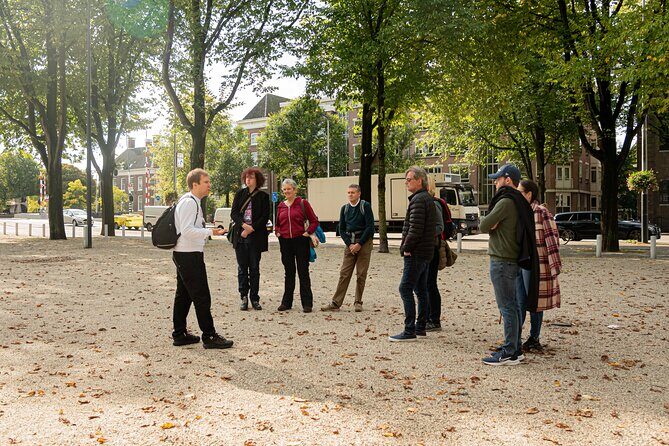
Next comes the Auschwitz Monument, where the focus turns to Jewish deportation. The wording in most people’s memories of Auschwitz is big and abstract. On this tour, it becomes specific to Amsterdam’s Jewish people and how deportations fit into the Nazi plan.
This stop is brief, but it’s designed as a pivot. After the synagogue context, you’ll feel the shift to persecution and forced removal. Even if you’ve read about WWII before, standing in the right place changes the meaning of what you already know.
Admission at this stop is listed as free, so you can focus on the words and not on logistics.





Verzetsmuseum Amsterdam: Resistance Adds Shape
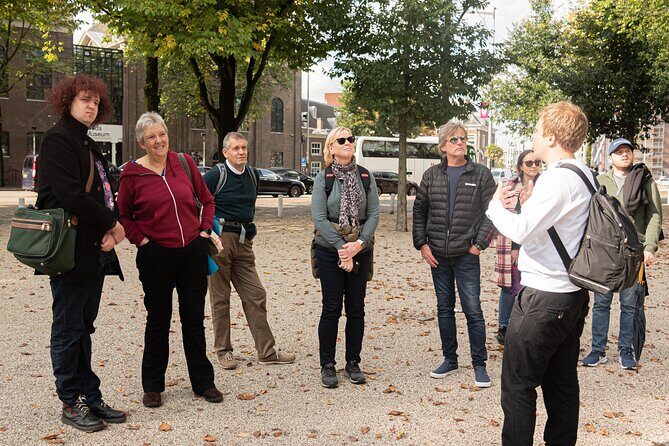
Then you head to Verzetsmuseum Amsterdam, focused on Jewish resistance. This matters more than you might expect. If a tour stays only on suffering, you come away with a one-note story. Here, you’re shown that Jewish Amsterdam was not only surviving—it was also resisting.
That doesn’t erase the horror. It just makes the overall picture accurate and more human. It also helps you process the memorial stops that follow, because you see agency alongside victimhood.
Like the other quick stops, the aim is to give you enough grounding to recognize why resistance is part of the WWII narrative—not an optional footnote.
Hollandsche Schouwburg: Deportation Camps in Plain Terms
At Hollandsche Schouwburg, the tour explains the deportation camps connection. This is one of those places where the emotion can catch in your throat, because it’s tied to the machinery of deportation in the city.
The stop is short (again, roughly 10 minutes), but it’s not meant to be skipped. It’s one of the key moments where the tour stops being background history and becomes an account of how people were processed and taken away.
Admission is free here too, which is nice. You can stay present instead of thinking about timed entries.
De Plantage: A Beautiful Area That Still Holds History
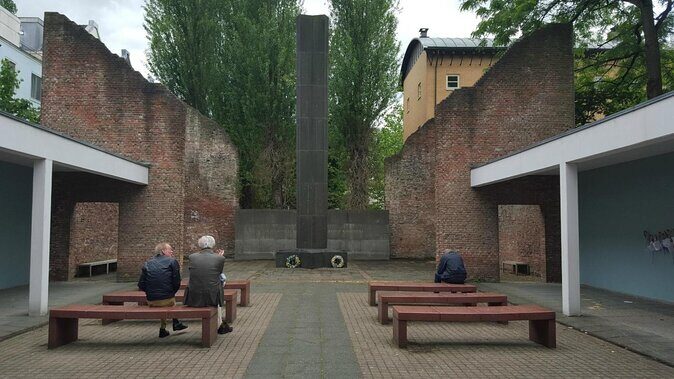
After the heavy memorial stops, you move into De Plantage, described as a beautiful area with history. This is a useful change of pace. You get a sense of place—Amsterdam not as a stage for WWII alone, but as a lived-in city where life continued in some form, and where the past still sits under the surface.
You’ll also get guided context that keeps it from becoming just a pleasant walk. The point is to help you understand that history doesn’t stay behind glass. It sits in the streets and in how neighborhoods developed.
Even with the emotional weight of the previous stops, this segment can feel like your brain catching up—because you’re allowed to look around.
Spinoza Monument: A Name Linked to Identity
Next is the Spinoza Monument. This stop is shorter than the synagogue or museum-style visits you might do on your own, but it’s there for a reason: you’re connecting Jewish identity and intellectual life to the city’s legacy.
Because the monument stop is brief, I’d treat it like a prompt. If you want more, you can always follow up after the tour by reading or visiting related sites. For many people, the monument works as a simple anchor: you remember the name, then you want to know more.
Dam Square and the Royal Palace Area: Back to Big Amsterdam
Midway through the route, you walk toward Dam Square and the Royal Palace. This section works as a bridge. After memorials, you’re back in a central, high-visibility part of town, with the energy of Amsterdam’s main public square around you.
That contrast helps you keep the bigger perspective: these WWII stories weren’t happening in an empty world. They were happening in a living city with famous landmarks, ordinary commutes, markets, and busy streets.
It also helps you end with a stronger sense of orientation for the rest of your day. You’ll likely know where to go next without guessing.
Nieuwmarkt Finish: Anne Frank’s Story Comes Back Into Focus
The tour finishes at or near Nieuwmarkt, where your guide shares more about the Anne Frank story and wraps things up. This ending is helpful because it brings the tour full circle. Even though you’ve covered wider Jewish Amsterdam and WWII mechanisms, you still land on the Anne Frank narrative.
Nieuwmarkt is a lively area name-wise and street-wise, so it’s a good place to transition from guided history into free exploration.
One note: the itinerary lists admission for this stop as not included, so don’t plan on a ticketed attraction here unless you confirm details at the time.
Price and Value: What $33.26 Buys You
At $33.26 per person, this is priced like a mid-range walking experience, but the value is in what you get for that money:
- A short, efficient 2-hour format that stacks multiple meaningful sites
- Free admission at several stops, so you’re not paying your way through the route
- A tight group limit (15 max), which makes the guide’s storytelling usable, not background noise
- A clear alternative to a museum-only approach, especially if you want the neighborhood layer added
If you’re already planning to do the Anne Frank House later, you can treat this as the context-builder. If you’re skipping the Anne Frank House and want a broader WWII Jewish-quarter view, this is a strong way to do that without spending all day in lines.
What to Wear and How to Plan Your Day
This walk is designed for being outside most of the time. I’d pack for real weather, not Amsterdam optimism. One practical theme in feedback: bring warm clothes if it’s chilly, because you’ll spend a lot of time walking between monuments.
Good plan for timing: schedule it earlier in your day or at least before you feel exhausted. Emotionally, it’s heavy enough that you’ll get more out of it when you’re fresh.
Who This Tour Fits Best (and Who Might Hesitate)
This is a great match if:
- You want to understand Jewish Amsterdam in WWII, not just Anne Frank as a standalone story
- You like walking routes that include memorial context and neighborhood meaning
- You appreciate a guide who keeps it organized and respectful at sensitive stops
You might hesitate if:
- You want a purely upbeat sightseeing walk. This one is about deportation, persecution, and resistance.
- You specifically want the Anne Frank House as part of your ticketed itinerary. This tour is positioned as an alternative, not a replacement.
Final Take: Should You Book This Anne Frank Jewish Quarter Walk?
Yes—if you’re in Amsterdam and you want the Anne Frank story with real neighborhood grounding, this tour is a smart use of time. The combination of the Portuguese Synagogue start, multiple memorial stops, and the finish around Nieuwmarkt gives you a full arc without turning into an all-day ordeal.
Book it especially if you’re the type who likes facts with a human face, and you don’t mind that the walk is emotionally direct. If you’re trying to plan a day with both education and breathing room, this is one of the better-balanced options.
FAQ
How long is the tour?
It runs for about 2 hours.
How big is the group?
The group size is capped at a maximum of 15 travelers.
Is it only for English speakers?
Yes, the tour is offered in English.
Where does the tour start and end?
It starts at Amstel 51C, 1018 EJ Amsterdam and ends back at the meeting point.
Does the tour include the Anne Frank House?
This tour is positioned as an alternative to a Anne Frank House visit, and it does not include the Anne Frank House.
What happens if the weather is bad?
The experience requires good weather. If it’s canceled due to poor weather, you’ll be offered a different date or a full refund.
If you want, tell me your travel dates and whether you’re also planning the Anne Frank House, and I’ll suggest the smoothest way to fit both into one efficient day.