REVIEW · AMSTERDAM
Jordaan, Anne Frank and Leidseplein tour in English
Book on GetYourGuide →Operated by Camaleon Tours · Bookable on GetYourGuide
A good stroll, with real context. This 3-hour English tour knits together Amsterdam’s most famous neighborhoods and stories, starting on the 17th-century Canal Ring and ending near Museumplein. I love how it mixes postcard sights with WWII remembrance, and I like that you get a guided walk through the Jordaan’s streets and canals rather than just standing in front of one photo spot.
The main thing to consider is pacing and language. One past booking complained about a late start and a guide who was hard to understand, so arrive early and expect walking. Also, the Anne Frank House ticket isn’t included, so you’ll be learning at/near the site rather than doing the timed-entry visit as part of this price.
In This Review
- Key things to know before you go
- Starting at Central Station: the fast way to get oriented
- Canal Ring, the 17th-century heart of Amsterdam
- Into the Jordaan: brown cafés, canals, and a bohemian rhythm
- Anne Frank’s house area: learning the WWII story in context
- Westerkerk: a church Anne referenced, not just another landmark
- Leidseplein and Museumplein: finishing near the museums
- Vondelpark: the big green reset after city streets
- How good is the guide impact, really
- Price and value: $29 for three big themes
- Who should book this tour (and who should skip it)
- Should you book this English Jordaan, Anne Frank and Vondelpark tour?
- FAQ
- Where is the meeting point?
- How long is the tour?
- Is the Anne Frank House ticket included?
- What sights are included in the route?
- What language is the tour in?
- Where does the tour end?
Key things to know before you go
- Canal Ring opener: 17th-century waterways and World Heritage canal views get you oriented fast.
- Jordaan streets + brown cafés: You see the vibe of a bohemian corner, not just the buildings.
- Anne Frank focus outside the ticket: You’ll learn the WWII story connected to the house site.
- Westerkerk stop: The church Anne mentioned shows up on your route.
- Vondelpark at a walking pace: The largest park in Amsterdam is built into the itinerary.
- Good location end point: You finish near Museumplein and the big museums.
Starting at Central Station: the fast way to get oriented
Your tour begins at Stationsplein 10, right in front of Amsterdam Centraal Station. The guide will be waiting with a green umbrella, and you’ll want to check in about 15 minutes early so you don’t get stuck hunting your group while the city moves on.
This opening stretch matters more than you might think. Amsterdam looks like one big maze from the outside, but the canal network is the organizing system. Starting near the Canal Ring helps you understand where you are before you start making photo stops.
Also, you’re walking from the get-go. Most of Amsterdam’s “big sights” are reachable on foot, but the streets are narrow and bicycles appear like magic. I always tell friends to keep moving, keep your eyes up, and don’t assume you’ve got a bike-free zone just because you’re on a pedestrian path.
You can also read our reviews of more tours and experiences in Amsterdam.
Canal Ring, the 17th-century heart of Amsterdam
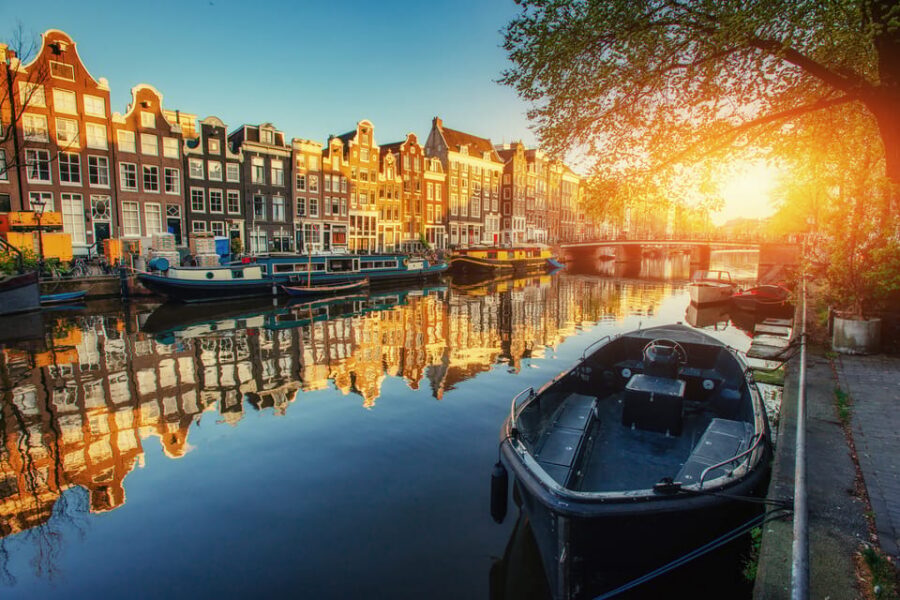
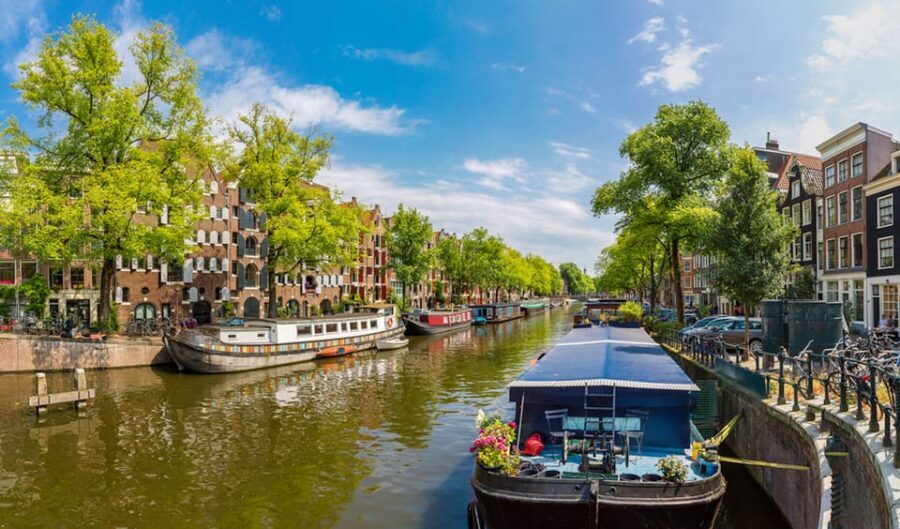
First stop is the Canal Ring, built in the 1600s and recognized as a World Heritage Site. This is where you’ll learn why Amsterdam’s canals are more than scenery. They’re the city’s historic transport routes, wealth display cases, and city-planning flex all at once.
Expect the classic lineup of canal details:
- Merchant palaces from wealthy eras, with grand façades that were meant to impress.
- Narrow house stories, including the famed idea of Amsterdam’s tightest spaces.
- Iconic houseboats, which remind you the “city” isn’t only on land.
What I like here is that the guide ties it together. You’re not just hearing facts; you’re getting a mental map. Once you understand how canals shaped neighborhoods, the rest of the route feels less random.
Time-wise, this portion sets the tone. You’re at walking speed, with quick explanations that help you look smarter at the next corner.
Into the Jordaan: brown cafés, canals, and a bohemian rhythm
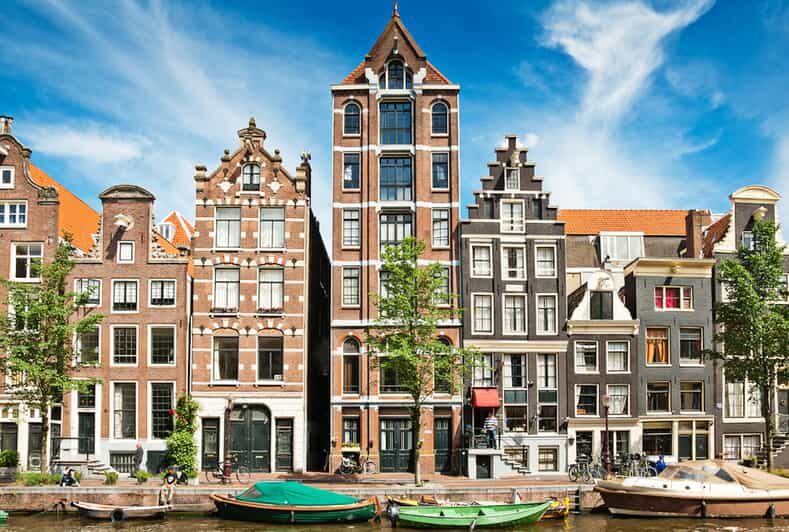
Next you head toward the Jordaan, one of Amsterdam’s most atmospheric areas. This neighborhood is known for a more artsy, older-city feel, and your walk focuses on that day-to-day character.
The Jordaan is especially good for a first visit because it shows a different Amsterdam than the canal-tour-from-a-distance version. You’ll pass through streets that feel lived-in, where locals linger around brown cafés rather than rushing for the next attraction.
You’ll also get canal views along the route, because the Jordaan is canal-connected in a way that makes the neighborhood feel stitched together. That matters if you’re trying to understand Amsterdam as a series of small districts, not one monolithic city.
A small consideration: the Jordaan’s charm also means more corners and more pedestrian-bike crossovers. Keep your spacing and don’t stop suddenly unless there’s clear room.
Anne Frank’s house area: learning the WWII story in context
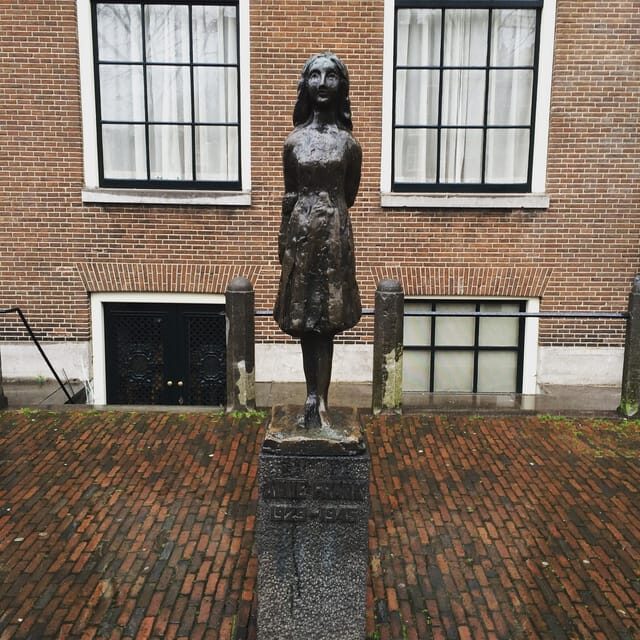
Then comes the anchor point: the Anne Frank House area, reached along the Prinsengracht canal. Your itinerary includes guided time at the site location, plus short walks through the surrounding streets.
Two important things for you to know:
- The tour does not include an Anne Frank House ticket, so don’t expect timed entry through the doors as part of the $29 price.
- The value here is the framing. You’ll learn how WWII affected Amsterdam and what it meant in the story people associate with this address.
Even if you’ve read the diary before, I find it helps to hear it tied to the city layout. The canals, the street scale, and the neighborhood density all shape how you imagine what hiding looked like in practice.
You’ll also visit the area near the square connected to the museum. That setting helps you understand why the location became a major site of remembrance, not just a building on a street.
Westerkerk: a church Anne referenced, not just another landmark
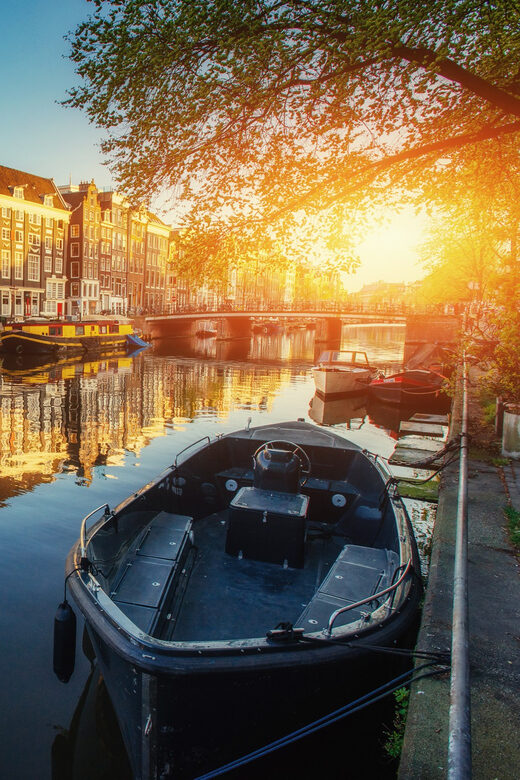
After Anne Frank’s site, your route includes the Westerkerk, the church associated with references from Anne’s writing. This stop is only a short walk, but it gives you an extra layer beyond the main house story.
What I like about including Westerkerk is that it reminds you Amsterdam’s WWII story wasn’t happening in a vacuum. Religious and community landmarks were part of everyday city life, and seeing them on the same walk helps you place the narrative in a real landscape.
If you’re the type of visitor who wants meaning, this is a good moment to slow down. Look at the church from the street and pay attention to how the neighborhood streets feed into it.


Leidseplein and Museumplein: finishing near the museums
Your walk continues to Leidseplein, a lively square area in central Amsterdam. It’s a practical stop because it puts you back into the city’s “I can grab something to eat or see a show” zone.
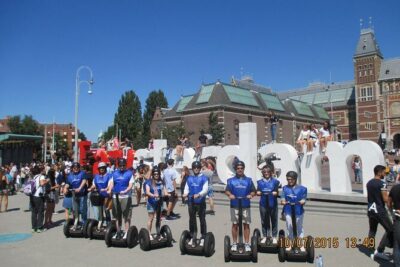
From there, the tour ends near Museumplein (1071 DJ Amsterdam). This is the museum square, and it’s where you’ll find the Van Gogh Museum and the Rijksmuseum.
This ending location is smart value. Even if you don’t want a full museum day, you can use Museumplein as a launchpad for your next move:
- If you want more culture right away, the big names are nearby.
- If you want a break, it’s easy to find a café and decompress without getting lost in random streets.
Vondelpark: the big green reset after city streets
The route includes a walk through Vondelpark, the largest park in Amsterdam. Parks aren’t just “nice scenery” here. They act like lungs for the city, giving you a change in pace after narrow streets and dense neighborhoods.
Why this stop matters on this particular itinerary: after the intense WWII learning at the Anne Frank area, a park walk feels like a reset. You’re not escaping the story so much as returning to the normal rhythm of how Amsterdam moves day to day.
Timing can be a factor. One earlier experience noted that the park wasn’t included due to time, so if Vondelpark is a must-do for you, double-check your expectations and plan to do a quick independent walk nearby if needed.
How good is the guide impact, really
A tour like this lives or dies by the guide. Based on what you’ll hear in the walk, the guide’s job is to connect architecture, neighborhood identity, and the WWII narrative without turning it into a lecture you can’t follow.
Positive experiences tied strong performance to a friendly, professional style, clear explanations of canal and building history, and good pacing that still left room for normal breaks. One account also noted coffee and restroom stops, which is genuinely useful on a 3-hour walk in Amsterdam.
But there’s another side to be aware of. A negative report described a late start, long time standing around near the station, and difficulty following along due to language clarity, plus concerning behavior described as alcohol smell and acting intoxicated. I can’t verify any of that, but it’s enough for you to trust your instincts. If the meeting point feels off or the guide’s communication isn’t working for your group, don’t just sit there for an hour. Ask for clarification fast.
Price and value: $29 for three big themes
At $29 per person for 3 hours in English, you’re paying for guided orientation plus a structured route through high-demand areas. That’s solid value if you want the “how to see Amsterdam in one afternoon” outcome.
Here’s what makes it a good deal:
- You’re getting multiple named zones in one go: Canal Ring, Jordaan, Anne Frank area, Westerkerk, Leidseplein, and Vondelpark.
- The route is built around walkable central Amsterdam, so you’re not paying extra transit time.
- The guide is included, and the explanations seem to focus on buildings and canal history, which is where walking tours pay off.
One clear trade-off: the Anne Frank House ticket isn’t included. If the timed-entry visit is your top priority, you may need to plan that separately. Think of this tour as the “context and city setting” version, not the full ticketed museum experience inside the house.
Who should book this tour (and who should skip it)
This tour fits best if you:
- Are in Amsterdam for a short time and want a practical orientation.
- Like walking tours that explain architecture and city layout, not just random stops.
- Want WWII context connected to real places, while still seeing parks and neighborhoods.
You might skip it if you:
- Need a full, ticketed Anne Frank House visit as part of your package.
- Don’t do well with walking in a dense bicycle city.
- Are very sensitive to delays or have low tolerance for unclear communication.
It’s also worth knowing that language quality can vary. Staying flexible and checking in early helps you avoid stress.
Should you book this English Jordaan, Anne Frank and Vondelpark tour?
If you want an efficient first-day walk that covers Amsterdam’s iconic canals, Jordaan character, and a WWII-linked site, this is a good option. For $29, the combination of multiple major areas plus guided storytelling is strong value, especially with an end point near Museumplein.
My booking advice: go for it if you’re comfortable doing a guided “site learning” visit at the Anne Frank location without assuming ticket entry. And if Vondelpark is a must, plan for the possibility that time constraints could affect park coverage on the day. If you arrive early, confirm the green umbrella guide, and stay alert to communication, you’ll likely get the experience this route is built for.
FAQ
Where is the meeting point?
The meeting point is in front of Central Station at Stationsplein 10. You should arrive about 15 minutes before departure. The guide will be wearing/holding a green umbrella.
How long is the tour?
The tour duration is 3 hours.
Is the Anne Frank House ticket included?
No. The Anne Frank House ticket is not included, so the tour price covers the guided walk and information, not entry via a ticket.
What sights are included in the route?
You’ll see the Canal Ring, the Jordaan, the Anne Frank House area, Westerkerk, Leidseplein, and a walk in Vondelpark, finishing near Museumplein.
What language is the tour in?
The tour is offered in English.
Where does the tour end?
The tour finishes at Museumplein, 1071 DJ Amsterdam near the museum square.