REVIEW · AMSTERDAM
Amsterdam: Anne Frank and Jewish Quarter Tour
Book on GetYourGuide →Operated by Trigger Tours · Bookable on GetYourGuide
War still echoes in these streets. This 2-hour walking tour connects the Nazi occupation to what Amsterdam remembers today, starting in the Jewish Quarter and moving through key WWII stops. I especially love the way the Anne Frank story is framed as part of the larger Jewish community experience, and I love that you stand by the Portuguese Synagogue while the guide fills in the human context behind the stone.
Guides like James and Aaron tend to keep things respectful but not stiff, with a clear timeline that makes names and dates easier to hold onto. You’ll hear about the February Strike and the Hunger Winter, and then how the city faced the aftermath. There’s no sugarcoating here, so it’s a sad subject and the walk may feel like a lot if you prefer lighter sightseeing.
You’ll cover several memorials and historic landmarks on foot, so bring comfortable shoes. I also like that private or small-group options are available, which often makes it easier to ask questions as you go.
In This Review
- Key things I’d bookmark before you go
- Why this Jewish Quarter tour feels different from a quick Anne Frank visit
- Your 2-hour route: the shape of the walk and what you’ll notice
- Starting near Amsterdam Boat Adventures: easy to find, easy to orient
- Auschwitz Monument and the Dokwerker: reading the city as a memory map
- Portuguese Synagogue: beauty with a job to do
- Jewish Historical Museum: turning dates into a sense of community
- Hollandsche Schouwburg Memorial and the wartime timeline you can track
- The Jewish Quarter walk and the Plantage district feel
- Grachtengordel and the canal-belt transition back to Amsterdam
- Price and value: what $24 buys you in real guidance
- How to get the most from the tour without rushing yourself
- Should you book the Amsterdam Anne Frank and Jewish Quarter Tour?
- FAQ
- How long is the Amsterdam Anne Frank and Jewish Quarter Tour?
- What stops are included on the tour?
- Where does the tour start and where does it end?
- Is the Anne Frank House included?
- What’s included in the price?
- Are there private or small group options?
- What languages is the tour offered in?
- What should I bring?
- Is free cancellation available?
Key things I’d bookmark before you go
- Anne Frank context without the Anne Frank House ticket: the tour builds the surrounding story, then points you toward what to see next
- Portuguese Synagogue and the Jewish Historical Museum: key stops for understanding Jewish life over time, not just one chapter
- WWII street-level memorials: Auschwitz Monument, the Dokwerker, and the Hollandsche Schouwburg memorial are treated as real places with meaning
- Amsterdam’s WWII timeline made plain: including the February Strike and the Hunger Winter, plus what came after
- A focused wander through the Jewish Quarter: narrow streets, historic buildings, and landmarks that help you “see” the neighborhood
- Finish near Hermitage Amsterdam: a convenient drop-off if you want to keep exploring after the walk
Why this Jewish Quarter tour feels different from a quick Anne Frank visit
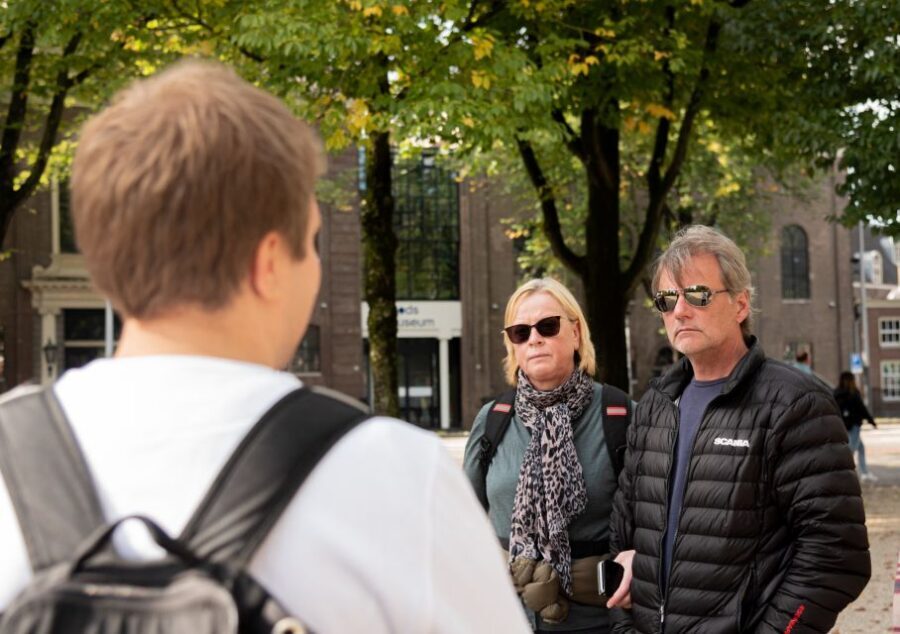
If you only do the Anne Frank House on your Amsterdam trip, you get one story inside one address. This tour gives you the wider neighborhood story around it. You learn how Amsterdam’s Jewish community lived, endured, and coped during the German occupation, then how the city remembered afterward.
What I like most is that the tour doesn’t treat history as an abstract concept. It links the wartime events you’ve heard about to specific places you can look at—synagogue, museum, and memorial sites—so the tragedy has geography. That makes the emotional weight feel grounded, not distant.
The best part is the balance. You’ll hear about the Holocaust and the atrocities committed in Amsterdam with sensitivity, but the guide also keeps you engaged with clear explanations and time to ask questions. In tours like this, that mix matters. It’s easy for somber material to turn into either a heavy lecture or a rushed walkthrough. This one aims for neither.
You can also read our reviews of more tours and experiences in Amsterdam.



Your 2-hour route: the shape of the walk and what you’ll notice
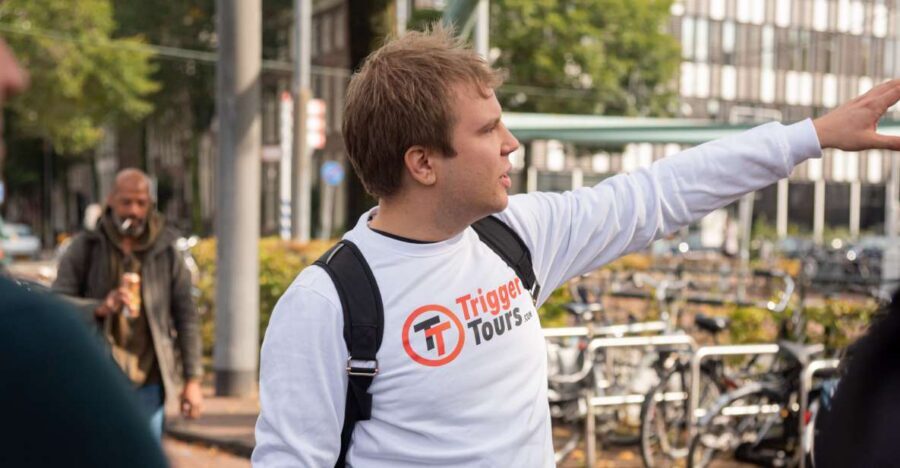
This is a tight schedule, so you don’t get long stretches at every stop. Instead, you move steadily through the Jewish Quarter and nearby historic areas with short guided moments at each marker. The tour is about 2 hours, which is long enough to connect the dots, but short enough to pair with other Amsterdam sightseeing.
Here’s the flow you can expect in a simple way:
- Start near Amsterdam Boat Adventures (meeting point can vary by option)
- Walk to major WWII-related sites like Auschwitz Monument and the Dokwerker
- Continue to landmarks in the Jewish Quarter area, including the Portuguese Synagogue and Jewish Historical Museum
- Visit Hollandsche Schouwburg National Holocaust Memorial
- Spend time walking through the Jewish Quarter area and then get a guided look at Grachtengordel (the canal belt zone)
- End with drop-off options near Hermitage Amsterdam
Because the tour keeps moving, you’ll want to slow down internally even if you’re walking quickly. I find it helps to mentally switch from sightseeing mode to story mode. You’re not just collecting photos; you’re building a map of what happened here and how the neighborhood changed.
Starting near Amsterdam Boat Adventures: easy to find, easy to orient
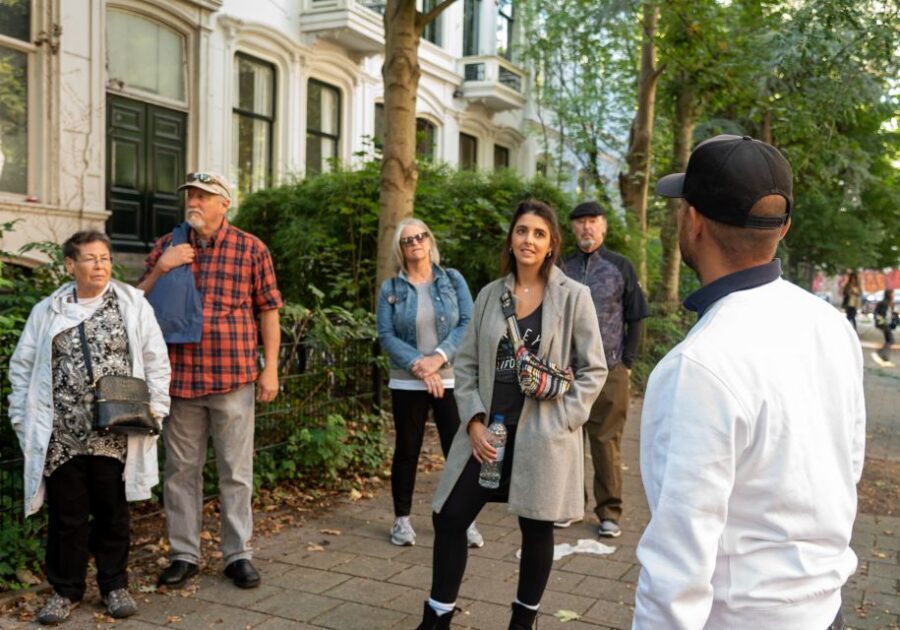
Your starting point can vary, but one listed option is Amsterdam Boat Adventures. That’s handy because it’s a well-known area for visitors, and it sets you up near the water and central sightseeing zones.
Even if you’re more of a “walk and talk” traveler than a boat person, this start location is useful. It typically means you’re not hunting for a meetup point in a tiny side street with three wrong turns and a cold nose.
From the first minutes, the guide sets the tone and explains what you’re about to see. That matters here. Without a framework, Holocaust sites can feel like isolated plaques. With a framework, they start to click into place as parts of the same wartime story.
Auschwitz Monument and the Dokwerker: reading the city as a memory map

Two of the key stops are Auschwitz Monument and the Dokwerker, each with a short guided visit. I like that the tour includes multiple markers rather than forcing everything into the Anne Frank narrative.
These stops work best when you treat them as prompts to ask questions. The guide’s job is to connect what you’re looking at with what happened in Amsterdam during the occupation—how people suffered, how they were targeted, and how the city responded afterward.
A practical note: because each stop is around 10 minutes, you’ll see and hear a lot in a short window. If you’re the type who needs time to process, give yourself a quick pause after the guide finishes. Stand there for an extra breath before moving on. You don’t need more facts to respect the place—you need time to let the facts land.
Portuguese Synagogue: beauty with a job to do

Then you shift from memorials to living heritage at the Portuguese Synagogue. The tour treats this as more than a photo stop. It’s a chance to understand how the community’s long presence in Amsterdam shows up in landmarks that still stand today.
What I like about this part of the route is the contrast. Memorial sites force you to look at what was destroyed. The synagogue forces you to look at what endured and what the city once built around communal life.
Even if you don’t go inside any building during the tour, the guide can help you see why this particular site matters. You’ll get the sense that the Jewish Quarter wasn’t just a wartime setting—it was a neighborhood with deep roots, institutions, and culture. That context makes the later Holocaust stories hit harder, in a good way.


Jewish Historical Museum: turning dates into a sense of community
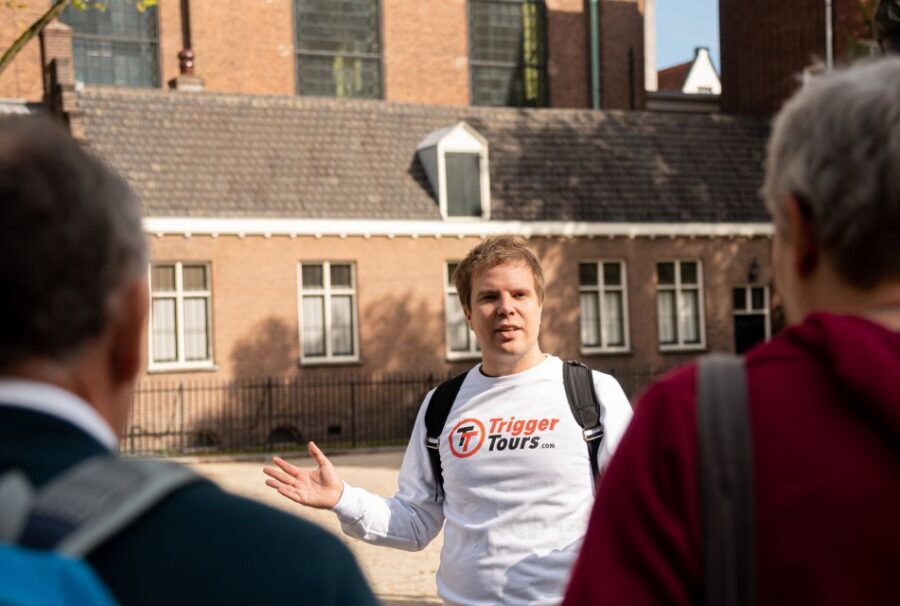
Another standout stop is the Jewish Historical Museum. This is where you move from “what happened” to “what it meant,” because museums are built to explain continuity, not just rupture.
Expect a guided walk-through outside the main story surfaces, with the guide tying the museum to broader Jewish history in Amsterdam. The tour also covers how the original Jewish quarter evolved over centuries, which helps you understand why this area has so many layers.
If you’re someone who struggles with history when it stays only in bullet points, this museum stop is valuable. It gives your mind something visual to organize. You don’t just memorize names; you understand the neighborhood’s role in shaping Amsterdam’s culture and heritage.
One trade-off: museum time here is guided and short. If you want to linger, you’ll probably want to return later on your own—so take note of what sparks your interest during the tour.
Hollandsche Schouwburg Memorial and the wartime timeline you can track
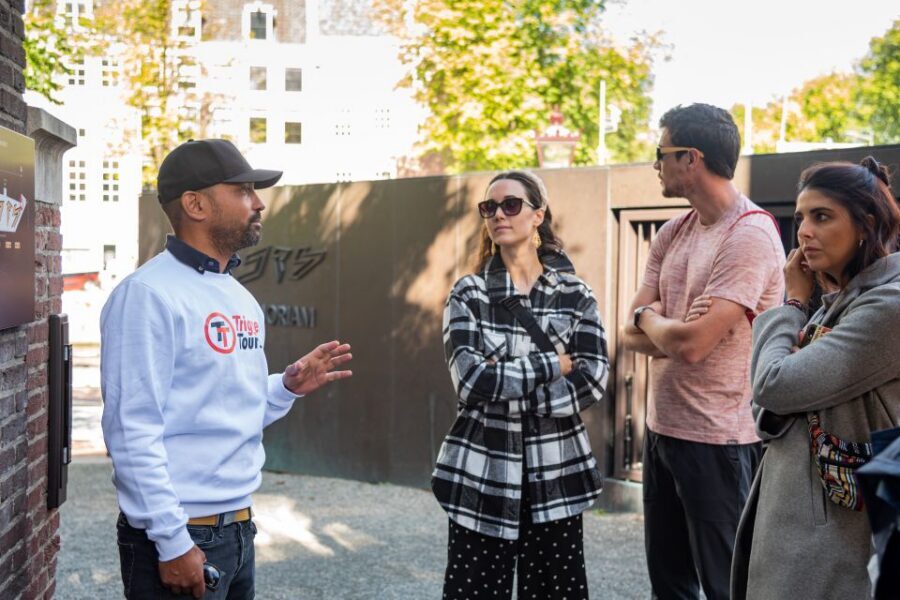
The Hollandsche Schouwburg National Holocaust Memorial is another major stop on this walk, again with a guided visit. This is the point where the tour really leans into the tragedy of WWII in Amsterdam and how deportations and persecution played out in real places.
The guide also brings in the wartime timeline in a way that feels structured: the Nazi occupation in the early 1940s, the February Strike, the Hunger Winter, and the aftermath that followed. Those events are mentioned specifically on this tour, which is great because it gives you a backbone for the rest of the story.
Here’s the practical side of a timeline lesson: it helps you connect cause and effect. For example, when you understand the Hunger Winter, later details about suffering and survival don’t feel random. They feel like the consequence of a tightening system.
And yes, it’s heavy. This is one of those tours where you’ll likely end up thinking about the people, not just the events. That’s the point.
The Jewish Quarter walk and the Plantage district feel
After the memorial stops, the tour spends about 30 minutes walking through the Jewish Quarter itself. This is where narrow streets and historic buildings stop being scenery and become evidence.
You’ll see landmarks tied to Jewish life and you’ll hear stories connected to how the community lived and endured during and after the Second World War. The tour also mentions looking at the Jewish Council headquarters area and the background of the quarter across centuries.
The tour content isn’t limited to WWII. It gives you the longer view: how the neighborhood developed, how it changed, and how Jewish Amsterdam contributed to the city’s cultural heritage. That broader context is what makes the route feel more complete than a one-note tragedy tour.
If you’re planning photos, remember the mood. Aim for respectful shots—street views that show structure and place—rather than selfies everywhere. A little restraint goes a long way in a neighborhood that carries so much meaning.
Grachtengordel and the canal-belt transition back to Amsterdam
After the Jewish Quarter portion, you get a guided look at Grachtengordel. This is a smart transition because Amsterdam’s canal belt can otherwise feel like a separate world from the WWII story.
Here, the guide helps you connect the dots: the same city that’s famous for beauty also contains difficult memory. You leave the tight alley atmosphere and see the broader city form, with the story still attached.
This part of the route is also useful for practical planning. If you like to keep moving, you’re in a central zone after the tour, not stuck in an out-of-the-way area.
Price and value: what $24 buys you in real guidance
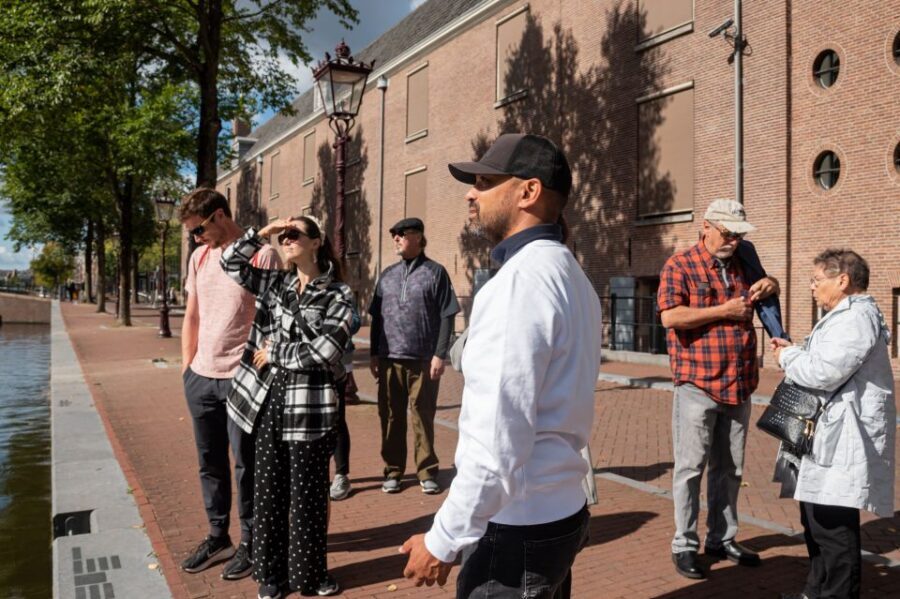
At $24 per person for 2 hours, this is good value if what you want is context, not just sights. You’re paying for a local guide, a structured narrative, and short guided moments at multiple important locations.
The value gets even better because this tour is set up as private or small groups available, and that often means you’re not stuck in a crowded line with no chance to ask follow-ups. The guide names that come through in the experience include James and Aaron, and the common thread is clear, respectful storytelling plus time for questions.
Also important: the tour does not include entrance to the Anne Frank House. The upside is that you’re not paying extra for a ticket you might not use, and the tour isn’t built around one-ticket logistics. The downside is simple: if you want the Anne Frank House interior, you’ll need to plan that separately.
So think of the $24 as paying for the background story that helps the Anne Frank House (and other WWII sites) make more sense later.
How to get the most from the tour without rushing yourself
This tour is best when you show up ready to listen. Here are a few practical moves that make a difference:
- Wear shoes you can handle for a solid walking pace. The route is short but active.
- Bring questions. The guides tend to answer them patiently, and you’ll learn more when you steer toward what you care about.
- Keep your expectations realistic: each stop is brief, so your goal is understanding the structure, not memorizing every detail.
Also, pace your emotions. If you feel overwhelmed at a memorial stop, that’s normal. Take a breath, look around for a second like you would anywhere else, then let the guide move you to the next place when you’re ready.
One more smart tip: the tour ends near Hermitage Amsterdam (with listed drop-off options). If you want to keep the learning going, that’s a convenient pairing for the rest of your day.
Should you book the Amsterdam Anne Frank and Jewish Quarter Tour?
I think you should book it if you want a guided walk through Amsterdam’s Jewish Quarter that connects WWII events to real sites—especially if you’re looking for more context than a single Anne Frank House visit provides. It’s also a strong choice if you like a clear narrative with time for questions, since guides such as James and Aaron are known for balancing sensitivity with engagement.
Skip it or consider pairing it differently if you want a lighter, purely scenic Amsterdam day. This one isn’t built for that mood. You’re going to walk, you’re going to learn, and you’re going to feel the weight of the history in the street-level details.
If you’re visiting Amsterdam for the first time and you care about understanding how the city’s past shaped its present, this tour is a very efficient way to do it.
FAQ
How long is the Amsterdam Anne Frank and Jewish Quarter Tour?
It lasts about 2 hours.
What stops are included on the tour?
You’ll visit several WWII-related and Jewish Quarter sights, including the Auschwitz Monument, the Dokwerker, the Portuguese Synagogue, the Jewish Historical Museum, and the Hollandsche Schouwburg National Holocaust Memorial, plus time in the Jewish Quarter and a guided look at Grachtengordel.
Where does the tour start and where does it end?
The meeting point can vary depending on the option booked. Starting options include Amsterdam Boat Adventures | Open boat tours, and the tour lists drop-off locations near Hermitage Amsterdam.
Is the Anne Frank House included?
No. The tour does not include tickets or entrance to the Anne Frank House.
What’s included in the price?
A local guide is included. Private tour options may also include a private format depending on the option you select.
Are there private or small group options?
Yes. Private or small groups are available.
What languages is the tour offered in?
The live tour guide is available in English and Spanish.
What should I bring?
Wear comfortable shoes.
Is free cancellation available?
Yes, you can cancel up to 24 hours in advance for a full refund.