REVIEW · AMSTERDAM
2 Hours Private Amsterdam Rickshaw Tour
Book on Viator →Operated by BlackfoXXX Amsterdam explorer · Bookable on Viator
Amsterdam from the seat of a rickshaw.
This 2-hour private ride is a fast, low-effort way to see Amsterdam’s highlights without fighting crowds on foot. I like the flexible departure times that help you plug it into a busy day, and I also like that the rickshaw can reach spots buses and boats can’t—so you get angles of the city that feel more personal than a standard bus loop.
You’re riding in a small group of up to 2 adults, and there’s a strict maximum weight limit for comfort and safety. One drawback to plan for: this is a good-weather experience, so if the day turns rainy/windy, you may feel it even with protection and blankets.
In This Review
- Key highlights worth prioritizing
- Entering Amsterdam’s highlights in just two hours
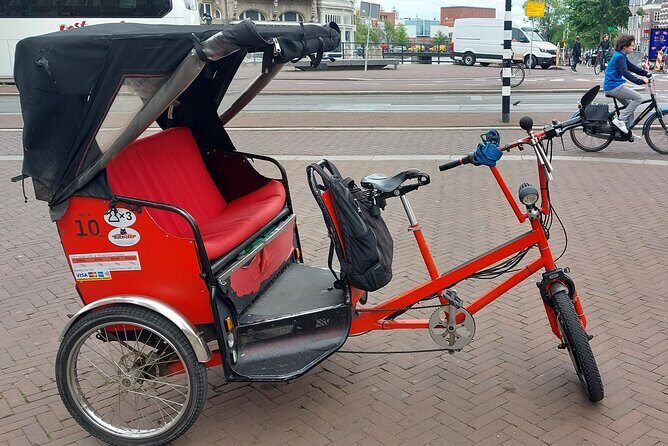
- The rickshaw ride: comfort, rain protection, and car-free closeness
- Hotel pickup and cruise docking: reducing the stress on arrival day
- The route through old Amsterdam: Dam Square to the Red Light District
- Nieuwmarkt and Rembrandtplein: markets, metro convenience, and night energy
- The Skinny Bridge and Museumplein zone: photo-ready Amsterdam geometry
- Anne Frank House area and Vondelpark: meaning and a reset
- De Gooyer Windmill and Brouwerij ’t IJ: a quick Dutch flavor hit
- De 9 Straatjes: canal-linked streets for one last look
- Price and value: what $234.30 per group really means
- Who should book this rickshaw tour, and who should skip it
- Should you book this 2-hour private rickshaw tour
- FAQ
- What is the duration of the Amsterdam rickshaw tour?
- How much does the tour cost?
- Is pickup offered?
- What language is the tour offered in?
- Is this a private tour?
- What size groups can ride in one rickshaw?
- Does the tour include a mobile ticket?
- Is there WiFi during the ride?
- What if the weather is bad?
- What stops are included on the route?
Key highlights worth prioritizing
- Private pace, real photo stops: the guide pauses often for photos and close looks.
- Rickshaw access: you can get into areas larger vehicles miss.
- Pickup where you are: hotels in central Amsterdam and common cruise docks.
- Route covers major neighborhoods: Dam Square, Red Light District, Nieuwmarkt, and more.
- Green break built in: Vondelpark is a calm reset between busy sights.
- Short scenic add-ons: De Gooyer Windmill and De 9 Straatjes round out the day.
Entering Amsterdam’s highlights in just two hours
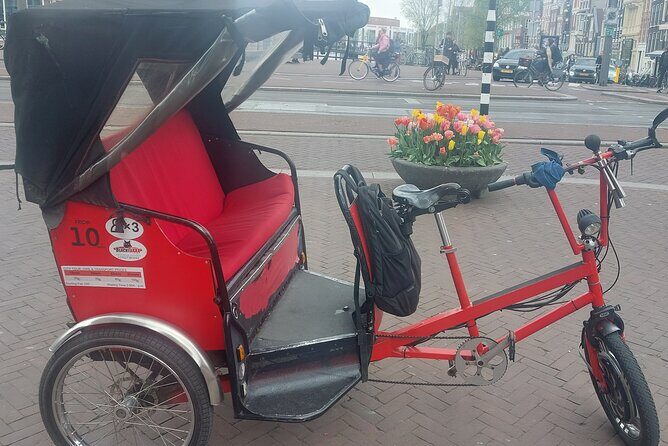
Two hours sounds short until you do the math on Amsterdam. Walking to the right places takes time, and public transport doesn’t always drop you at the best angles. This tour is built for speed with breathing room: you get an overview of the city’s most famous areas while staying comfortable and mobile.
The big practical win is that you’re not pedaling. In the reviews, people specifically call out that it feels like cycling without the effort. That matters if you’re tired from travel, carrying camera gear, or you just don’t feel like turning your vacation into a stair-and-bridge training plan.
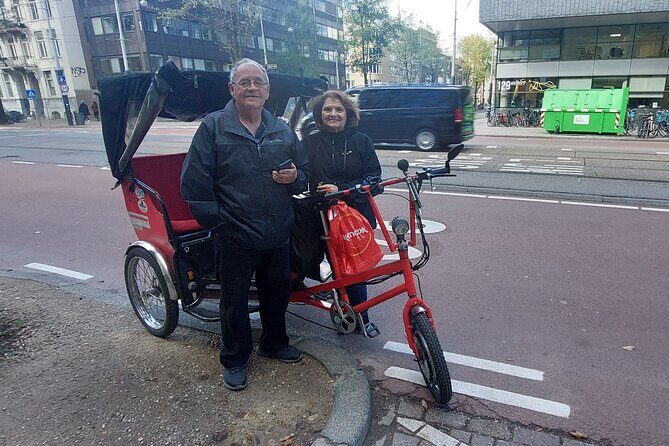
Because it’s private, the guide can adapt the stops to your comfort level. If you want more photos, you get them. If you want to linger for a quick street-corner moment, you can. It also helps that the ride is designed for a small group: up to 2 adults per rickshaw (or 2 adults plus up to 2 small children with a total weight limit).
You can also read our reviews of more private tours in Amsterdam


The rickshaw ride: comfort, rain protection, and car-free closeness
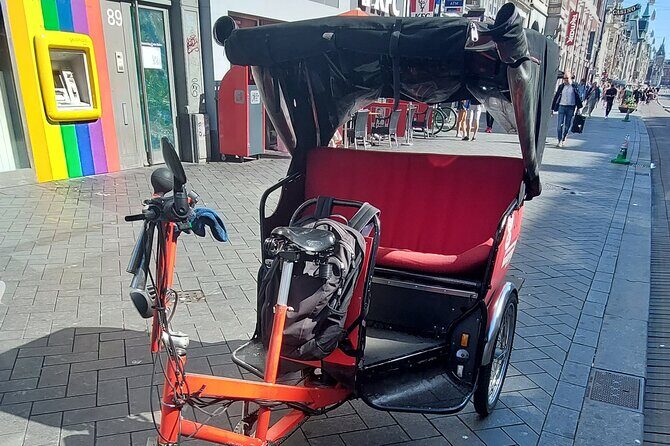
Amsterdam streets can be chaotic. Narrow lanes, cyclists whizzing by, and traffic that moves like it’s in a hurry even when it isn’t. A rickshaw cuts through that tension by being small and easy to navigate.
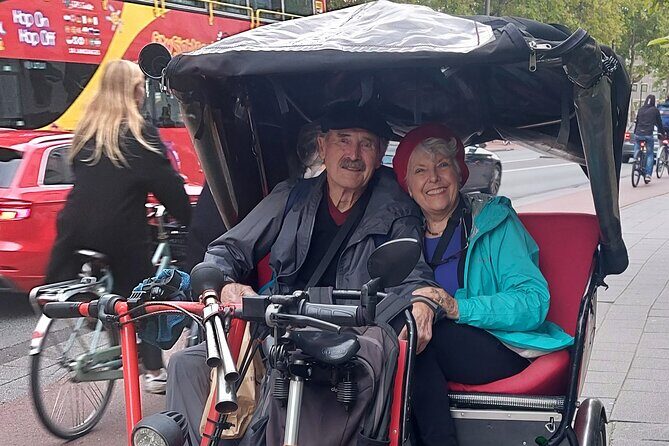
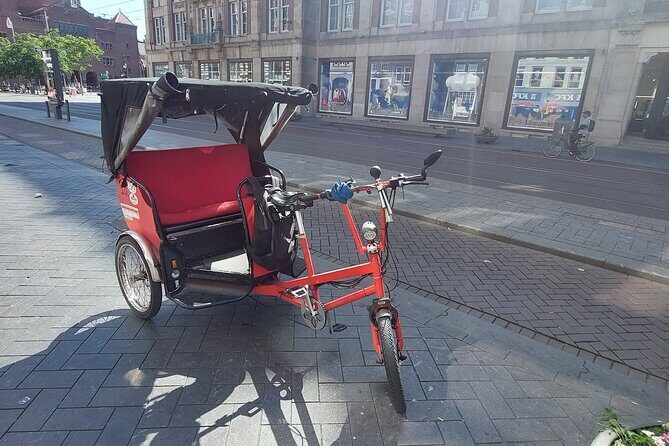
In the feedback, the rickshaw itself gets praised for being clean and having protection from rain and winds. People also mention a blanket for chilly mornings, which is one of those details that makes the difference between enjoying the ride and rushing through it. If you’re traveling in shoulder season, this matters more than you’d think.
What surprised me as I planned routes like this for clients over the years is the way a rickshaw changes your relationship with the city. You don’t just “see” buildings. You pass close to canal-side facades, you feel the shift from tourist blocks to local streets, and you catch those tiny sights that usually vanish when you’re moving too fast on foot.
And yes, the guide is on top of it. Reviews emphasize that the guide stays friendly and helpful in English, and that they stop safely for photos rather than talking while rushing through. One review even notes the guide getting off the bike to explain things, which is a great sign: it usually means the information lands instead of being shouted past the wind.
Hotel pickup and cruise docking: reducing the stress on arrival day
Amsterdam can be smooth when you’re near the center, and messy when you’re not. This tour solves that with pickup. If you’re staying in a hotel in central Amsterdam, pickup is described as the lowest-risk option for avoiding confusion.
If you’re arriving by ship, you’ll want the docking details in your back pocket. The pickup notes point to common docks: most sea cruises dock at the PTA, while most river cruises dock at De Ruyterkade Oost or De Ruyterkade west. If you’re not sure where your ship docks, it’s worth confirming it before you go, then telling the operator exactly where you’ll be.
What I like about the pickup approach is its flexibility. Pickup is offered for hotels in and around the center, and if you’re not at a central hotel, you can ask the guide to suggest meet-up locations. The tour ends back at the meeting point, which also keeps your timing simple when you’re heading to dinner or a museum after.
The route through old Amsterdam: Dam Square to the Red Light District
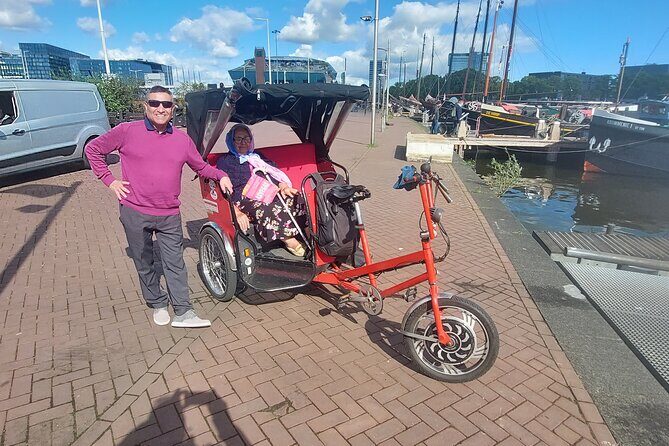
Your ride starts in the kind of Amsterdam that hits you immediately: history plus current-day energy. One of the stops is Dam Square, created in the 13th century when a dam was built around the river Amstel to prevent flooding. That origin story matters because Dam Square isn’t just a big plaza. It’s a symbolic center where the city’s shape and planning show up in plain sight.
Expect a classic Dam Square mix: lots of entertainment and pigeons. In spring, there can be a carnival on, and there’s also mention of a colorful ferris wheel. In summer, you may see mimers and other street performers popping up. This makes Dam Square a good first stop on a short tour because it sets the tone fast. Just plan for crowds and keep your camera ready.
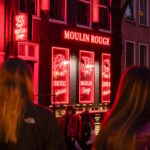
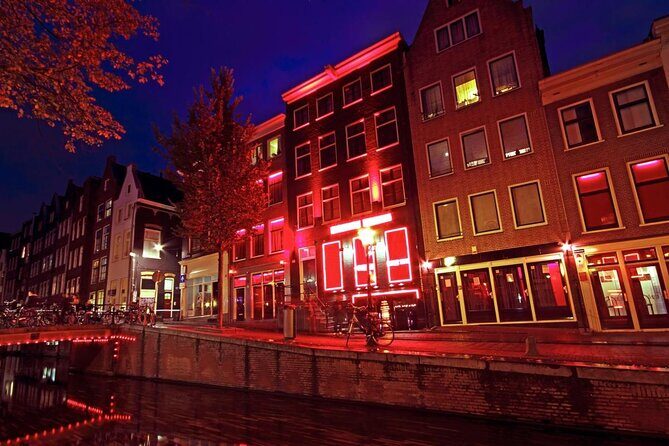
Next comes the Red Light District. The area is described as containing brothels, sex shops, and museums. Then comes the balancing note that I think is important for first-timers: the atmosphere is described as friendly and not as dangerous as it used to be. That doesn’t mean it’s for everyone. If you prefer a totally family-quiet tour, you might still enjoy the historical city overview, but the content and storefronts may not match your comfort level.
If you’re traveling with kids, remember the tour allows small children only when accompanied by an adult, and the group still has strict weight limits. For families, this stop can feel awkward depending on what you want to expose.
Nieuwmarkt and Rembrandtplein: markets, metro convenience, and night energy
After the hot spots, the tour shifts to Nieuwmarkt, in the old city center just east of the Red Light District. Nieuwmarkt exists because surrounding canals were filled in, and its location just inside the old city gate made it a trading and shopping hub as far back as the 17th century.
Today, Nieuwmarkt still holds a daily market, and there’s an organic fare market on Saturdays. That gives you something useful to do if you want to hop off later for food or browsing. Even if your tour time doesn’t line up with a market day, the square is described as surrounded by cafés, restaurants, and coffeeshops, so it’s easy to turn your afternoon into a relaxed pause.
There’s also a practical detail: the Nieuwmarkt metro stop is on the square. If you plan to continue your day with public transit, this is one of the rare stops that makes it easy.
Next up is Rembrandtplein, called one of the busiest squares in Amsterdam, especially for nightlife and clubbing. The review route includes that it started as a butter and dairy market. That small history detail helps you see the place as more than just bars and lights. It also helps you understand why it stays busy: it’s a social gravity point.
You can also read our reviews of more tours and experiences in Amsterdam



The Skinny Bridge and Museumplein zone: photo-ready Amsterdam geometry
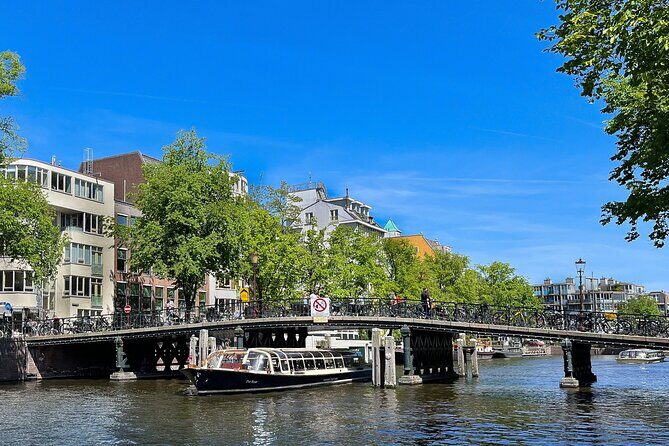
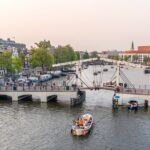
One of the route highlights is the skinny bridge across the river Amstel, opposite the Carré theatre. It’s a wooden design known as a double-swipe (balanced) bridge. The tour also shares the traditional story about the sisters Mager who supposedly lived on opposite sides and had the bridge built to make visiting easier.
Then there’s a more practical explanation: the bridge likely got the name from being narrow—“mager” meaning skinny in Dutch—so it was hard for two pedestrians to pass each other. Either way, this is exactly the kind of Amsterdam detail that makes a short guided tour feel worth it. You get both the story and the visual.
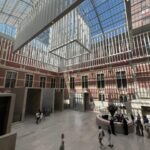
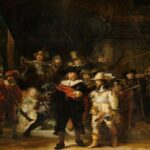
Then you move into the Museumplein area. This is one of Amsterdam’s big museum-and-concert zones, with the Rijksmuseum, Van Gogh Museum, and Stedelijk Museum nearby, plus the Concertgebouw. Even if you don’t enter museums today, it’s a key “where am I in the city?” stop. It shows the city’s cultural focus and helps you orient for future days.
A small consideration: Museumplein and the surrounding area can be busy, and it can feel more open and structured than the older canal neighborhoods. That’s not bad—just different. If you like compact lanes and constant discoveries, you might treat Museumplein as a quick orientation moment, not a long linger.
Anne Frank House area and Vondelpark: meaning and a reset
The route includes the Anne Frank House area. The tour describes it as a writer’s house and biographical museum dedicated to Jewish wartime diarist Anne Frank, located on the canal Prinsengracht close to the Westerkerk. That location detail is helpful because it anchors you visually to the canals and the historic center layout.
This is a stop that changes the emotional tone of the day. Even on a short tour, it’s worth taking a second to look around before you rush onward. The practical value is that the guide’s driving route gets you close enough to understand the canal geography, so when you plan any future museum visit, you’ll already know how the area fits together.
Then comes the reset: Vondelpark, described as Amsterdam’s largest city park and the most famous park in the Netherlands. This is where the ride feels like it turns softer. You’ll see places for people-watching, dog-walking, jogging, roller-skating, and just sitting on grass.
The tour notes specific park features, including free concerts at the open-air theatre and (in summer) at the bandstand. Also mentioned are the statue of the poet Vondel, a cast iron music dome, the Groot Melkhuis playground, and the historical Pavilion with its restaurant Vertigo, which opens in summer with a popular terrace.
For me, the best reason to include Vondelpark on a 2-hour itinerary is that it breaks the day into two moods: historic streets, then a calmer green zone. If you’re doing museums later, this park stop helps you arrive at them feeling less frazzled.
De Gooyer Windmill and Brouwerij ’t IJ: a quick Dutch flavor hit
Near the end of the route, you’ll hit De Gooyer Windmill. It’s described as an 18th-century grain mill and the sole survivor of five windmills that once stood in that part of town. The windmill was moved to its current spot in 1814, fully renovated in 1925, and it’s now a private home.
This is one of those stops where you’re not buying a long ticket. It’s also explicitly noted as a short stop—about 5 minutes—and admission ticket is not included. That makes it ideal on a timed tour because you get the visual and the context without losing your hour-and-a-half window to queues.
The adjacent story adds another layer. The public baths alongside the windmill were converted into Brouwerij ’t IJ in 1985. If you’re into Dutch brewing culture, this is a fun context moment that you can use later if you want to plan a longer beer-focused outing.
De 9 Straatjes: canal-linked streets for one last look
To wrap things up, the route includes De 9 Straatjes, also called The Nine Streets. It’s an intimate shopping area tucked between the Singel, Herengracht, Keizersgracht, and Prinsengracht canals. The vibe described is one-of-a-kind boutiques, stylish cafés, and galleries.
This is an excellent final segment because it’s built for wandering—short distances, lots of storefront interest, and streets that feel made for slowing down. Even if you don’t shop, it’s a strong way to close the tour because it gives you something beautiful to look at while you decide where to go next.
One practical note: since this is a rickshaw tour with time limits, you’ll likely see the area from the route or with limited stop time. If shopping is your priority, I’d treat this as your “bookmark for later” section. You’ll know where to return.
Price and value: what $234.30 per group really means
The price is $234.30 per group, for up to 2 people, and the ride runs about 2 hours. If you’re two adults, that can work out as a reasonable “comfort and access” cost compared with paying for separate taxis, fighting transit steps, or doing multiple day-ticket attractions just to cover the same ground.
Here’s the part that tends to matter most for value: this tour is private and it includes pickup offered. Pickup can easily turn an “okay” city tour into a smooth, low-stress experience, especially if you’re only in Amsterdam for a short window.
Also, you get WiFi on board and a mobile ticket, plus the tour is offered in English. Those are convenience wins rather than headline features, but they add up when you’re coordinating plans with your travel group or checking your next steps during the ride.
So, is it cheap? No. But it’s also not trying to replace museum tickets or a full canal cruise day. It’s trying to do one job well: give you bearings fast and show you Amsterdam’s key zones in a format that’s comfortable and efficient.
Who should book this rickshaw tour, and who should skip it
This tour fits best if you:
- Want a first-day orientation or an overview when time is tight.
- Prefer comfort over walking, especially in busy areas.
- Like photo stops and a guide who pauses so you can actually take pictures.
- Have mobility limits that make long walks hard.
It’s also a smart pick if you hate the effort side of cycling. Reviews highlight that the ride feels fun without pedaling, which makes it more accessible than a bike tour.
You might skip it if you:
- Want a fully museum-based day with deep ticketed time at each site.
- Strongly dislike any stops connected to the Red Light District.
- Are traveling on a day where weather is likely to be poor, since the experience requires good weather.
Also, if you’re traveling in a group larger than the maximum rickshaw capacity, you’ll need to arrange accordingly since each rickshaw has a tight group and weight limit.
Should you book this 2-hour private rickshaw tour
If you want an easy, efficient Amsterdam sampler that still feels personal, I think this is a strong booking. You’re not just riding around—you’re getting a guided route that connects neighborhoods you’d otherwise struggle to stitch together quickly.
The biggest reasons to choose it are the private format, the pickup option, and the way the guide handles the ride: stopping often for photos, staying friendly, and using English clearly. Add in the comfort details like rain protection and a blanket option, and it becomes a tour you can actually enjoy even when the day is less than perfect.
FAQ
What is the duration of the Amsterdam rickshaw tour?
The tour runs for approximately 2 hours.
How much does the tour cost?
The price is $234.30 per group, up to 2 people.
Is pickup offered?
Yes. Traveler pickup is offered, including from hotels in and around central Amsterdam and from common cruise ship docking locations.
What language is the tour offered in?
The tour is offered in English.
Is this a private tour?
Yes. It’s a private tour/activity, and only your group participates.
What size groups can ride in one rickshaw?
The maximum group size per rickshaw is 2 adults with a maximum weight of 500 pounds (230 kilograms), or 2 adults and 2 small children up to 9 years old with a total weight up to 500 pounds (230 kilograms).
Does the tour include a mobile ticket?
Yes. A mobile ticket is included.
Is there WiFi during the ride?
Yes. WiFi is provided on board.
What if the weather is bad?
The experience requires good weather. If it’s canceled due to poor weather, you’ll be offered a different date or a full refund.
What stops are included on the route?
The route includes stops such as Dam Square, the Red Light District, Nieuwmarkt, Rembrandtplein, the skinny bridge across the Amstel, Museumplein, the Anne Frank House area, Vondelpark, De Gooyer Windmill, and De 9 Straatjes.