REVIEW · AMSTERDAM
Small Group Walking Tour – Hello Amsterdam
Book on Viator →Operated by Who Is Amsterdam Tours · Bookable on Viator
Two hours to orient yourself in Amsterdam.
This small-group walking tour strings together the center’s big landmarks with short, story-packed stops, from Dam Square to the canal belt and ending near the Westerkerk area.
I especially like that the guide uses games to teach facts without turning it into a lecture.
And I like the practical flow: you finish near the Homomonument, just a quick walk toward the Anne Frank House and Westerchurch area, so you can keep exploring right away.
One catch to keep in mind: it can be tricky to spot your guide at the meeting point if your ticket details are unclear, so have your phone ticket ready and check the operator name.
In This Review
- Key things to know before you go
- Dam Square and Damstraat: where the route starts to make sense
- Beurs van Berlage: money made into architecture
- Damrak near the Red Light District: learn the culture using a game
- Haarlemmersluis: canals and Amsterdam bikes, plus a view break
- Singel and the Dancing Houses: the canal scenery that makes Amsterdam look like a postcard
- Torensluis: UNESCO canal belt views with the harder history included
- Emperor’s Canal (Keizersgracht): the Dutch family story you can actually remember
- Westerkerk finish near the Homomonument: diversity, acceptance, and a meaningful wrap-up
- Price and how this tour fits your budget
- Walking pace, timing, and what to wear
- Who this tour is best for
- The guide experience: why names you might hear matter
- Should you book Small Group Walking Tour – Hello Amsterdam?
- FAQ
- How long is the Hello Amsterdam walking tour?
- Where do I meet, and where does the tour end?
- Is the tour offered in English, and do I use a mobile ticket?
- What group size should I expect?
- Is the tour suitable for most people, and are service animals allowed?
- What if the weather is poor or I need to cancel?
Key things to know before you go
- Small group size (up to 15): easier questions, better pacing, and you stay with the guide through the whole route.
- Games at the stops: you get facts fast, including a true-or-false quiz near Damrak.
- Central Amsterdam in 2 hours: you hit the Dam Square area, canal views, and the Westerkerk finish without a long commute.
- Canal-belt viewpoints: you’ll see the Singel and Keizersgracht areas from classic angles.
- Two-track storytelling: you get both the city’s famous charm and harder history, including slavery at Torensluis.
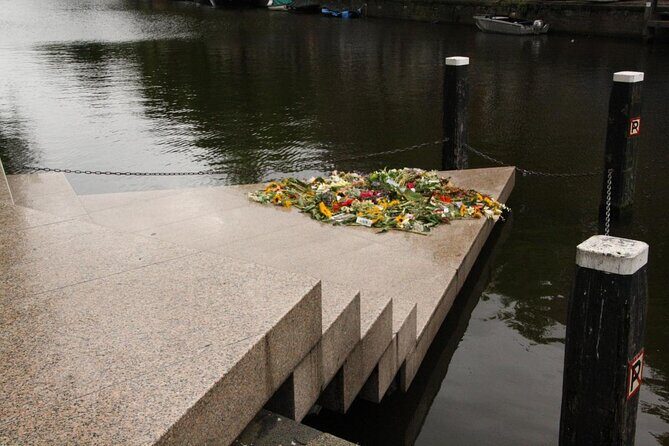
- Ends in a smart spot: the Homomonument finish is close to the Anne Frank House and Westerchurch.
Dam Square and Damstraat: where the route starts to make sense
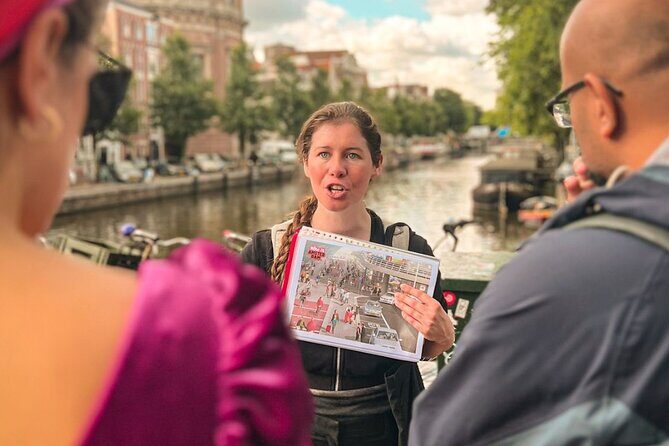
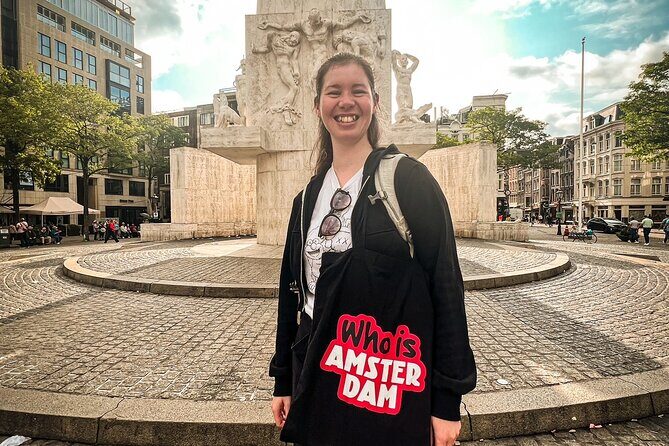
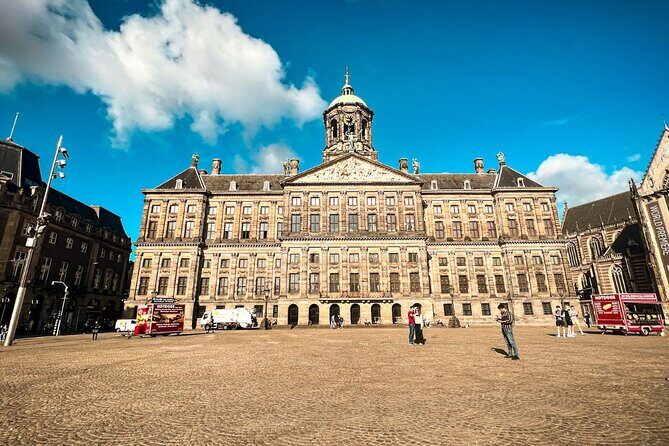
Your walk begins at the National Monument (Dam), right in the heart of Amsterdam. From here, you get an immediate sense of the city’s layout: major sights are close together, but they feel different once you’re moving on foot instead of standing still with a map.
At Dam Square, you’ll hear about the Royal Palace and the National Monument area, plus the New Church. It’s a good first stop because the guide sets up what you’ll notice later, especially the way history and today’s street life sit side by side.
Damstraat is your early warm-up. It keeps the energy moving and helps you get oriented before the tour starts turning into canals, architecture, and stories with context.
You can also read our reviews of more walking tours in Amsterdam



Beurs van Berlage: money made into architecture
Next is Beurs van Berlage, the building tied to Amsterdam’s early stock exchange story. Even if you’re not a finance person, this stop works because the guide frames it as a turning point in how Amsterdam grew into a major trading power.
What I like about this kind of stop is the contrast. You’re standing in a landmark that looks like pure architecture, but you’re also learning why it matters for the city’s identity. The tour treats the building like a clue to the past, not a static photo-op.
There’s no pressure here to memorize dates. The goal is to give you a mental connection so when you later see old wealth reflected in canal-era homes, it clicks.
Damrak near the Red Light District: learn the culture using a game
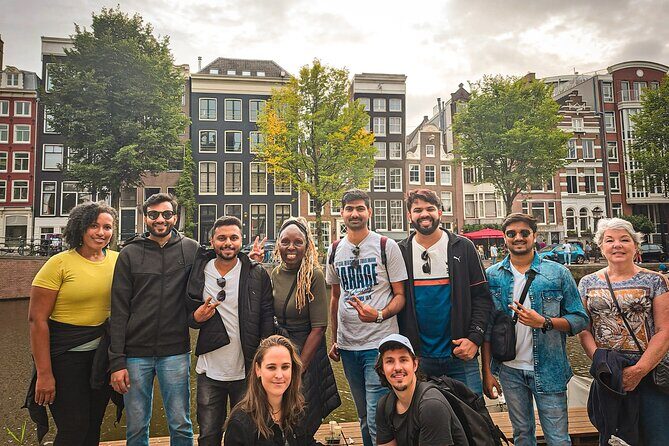
Damrak sits just steps from the Red Light District, and the tour uses that proximity to talk about Dutch culture in a way that feels human, not preachy. You’ll play a fast true-or-false game about tolerance, coffeeshops, and other cultural signals.
This is one of the most engaging parts of the route because the quiz format keeps things light while still giving you real points to remember. It’s also useful for first-time visitors: Amsterdam can feel like it runs on rules you’re not fully aware of, and the guide helps you understand the vibe without needing background knowledge first.
You also look out at notable architecture along the way, including those famous dancing houses you’ll hear about more as the route goes on. This stop is short, but it sets up the tour’s theme: facts can be fun if the guide delivers them the right way.
Haarlemmersluis: canals and Amsterdam bikes, plus a view break
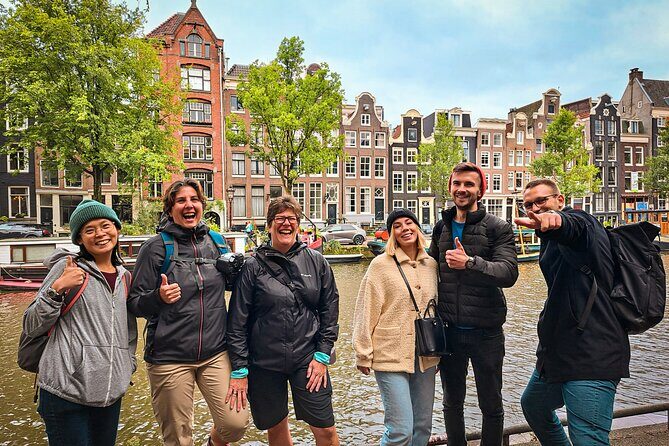
At Haarlemmersluis, you get a canal-belt gateway view and a crash course in Amsterdam’s bike culture. The guide points out the simple reality that bikes outnumber people, and you start noticing bike infrastructure as part of the city’s design.
This stop is especially good mid-walk because it gives you a breather. You’re not just staring at buildings; you’re looking at how the city moves water, people, and bicycles around each other.
If you’re thinking about what to do after the tour, this is where the advice starts making sense. Amsterdam isn’t just walkable; it’s shaped for cyclists. Even if you don’t ride, you’ll understand why locals treat bikes like everyday transport, not a hobby.
Singel and the Dancing Houses: the canal scenery that makes Amsterdam look like a postcard
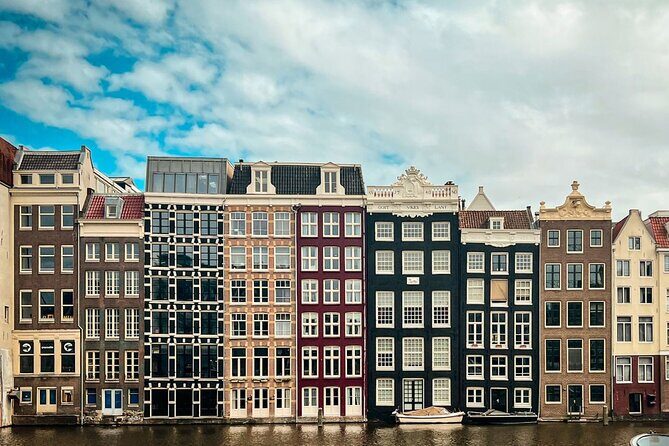
The Singel canal area brings you to the dancing houses, the tilted canal-side homes that look like they’re performing for passing eyes. The guide explains what you’re seeing and gives you the story behind the odd angle and how these buildings became part of Amsterdam’s visual signature.
This is a classic Amsterdam moment, and the best part is that it’s short and focused. You get the name, the look, and the reason it’s famous, then you move on before the group gets bored.
Bring your phone camera if you like, but don’t get stuck framing shots. The tour’s value is the story you’re picking up as you walk, not the number of photos you take.






Torensluis: UNESCO canal belt views with the harder history included
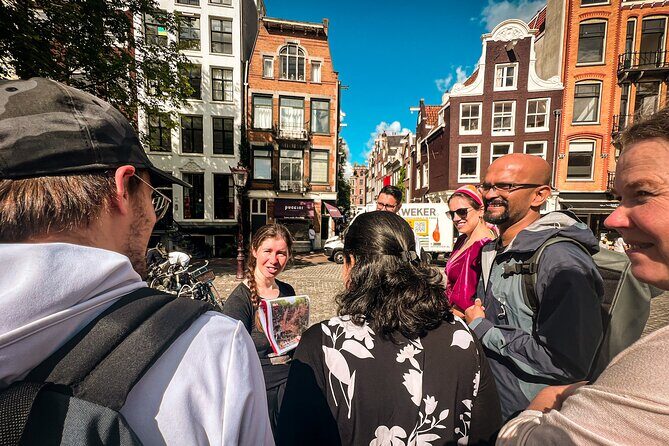
Torensluis is tied to the UNESCO canal belt theme, and you’ll get a sense of how this area was shaped and why it’s recognized. The route here is mostly about perspective, so take your time looking out at the canal setting before you keep moving.
What makes this stop more than pretty scenery is the subject matter. The guide brings up Amsterdam’s shadowed past of slavery, tying it to the city’s legacy. It’s not handled like a guilt speech, but it is handled as history you should know exists in the same city where you’re enjoying the canal views.
That mix matters. Amsterdam can feel like a lifestyle destination, but it’s also a place with real historical weight. Including that context gives you a more honest understanding than a route that only celebrates the charming parts.
Emperor’s Canal (Keizersgracht): the Dutch family story you can actually remember
At Keizersgracht, the tour shifts toward Dutch culture through family life. You’ll learn about the idea that Dutch kids were named among the happiest in the world by UNICEF in 2017, and you’ll hear how family dynamics connect to the daily rhythm of life in the Netherlands.
This stop is useful because it’s not just architecture. It’s about how a country shapes people over time, and how that shows up in small choices you’ll notice later, like how public spaces are used and how routines feel.
If you’ve ever wondered why Amsterdam feels calm and practical on the surface while also being complicated in the details, this is one of the stops that helps you connect the dots.
Westerkerk finish near the Homomonument: diversity, acceptance, and a meaningful wrap-up
The walk ends at the Homomonument, near the Westerchurch area, and the guide also ties in the Anne Frank House neighborhood and the Gay Monument. This final stretch is about the city’s mentality—how differences are treated—and it connects that theme to Amsterdam’s identity.
You’ll hear the live-and-let-live idea and get a sense of why the city’s tolerance is part of its self-image. This is also where the guide’s storytelling tone tends to feel most personal, because the last stop is where everything you’ve learned earlier becomes part of one picture.
If you want a smooth transition, this is a smart finishing point. Homomonument is a short walk from both the Anne Frank House area and Westerchurch, so you can choose what you want next without backtracking.
Price and how this tour fits your budget
At $35.07 per person for about two hours, the value depends on what you want from Amsterdam on day one. For me, this price makes sense when you want guidance that does more than point: a real local guide who turns key landmarks into a story you can carry around.
The up-to-15 group size is part of the value. You’re not being rushed through with a big crowd, and the guide has room to keep energy up. The guide also provides recommendations for where to eat and shop, which is often where a tour pays off after the walk ends.
One more practical point: the tour uses a mobile ticket, so you can keep things simple once you get to the start point.
Walking pace, timing, and what to wear
The tour runs from 10:00 am and lasts about two hours. It’s enough time to cover the center highlights without turning into an all-day hike, but you should expect a moderate walk.
Comfortable shoes matter. Even if you’re not walking far by European-city standards, you’ll be on pavement for the whole session, and you want to stay comfortable so you can actually enjoy the stops.
Also, this experience requires good weather. If rain or cold is in the forecast, plan for a different day or be ready to rebook.
Who this tour is best for
This is a great fit if you’re in Amsterdam for a first visit and you want to get your bearings fast. It’s also a strong choice if you like facts that come in quick bursts, like the true-or-false game at Damrak.
If you enjoy architecture, the route hits the big visual hits: Beurs van Berlage, canal views at Singel and Torensluis, and the Keizersgracht area. And if you care about context, the slavery history at Torensluis keeps the story honest.
If you want a long, slow wander where you spend lots of time outside each building, you might find two hours a bit tight. This tour is designed for overview, not deep museum time.
The guide experience: why names you might hear matter
You may get a guide like Dani or Danni, who are known for making the walk fun with games and lively storytelling. If you’re paired with Jonas, the focus tends to be strong on clear facts and a smooth flow through the highlights. There are also guides like Adam, who bring useful personal asides alongside the history.
The common thread is the delivery style: short lessons, quick interaction, and practical pointers you can use after you leave Dam Square behind.
Should you book Small Group Walking Tour – Hello Amsterdam?
Yes, if you want a smart first-day Amsterdam orientation that balances iconic sights with real context. The small group size and the interactive games make it feel efficient rather than rushed, and the finish near Homomonument sets you up for the next step of your trip.
I’d especially book this if you like structure. The route gives you a clear arc from Dam Square to the canal belt and ends where you can keep exploring without major backtracking.
If your top priority is lingering at one site for a long time, or if you dislike walking for any reason, you might prefer a slower alternative. But for most people—especially first-timers—this is a good bet for seeing a lot, learning quickly, and leaving with a better sense of how Amsterdam works.
FAQ
How long is the Hello Amsterdam walking tour?
It’s about 2 hours.
Where do I meet, and where does the tour end?
You meet at the National Monument on Dam (1012 JS Amsterdam). The tour ends at the Homomonument on Westermarkt (1016 DW Amsterdam), near the Anne Frank House and Westerchurch.
Is the tour offered in English, and do I use a mobile ticket?
Yes, it’s offered in English. You’ll use a mobile ticket.
What group size should I expect?
The tour has a maximum of 15 people.
Is the tour suitable for most people, and are service animals allowed?
Most people can participate, and service animals are allowed.
What if the weather is poor or I need to cancel?
The tour requires good weather. If it’s canceled due to poor weather, you’ll be offered a different date or a full refund. You can cancel up to 24 hours in advance for a full refund; canceling later won’t be refunded.