REVIEW · AMSTERDAM
Red Light District tour in Amsterdam
Book on Viator →Operated by Guidance Travel · Bookable on Viator
This walk turns curiosity into context. I love the small-group feel and the guide-led stories behind coffee-shop history in Amsterdam. One note up front: you do not get inside the Red Light District itself, due to city rules.
You still get close enough to understand the layout and the human side of the neighborhood, without the awkward guessing. I also like that the tour runs at a calm walking pace and saves time for questions, which matters for a topic this sensitive.
You’ll finish with a map and a small gift, so the 90 minutes feels like a smart start—not a dead-end. If you’re hoping for a guided walk through the window streets, plan on exploring the area on your own after the tour.
In This Review
- Key highlights you’ll care about
- Why Amsterdam’s sex-and-coffee story makes more sense with a guide
- The big rule since 2020: you’ll tour the outskirts, not the window streets
- Meet-up at Bistro Berlage and a pace that keeps it from getting awkward
- De Wallen: the neighborhood’s origin point and the idea of a “sacred place”
- Dam Square: where coffee-shop culture and tolerance connect
- Warmoesstraat and the Old Church glimpse: an old street with a new role
- Zeedijk’s Chinatown twist: from 1970s danger to a favorite street
- Nieuwmarkt: legalization explained, plus the ongoing human challenges
- Kloveniersburgwal: coffeeshops, cultural significance, and legality
- Paulusbroederssluis: the map handoff and your respectful self-guided finish
- What $31.44 buys for 90 minutes (and why value depends on your goal)
- Who should book this Red Light District perimeter tour
- Should you book this Red Light District walking tour?
- FAQ
- How long is the Red Light District walking tour?
- Is the tour offered in English?
- Where does the tour start and end?
- How big is the group?
- Does the tour go into the Red Light District itself?
- Are tickets or entry fees included for the stops?
- Is a map included?
- Do I get a mobile ticket?
- Are service animals allowed?
- Is the tour suitable for people with only moderate fitness?
Key highlights you’ll care about
- Perimeter walking, not entry: you’ll see the neighborhood from the outside, then get a map for a respectful self-guided look
- Coffee-shop origin points: Dam Square and Kloveniersburgwal help connect Amsterdam’s tolerance story to its coffee culture
- Legal and real-world context: prostitution legalization and coffeeshop legal status are explained plainly
- Small group size: capped at 15 travelers, which keeps the pace manageable
- Guides who answer questions: guides like Carlos, Nadav, Manouk, David, and Valeria are repeatedly praised for humor and Q&A
- A practical end-of-tour handoff: you leave with guidance for what to do next in the area
Why Amsterdam’s sex-and-coffee story makes more sense with a guide
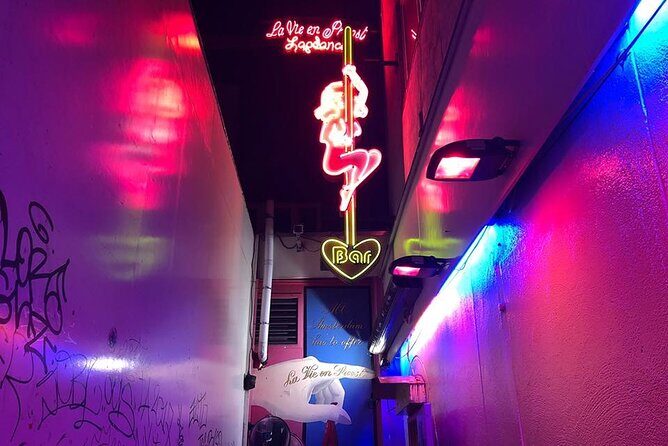
Amsterdam’s Red Light District is one of those places people think they already understand. Then you see the neighborhood’s geography, the legal framing, and the cultural compromises that shaped it. A perimeter tour helps you connect the dots in a way that a quick stop or photo spree can’t.
What I like is that the focus isn’t just on sex work as a spectacle. You learn why sex workers settled in this particular area and how Amsterdam built a reputation for tolerance over time. The guide also brings the topic back to today, including what legalization looks like in practice and the kinds of challenges that can still exist for sex workers.
And then there’s the coffee thread. Amsterdam’s coffee houses aren’t treated like a side note. You’ll hear how the city’s approach to tolerance connects to what people did and didn’t accept historically—especially around the Dam Square area and later at Kloveniersburgwal.
You can also read our reviews of more tours and experiences in Amsterdam.



The big rule since 2020: you’ll tour the outskirts, not the window streets
Here’s the key consideration before you book: tours are prohibited from entering the Red Light District itself. That doesn’t mean you get nothing. It means you get a guide-led orientation from the outside, with enough context to understand what you’re seeing.
In practice, you walk around the perimeter and get views and landmarks that make the neighborhood readable. A few people say they could spot the area from where they stood, but you should not expect a guided march through the window streets. If your main goal is to be inside that exact zone with the guide pointing things out one by one, this format won’t match your expectations.
The upside is that this approach often feels more comfortable and respectful. You’re not being herded through a tight, rules-heavy zone. You can ask questions at a distance, then decide what you want to do next using the map provided.
Meet-up at Bistro Berlage and a pace that keeps it from getting awkward
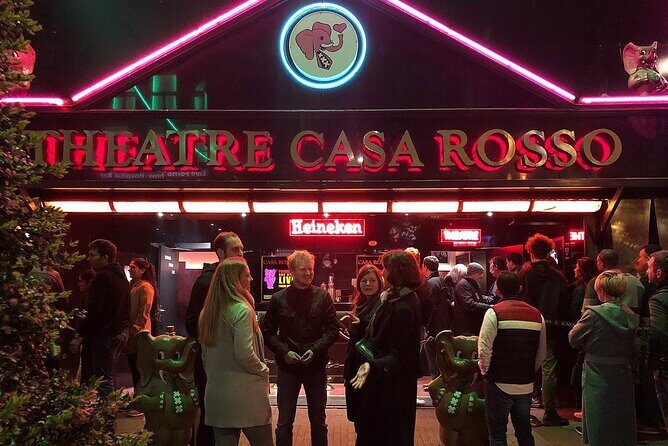
This is a walking tour of about 1.5 hours, and the city helps you: Amsterdam is largely flat. The tour is near public transportation, and it’s set up for people with moderate physical fitness—basically, you should be comfortable on city sidewalks for the duration.
Group size is max 15 travelers, which is a big deal here. Small groups mean you’re more likely to actually get answers, not just hear a monologue. In the feedback, I saw repeated praise for guides keeping a manageable pace, even in rough weather like rain or snow. So even if the forecast isn’t perfect, you’re not going to be sprinting down canalside streets.
The meeting point is Bistro Berlage, Beursplein 1, 1012 JW Amsterdam. One practical tip from the experience: arrive a few minutes early. More than once, people noted trouble finding the exact meet-up spot. When the start point is a busy central area, those extra minutes save stress.
You’ll have a mobile ticket, and you’ll end back at the same meeting place. That simple loop matters because it means you don’t have to figure out a new drop-off location while your brain is already busy with the day’s heavy topics.
De Wallen: the neighborhood’s origin point and the idea of a “sacred place”
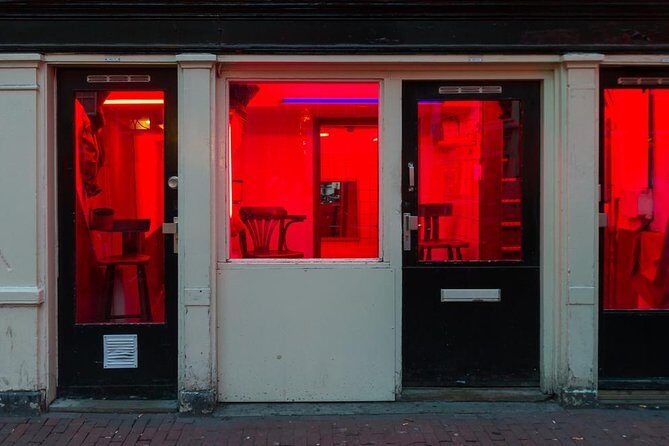
You start with De Wallen (the Red Light District) as your anchor point. Even though you’re not going into the district with a guide, De Wallen is the reference point that makes the rest of the walk click.
This stop is where the guide explains the logic behind why sex workers chose to settle in this area. The story includes how Amsterdam became known for a liberal stance around sex, and why this neighborhood became the visible focal point for that reputation.
What you’ll likely appreciate most here is the plain framing. The tour treats the topic like part of a city system—housing patterns, legal tolerance, and social norms—rather than a set of sensational scenes. If you’ve been carrying Hollywood assumptions, this first stop helps you recalibrate quickly.
Dam Square: where coffee-shop culture and tolerance connect
From De Wallen you head to Dam Square. This is a short stop, but it’s packed with meaning. You’ll learn what the guide describes as the origin of the coffee shop concept in the city, and why Dam Square became a kind of historical center for tolerance and freedom.
This stop works well for two types of visitors:
- You want the “why” behind Amsterdam’s reputation, not just the what.
- You want a link between nightlife culture and city laws that keeps the story coherent.
Even if you don’t plan to visit coffee shops during your trip, Dam Square gives you context for what locals mean when they talk about tolerance as part of Amsterdam identity. It also helps you understand why the tour keeps circling back to coffee houses as cultural touchpoints.


Warmoesstraat and the Old Church glimpse: an old street with a new role
Next up is Warmoesstraat, described as one of Amsterdam’s oldest streets. The big idea here is contrast: an old street with layers of city life, now functioning as an entertainment center.
You’ll also catch a glimpse of the Old Church. That kind of landmark matters because it grounds the tour in the city’s physical reality. It’s easy to forget, when you’re focused on one headline neighborhood, that the area sits inside a broader Amsterdam story of churches, streets, commerce, and change.
If you’re the type of traveler who likes photos that mean something, this stop helps. You’re not just snapping buildings. You’re collecting reference points for how the neighborhood evolved around its most well-known reputation.
Zeedijk’s Chinatown twist: from 1970s danger to a favorite street
Then the walk moves to Zeedijk. You’ll hear about Chinatown here and how this street used to be seen as one of the most dangerous areas in Amsterdam during the 1970s.
What’s useful is the way the guide talks about decline and transformation. Today, Zeedijk is treated as one of those streets many Amsterdammers enjoy—proof that neighborhoods can change their identity without losing the fact that they had a rough chapter.
This stop broadens the tour. It keeps the conversation from staying stuck in one theme. You start to see that the Red Light District perimeter is not an isolated bubble. It sits next to immigrant communities and shifting urban fortunes, which is exactly the kind of context that makes Amsterdam feel less like a single “attraction” and more like a city.
Nieuwmarkt: legalization explained, plus the ongoing human challenges
At Nieuwmarkt, the guide addresses the legalization of prostitution and the real challenges sex workers can still face today. This is the stop where the tour can feel most grounded, because it shifts from the city’s reputation to people’s lived reality.
You’ll get a sense of how legalization changed the framework around sex work, and why legal changes don’t automatically solve every hardship. The tone is usually respectful rather than judgmental, and the point isn’t to shock you. It’s to explain how legal and social systems intersect.
If you want the “responsible understanding” angle of Amsterdam tourism—the kind that doesn’t reduce people to stereotypes—this is one of the stops you’ll remember.
Kloveniersburgwal: coffeeshops, cultural significance, and legality
Next is Kloveniersburgwal, Amsterdam, where the tour focuses on the coffeeshops. The guide explains their cultural significance and also covers their legal status.
This is where your Dam Square context pays off. You’ll connect the coffee-shop story from the beginning to what’s happening in the neighborhood today. The guide also helps you understand the legal framing, which is useful if you’ve only heard simplified versions of the rules.
One practical payoff: by the time you reach Kloveniersburgwal, you’re not just walking past coffeeshops. You’re reading the city’s approach to regulation and tolerance as a system. That turns the tour from “interesting streets” into “understanding Amsterdam.”
Paulusbroederssluis: the map handoff and your respectful self-guided finish
The final stop is Paulusbroederssluis. Here you receive a map with information for the last stretch, and then you’re free to explore the area yourself.
This is a smart ending for a perimeter tour. It gives you structure without pretending the guide can escort you through rules-restricted zones. You leave with a way to orient yourself and choose what feels appropriate.
This is also where you control your tone. Some people want a quick look and move on. Others want time to slow down and absorb details from a distance. Either way, the map makes the self-guided part feel less like wandering and more like a continuation of what you just learned.
And yes—the small gift matters too. One person specifically mentioned cheeky gummies shaped like genitalia, which matches the vibe of a tour that wants you to stay human, not caricatured.
What $31.44 buys for 90 minutes (and why value depends on your goal)
At $31.44 per person for about 1.5 hours, this tour is priced like a focused, topic-based walking experience. The value is tied to what you’re trying to get out of Amsterdam.
If your goal is to understand the city’s tolerance story and the legal/cultural background behind the Red Light District and coffee shops, this price can feel fair. You get:
- a guided walk around key reference points
- an information map for afterward
- a small gift
- and no extra “admission ticket” costs listed for the tour stops
Also, English is offered, and the tour caps at 15. That small-group cap helps keep it from becoming a rushed lecture. In the feedback, people praised guides for being funny while answering questions.
Still, here’s the balanced note: some people said the pace felt quicker than expected, or that it could feel more like a lecture when the group dynamics were less interactive. If you love slow, lots-of-chat tours, you may want to plan extra time to ask your questions during the walk—and don’t be shy.
Who should book this Red Light District perimeter tour
This is a good match if you want:
- a respectful, practical overview of the area
- context about why the neighborhood developed and how Amsterdam built a tolerance reputation
- explanations tying prostitution legalization and coffeeshop legality into a bigger city story
- a small group where questions are welcome
It’s also a decent pick if you’re curious but worried about saying the wrong thing. A guide-led framework keeps the conversation grounded in facts and social context.
I’d think twice if:
- your top priority is getting guided access inside the window streets (this tour does not do that)
- you’re easily thrown off by street-level topics and adult themes, even when handled respectfully
- you hate walking tours that feel like you’re standing and listening for extended stretches
Should you book this Red Light District walking tour?
I’d book it if you want a solid starting point and a map you can trust. The perimeter approach actually works in your favor: it sets expectations clearly, keeps you oriented, and helps you understand what you’re seeing without pretending city rules don’t exist.
Skip it if your plan is simply to do a general Amsterdam walk and hope the topic isn’t any deeper than what you could read in minutes online. This tour is for people who want the angle—sex work history, coffee-shop culture, and how laws and tolerance shaped the neighborhood.
If you do book, show up a little early for the Beursplein/Bistro Berlage meet-up, bring your best questions, and keep your tone respectful—because that’s the mindset the whole tour is built on.
FAQ
How long is the Red Light District walking tour?
It takes about 1.5 hours on foot.
Is the tour offered in English?
Yes, the tour is offered in English.
Where does the tour start and end?
It starts at Bistro Berlage, Beursplein 1, 1012 JW Amsterdam, Netherlands, and ends back at the same meeting point.
How big is the group?
The group size is limited to a maximum of 15 travelers.
Does the tour go into the Red Light District itself?
No. Since 2020, tours have been prohibited from entering the Red Light District, so this tour goes to the outskirts.
Are tickets or entry fees included for the stops?
The tour stops listed show admission ticket free, and the tour includes the walking experience plus the map.
Is a map included?
Yes. You receive a map with information for the last stretch so you can explore on your own.
Do I get a mobile ticket?
Yes. The tour uses a mobile ticket.
Are service animals allowed?
Yes, service animals are allowed.
Is the tour suitable for people with only moderate fitness?
The tour is designed for travelers with a moderate physical fitness level.