REVIEW · AMSTERDAM
Bruges bus tour from Amsterdam
Book on Viator →Operated by Buendía · Bookable on Viator
Bruges feels like a fairytale on a schedule. This day trip turns a long bus ride into a guided hit list of medieval landmarks across the canals and squares of the Venice of the North, with a Spanish-speaking guide steering the day and keeping you oriented. I like that the tour doesn’t just point at buildings, it explains why they mattered.
What I really like is the round-trip, air-conditioned bus setup. You start at De Ruijterkade in Amsterdam (8:30am), ride out with a professional driver, and come back without having to figure out trains, bus changes, or Belgian timetables. Reviews highlight guides like Blanca, Pau, Lorena, and Eduardo, plus drivers such as Michael and Adrián, and that matters because Bruges is easy to “almost see” if the logistics are messy.
One consideration: the day is packed. Stop times are short, and you’ll often hear stories while standing outside rather than wandering deep inside. Also, Belgian rules can mean you’ll use radio guides with headphones on some occasions, so bring wired 3.5 mm headphones (or plan to buy disposable ones for €1).
In This Review
- Key things worth knowing before you go
- Why this Bruges trip works so well from Amsterdam
- Price and value: what $77.02 really buys
- Morning logistics: starting at De Ruijterkade and keeping your energy
- Stop-by-stop: how the itinerary tells Bruges’ story
- Bargeplein (Katelijnparking): start smart, use the quick bathroom window
- Minnewater Lake: the Lake of Love plus a history lesson
- Begijnhof: a women’s religious community founded in 1245
- Chocolalino: artisan chocolate tasting and what to look for
- Walplein, Stoofstraat, and the medieval “how-to see it” stops
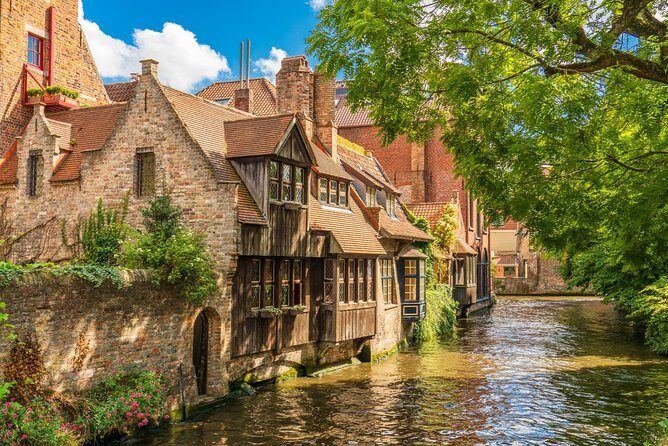
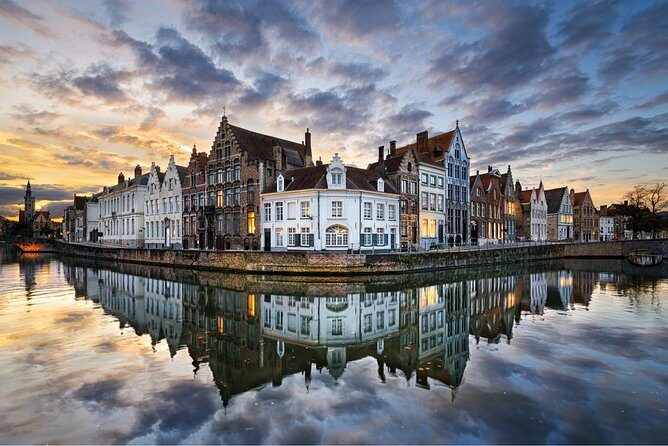
- St Bonifacius Bridge and Rozenhoedkaai: two legends, two iconic views
- Huidenvettersplein: the tanners’ square and medieval work life
- Saint John’s Hospital and Onze-Lieve-Vrouwekerk: healthcare and art details from the outside
- Gruuthusemuseum: meeting a powerful family, 17th to 18th centuries
- Burg Square and the Markt: town power today, shopping and food strategy tomorrow
- Using the 2 hours of free time well
- Guides and pacing: what stood out from real experience
- Who should book this Bruges day trip, and who should skip it
- Should you book this Bruges trip from Amsterdam?
- FAQ
- FAQ
- What time does the Bruges bus tour start from Amsterdam?
- How long is the tour?
- What language is the guide?
- Is round-trip transport included?
- Do I need headphones for the tour?
- Where are the first and last stops in Bruges?
- Is food included?
- How much free time do I get in Bruges?
- Can I cancel for a full refund?
- Is it suitable for everyone?
Key things worth knowing before you go
- Spanish guide + city tips so you know where to walk and what to notice
- Air-conditioned round-trip bus that removes the most stressful part of a day trip
- Short, strategic stops built around photos, legends, and quick context
- Chocolalino tasting with guidance on what makes artisan chocolate different
- Photo hits on every canal and bridge like Rozenhoedkaai and St Bonifacius Bridge
- About 2 hours of free time at the end to eat, shop, and roam at your pace
Why this Bruges trip works so well from Amsterdam
Bruges is the kind of city where every corner looks like it belongs on a postcard. The trick is timing. On your own, you can spend your whole day just navigating between squares, canals, and neighborhoods—then end up with little time to sit with the story behind what you’re seeing.
This tour is designed for the “I want to see Bruges, not plan a mission” traveler. You get a guided route across many of Bruges’ most recognizable spots, plus a real chance to wander on your own for roughly two hours near the end. That balance is the sweet spot for a day trip.
Another plus: the tour is guided in Spanish, and the guiding style shows up in multiple reviews—friendly, organized, and very tuned to helping people not get lost. If you’ve ever been in a group tour where you’re just herded from one street to another, you’ll appreciate that the guide calls out what matters and when to return to the bus.
You can also read our reviews of more tours and experiences in Amsterdam.
Price and value: what $77.02 really buys
At about $77.02 per person, the price isn’t just for “a bus to Bruges.” It covers the big cost drivers for most people: round-trip transport from Amsterdam, a professional Spanish guide, and a structured guided tour that hits a wide slice of the city.
You also get city recommendations throughout the day—useful in Bruges because the center is pretty walkable, but it’s still easy to waste time if you don’t know where the best chocolate shops, squares, and photo points are. The tour also includes exclusive discounts at select shops, restaurants, and attractions (you won’t get a giant discount list in your pocket, but you can benefit if you plan your stops around what the guide flags).
One more value note: this is listed as a private tour/activity, meaning it’s only your group. That’s not the same thing as “anyone can show up,” and it usually makes the pacing and communication feel less chaotic.
Morning logistics: starting at De Ruijterkade and keeping your energy
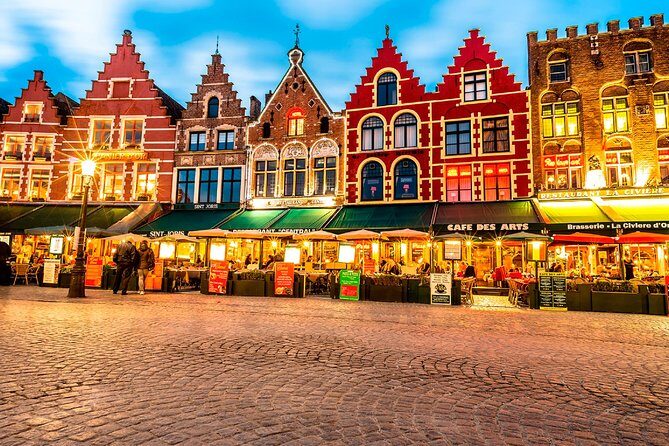
Your day begins at De Ruijterkade 151, 1011 AC Amsterdam, with a start time of 8:30am. The activity ends back at the same meeting point in Amsterdam.
This matters because the tour is built on a full-day rhythm: bus travel, quick guided stops, and then free time. If you treat it like a leisurely stroll day, it can feel rushed. If you treat it like a guided sightseeing sprint with a payoff at the end, it’s a lot more enjoyable.
Packing advice for this kind of schedule is simple:
- Wear comfortable shoes. Bruges is cobblestones and short distances that still add up.
- If you have them, bring your own wired 3.5 mm headphones for the radio-guide system that’s sometimes used.
- Bring a small snack or water if you’re the type who gets “hangry” between stops, since food and drink are not included.
Stop-by-stop: how the itinerary tells Bruges’ story
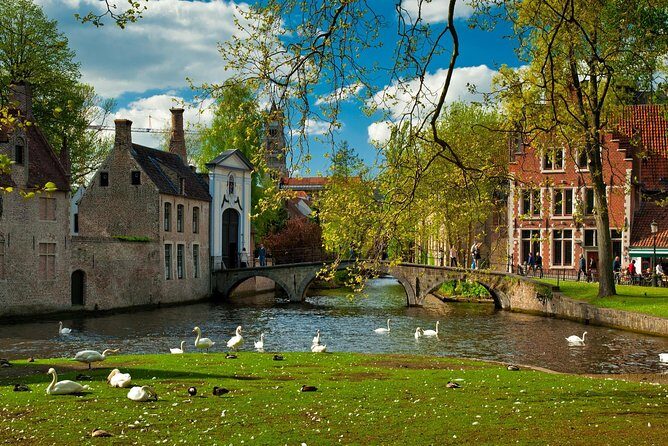
The tour is paced in a sequence of short stops, each one aiming at a specific theme: love and water, religious history, medieval daily life, and the squares where power and commerce shaped the city.
Bargeplein (Katelijnparking): start smart, use the quick bathroom window
Your bus drops you near Bargeplein (Katelijnparking) and you get about 10 minutes before the guide explains what time to be back. This is your buffer for a bathroom break and for settling into the rhythm of “quick hit” sightseeing.
Practical tip: don’t use this time to wander far. You’ll save time later by getting organized now—then you can enjoy the walking when it’s on purpose.

Minnewater Lake: the Lake of Love plus a history lesson
Next up is Minnewater Lake, also called the Lake of Love. You’ll have around 5 minutes here, with the guide explaining the history of Bruges and the love story tied to the lake.
This stop is short, but it’s one of the most beautiful “wow” moments early in the day. Think of it as a setting you’ll remember for photos later, even if you don’t linger long.
Begijnhof: a women’s religious community founded in 1245
You’ll then reach the Beguinario (Begijnhof), founded in 1245. You get about 10 minutes and the guide covers the history of the women’s community.
If you care about how medieval life worked beyond castles and churches, this is a strong stop. It’s also a good mental reset: the day isn’t only about buildings, it’s about how people organized their lives.
Chocolalino: artisan chocolate tasting and what to look for
Then comes Chocolalino, one of the few certified artisan chocolate shops. You’ll get about 8 minutes, including a chance to taste and hear tips on how to tell handmade chocolate from industrial chocolate.
This is a standout because it gives you something immediate to do and evaluate. When you taste, you’re not just collecting visuals—you’re getting a reference point. If you end up buying chocolate later, you’ll understand what makes it different.
A quick note: do not count on a long shopping spree here. This is a tasting and education moment, then you move on.
Walplein, Stoofstraat, and the medieval “how-to see it” stops
A few stops work like a mini field class.
- Walplein (about 5 minutes) where the guide explains the history of Bruges beer.
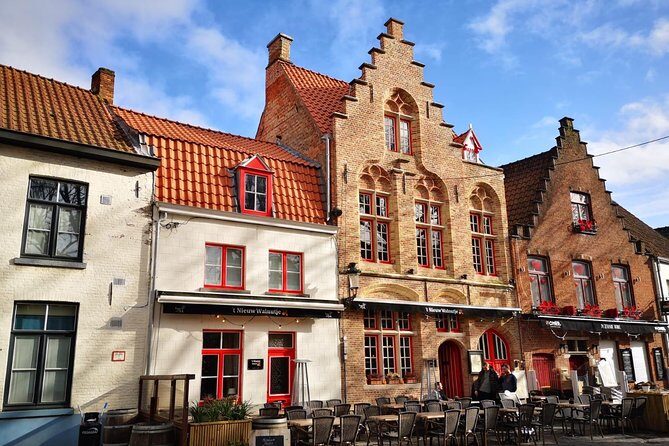
- Stoofstraat (about 5 minutes) where the guide teaches you how to identify original medieval houses.
These might seem minor compared with big churches, but they’re smart for day-trippers. Bruges has a lot of old buildings. Learning how to spot what’s original helps you read the city instead of just staring at it.
St Bonifacius Bridge and Rozenhoedkaai: two legends, two iconic views
Later you’ll pass by:
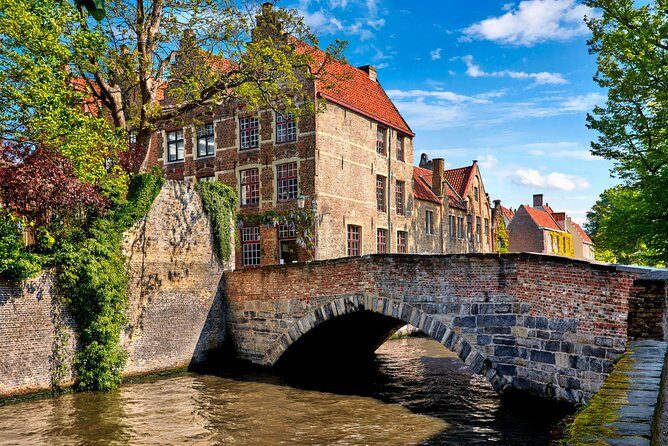
- St Bonifacius Bridge (about 5 minutes), with a legend explained and time for photos.
- Rozenhoedkaai (about 5 minutes), Bruges’ most photographed spot, tied to the history around the “Muelle de las rosas” (roses quay).
These are the kinds of stops where you’ll want to be ready with your phone/camera before the guide finishes talking. The best photos are quick, and the timing is designed around that reality.
Huidenvettersplein: the tanners’ square and medieval work life
At Huidenvettersplein (Tanners Square), you’ll have about 5 minutes to learn how tanners worked in medieval Bruges.
It’s not glamorous, but it adds texture. Bruges didn’t become rich by being pretty. It became rich by being useful—trade, crafts, and manufacturing shaped the city’s growth.
Saint John’s Hospital and Onze-Lieve-Vrouwekerk: healthcare and art details from the outside
Next you’ll see:
- Saint John’s Hospital (about 8 minutes) where the guide explains how the medieval health system worked.
- Onze-Lieve-Vrouwekerk (about 5 minutes) from the outside, with curiosities about the white marble Virgin and Child sculpture by Michelangelo, found inside the church.
You’re not spending a long time inside here, so you’re relying on the guide’s explanation. That’s why this stop works best if you’re paying attention to what the guide points out—because you won’t be doing a full museum visit.
Gruuthusemuseum: meeting a powerful family, 17th to 18th centuries
You’ll stop at Gruuthusemuseum with about 5 minutes for the guide to explain the history tied to one of Bruges’ most famous and powerful families between the 17th and 18th centuries.
Even if you don’t go in, this gives you a lens for what you’re seeing in the neighborhoods and squares. Old Bruges isn’t only gothic stone. It’s also old money and influence.
Burg Square and the Markt: town power today, shopping and food strategy tomorrow
You’ll arrive at major civic space in two steps:
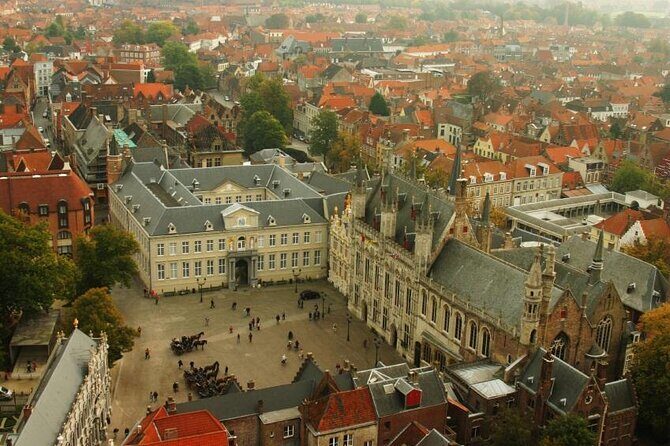
- Burg Square (about 10 minutes) with the Gothic town hall, the old courthouse, and the Basilica of the Holy Blood.
- The Markt (about 20 minutes) as the last point of the guided portion, where the guide explains buildings around the square and gives tips on where to eat and what are the best shops to buy traditional chocolate.
Then you get your payoff: approximately 2 hours free time in Bruges, depending on traffic and group pace. Finally, you meet the guide and bus back at Bargeplein (Katelijnparking) with about 10 minutes to head back to Amsterdam.
Using the 2 hours of free time well
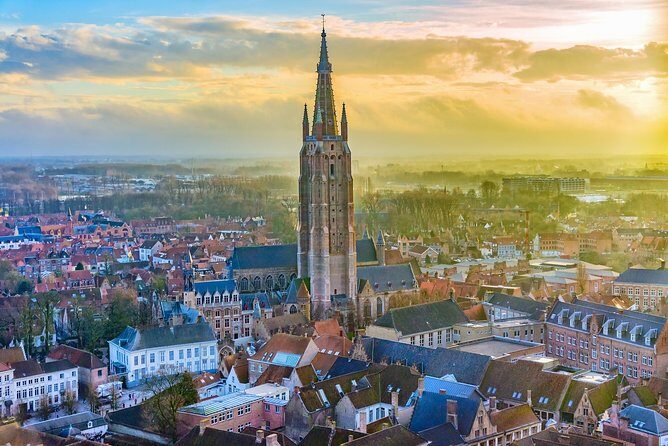
Two hours is enough to feel like you actually did Bruges, but you have to move with purpose.
Here’s how I’d use it:
- Pick one “anchor zone” around either the canal views (near the photo stops) or the square area (around the Markt). Bruges rewards small walking loops, but long cross-city wanderings will eat your time.
- If you want chocolate, use the guide’s Markt tips early. Waiting until the end often means you’ll shop with less patience.
- If you want a sit-down break, choose it during the free time. The guided portion is tight and you’ll lose less time if your pause happens when it’s truly yours.
If you like buying gifts, this is also the moment to do it. Bruges is famous for chocolate, and you’ll probably see plenty of tempting packaging everywhere. Your best plan is to buy the stuff you actually sampled or the shop the guide pointed to.
Guides and pacing: what stood out from real experience
The most praised element across feedback is how guides run the day. Multiple names show up, including Blanca (with driver Michael mentioned for getting people safely), Pau, Lorena, and Eduardo. The common theme is clear communication, friendliness, and a strong focus on helping you understand what you’re looking at.
That communication shows in small ways:
- The guide explains what time you should return to the bus at each stop.
- They point out landmarks so you don’t feel like you’re wandering blind during quick photo windows.
- They provide local tips so your free time isn’t just “walk and hope.”
One caution from schedules like this: if you expect long stays at each sight, you might leave wanting more. The tour is built for coverage and orientation, not slow-paced museum time. If that sounds like you, keep your expectations aligned and you’ll enjoy it more.
Who should book this Bruges day trip, and who should skip it
This tour fits best if you:
- Want a guided introduction to Bruges without navigating independently.
- Like photo moments but also want explanations behind them.
- Appreciate structured timing and clear meeting points.
- Travel in a group that wants one clear plan for the day.
It’s less ideal if you:
- Have reduced mobility, since it’s not recommended for that.
- Expect long indoor visits at each site.
- Prefer flexible, spend-45-minutes-per-place sightseeing over quick stops.
Should you book this Bruges trip from Amsterdam?
I’d book it if your goal is a memorable Bruges “greatest hits” day with less stress than DIY transport. The value is strong for what you get: bus from Amsterdam, a Spanish guide, a guided route that hits love stories, medieval life, gothic landmarks, plus a real tasting at Chocolalino. And the ending free time gives you room to turn the photos into actual exploring.
I would hesitate only if your idea of Bruges is slow and deep, because the stop windows are short and you may only see sites from the outside. If you go in knowing it’s a guided hit list with a payoff, you’ll likely leave happy—chocolate in hand and stories in your head.
FAQ
FAQ
What time does the Bruges bus tour start from Amsterdam?
It starts at 8:30am at De Ruijterkade 151, 1011 AC Amsterdam. The tour ends back at the same meeting point.
How long is the tour?
The duration is listed as about 12 hours.
What language is the guide?
The guide is professional and speaks Spanish.
Is round-trip transport included?
Yes. The price includes round trip by air-conditioned bus from Amsterdam to Bruges and back.
Do I need headphones for the tour?
Belgian regulations require radio guides on some occasions. You can use your own wired headphones with a jack 3.5 mm, or buy disposable headphones for €1.
Where are the first and last stops in Bruges?
The bus drops you at Bargeplein (Katelijnparking) for the start of the city portion, and you return there at the end before heading back to Amsterdam.
Is food included?
No. Food and drink are not included, but the guide will share recommendations.
How much free time do I get in Bruges?
You get approximately 2 hours of free time, depending on traffic and the rhythm of the group.
Can I cancel for a full refund?
Yes. You can cancel up to 24 hours in advance for a full refund. Cancellation less than 24 hours before the start time is not refunded.
Is it suitable for everyone?
Most travelers can participate, but it is not recommended for travelers with reduced mobility. Children under 2 must ride in a safety seat on the bus, and you should bring the proper chair.