REVIEW · AMSTERDAM
Amsterdam: Red Light District & City Tour German or English
Book on GetYourGuide →Operated by Amsterdamliebe · Bookable on GetYourGuide
Red Light District, explained on a city walk. This tour strings together the Amsterdam canal belt and the Red Light District with a focused German city guide, so you get both postcard beauty and the real neighborhood story. I like how the pace is relaxed (it feels like you’re walking with someone who cares), and I like the practical insider angle on how the area works day to day. One thing to consider: it’s an adult-focused topic, so if you’re uncomfortable with sex work details, this may not be your best match.
For canal-lovers, I especially appreciate the way you move between famous landmarks and quieter street corners without feeling rushed. You’ll also get that German-guide energy that keeps things lively—someone who can answer questions and steer you through sensitive material without turning it into shock value.
If you want a thorough all-day Amsterdam deep dive, 2 hours will feel short. Still, it’s a smart first-timer “get your bearings fast” plan—small group, walking, and built for context.
In This Review
- Key highlights you’ll actually notice
- Canal Belt Warm-Up: Dam Square to the Royal Palace
- Oude Kerk to Beurs van Berlage: Amsterdam’s Brains and Beliefs
- Dancing Houses and Centraal Station: Why Amsterdam Looks Like It Does
- Chinatown and the Coffeeshop Stop: Amsterdam Beyond One Theme
- Entering the Red Light District (Carefully): What Changes as You Go South
- What You Learn About Daily Life: Money, Space, and Safety
- Ending at De Waag: Finishing With a Sense of Center and Continuation
- Price and Time on Your Feet: Is $271 Good Value?
- Practical Tips for a Smooth 2-Hour Amsterdam Walk
- Should You Book This Tour?
- FAQ
- How long is the Amsterdam Red Light District & City Tour?
- Is the tour in English or German?
- Is the tour bilingual?
- Where do I meet, and where does the tour end?
- What is included in the price?
- Are food and drinks included?
- Will the tour run in bad weather?
- Is it wheelchair accessible, and can I cancel?
Key highlights you’ll actually notice

- Two must-dos stitched into one walk: canal belt sights plus the Red Light District
- A German or English guide you choose upfront: the tour is not bilingual
- Behind-the-scenes explanation: how sex work functions, including money basics and safety topics
- Small-group feel: private group experience for up to 4 people
- Photo stops where they matter: from Dam Square to De Waag
Canal Belt Warm-Up: Dam Square to the Royal Palace
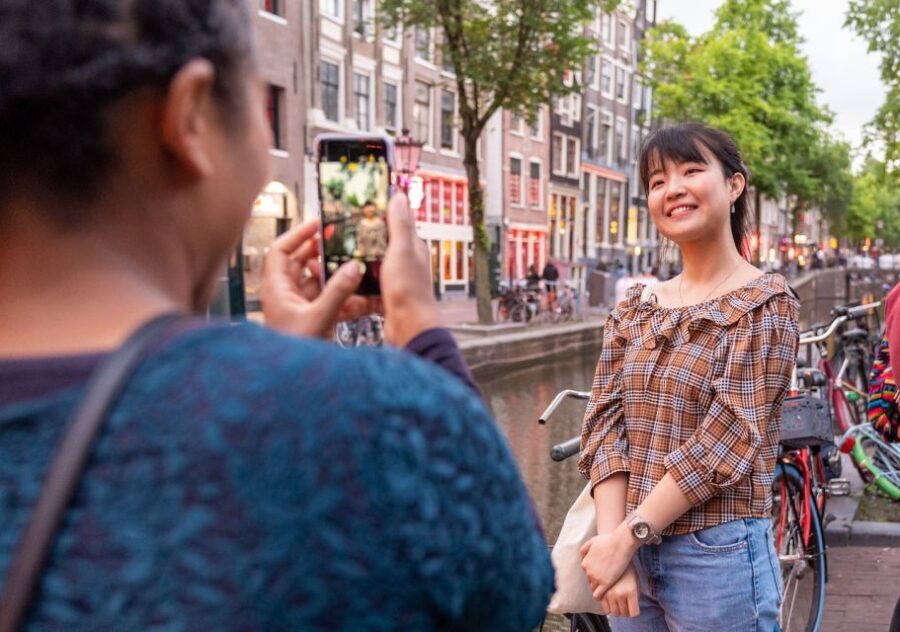
This starts right in the center, where Amsterdam’s story is easiest to see. You’ll meet at one of the Dam area points (the National Monument by Dam 3 or Dam Square itself) and immediately get oriented around the big civic spaces that shaped the city.
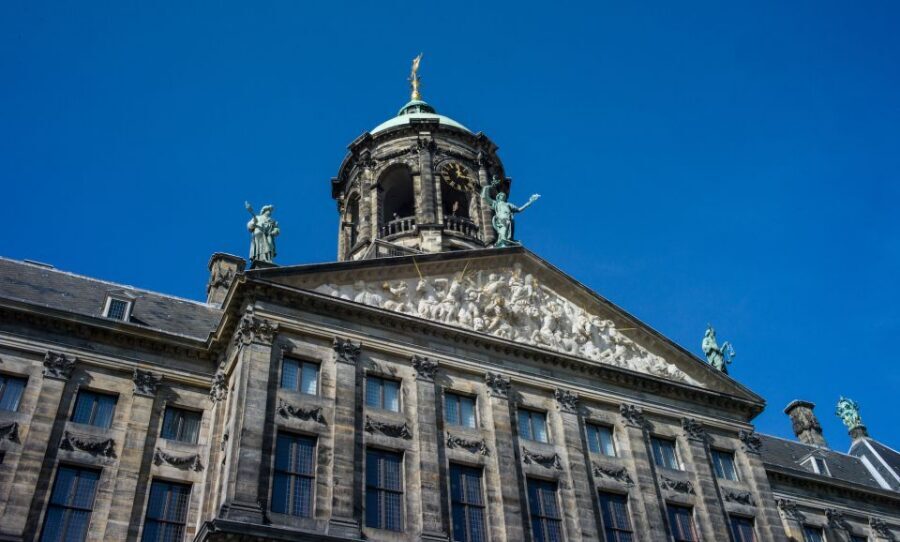
Dam Square is your first quick photo stop. From there, the tour heads to the Royal Palace area and the landmarks nearby—places that show how Amsterdam can look royal and orderly while still being famously tolerant and pragmatic. The guide’s job here is not to rattle off dates. It’s to connect what you’re seeing to how Amsterdam thinks: trade-minded, people-minded, and stubbornly self-inventive.
A stop at the Nieuwe Kerk keeps the rhythm going. You get a short guided moment that helps you understand why churches and public buildings were central to community life, even as the city’s priorities evolved.
What’s valuable for you: the tour doesn’t treat the center like a museum. It links architecture and squares to everyday identity, so later, when you reach the Red Light District, it won’t feel like a random detour—it’ll feel like part of the same city.
You can also read our reviews of more city tours in Amsterdam



Oude Kerk to Beurs van Berlage: Amsterdam’s Brains and Beliefs
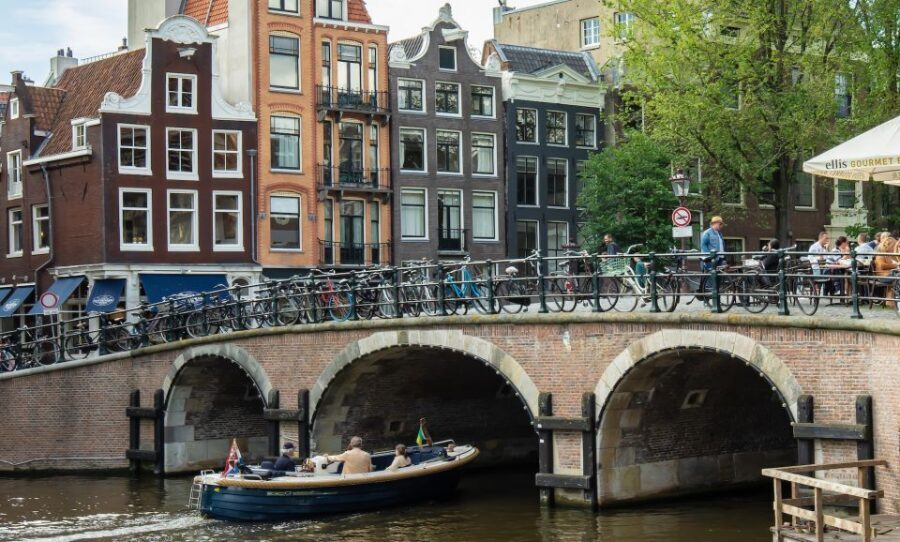
Then the tour moves into the older city fabric. The Oude Kerk photo stop is more than a pretty church exterior. It’s a reminder that Amsterdam’s growth didn’t happen in a vacuum—religion, trade, and civic life shaped one another.
From there, you’ll reach the Beurs van Berlage, which helps explain a key Amsterdam theme: money and meaning often shared the same streets. This is one of those spots where a guide can translate “big building” into “big story.” You’ll get context for why the city attracted merchants, thinkers, and people looking for space to build a life.
One of my favorite parts of tours like this is that they teach you to look at the city like a system. Streets connect. Institutions cluster. Neighborhoods form around jobs, housing, and social rules. Even on a short walk, your guide can point out those patterns, so you leave with more than photos—you leave with mental maps.
Possible drawback: this section moves quickly. If you’re the type who wants to go inside buildings and linger, you’ll mainly be learning from the street view and brief guided stops.
Dancing Houses and Centraal Station: Why Amsterdam Looks Like It Does
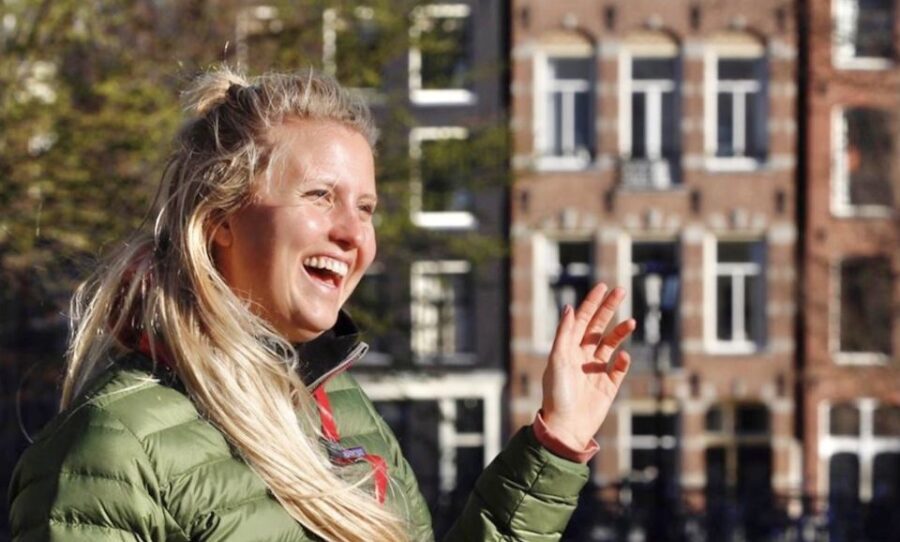
The Dancing Houses photo stop is one of those “oh, that’s Amsterdam” moments. These buildings are playful by design, and that matters. Amsterdam has a reputation for freedom—and the city’s architecture gives you a clue about that attitude. You’ll get a guided moment that frames whimsy as part of the city’s built personality, not just a gimmick.
Next comes Centraal Station. A short guided stop here helps you understand Amsterdam as a junction: a place where people arrive, move on, and also decide to stay. This is useful later if you’re planning your own neighborhoods, since Centraal is a convenient reference point for transit and orientation.
If you like to travel smart, this is the part where the guide quietly sets you up for independence. After a walk like this, you usually know which areas to revisit and which ones to use as a base.
Chinatown and the Coffeeshop Stop: Amsterdam Beyond One Theme
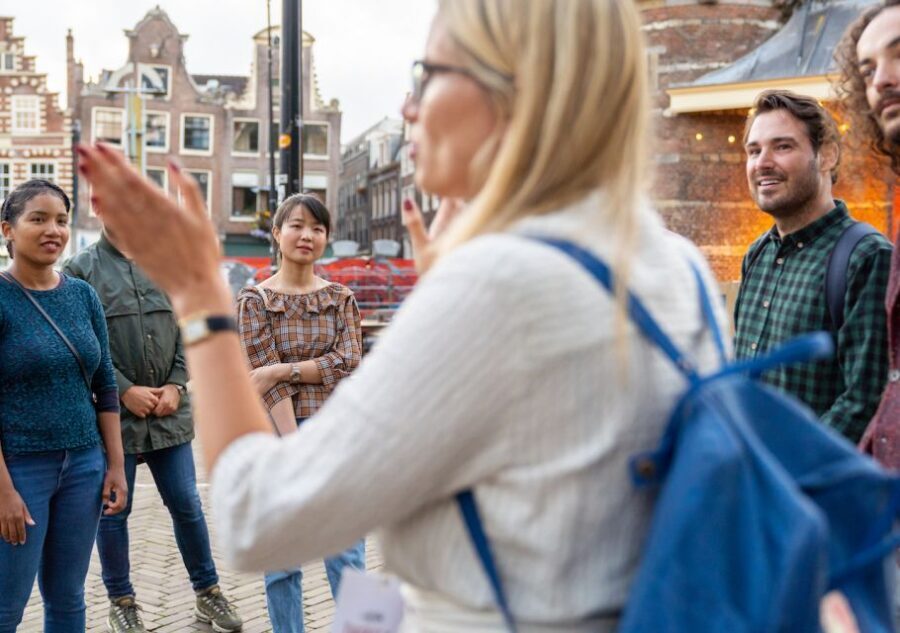
Amsterdam has layers, and the route nudges you to notice more than the obvious highlights. You’ll pass through Chinatown with a guided moment—short, but enough to give you a sense of how migration and community branding show up in city streets.
Then you’ll stop at Coffeeshop The Jolly Joker for a photo moment. The point isn’t a lesson in rules or a recommendation to do anything specific. The tour is about showing you what Amsterdam looks like when daily life has different textures. You’ll also get context that makes the city’s tolerance feel less like a slogan and more like a lived system.
The “small guided stops” approach works here. You’re not trapped in one topic for two hours. Instead, you get quick guided context at several places, which helps you keep the city feeling whole rather than segmented.
What to watch for: because these stops are brief, it’s worth keeping your questions ready. Your guide can connect dots faster than you’ll get from wandering alone.
Entering the Red Light District (Carefully): What Changes as You Go South
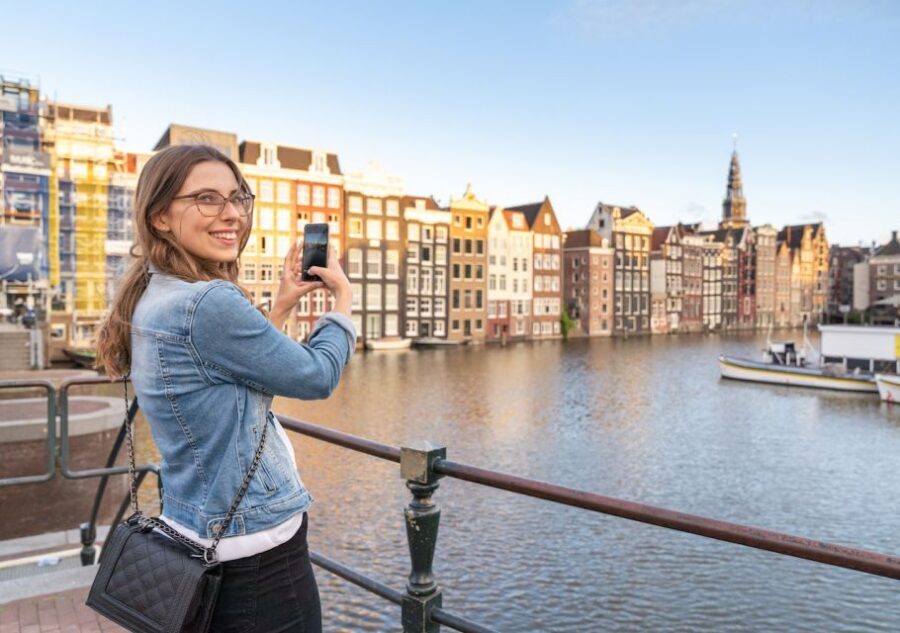
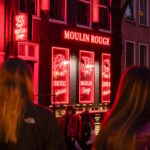
This is the heart of the tour. When you reach the Red Light District, the atmosphere shifts—socially, visually, and emotionally. Your guide’s job is to help you see it as a neighborhood with rules and routines, not just as a spectacle.
The walking segment includes a Red Light District guided moment and then ends the tour later in another landmark area (De Waag). In the middle, you’ll get a structured explanation: Amsterdam’s history of sex work in that area, the way negotiations happen between punters and prostitutes, and how the neighborhood handles public realities.
This is where I think the guide quality matters most. In a good version of this tour, you learn without being pushed into uncomfortable storytelling. The data for this experience stresses exactly that balance: it covers topics like women’s safety, income and expenses, and how sex clubs fit into the picture—so the area is explained as part of the city’s social order.
One important consideration for you: this section is adult-focused. Be ready for plain language around work routines and costs. If you want Amsterdam content with zero adult-adjacent detail, choose a different tour.





What You Learn About Daily Life: Money, Space, and Safety
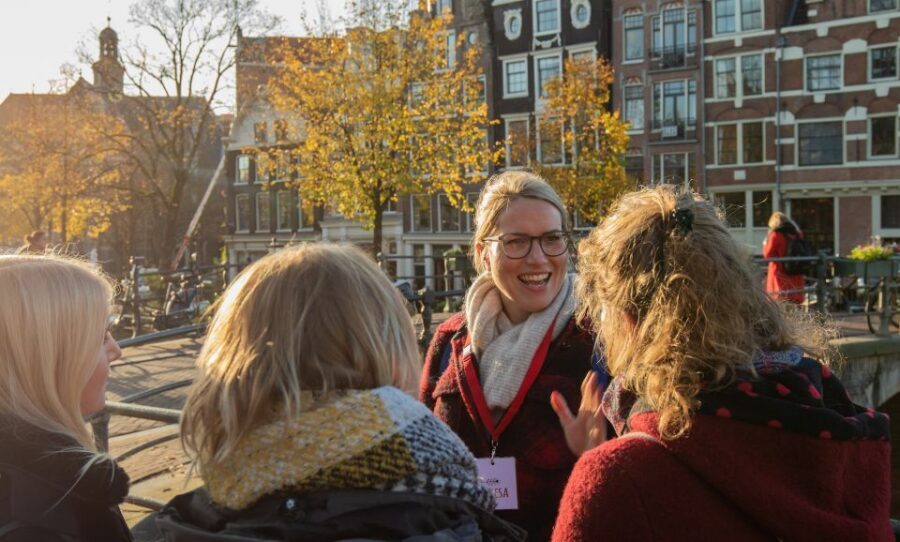
One of the most praised parts of this experience is the practical insider context. You’ll hear about how sex workers earn their living, including the trade-offs that come with renting rooms and the role of taxation. Your guide explains not only what’s visible, but the mechanics behind it—how the business side works, and how people keep themselves safe within the constraints of the neighborhood.
You’ll also learn about control mechanisms in the area and how the structures of sex work are questioned and negotiated in practice. That means you get more than morality tales. You get the policy-and-real-life overlap: what’s managed locally, what stays informal, and how tolerance can coexist with strict boundaries.
From the reviews, guide names like Shari, Chantal, and Amelie show up as examples of how engaging the guiding can be. The consistent theme is energy plus clarity—information delivered with enough warmth that it doesn’t feel cold or clinical.
How that helps your trip: even if you never plan to come back to this area in the same way, you’ll understand what you’re seeing. You’ll also avoid the common “tourist lens” that turns people into props.
Ending at De Waag: Finishing With a Sense of Center and Continuation
The tour wraps at De Waag. This finish point matters because it places you back into a recognizable historic-center vibe—an area where it’s easy to plan your next move on foot.
If you’re thinking ahead: once you’ve walked Dam Square to the Red Light District and back toward a central finish, you’ll be better at shaping your own day. You’ll know where you can wander without feeling lost and where you might want to slow down.
For many people, this is the perfect intro tour. Two hours is enough time to gain context, but not so long that you’re burned out by walking or by one heavy topic.
Price and Time on Your Feet: Is $271 Good Value?
The price is $271 per group (up to 4 people) for the 2-hour walk. That’s important because it’s not priced like a solo ticket where you’d instantly pay a lot more. Instead, it’s closer to a “you split the cost” format.
Here’s the value logic:
- If you go as a couple, you’re typically paying a lot less per person than a traditional per-person walking tour.
- If you fill the full group size, the per-person cost drops even more.
Also note: the experience includes a licensed guide and the 1.50 city tax (per passenger). That city-tax detail is easy to miss on some tours, so it’s good that it’s stated as included here.
And because it’s a private group, you get more chance for personal questions—especially useful for a topic like the Red Light District, where people often have real concerns about what they’re seeing and how the neighborhood functions.
Practical Tips for a Smooth 2-Hour Amsterdam Walk
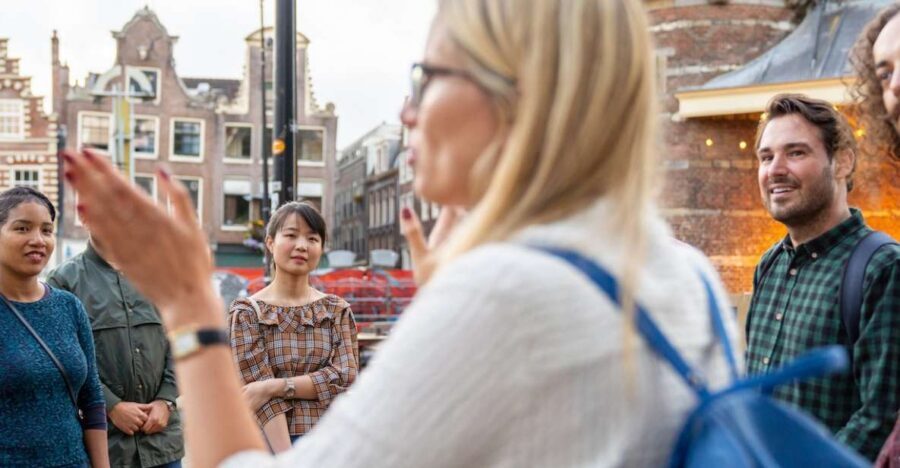
This tour is a walking experience, and it runs rain or shine. Amsterdam weather can switch fast, so plan for layers and shoes that handle wet stone.
A few practical notes that will make your life easier:
- Bring a phone with enough battery for quick navigation and photo moments.
- Wear comfortable shoes. The route is compact, but you still cover real walking time.
- Choose your language option before you arrive. The tour is not bilingual, so pick German or English based on your comfort.
- Since the subject matter is adult-focused, set your expectations. The guide includes topics like club activity, negotiations, and work routines, so you’ll get direct explanations.
Should You Book This Tour?
Book it if you want an Amsterdam intro that balances beauty with real-world context, and you’re comfortable hearing direct information about the Red Light District. The small-group private format and guide skill seem to be the big wins, with multiple guides praised by name (including Shari, Chantal, and Amelie).
Skip it if you want a purely sightseeing tour with zero adult-adjacent detail. Also skip it if you hate walking for two hours straight and prefer to enter lots of buildings—this one is designed for guided street knowledge and photo-stop pacing.
If you’re on the fence, think of it like this: it’s a short walk built to prevent misunderstanding. And in Amsterdam, that’s often the smartest kind of travel souvenir.
FAQ
How long is the Amsterdam Red Light District & City Tour?
The tour lasts 2 hours.
Is the tour in English or German?
The tour is offered in English or German. You choose one option when booking.
Is the tour bilingual?
No, it is not bilingual. You should select the language you want.
Where do I meet, and where does the tour end?
Meeting point can vary depending on the option booked, with starting options including Dam Square or the National Monument at Dam 3. The tour finishes at De Waag.
What is included in the price?
You get a licensed, experienced tour guide (German or English) and the 1.50 city tax per passenger.
Are food and drinks included?
No. Food and drinks are not included.
Will the tour run in bad weather?
Yes. The tour takes place rain or shine.
Is it wheelchair accessible, and can I cancel?
The tour is wheelchair accessible. You can cancel up to 24 hours in advance for a full refund.