REVIEW · AMSTERDAM
Amsterdam in World War Two Cycle Tour
Book on Viator →Operated by Slagveldreizen.nl · Bookable on Viator
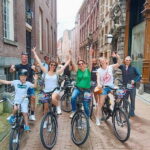
WWII becomes real fast on two wheels. This Amsterdam South ride uses then-and-now photos to show what the Nazi occupation looked like on today’s streets, squares, and building corners. You’ll also get the comfort of a small group (max 6) and a guide who can explain why each place mattered.
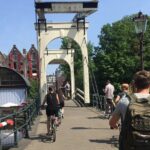
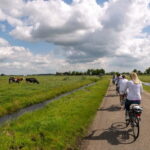
I love how much ground you cover without feeling rushed. The route reaches areas that feel quieter than the center and lets you see the city like a local, not like a bus schedule. One thing to consider: the topic is heavy, and you’re on a bike for close to three hours, so go into it ready for both emotion and movement.
In This Review
- Key Things I’d Put on Your Must-Do List
- Why This WWII Bike Tour Feels Different Than Usual Sightseeing
- Getting Oriented: Start Time, Meeting Point, and How the Ride Runs
- Victorieplein (Daniël Willinkplein): The 1943 Raid and What Came Next
- Merwedeplein and Waalstraat: The Frank Family, Anne Frank’s Footsteps, and the Diary’s Origin
- Cornelis Troostplein and Museumplein: From Barracks to Nazi Offices and Flak Batteries
- Roelof Hartplein: Coffee, Restroom Time, and How Resistance Used Everyday Stores
- Beethovenstraat and Euterpestraat: Retaliation After an Execution
- Rubensstraat Corners: SD HQ, Stolen Property, and the RAF Attack Mission
- Olympiaplein, Parnassusweg, and Amsterdam Lyceum: Registration and Luftwaffe Headquarters
- Queen Emma’s Statue, May 7, 1945, and the Ride Back Through Vondelpark
- Price and Value: What $66.09 Buys You on a Two-Wheel Timeline
- Who Should Book This (and Who Might Skip It)
- Should You Book This Amsterdam WWII Cycle Tour?
- FAQ
- FAQ
- What time does the tour start?
- Where do I meet the guide?
- How long is the tour?
- Is the tour offered in English?
- How many people are in the group?
- Do I need a mobile ticket?
- Is there a break during the ride?
- What WWII sites does the tour focus on?
- Is there any cancellation flexibility?
- Is the tour suitable for most people?
Key Things I’d Put on Your Must-Do List
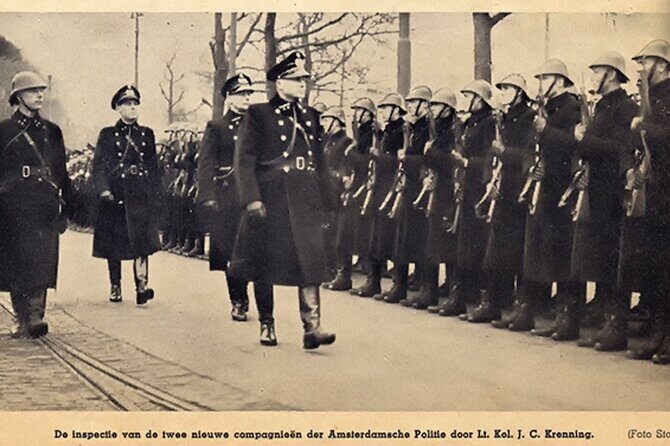
- Then-and-now WWII photo stops that match the exact spots on today’s streets
- Max group size of six, which makes questions easy and pacing calm
- Amsterdam South neighborhoods, where cycling beats slogging through crowds on foot
- Specific stories tied to places like the Frank family home and WWII offices at Museumplein
- Short coffee and restroom break at Roelof Hartplein to keep things human
Why This WWII Bike Tour Feels Different Than Usual Sightseeing
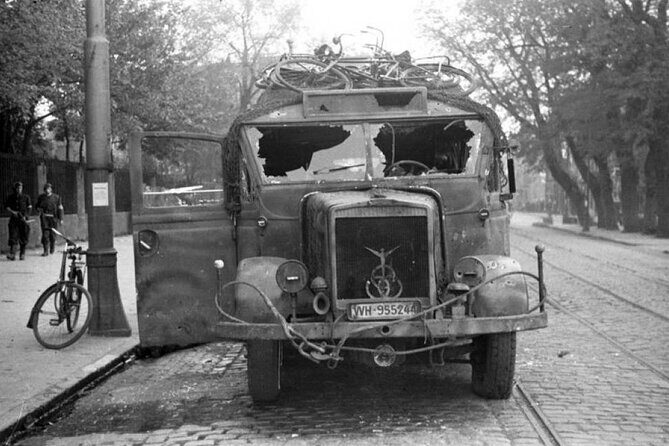
This tour doesn’t treat WWII like a distant topic in a museum room. It puts you on the real streets where arrests, paperwork, and resistance actions happened. The biggest reason it works is the photo matching. You’re not just hearing history; you’re seeing the old scene overlay the new one.
I also like that the ride is designed for efficiency. Cycling lets you cover more than walking, and it helps you connect dots between neighborhoods that would take forever to reach on foot. The guides—Rudy and Peter—bring a teacher’s clarity, plus the kind of local detail you only get from people who know these streets.
You can also read our reviews of more cycling tours in Amsterdam
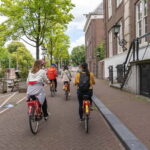
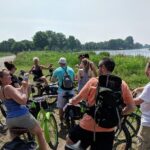
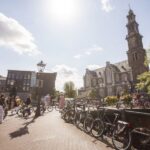
Getting Oriented: Start Time, Meeting Point, and How the Ride Runs
Plan to meet at Tesselschadestraat 1 in Amsterdam (the tour starts at 11:00 am). It ends back at the meeting point. Expect roughly 2 hours 30 minutes to 3 hours 10 minutes, depending on pacing and photo-stop time.
You’ll get a mobile ticket, and the tour is offered in English. The group stays small (max six travelers), which matters on a history tour—there’s room for questions and you’re less likely to feel like you’re being marched through.
One practical note: this is an outdoor ride. Bring what you need for the weather and plan for a full stretch of cycling rather than quick, hop-off stops every five minutes.
Victorieplein (Daniël Willinkplein): The 1943 Raid and What Came Next
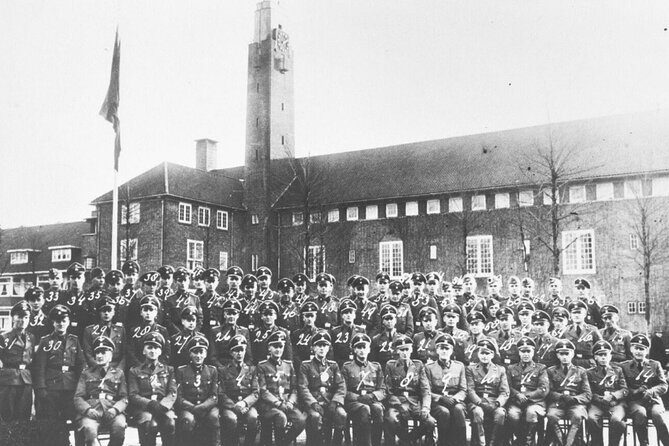
The ride begins at Victorieplein, which was known as Daniël Willinkplein during the war. Here the story starts with the big June 20, 1943 raid in Amsterdam. Large groups of Jewish citizens were arrested at the foot of the nearby skyscraper area during what the Nazis called a Judenaktion.
What I find important is the way the tour explains the process, not just the event. You’ll hear how Jewish people were transported with help from Dutch police units (PBA) and police volunteers linked to the NSB. Then the route moved to Olympiaplein for registration, and from there to Westerbork in the east of the Netherlands.
This is the kind of stop where you’ll want a quiet minute. It’s not “photo-op history.” It’s the beginning of a chain that repeats through many places on the route.
Merwedeplein and Waalstraat: The Frank Family, Anne Frank’s Footsteps, and the Diary’s Origin
Next up is Merwedeplein 37-II on the third floor by American counting—the home tied to the Frank family. The tour places you close to memory: in the summer of 1942, Otto Frank moved his family and some acquaintances to Het Achterhuis, the Secret Annex on the Prinsengracht, connected to Otto’s company.
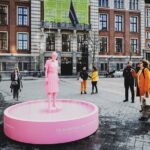
A statue commemorating Anne Frank sits on Merwedeplein, so you get a tangible landmark right in the neighborhood fabric.
From there, the story shifts to publishing and chance. At the Waalstraat bookstore area (Waalstraat 48, now Café Blek), the tour points out the former Tilex Bar (Tilly and Lex—van Weren). Lex van Weren survived Auschwitz because he had to play his trumpet at executions. That detail is brutal, but it’s also part of why these locations matter: survival sometimes depended on one cruel, arbitrary moment.
Then you reach a key Anne Frank connection tied to the diary’s publication. Otto Frank bought the diary here (the tour notes it was later published in 1947 as the first edition). For me, that turns the story from “what happened to a family” into “how the world learned what happened.”
Cornelis Troostplein and Museumplein: From Barracks to Nazi Offices and Flak Batteries
At Cornelis Troostplein 23, the setting changes from residential life to occupation infrastructure. The tour explains that the area once held PBA barracks. Before WWII it had a different identity as a Catholic complex with two convents and a school.
Spring 1942 brings higher-level meetings. The chief of the Sicherheitsdienst (SD) /Gestapo, Rauter, inspected the PBA and met Heinrich Himmler at Museumplein. That’s one of those connections that helps you understand the scale: this wasn’t only local enforcement. It was tied into the broader Nazi machinery.
Museumplein itself becomes a stronghold. Facing the concert hall, the houses on the left were occupied by German offices. The tour also points out specific functions: a building connected to the United States consulate once housed the Zentralstelle für Jüdische Auswanderung, the Central Jewish emigration office (the tour uses emigration in a grim sense). Next door you’ll hear about the Ortskommandantur and the Feldgendarmerie building.
The square fronting these offices held the IJsclubterrein, and here Germans built their stronghold with bunkers and anti-aircraft (Flak) batteries. Next to the concert hall you’ll find the NSB HQ Amsterdam. After WWII, the bunkers were blown up.
If you’re expecting to feel like you’re “just passing buildings,” this stop corrects that. You’re standing where layers of bureaucracy and military planning sat side by side.


Roelof Hartplein: Coffee, Restroom Time, and How Resistance Used Everyday Stores
At Roelof Hartplein, there’s a short break at Café Wildschut for coffee and a restroom visit. It’s about 10 minutes, and admission is free. This matters more than it sounds. On a history ride that deals with arrests and retaliation, a tiny reset keeps the rest of the route from feeling like a nonstop lecture.
Then the tour turns to something practical and fascinating: resistance photography. Near the library building on Roelof Hartstraat, the tour describes a photo shop used by the Dutch resistance to develop unique photographs of the first roundup of Jews in Amsterdam by the SD/Gestapo and German (order) police.
Charles Breijer’s name comes up here as the photographer linked with those images. And right near the neighborhood, you’ll also see a small monument remembering Jews taken from the area. It’s a reminder that history isn’t only at famous addresses. It’s scattered in small corners too.
Beethovenstraat and Euterpestraat: Retaliation After an Execution
The corner of Beethovenstraat and Apollolaan brings the tour into the rhythm of violence and retaliation. In late October 1944, around in front of no: 6, SS officer Herbert Oelschlägel and SD/Gestapo agent were executed by a Dutch resistance member.
The consequence came fast. In retaliation, the Sicherheitsdienst / Gestapo burned down two houses and executed 29 resistance fighters. The tour notes that most house numbers still match what they were during WWII, which can make the street feel eerily close to the past.
At the time, this street was called Euterpestraat. The guide connects the dots to Gerrit van der Veen, described as the leader of an important Dutch resistance group. This part of the ride helps you see resistance as organized work, not only spontaneous heroism.
Rubensstraat Corners: SD HQ, Stolen Property, and the RAF Attack Mission
This section is dense in a good way, because the tour explains what the Nazis did on the ground. At the corner of Memlingstraat and Rubensstraat, you’ll hear about two offices of major Nazi oppression organizations: the SD-HQ Amsterdam (SD Aussenstelle under Willy Lages) and the Hausraterfassungsstelle, an office involved in stealing possessions of deported Jews. It was part of the Zentralstelle für Jüdische Auswanderung.
The tour names Henneicke as the leader of the Hauserfassungsstelle. That specific naming helps avoid vague history. It gives faces to roles, which makes the system feel painfully real.
Then the story turns to how resistance tried to break the machinery. In November 1944, the resistance requested an attack by the Royal Air Force via a secret radio message. The main goal was to destroy SD/Gestapo files. The tour credits Group Captain Denys Gillam (leader of 149 Typhoon wing) as the person connected to completing the job.
You also get a safehouse detail on the corner of Rubensstraat and Gerrit van der Veenstraat. There’s a note to look for a Stolperstein for the address. The tour adds that in June 1944, that address was betrayed to the SD/Gestapo by a female informant (V-Frau). This isn’t meant to shock you for shock’s sake. It’s meant to show the constant danger in everyday connections.
Olympiaplein, Parnassusweg, and Amsterdam Lyceum: Registration and Luftwaffe Headquarters
At Olympiaplein / Parnassusweg, the tour connects the earlier raid to what happened after detention. Jewish people arrested during the June 1943 raid at the sports complex were registered by the SD/Gestapo. The guide explains that this happened with help from Jewish camp police sent from Westerbork concentration camp.
It’s a complicated detail, and the tour handles it carefully: it shows how the occupation system forced people into roles with impossible choices. Standing there, you can feel why the guide wants you to look at the present-day location while remembering the past paperwork that shaped lives.
Next is Valeriusplein / Amsterdam Lyceum. The school building served as the headquarters of the Luftwaffe at the end of the occupation. Schools and offices, places built for daily order, turned into command hubs. That contrast is one of the tour’s most sobering lessons.
Queen Emma’s Statue, May 7, 1945, and the Ride Back Through Vondelpark
On Emmalaan / Prins Hendriklaan, the tour stops at a statue of Queen Emma. It mentions that in the summer of 1940, people placed flowers at the statue in defiance of the German occupiers. Small acts like that matter on a long history route. They remind you that resistance wasn’t only underground operations. It was also public refusal.
The guide also ties in a photo connected to Charles Breijer, described as showing a guard at the headquarters of the Kriegsmarine in 1944.
Finally, you end with the last days of occupation. When the Germans surrendered on May 7, 1945, dangerous situations arose between frustrated German troops and resistance fighters. You’ll see a monument to victims of one of the shootings on the last day. The tour then guides you through the Vondelpark back toward Leidseplein where the ride originally started.
It’s a controlled emotional arc: from raids to paperwork, to retaliation, to resistance actions, and finally to the messy end of the occupation.
Price and Value: What $66.09 Buys You on a Two-Wheel Timeline
The price is $66.09 per person for a roughly 2.5–3 hour ride. You’re paying for three things: access, presentation, and focus.
Access means you’re not just seeing a handful of plaques. You’re cycling between many WWII-relevant locations across Amsterdam South, including sites tied to the Frank family, Nazi offices at Museumplein, and registration steps connected to Westerbork.
Presentation means the tour relies on historical photos from the occupation era matched to exactly where you are on the street. That approach is hard to recreate on your own unless you’re doing serious research and carrying the right images.
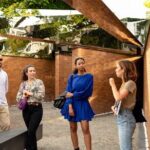
Focus means your group stays small and the guide can keep the story structured. The reviews strongly highlight Rudy and Peter’s friendly style and how well they connect street corners to events, plus the sense of safety on the cycling portion.
If you’re hoping for a “light and fun bike ride,” this may feel heavy. If you want meaningful WWII context beyond a room full of exhibits, the value makes sense fast.
Who Should Book This (and Who Might Skip It)
This tour fits best if you:
- Want WWII history tied to real addresses, not only museum displays
- Enjoy cycling and feel comfortable riding for close to three hours
- Prefer small-group guiding over a big bus format
- Like photo-based learning, especially then-and-now comparisons
You might skip it if:
- You don’t want a history-heavy route with arrest and retaliation stories
- You’d rather keep your sightseeing to canals and classic center sights
Should You Book This Amsterdam WWII Cycle Tour?
Yes, if you want the kind of WWII understanding that sticks. The combination of small group size, a clear guide like Rudy (and Peter), and photo comparisons at specific sites makes this more than a checklist tour. It’s also a strong choice for Amsterdam, because cycling naturally takes you through neighborhoods you’d miss if you only stayed in the museum-and-center loop.
Book it if you’re ready for a thoughtful ride that uses the city itself as the textbook.
FAQ
FAQ
What time does the tour start?
The start time is 11:00 am.
Where do I meet the guide?
Meet at Tesselschadestraat 1, 1054 ET Amsterdam, Netherlands.
How long is the tour?
It runs about 2 hours 30 minutes to 3 hours 10 minutes.
Is the tour offered in English?
Yes, it’s offered in English.
How many people are in the group?
The tour has a maximum of six travelers.
Do I need a mobile ticket?
Yes, the tour uses a mobile ticket.
Is there a break during the ride?
There’s a short stop at Roelof Hartplein for coffee and a restroom visit, about 10 minutes.
What WWII sites does the tour focus on?
The route includes places connected to events like the June 1943 raid, the Frank family home, Nazi offices around Museumplein, and locations tied to resistance actions and registration/deportation processes.
Is there any cancellation flexibility?
Yes. Free cancellation is available, and you can cancel up to 24 hours in advance for a full refund.
Is the tour suitable for most people?
The info says most travelers can participate.