Small car, big Dutch countryside day.
I love the Renault Twizy style of self-driving—light, fun, and genuinely different from a bus tour. I also like that the route is handled for you with GPS navigation plus an audio guide in English, Dutch, and German. One consideration: the Twizy is built for two people, so if you’re used to roomy seating, you may find it a bit snug.
The tour runs about 3 hours and loops through South Holland’s castles and bulb region from Lisse. You get a fixed route (about 39 km) with timed stops at medieval and estate sites, plus time near Keukenhof’s castle-area (with the important note that the castle itself is private property).
In This Review
- Key points you’ll feel right away
- Renault Twizy + GPS audio: why this day works
- Choosing your morning or afternoon departure in Lisse
- The 39 km GPS route and audio guide: what to expect on the road
- Stop-by-stop: Dever, Oud Poelgeest, Warmond, then Keukenhof grounds
- ‘t Huys Dever (medieval castle stop)
- Oud Poelgeest (17th-century castle stop)
- Huys te Warmont (18th-century estate stop)
- Riding through the flower bulb region (the in-between part you’ll remember)
- Keukenhof Castle-area (last stop with private-property limits)
- Price and value: why $106.65 per group often makes sense
- Getting clear instructions and handling real-world surprises
- Who this South Holland castles-by-Twizy tour is best for
- The decision: should you book it?
- FAQ
- How long is the history and castle GPS audio tour?
- How much does it cost?
- What languages are available for the audio guide?
- What’s included in the price?
- Are the castle stops free?
- Where do you start and end?
- What do I need to drive the Twizy?
Key points you’ll feel right away
- Twizy self-drive freedom: you set the pace while the GPS keeps you from getting lost
- Three-language audio: English, Dutch, and German for the same castles and sights
- A fixed 39 km GPS loop: built for an efficient half-day with real stopping time
- Free entry for the first castle grounds: ‘t Huys Dever, Oud Poelgeest, and Huys te Warmond
- Keukenhof is about the grounds: the estate around the private castle is free, but the castle visit isn’t included
- A 2-person sweet spot: the math and comfort both work best for couples
Renault Twizy + GPS audio: why this day works
This is the kind of trip that feels made for people who want motion, not just standing in lines. You’re driving an electric microcar—small enough to feel playful, but practical enough to handle village streets and countryside roads. The payoff is that you’re not just parked near monuments. You’re actually passing through the places that make this part of the Netherlands feel like itself.
The GPS route is fixed, and that matters more than you might think. A self-drive day can become stressful fast if you’re constantly searching for turns or rechecking maps. Here, the navigation is designed for a smooth loop with stops at named sights, so you can spend your attention on the castles and the scenery instead of your phone.
You can also read our reviews of more tours and experiences in South Holland.

Choosing your morning or afternoon departure in Lisse
You get a morning or afternoon option, and your timing can change the vibe. In daylight, those bulb-region roads look cinematic—wide sky, neat fields, and small stretches of road that feel like you’re cutting through a postcard. In softer light, castle facades and garden areas tend to look more dramatic in photos.
One practical note: if your travel dates are after early-season peak, you might see fewer flowers than you expect. There’s at least one firsthand account of tulips being mostly gone by early May, so plan around the possibility that you’ll be there for the roads, castles, and atmosphere even if full bloom isn’t guaranteed.
The 39 km GPS route and audio guide: what to expect on the road
The heart of the experience is the step-by-step GPS navigation with audio. The route is fixed at about 39 km, and you’ll have set stops along the way rather than wandering on your own. That structure is great if you’re short on time, or if you don’t want to spend half a day reading maps.
Audio is available in Dutch, English, and German, and it’s built around the historical sights you’ll see. I like this format because it turns driving time into storytelling time. You’re not just moving between points—you’re learning what to look for as you arrive.
Two practical tips that keep this smooth:
- Keep your audio volume ready before you leave the start point. The Twizy is electric and fun, but road noise can make narration harder to catch if you don’t have the volume set comfortably.
- Treat the timed stops as real deadlines. If you’re the type who loves lingering, plan your walking and photos early so you don’t feel rushed later.
Stop-by-stop: Dever, Oud Poelgeest, Warmond, then Keukenhof grounds
This tour is built around a clear rhythm: short castle visits, then a ride through the bulb region, then the biggest final stop. The time allocation is part of the design—enough to get close, enough to understand the basics, and enough momentum to keep the day from dragging.
‘t Huys Dever (medieval castle stop)
You start with ‘t Huys Dever, a medieval castle stop with about 15 minutes on site. Admission is free for this stop, so you’re not juggling ticket lines or extra costs before you’ve even settled in. In that short window, aim for quick orientation first, then pick one or two viewpoints to return to for photos.
You can also read our reviews of more tours and experiences in South Holland


Oud Poelgeest (17th-century castle stop)
Next is Oud Poelgeest, a 17th-century castle with another 15 minutes. Again, admission is free here. This is a good stop for people who like architecture and atmosphere more than museums—think walking enough to appreciate the setting, then moving on while the route stays easy.
Huys te Warmont (18th-century estate stop)
Then you move to Huys te Warmont, an 18th-century estate stop. You get about 20 minutes here, which is slightly longer than the previous two. If you want to slow down—take your time near the grounds, find a quiet corner, and really look at how the estate sits in its surroundings—this extra time helps.
Riding through the flower bulb region (the in-between part you’ll remember)
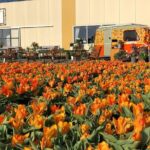
Between castles, you’ll drive through the bulb region, and that’s more than filler. It’s the Netherlands you came for: straight stretches broken by villages, narrow roads, and fields that visually explain why this area is famous in spring. Even if you’re not seeing peak bloom, the roads still create that “day outside the city” feeling.
Keukenhof Castle-area (last stop with private-property limits)
Your final stop is the Keukenhof Castle area, with about 30 minutes. Here’s the key detail: the castle itself is private property, so you can’t count on public access inside. The estate surrounding the castle is free for the public, and the main walking space is what you’re using for your time here.
Also note the cost: this stop lists admission not included, so don’t assume your time here includes a ticketed castle visit. If your plan is mostly photos and strolling the grounds, you’re in the right place. If you want full access to the castle interior, you’ll need to treat that as separate.
A simple strategy: use Keukenhof time actively. If you wait until the last minute to park, walk, and take photos, you can end up feeling like the clock is winning. Build in a buffer so you’re not rushing at the finish.
Price and value: why $106.65 per group often makes sense
The price is $106.65 per group (up to 2) for roughly 3 hours. That’s not “cheap,” but it can be good value because you’re paying for a full self-drive package: a fully charged electric Renault Twizy, the fixed GPS route, and the audio history layer.
The stop costs also matter for value. The first three castle stops are free for your visit window, which reduces the day’s unpredictable add-ons. The Keukenhof castle-area has the private-property limitation and lists admission as not included, so it’s the one place where you may pay extra if your goal goes beyond the public grounds.
The per-group structure is also a comfort-and-math factor. With Twizy seating designed for two, this is naturally a couples and small-party experience. One firsthand perspective pointed out that if you’re traveling with more people, the “cost per person” rises fast once you need a second vehicle.
Two costs to keep in the back of your mind:
- There’s a €150 deposit paid in advance per vehicle, refundable under the stated terms.
- There’s an own risk of €500 per reserved vehicle.
That doesn’t mean you should skip the trip. It just means you should plan like a driver: take care, drive smoothly, and treat the microcar as a vehicle you’ll want to return in the same condition you received it.
Getting clear instructions and handling real-world surprises
Even with GPS, a self-drive day depends on how well the operation sets you up. The experience is designed to be straightforward, with thorough instructions before you begin and responsive support if something needs adjusting. If a road segment is closed, the operator has offered an alternative route in at least one situation—so don’t assume your route is so rigid that nothing can change.
One small heads-up: the Twizy experience itself can be loud enough that narration may be harder to catch if you set the audio too low or if you’re concentrating on driving. If you’re someone who likes to read details and keep track of names, make sure you can hear the audio comfortably as you arrive at each stop.
Who this South Holland castles-by-Twizy tour is best for
This tour fits best when you want a day that feels hands-on and local. You’ll like it if you enjoy:
- Driving yourself through the countryside rather than riding in a bus
- Getting close to castles and estates with timed stops
- Hearing the story in real time with an audio guide in your preferred language
It’s also a good option if you’re based around Amsterdam, Rotterdam, Leiden, Den Haag, or Schiphol Airport and want an outing that’s easy to reach from public transport. The start point is in Lisse, and the ride ends back at the same meeting point, so you’re not dealing with a complicated end-of-day transfer.
Where it may not be ideal:
- If you need lots of space or hate tight seating, the Twizy layout is worth considering.
- If you’re expecting a long, museum-style castle experience, the stop times are intentionally short, and the Keukenhof castle interior access is limited.
The decision: should you book it?
I’d book this tour if you want the best of both worlds: castle visits with real context and the freedom of a self-drive electric microcar. The fixed GPS route, timed stops, and multilingual audio make it easy to get value out of a 3-hour window without guessing your way through South Holland.
Hold off or rethink if your top priority is spending a long time inside castle interiors, especially at Keukenhof. Your access there is primarily the public estate grounds, while the castle itself is private, and admission there isn’t included.
If you’re traveling as two and you like driving, you’ll probably feel like you got a full day’s worth of sights without the “too much planning” stress.
FAQ
How long is the history and castle GPS audio tour?
It runs for about 3 hours (approximately), with timed stops at multiple castle and estate locations and time for the bulb-region ride.
How much does it cost?
It costs $106.65 per group for up to 2 people.
What languages are available for the audio guide?
The audio guide is available in Dutch, English, and German.
What’s included in the price?
You get a fully charged Renault Twizy for two, GPS navigation with a fixed route (about 39 km) and an audio guide covering the historical sights.
Are the castle stops free?
The stops at ‘t Huys Dever, Oud Poelgeest, and Huys te Warmont list admission ticket free. Keukenhof Castle is different: the estate is free, but castle admission is not included.
Where do you start and end?
The tour starts at Meer en Duin 44, 2163 HC Lisse, Netherlands and ends back at the same meeting point.
What do I need to drive the Twizy?
You need to be 21+ and have held a driver’s license for at least 3 years. Bring your passport or ID and your driver’s license. If you’re outside Europe, North America, South America, or Australia, bring an international driver’s license if your license isn’t in English writing.