REVIEW · AMSTERDAM
Amsterdam in World War II Tour
Book on Viator →Operated by Slagveldreizen.nl · Bookable on Viator
World War II is written into Amsterdam’s streets. This tour uses real locations to explain the German occupation of the Netherlands from 1940 to 1945, with retired historians leading a small-group walk through the city. It’s the kind of tour where street corners, monuments, and memorials stop feeling like background noise.
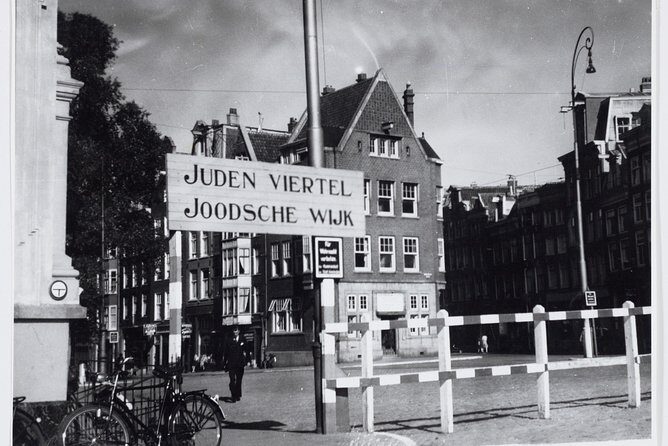
I like the mix of major landmarks and tight storytelling. You get set up outside Anne Frank’s House, then you keep moving through places tied to the Jewish experience and the war years, including Dam Square and the Nieuwe Kerk area. The guide also brings period photos and maps, which helps you picture the city as it was, not just as it is today.
One possible drawback: this is heavy material, and it’s mostly an outdoor walk at a slow pace. If you want a lighter day or you’re not up for Holocaust and occupation stories, plan your schedule and come prepared for an emotional route.
In This Review
- Key things I’d focus on before you go
- A 3-hour walk that turns WWII facts into real streets
- Where you start and how you finish at a Holocaust Names Monument
- Stop-by-stop: what each landmark adds to the WWII story
- Stop 1: Amsterdam occupation sites and monuments (about 2 hours 30 minutes)
- Stop 2: Outside Anne Frank’s House (10 minutes, no museum)
- Stop 3: Statue of Multatuli near Raadhuisstraat and the Singel (10 minutes)
- Stop 4: Magna Plaza, once a WWII post office (5 minutes)
- Stop 5: Nieuwe Kerk area and Mozes en Aäronstraat (5 minutes)
- Stop 6: Dam Square and the May 1945 aftermath (about 25 minutes)
- Stop 7: Sofitel Legend The Grand Amsterdam, once City Hall (about 5 minutes)
- What makes the guide approach work so well
- Price and value: is $46.44 a good deal for this tour?
- Who should book this WWII walking tour?
- A quick reality check: weather and comfort
- Should you book the Amsterdam in World War II Tour?
- FAQ
- How long is the Amsterdam in World War II tour?
- What size is the group?
- What’s included in the price?
- Do we enter the Anne Frank House museum?
- Is the admission for the stops included?
- Where does the tour start and end?
- Is coffee or tea included?
- What if the weather is bad?
- What’s the cancellation policy?
Key things I’d focus on before you go
- Small group size (max 8) means more time for your questions and less crowding on tight streets
- Retired historian-led narration, with photos and maps to anchor the story to the streets
- No museum visit at Anne Frank’s House, but you still start outside and get the crucial context
- All the key stops are free to see, including Dam Square and the Nieuwe Kerk area
- Slow walk for everyone, so you won’t be sprinting between meanings in the city
A 3-hour walk that turns WWII facts into real streets
This tour is built for people who want history that you can actually stand in. Instead of reading plaques in a rush, you walk through Amsterdam and the guide keeps connecting the dots: who controlled what, where people hid and moved, and how the city changed after the war.
The time window is short enough to fit into a trip schedule, roughly 3 to 3.5 hours. The pace is intentionally slow, which matters in Amsterdam. If you’ve tried to do big walking days in the center, you know how quickly it can turn into sidewalk speed-walking. Here, you can keep up without feeling like you’re being dragged along.
And because the group is limited to 8 people, it stays human. You’ll notice it in the flow: you can hear the guide, you’re not constantly threading through strangers, and it’s easier to pause when something feels important.
You can also read our reviews of more tours and experiences in Amsterdam.



Where you start and how you finish at a Holocaust Names Monument
You start at Prinsengracht 263 (1016 GV) at 9:30 am. From the start, the route is designed to keep you oriented so you don’t feel lost while the story expands. You’ll end at the National Holocaust Names Monument (1018 DP), near the Portuguese Synagogue, and not far from City Hall.
That ending point is more than a convenient destination. It gives the tour a kind of closure: you’re not just looking back at 1940s events; you’re finishing at a place built to remember individual lives. It’s a strong emotional pivot, especially after the stop-by-stop narration of victims, refugees, and occupation-era choices.
Stop-by-stop: what each landmark adds to the WWII story
Here’s what you can expect at each stop, and why it’s worth paying attention.
Stop 1: Amsterdam occupation sites and monuments (about 2 hours 30 minutes)
Most of your time goes to the heart of the tour: key Amsterdam sites and monuments connected to the Nazi occupation, covering 1940–45. This long block matters because it’s where the guide can build the timeline and explain how the occupation shaped daily life.
You’re not just looking at one building and moving on. You’re walking a sequence, and your guide uses that movement to make the story feel geographic: what was nearby, what routes meant, and how Amsterdam’s layout played into what happened.
Practical note: because this is the longest section, it’s also where your comfort matters most. Wear shoes you can stand in for a while. Even though the pace is slow, Amsterdam sidewalks don’t forgive flimsy soles.
Stop 2: Outside Anne Frank’s House (10 minutes, no museum)
You begin outside Anne Frank’s House and get the story connected to the German attack and Jewish refugees. Importantly, you do not visit the museum.
This is a big deal for how the tour feels. You get context first, before you ever see the building as a symbol. That can be powerful if you’re the type of person who wants the meaning behind the famous address. It also keeps the walk moving, which helps if you’re trying to fit multiple activities into one day.
The downside is obvious: if you came specifically for the museum experience, this tour won’t cover it. Think of this stop as the narrative doorway, not the full museum visit.


Stop 3: Statue of Multatuli near Raadhuisstraat and the Singel (10 minutes)
You’ll see the Statue of Multatuli in the Raadhuisstraat area, plus a view from the bridge over the Singel. On the surface, it’s a quick photo-and-walk moment.
But the guide uses it to show how Amsterdam changed after the war years. That shift is valuable. It prevents the tour from becoming only about tragedy. You’re reminded that the city rebuilt, restructured, and kept going—sometimes quietly, through everyday urban life.
If you’re someone who only wants WWII references and nothing else, this may feel like a breather. If you want balance, it helps.
Stop 4: Magna Plaza, once a WWII post office (5 minutes)
Next up is Magna Plaza, which is now a mall. But during World War II, it served as the post office of Amsterdam.
Here’s the historical weight: Dutch postmen were executed by the Germans. That single sentence makes the building stop being a modern shopping stop. It becomes a location where the war’s cruelty crossed into routine services—mail, delivery, communication, jobs that were suddenly dangerous.
This is one of those “brief stop, big meaning” moments. Even if you’re rushing the mall area later that day, try to give the moment its due during the tour.
Stop 5: Nieuwe Kerk area and Mozes en Aäronstraat (5 minutes)
You get a WW2-linked story in the area between the Royal Palace and the New Church (Nieuwe Kerk), focusing on Mozes en Aäronstraat.
This kind of stop is easy to miss on your own because the street grid looks familiar and “war history” doesn’t always scream from the sidewalk. In the context of the tour, the street becomes a clue—one more piece in how Amsterdam’s neighborhoods and streets connected to what happened during the occupation.
Stop 6: Dam Square and the May 1945 aftermath (about 25 minutes)
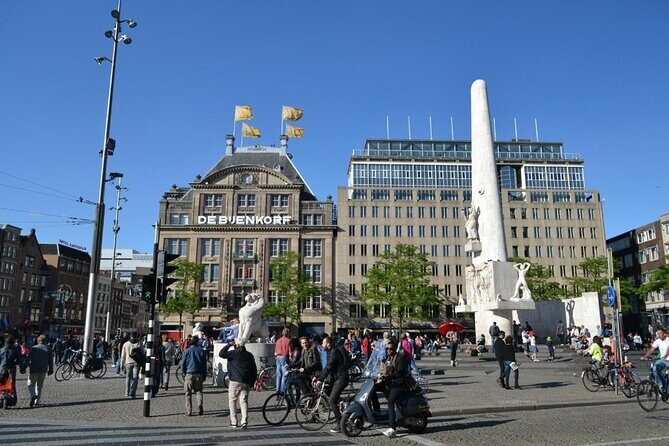
Dam Square is the tour’s major set piece and the timing is built around it: about 25 minutes here.
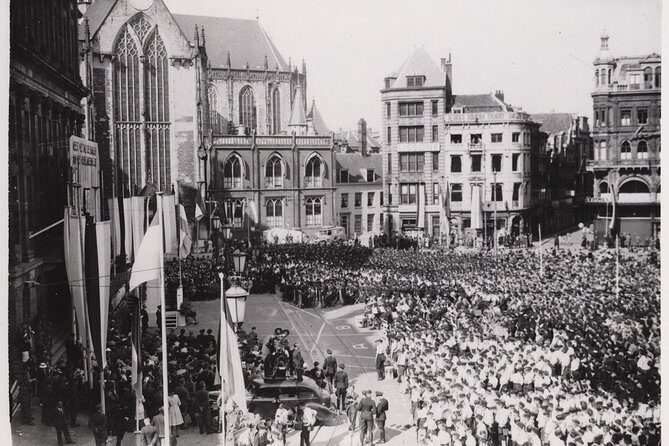
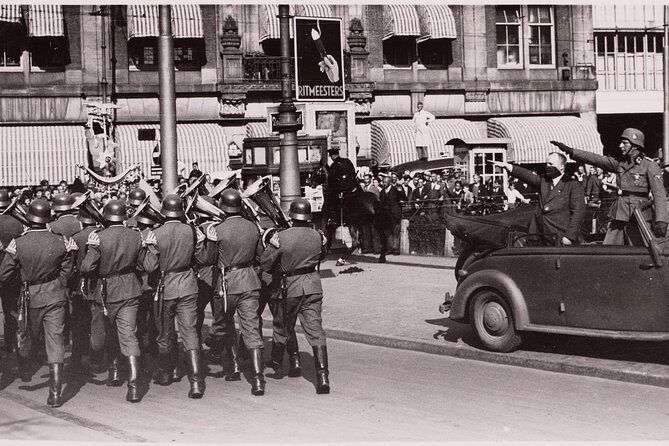
The guide explains how Dam Square functioned as the heart of Amsterdam during the occupation. You’ll hear about the shooting incident on May 7, 1945, two days after the German surrender. You’ll also get the story about Dutch volunteers being recruited for the “crusade against Bolshevism.”
And the tour connects it to remembrance culture too. You’ll hear about May 4 remembrance day and the story behind the WWII monument.
This stop can feel like a punch to the stomach, but it’s also essential. War doesn’t always end cleanly when the official surrender happens. The details at Dam Square reflect that messy reality.
Stop 7: Sofitel Legend The Grand Amsterdam, once City Hall (about 5 minutes)
You finish at Sofitel Legend The Grand Amsterdam (Hotel The Grand). In WWII, this location was the City Hall.
The key story here: German troops were welcomed by Dutch civil servants on May 15, 1940. That date and that detail matter because they complicate the usual “invader vs. resisted” story line. It’s a reminder that occupation history includes a range of human decisions—some coerced, some chosen, and many in between.
This final stop doesn’t wrap every theme neatly. Instead, it pushes you to think about how institutions and everyday authority played roles in the early occupation period.
What makes the guide approach work so well
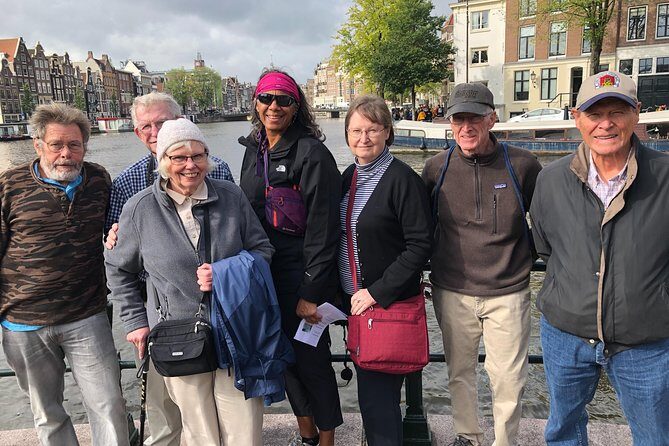
This tour is led by retired historians, and the best part is how they teach you to look. They don’t just name places; they make you understand why those places mattered.
From the structure and the way the tour is delivered, you can expect:
- A narrative timeline that you can follow while moving through the city
- Photos and maps to help you visualize Amsterdam in the occupation years
- A careful walking pace so everyone can hear and keep up
- Time management so you still cover both Jewish heritage and military/occupation history
One thing I appreciate is that the tour isn’t only grim, hour after hour. The guide may add small Amsterdam context along the way so you’re not trapped in sadness the entire time. It keeps the tour from feeling like you’re being pressed under the weight of history. You still get the full seriousness; the pace just feels more human.
Price and value: is $46.44 a good deal for this tour?
At $46.44 per person, this isn’t an impulse buy. But it also isn’t priced like a luxury experience. The value comes from what you’re getting for that money:
- Small-group limit (max 8), which is often where history tours either shine or turn uncomfortable
- Historian-led storytelling rather than a basic audio-guide-style walk
- Most stops are free to see, and the tour doesn’t require you to spend extra on attractions during the route
- You get the Anne Frank context without committing to the museum visit on the spot
If you’re the type of traveler who already knows the headline facts but wants the “why here” details—this price starts to look fair fast.
Where it may not be the best match: if you only care about museum-style content and need indoor exhibits, the tour’s format is more about streets and explanation than ticket-based attractions.
Who should book this WWII walking tour?

You’ll probably love this tour if:
- You want World War II history tied to real Amsterdam locations
- You’re interested in Jewish heritage and the occupation-era experience
- You like guides who can explain context clearly and answer questions
- You’d rather walk with a route than play map roulette in the center
You might think twice if:
- You want mostly upbeat sightseeing today
- You need a museum visit as a non-negotiable part of the plan
- You’re traveling with someone who finds Holocaust stories very difficult to hear
A quick reality check: weather and comfort
This experience needs good weather. It’s designed as a walking tour, and the tour is described as walking slowly, with a duration around 3 hours.
Also, coffee or tea is not included. If you run cold easily or you like a mid-morning break, plan to find a drink option nearby either before or after.
Service animals are allowed, and the tour is near public transportation. Most travelers can participate, which is a good sign for a standard walking group day.
Should you book the Amsterdam in World War II Tour?
My take: book it if you want a focused, small-group way to understand Amsterdam’s role in World War II. The route is tight and intentional, and the guide style—historian narration with photos and maps—turns famous places like Anne Frank’s House and Dam Square into more than just famous stops.
Skip it only if your priority is museum time over guided street context, or if you know you’ll struggle with heavy Holocaust and occupation stories.
If you’re visiting Amsterdam for history, Jewish heritage, or just because you want to understand how this city got from the occupation years to today, this is a strong fit.
FAQ
How long is the Amsterdam in World War II tour?
The tour lasts about 3 hours to 3 hours 30 minutes.
What size is the group?
The tour is limited to a maximum of 8 travelers.
What’s included in the price?
The guided tour is included.
Do we enter the Anne Frank House museum?
No. You start outside Anne Frank’s House and hear the story, but you do not visit the museum.
Is the admission for the stops included?
Admission is listed as free for the stops on the route. The Anne Frank House stop is not included and is only visited from outside.
Where does the tour start and end?
It starts at Prinsengracht 263, 1016 GV Amsterdam, and ends at the National Holocaust Names Monument, 1018 DP Amsterdam.
Is coffee or tea included?
No, coffee and/or tea are not included.
What if the weather is bad?
The tour requires good weather. If it’s canceled due to poor weather, you’ll be offered a different date or a full refund.
What’s the cancellation policy?
You can cancel for free up to 24 hours in advance for a full refund. If you cancel less than 24 hours before the start time, the amount paid is not refunded.